Vehicle fitment data: Stop costly returns now
Accessing ACES and PIES data costs between $1,050 and $10,868 annually, a price tag that scales with company size. Ignore these protocols, and you invite the chaos of inconsistent naming, "Chevy" versus "Chevrolet", that drives returns and kills customer trust.
The Auto Care Association governs these exchange files through its Technology Standards Committee, enforcing a common language for parts. ACES catalogs vehicle applications; PIES manages detailed product attributes. Together, they let suppliers simplify operations and cut supply chain costs without reinventing the wheel via proprietary databases.
Participation is voluntary, but the accuracy gap widens for those ignoring monthly updates. Accessing accurate US vehicle fitments demands understanding these specific exchange protocols, not assuming universal compatibility. Businesses can use DriveRightData to ensure their search capabilities align with these rigorous industry expectations.
Defining the Dual Standards of Automotive Aftermarket Data
ACES Vehicle Fitment and PIES Product Information Standards
ACES links parts to specific vehicles using year, make, and model codes. It kills the ambiguity of "Chevy" vs. "Chevrolet" that historically wrecked ordering accuracy. PIES governs rich product attributes, dimensions, weight, warranty details, across 25 categories, covering information on over 20,000 product types. These precise data exchange protocols fix the inconsistencies in describing vehicles and parts that previously led to incorrect orders, returns, and dissatisfied customers.
| Feature | ACES Standard | PIES Standard |
|---|---|---|
| Primary Focus | Vehicle Fitment | Product Attributes |
| Key Data Points | Year, Make, Model, Engine | Weight, Dimensions, Price |
| Format | XML Codes | Structured Text |
Manufacturers pay annual fees ranging from $1,050 to $10,868 depending on organization size to access these standards. While adoption remains voluntary under Auto Care Association governance, non-compliant suppliers create dangerous gaps in the ecosystem. Recent updates include multilingual capabilities, signaling a shift toward global catalog compatibility. Accessing the necessary reference data involves distinct structures: the Vehicle Configuration Database (VCdb) requires a paid subscription, while components like the Parts Configuration Database (PCdb) may be free but reference outside sources requiring payment. High implementation costs contrast sharply with potential savings from fewer returns.
Applying VCdb and PCdb Databases for Parts Compatibility
Operators map part numbers to specific vehicles using the Vehicle Configuration Database and Parts Configuration Database to resolve fitment ambiguity. The VCdb contains hierarchical vehicle data dating back to 1896, while the PCdb holds standardized parts attributes required for compatibility checks. This separation distinguishes raw vehicle fitment data from detailed product specifications. Implementation requires cross-referencing these sources because ACES files rely on coded identifiers rather than plain text descriptions. A notable constraint involves the upcoming March 26, 2026 deadline for updated database releases, which introduces version 2.0 schemas for VCdb, PCdb, Qdb, PAdb, and Brand Tables.
Risks of Inconsistent Data Descriptions in Aftermarket eCommerce
Pre-standardization naming variants like 'Chevy' versus 'Chevrolet' triggered incorrect orders and returns across the supply chain. Before ACES and PIES enforcement, operators frequently abbreviated 'rear wheel drive' inconsistently, confusing vehicle fitment logic and corrupting catalog integrity. These descriptive mismatches caused shoppers to purchase incompatible parts, directly increasing return volumes and eroding customer trust. The financial impact extends beyond shipping costs; dissatisfied customers rarely return to retry a confusing digital storefront. The Auto Care Association published a 15-page API Usage Guide to assist organizations in using the PIES data standard effectively. Without such adherence, manual data cleaning consumes resources improved spent on expansion. The root cause of many fitment failures remains the reliance on free-text fields instead of coded identifiers. This discipline eliminates the guesswork that previously plagued parts identification. Strict adherence to coded values prevents the ambiguity that free-text entries invite.
Architectural Mechanics of Fitment and Product Data Exchange
ACES Fitment Logic and PIES Product Attribute Structures
ACES logic validates part compatibility by requiring precise matches for Year, Make, Model, and Engine attributes. This fitment framework relies on the VCdb to map vehicle configurations accurately. Conversely, PIES structures rich product data including dimensions, materials, and UPC codes to define the physical item itself. While fitment ensures the part fits the car, product attributes ensure the buyer understands the specific build quality and origin.
| Data Standard | Primary Function | Key Attributes |
|---|---|---|
| ACES | Vehicle Fitment | Year, Make, Model, Engine |
| PIES | Product Details | Weight, Country of Origin, Price |
The separation of these domains prevents data bloat but introduces coordination overhead. PIES records include critical details such as interchanges and warranty information, which help define the product fully. This thorough data structure supports accurate cataloging and reduces ambiguity for buyers.
The structural rigidity of XML files used in ACES ensures machine readability but demands strict adherence to coding schemas. ACES connects part numbers with specific vehicles using attributes like drivetrain and bed to ensure compatibility. Consequently, catalog managers must prioritize validation routines that check both fitment paths and attribute completeness before publishing updates. The PIES Delivery Specification was originally designed in 2003, establishing the core XML schema that has been updated over two decades to enable effective data exchange.
Executing VCdb Subscriptions and PCdb Compatibility Lookups
Activating vehicle fitment validation requires purchasing a paid subscription to the Vehicle Configuration Database (VCdb) before any API calls succeed. This paid tier unlocks hierarchical data for U.S. Vehicles, enabling precise mapping of year, make, and engine attributes. Without this active license, systems cannot resolve specific vehicle configurations against part applications. Conversely, the Parts Configuration Database (PCdb) allows access to standardized part definitions, though external references within records may trigger additional paid gates. Operators must distinguish between these access models to avoid integration dead-ends during catalog builds.
Maintaining accurate fitment involves a systematic approach to data verification:
- Query the VCdb to verify the target vehicle hierarchy exists.
- Cross-reference the part number against the PCdb entry for attribute mismatches.
- Inspect Qualifier Database (Qdb) flags that restrict fitment to specific sub-models.
- Regenerate the XML payload using updated codes from the monthly release.
| Database | Access Model | Primary Content |
|---|---|---|
| VCdb | Paid Subscription | Vehicle hierarchy and attributes |
| PCdb | Free | Standardized part definitions |
The Auto Care Association pushes monthly updates to these datasets, meaning static local copies expire quickly and cause immediate fitment errors. A critical technical tension exists between data freshness and system stability; ACES and PIES standards change frequently, usually every month, to include new product data and vehicles. Because standards change frequently, it is advisable to double-check that you are using the most recent version to avoid sharing outdated information with shoppers.
Validating Data Against Monthly TSC Update Cycles
Outdated fitment files lead to errors when internal catalogs lag behind the monthly releases managed by the Technology Standards Committee. Operators must align ingestion pipelines with these cycles because the Auto Care Association verifies user-sourced data through a strict 90 days expert review window. This delay creates a tension between immediate data availability and verified accuracy, forcing distributors to decide whether to trust raw submissions or wait for official validation. The TSC sources data from users and independently verifies it with a team of industry experts to ensure relevance.
Adopting a disciplined update schedule mitigates the risk of displaying incompatible parts for newly released models. The TSC manages all data standards and handles monthly updates to ACES and PIES.
- Schedule automated checks against the central repository to detect new monthly ACES and PIES releases.
- Monitor the status of data submissions, noting that the review process lasts 90 days before full validation.
- Cross-reference updated VCdb codes with local inventory before publishing changes to the live storefront.
Multilingual expansion in recent standard versions further complicates this maintenance, requiring operators to validate localized attributes alongside core fitment data. Keeping catalogs current with monthly updates is necessary to maintaining data accuracy and supporting customer confidence.
Strategic Comparison of ACES and PIES for eCommerce Operations
Comparison: ACES Fitment Focus Versus PIES Product Information Scope
Operational lanes diverge sharply as ACES mandates paid licensing for vehicle mapping while PIES remains free for product details. This separation forces distributors to budget for fitment access while using open access for attribute richness. ACES concentrates exclusively on determining what parts fit specific vehicles using Year, Make, Model, and Engine parameters. In contrast, PIES manages thorough product information including brand, price, dimensions, and country of origin.
The vehicle fitment focus ensures parts match specific configurations, whereas PIES delivers the descriptive content shoppers need to finalize purchases. Implementing both standards creates a complete catalog strategy rather than forcing a choice between compatibility or content. However, the paid barrier for ACES creates a financial gatekeeper that does not exist for PIES adoption. This asymmetry means a retailer can possess perfect product data yet still fail to match parts to cars accurately without the subscription. The Auto Care Association governs these distinct lanes to maintain industry-wide consistency across disparate data types. Operators must recognize that free product attributes cannot compensate for missing fitment logic in automotive eCommerce.
Combining ACES Fitment and PIES Attributes for Resellers
Resellers determine vehicle compatibility via ACES while retrieving detailed product specifications through PIES to construct a complete catalog view. This dual-standard workflow prevents mismatches where a part fits the car model but fails on specific physical dimensions or packaging requirements. ACES handles the complex mapping of year, make, and engine data, whereas PIES supplies the rich attribute set needed for customer decision-making including weight and country of origin.
| Workflow Step | Data Standard | Operational Function |
|---|---|---|
| Vehicle Selection | ACES | Validates fitment against VCdb configurations |
| Product Display | PIES | Renders images, dimensions, and pricing |
| Order Validation | Both | Confirms part fits AND matches shipping constraints |
A complete catalog strategy requires the integration of both standards rather than choosing one over the other, as ACES ensures consistency of fitment data while PIES ensures the richness of product content. The tension lies in managing two distinct data streams; fitment ensures the part installs correctly, but product attributes ensure the buyer understands the specific build quality.
Consequently, accurate catalog data has evolved from a back-office requirement to a primary sales driver, where poor data management can lead to reduced sales and increased supply chain costs. The Auto Care Association governs these protocols to maintain industry consistency. Implementing this combined approach transforms raw data into a reliable sales tool that reduces return rates and improves customer trust.
Verifying TSC Monthly Updates and 90-Day Review Cycles
The Technology Standards Committee handles monthly updates to ACES and PIES, which include new product data and vehicles that have hit the market. Operators must validate that their systems reflect the latest vehicle configurations, as the official release date for updated databases like VCdb 2.0 is scheduled for March 26, 2026. This specific timing matters because raw user submissions undergo a rigorous 90-day expert review before becoming verified.
| Checkpoint | Frequency | Validation Action |
|---|---|---|
| TSC Releases | Monthly | Sync XML feeds to capture new vehicle models |
| Expert Review | 90 Days | Allow time for industry experts to verify data |
| Version Check | As needed | Verify use of the most recent version |
Meanwhile, the tension here lies between speed and accuracy; adopting data before the review window closes risks propagating errors, yet waiting too long misses market opportunities for new vehicle launches. Because standards change frequently, it is a good idea to double-check that you are using the most recent version so you do not share outdated information with your shoppers. Relying on stale files means your catalog lacks the corrections that prevent returns.
Implementing Combined Data Standards to Reduce Returns and Boost Sales
Defining the Five-Step ACES and PIES Implementation Process
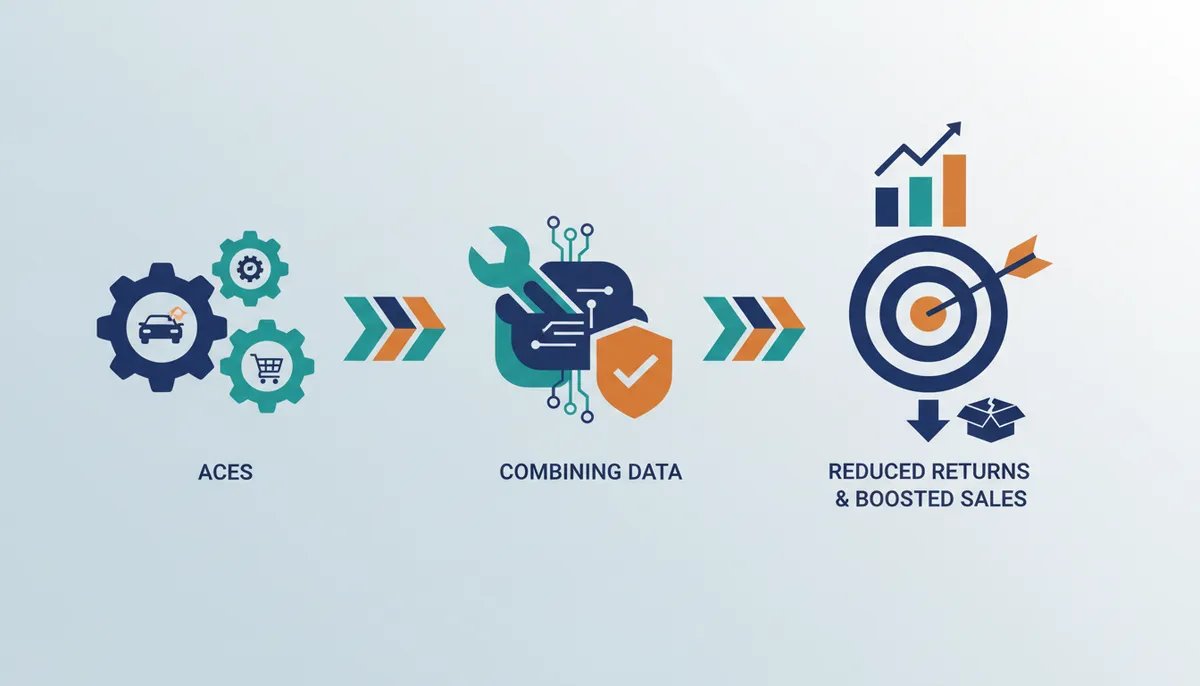
Operators start by auditing disparate data silos to establish a baseline for catalog accuracy. This initial review often reveals inconsistent formatting, such as varying abbreviations for drivetrain types, which previously caused incorrect orders. The next phase requires mapping internal fields to specific ACES and PIES attributes, translating custom notes into standardized qualifiers. Teams generate initial XML files that drive online search filters and product display pages once mapped. Validation follows generation, where software identifies missing attributes or outdated vehicle codes before public release. Poor data management directly increases supply chain costs and reduces sales potential reduced sales. The final step establishes a recurring update process to handle monthly changes from the Technology Standards Committee. Catalogs quickly drift from current market configurations without this cycle.
A complete strategy demands integrating both standards rather than choosing one, as PIES ensures content richness while ACES guarantees fitment consistency integration of both. The underlying XML schema has evolved notably since the original specification design in 2003 XML schema. Products appear listed but fail compatibility checks if the mapping phase is ignored.
Automating Distributor Data Enrichment with Spark Shipping
Distributor reference numbers alone fail to populate the rich product attributes required for modern eCommerce search filters. Spark Shipping resolves this gap by ingesting minimal wholesale identifiers and automatically expanding them into complete ACES and PIES compliant records. This mechanism pulls detailed specifications from established datasets when a distributor provides only a skeletal part number. The result is a listing that includes necessary fitment data alongside marketing content and dimensional weights. Operators observing high return rates often find that incomplete data drives customers to guess at compatibility, leading to costly exchanges. Businesses create a common language that simplifies operations across the supply chain by automating this enrichment.
Relying on manual updates creates a vulnerability as vehicle configurations change monthly. Static spreadsheets cannot match the velocity of the Technology Standards Committee release cadence. Real-time inventory tracking becomes impossible without an automated bridge between supplier feeds and the storefront. Delays in data synchronization directly impact shopper trust and order accuracy because of this dependency.
Automation transforms raw data into a competitive asset that reduces supply chain costs. Retailers risk displaying outdated or incompatible parts to buyers without this layer of enrichment. Non-compliance manifests as reduced sales and increased logistical friction.
Validation Checklist for ACES XML Files and Vehicle Notes
Validate XML syntax immediately using dedicated viewers to catch structural errors before publication. Operators must convert unstructured text fields like "vehicle notes" into standardized ACES qualifiers to ensure precise fitment logic. This mapping step transforms vague descriptions into machine-readable codes that drive accurate search filters.
Businesses often rely on validation software to read these files, yet manual review remains necessary for catching semantic mismatches that automated tools miss. The App Segment in newer standards now supports non-diagram assets, requiring operators to verify that digital links resolve correctly alongside text codes. Rushing publication without validation often results in increased supply chain costs due to wrong-part returns because a tension exists between rapid data ingestion and strict adherence to evolving schemas.
Operators should audit their vehicle configuration mappings monthly since the underlying databases update frequently. Minor drift in vehicle definitions compounds over time if this routine is neglected, eventually causing broad compatibility failures across entire product categories. The Auto Care Association advises verifying version currency regularly to avoid sharing outdated fitment information with shoppers.
About
Mark Phillips serves as Editor of Aftermarket Intel at KZMALL, where he uses years of experience tracking distribution channels and e-commerce trends in the automotive sector. His deep familiarity with the competitive moves of substantial distributors makes him uniquely qualified to dissect the complexities of ACES and PIES data standards. In his daily role, Phillips oversees the curation of KZMALL's extensive catalog, ensuring that over 50,000 SKUs maintain precise vehicle fitment across global markets. This article directly reflects his ongoing work to eliminate data inconsistencies that plague online parts sales. By connecting rigorous standardized fitment data to KZMALL's single-source supplier model, Phillips illustrates how accurate Year/Make/Engine applications drive reliability for B2B buyers. His insights bridge the gap between technical data protocols and practical wholesale distribution, offering readers a clear path to navigating the $855 billion aftermarket environment with confidence and precision.
Conclusion
Scaling fitment operations reveals that reliance on manual expert review creates a critical bottleneck where new models remain unsellable for 90 days. This latency allows competitors with automated ingestion to capture early market share while your catalog sits in a verification queue. By 2027, strict adherence to ACES and PIES standards will shift from a competitive advantage to a mandatory baseline for platform visibility, making current delays financially unsustainable. Organizations must transition from reactive correction to proactive schema management immediately to avoid being locked out of substantial distribution channels.
You should mandate a full migration to automated XML validation workflows by the start of the next fiscal quarter to eliminate human-induced lag. This timeline ensures your infrastructure handles the increasing volume of vehicle definitions without requiring exponential staff growth. Begin this week by auditing your current vehicle configuration mappings against the latest ACES XML schema to identify semantic drift before it causes widespread compatibility errors. Addressing these structural gaps now prevents the compounding returns and lost revenue that occur when machine-readable codes fail to align with actual inventory.
Frequently Asked Questions
Annual fees for accessing these data standards range from $1,050 to $10,868 based on company size. This investment helps businesses prevent costly inventory errors caused by inconsistent naming conventions in the automotive aftermarket sector.
Participation in these data exchange programs remains entirely voluntary for all manufacturers and suppliers. However, ignoring monthly updates from the governing body creates growing gaps in system accuracy compared to compliant competitors.
Raw user submissions must undergo a rigorous 90-day expert review window before becoming verified industry data. This delay ensures high accuracy but requires operators to plan ahead for new vehicle model additions.
Variations like Chevy versus Chevrolet historically triggered incorrect orders and high customer return rates. Adopting standardized codes eliminates these description errors and streamlines operations across the entire supply chain effectively.
Businesses should leverage DriveRightData to align search capabilities with rigorous industry expectations. This approach ensures accurate US vehicle fitments without building proprietary databases from scratch.
References