
ACES fitment data: cut wrong-part returns by half
Stores implementing accurate ACES fitment report a 50, 60% drop in wrong-part returns according to industry data. You will learn how ACES and PIES function as distinct but complementary frameworks for parts validation. Finally, the text outlines operational workflows for catalog normalization and the technical requirements for recurring data ingestion.
The automotive aftermarket relies on ACES to manage critical vehicle attributes like engine type and trim while PIES handles product content and digital assets. Without this separation, retailers face the chaos of unstructured data that drives customers away. Highlights that conversion rates can improve by 30, 40% when fitment confidence removes buying friction. These are not marketing tricks but the result of rigorous data hygiene and standardized exchange protocols.
Understanding the distinct roles of these standards allows businesses to map cleanly to channels like Google and substantial marketplaces. The discussion moves beyond basic definitions to the hard engineering required to maintain these systems. Success depends on your ability to ingest continuous data streams without corrupting the core catalog.
The Distinct Roles of ACES Fitment and PIES Product Content Standards
ACES Fitment Data vs PIES Product Content Standards
ACES defines vehicle application while PIES details product attributes for accurate aftermarket cataloging. These two primary data standards combat inconsistency by separating the question of fitment from product description. ACES (Aftermarket Catalog Exchange Standard) specifically manages critical data points like year, make, model, and engine type to answer "Will it fit?" effectively. Generic data entry methods lead to customer dissatisfaction, yet ACES and PIES provide a structured framework that ensures consistency across the entire supply chain.
Conversely, PIES (Product Information Exchange Standard) answers "What is it?" by covering descriptions, digital assets, and technical specifications. This division ensures that a shopper selects a vehicle and sees only the parts, removing the guesswork that drives returns. Companies adopting these unified solutions report improved consistency and fewer errors compared to those relying on unstructured data. The distinction is vital because ACES handles the complex vehicle application logic, whereas PIES focuses on the product information itself.
| Feature | ACES Standard | PIES Standard |
| Primary Question | Will it fit? | |
| What is it? | ||
| Key Data | Year, Make, Model, Engine | Descriptions, Assets, Specs |
| Function | Vehicle Application | Product Content |
Operators must recognize that ACES files often contain non-human-readable IDs requiring database lookup rather than plain text values. The ACES XML structure is built around IDs that reference the Auto Care Association's vehicle databases, meaning files often contain keys instead of plain English values. A common deployment error involves treating these standards as static files rather than living data requiring recurring updates. In real-world operation, ACES/PIES is a living catalog that requires recurring data pulls, validation, and normalization to remain effective. Successful implementation demands a system capable of parsing XML structures and mapping keys to current vehicle databases.
Accurate fitment confidence drives conversion rates up by 30, 40%+ when shoppers trust the catalog. This non-negotiable standard eliminates guesswork for the buyer. Stores implementing strict ACES validation see wrong-part returns drop by 50, 60% immediately. Accuracy in ACES and PIES data is necessary for achieving success in auto parts SEO and customer satisfaction.
The mechanism is simple: structured vehicle fitment data prevents the initial mismatch. Shoppers select their Year, Make, and Model, then see only compatible items. This precision removes the "will this fit?" anxiety that kills sales. Clean fitment means nothing if the product information standard lacks detail. PIES fills that gap with dimensions, materials, and images.
| Outcome | Impact Driver |
|---|---|
| Higher Sales | Fitment Confidence |
| Fewer Returns | Accurate Vehicle Mapping |
| Improved SEO | Structured Attributes |
A common limitation arises when teams update fitment but ignore product descriptions. The part fits, but the buyer lacks context to purchase. Both standards must work in tandem to maximize value. Neglecting either side leaves revenue on the table.
Operators must treat these files as living documents requiring recurring updates. Because the automotive aftermarket is fast-paced, continuous ingestion ensures the auto parts data standards remain effective over time. This discipline protects margins from the cost of reverse logistics.
Risks of Incomplete ACES Attributes and PIES Descriptions
Missing submodel or bed length attributes create a fuzzy customer experience. When ACES fitment data lacks specific vehicle configuration details like drivetrain or trim, shoppers face ambiguity regarding part compatibility. This uncertainty can lead to incorrect orders that trigger support tickets and returns. The technical failure occurs when the catalog omits required qualifiers, leaving the application logic unable to distinguish between similar vehicle variants.
Consequently, incomplete PIES descriptions compound the issue by failing to provide dimensional specs or material data needed for verification. A dual-layer data model breakdown happens when vehicle application logic exists without corresponding product attribute clarity. Operators ignoring these gaps face tangible issues with customer dissatisfaction compared to peers adopting full standards compliance. The cost manifests as increased operational overhead rather than just lost sales volume.
| Missing Attribute | Consequence |
|---|---|
| Submodel / Trim | Ambiguous fitment for engine-specific parts |
| Bed Length | Incorrect bumper or light bar selection |
| Digital Assets | Higher return rates due to visual mismatch |
Fixing these gaps requires more than simple file uploads; it demands rigorous validation against current database releases. The constraint lies in the complexity of joining foreign keys correctly across massive reference tables. Failing to provide this structured information goes against industry norms where precision and efficiency are identified as the primary keys to success. Accurate vehicle fitment data functions as a necessary form of consumer protection in the digital marketplace. Buy the part the vehicle was engineered for, not the one that looks close.
Internal Mechanics of Vehicle Attribute Databases and XML Data Structures
Decoding ACES XML IDs into VCdb and PCdb Values
A raw ACES XML file refuses to speak plain English to anyone reading the code directly. Numeric keys fill the rows instead of brand names like "Ford." The system sees MakeID = 123 and demands a lookup against the Auto Care Association's VCdb to find the actual vehicle attribute. This design keeps the logic for "where it fits" separate from the "what it is" details stored in PIES standards. Auto Care Association teams maintain these databases so the whole supply chain speaks one language. Merchants cannot turn those foreign keys into a usable catalog without accessing these specific reference tables.
Decoding these values follows a strict path:
- Ingest the raw XML file containing integer identifiers.
- Join the MakeID and ModelID against the local VCdb mirror.
- Map the resolved text strings to the storefront search filters.
| Data Element | Raw XML Value | Resolved Value Source |
|---|---|---|
| Manufacturer | MakeID = 123 | VCdb |
| Vehicle Line | ModelID = 456 | VCdb |
| Engine Type | EngineBaseID = 789 | PCdb |
Owning the file does not mean owning the dictionary. Data stays locked without proper association access. Operators trying to parse these files by hand hit a wall of numeric strings where vehicle descriptions should be. Accurate fitment needs this lookup layer to work correctly. Removing uncertainty stops incorrect part sales before they happen. A catalog missing this step lacks the specific vehicle attributes buyers need to feel confident.
Ingesting Multi-Source ACES Feeds into Parts Square
Co-ops, direct brands, and private PIM systems all send feeds that clash immediately over engine coverage depth. Parts Square fixes these mismatches by turning different ACES inputs into one unified catalog. Various ACES providers send conflicting versions of the same brand data with huge gaps in attribute richness or submodel precision. Store owners mix provider-sourced brands with direct manufacturer links to cover niche needs effectively.
| Data Source Type | Coverage Depth | Attribute Richness | Update Frequency |
|---|---|---|---|
| Data Co-ops | High Volume | Variable | Scheduled Batches |
| Direct Manufacturer | Brand Specific | High Detail | Irregular |
| Private PIM | Custom Scope | Proprietary Fields | Real-time |
Mapping foreign keys from source files to central VCdb reference tables drives the ingestion process. Auto Care Association maintains these tables to keep vehicle application logic separate from product attributes. Engine submodel definitions must match exactly because small errors cause fitment failures later.
- Ingest raw ACES XML files from all upstream sources.
- Decode numeric IDs against current VCdb and PCdb databases.
- Resolve conflicts where multiple sources claim authority for the same part.
- Sync the normalized catalog to the storefront via ACES & PIES Integration.
Freshness of updates creates the hardest constraint. Recurring data pulls happen daily, weekly, or monthly depending on the provider. Rigorous join logic beats simple file overwrites for successful catalog normalization. Displaying incompatible parts happens when operators skip this validation step. Precision in data engineering stops the frustration of wrong-part returns. Proper fitment cleanup cuts those return rates notably.
Handling Massive ACES Exports and Image Pipeline Failures
Servers choke on ACES exports when single files grow past hundreds of megabytes in raw size. Decompressing these archives eats memory before any catalog normalization logic can read the XML structures inside. System timeouts kill the process before vehicle application data validates against reference tables.
Images break the asset pipeline through inconsistent formatting and missing SKU links. A professional workflow ingests assets, validates matches to specific parts, and converts formats automatically so thumbnails do not disappear from the storefront.
| Failure Point | Technical Consequence | Required Fix |
|---|---|---|
| Huge Dimensions | Slow page load times | Automated compression |
| Wrong Formats | Browser rendering errors | Format conversion |
| Missing SKUs | Orphaned image files | Name validation |
Image archives arrive separate from the main data file, creating a gap many operators miss. Asset files stay unlinked if the naming convention in the folder does not match product information keys exactly. Product pages sit visually empty even when fitment data looks perfect. Manual resizing creates technical debt that becomes unsustainable once catalog depth passes a few thousand line items. Automated ingestion scripts handle these conversions without human help to keep velocity high. Staff face a bad choice between slow site performance or incomplete product visualization when this step gets ignored.
Operational Workflows for Catalog Normalization and Recurring Data Ingestion
Catalog Normalization for Brand and Attribute Consistency

Raw supplier feeds arrive with fractured naming conventions that break site search and confuse buyers immediately. Combining multiple brands requires a strict workflow to convert these inconsistent inputs into a unified catalog. Without this step, stores suffer from broken filters and weak SEO because the system cannot group identical items.
- Standardize Brand Names: Map variations like "BILSTEIN" and "Bilstein Suspension" to a single master ID to prevent duplicate manufacturer pages.
- Align Taxonomy: Enforce consistent category paths so similar parts do not create random category spaghetti in navigation menus.
- Normalize Attributes: Convert distinct value formats into a single unit of measure for accurate comparison filtering.
The unified solution separates vehicle fitment from product details, yet ingestion logic must still reconcile conflicting attribute strings from different providers. A common failure mode involves overwriting manual enhancements during recurring updates, erasing valuable merchandising context. Operators often overlook the tension between data freshness and content stability; aggressive overwrite policies can strip away the very differentiation added to commodity parts. Parts Square addresses this by treating the catalog as a living asset rather than a static import. Failure to implement these safeguards results in inconsistent product pages that frustrate customers and increase return rates. The cost of skipping normalization is measurable in lost conversion when shoppers cannot trust the displayed specifications.
Executing Recurring Data Pulls and Update Logic
Real-world operation demands recurring data pulls on daily, weekly, or monthly cycles depending on the specific provider and brand requirements. Manufacturers constantly update part numbers through supersessions, kit replacements, and line discontinuations, requiring strong update logic that prevents catalog destruction when new files arrive. The critical tension lies in applying these manufacturer changes while preserving manual enrichments like custom descriptions or marketing tags that improve conversion.
- Schedule Automated Ingestion: Configure system timers to fetch fresh ACES and PIES feeds at intervals matching each supplier's release cadence.
- Apply Update Rules: Define logic to overwrite fitment data while flagging non-standard attributes for human review before deletion.
- Process Supersessions: Map old SKUs to new replacements automatically to maintain search visibility for discontinued items.
This structured approach ensures fitment accuracy and operational efficiency as the automotive aftermarket evolves in a fast-paced world operational efficiency. Failure to manage these lifecycle updates results in old SKUs ranking in search, causing customer confusion and support tickets. Many businesses choose a catalog partner over DIY solutions due to this complexity, as Parts Square offers a productized catalog service addressing these needs. The cost of ignoring this workflow is measurable: without proper normalization and update logic, stores suffer from inconsistent product pages and broken filters. Implementing these standards is an ongoing response to the industry's continuous update cycle rather than a single static release continuous update cycle. Retailers must treat their catalog as living data that requires constant validation and error handling to remain viable.
Lifecycle Management Risks in ACES and PIES Updates
Neglecting lifecycle rules causes old SKUs to rank in search results, creating broken SEO URLs and immediate customer confusion. Manufacturers constantly issue supersessions and discontinue lines, meaning a static catalog quickly becomes a liability for any auto parts retailer. Without active management, stores face a surge in support tickets as buyers order parts that no longer exist or fit incorrectly. A mature system requires strict logic to track replacements and decide whether to hide, redirect, or replace items when data changes.
- Map Supersessions: Link obsolete part numbers to current valid SKUs automatically to preserve traffic value.
- Preserve References: Keep historical data accessible via redirect rather than deleting pages entirely.
- Validate Fits: Ensure vehicle fitment updates do not accidentally remove valid applications during daily syncs.
Failure to apply these standards effectively leads directly to data dissatisfaction among customers who encounter inconsistent product pages. Accuracy in this domain is non-negotiable for achieving success in auto parts SEO and maintaining high customer satisfaction scores. The implementation of structured frameworks ensures consistency across the entire supply chain, unlike generic entry methods that invite error.
The hidden risk involves the tension between keeping data fresh and maintaining URL stability for search engines. If a store aggressively deletes outdated items without redirection, it loses the organic traffic built over years of operation. Conversely, keeping dead SKUs active without clear replacement warnings damages trust and increases return rates. Publishers recommend establishing a catalog partner workflow to handle these complex update cycles automatically. This approach prevents the "parts disappear" problem where valuable inventory seems to vanish from the storefront during routine data ingestion. Properly managed, these updates change potential chaos into a competitive advantage for the business.
Strategic ROI of Data Accuracy in Reducing Returns and Optimizing SEO
Defining Strategic ROI Through Data Accuracy Metrics
Guesswork kills sales. Customers abandon carts when fitment data fails to confirm part compatibility immediately. Strict ACES and PIES compliance stops this bleed by removing uncertainty from the selection process. This precision drives the strategic return on investment for any serious auto parts retailer. Search engines prioritize structured attributes over messy text, making accuracy non-negotiable for SEO success.
| Metric Category | Impact of High Accuracy |
|---|---|
| Return Rates | Substantial reductions in "it didn't fit" returns |
| Search Visibility | Structured data enables richer category indexing |
| Operational Cost | Fewer support tickets regarding compatibility |
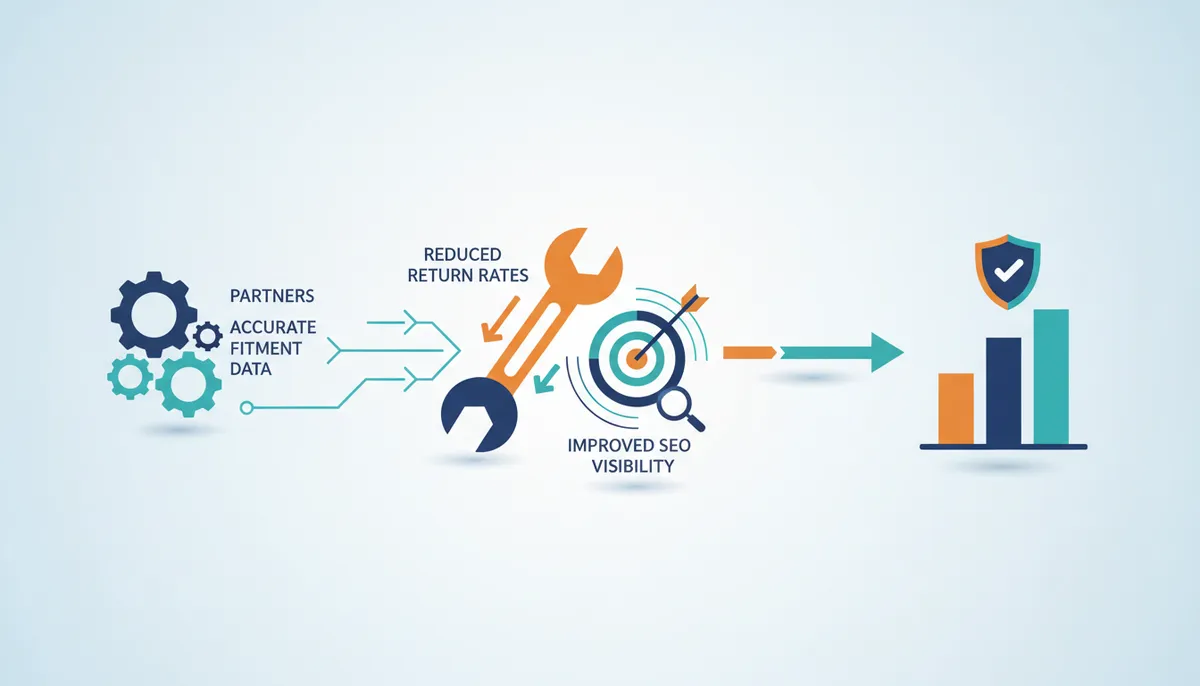
Maintenance defines the difference between a working catalog and a broken one. Raw XML files rely on numeric IDs instead of human-readable text, demanding reliable decoding logic to function. Vehicle databases evolve constantly as new models enter the market, rendering static imports useless within months. Operators must treat data ingestion as a continuous operational loop. Infrastructure requires automated validation and normalization pipelines to preserve gains in conversion. Initial reductions in returns vanish quickly if catalog freshness declines due to neglected update logic.
Applying Validation Workflows to Prevent Catalog Chaos
Recurring data pulls, rigorous error handling, and source normalization form the backbone of real-world operation. Total overwrites alter catalog integrity unless update logic preserves historical fitment links during the process. The ACES relational model depends on specific IDs that require decoding against reference databases to verify application accuracy. Generic inventory systems track stock levels but often lack the specific structure needed to link products to compatible vehicles effectively. Structured fitment data ensures parts match exact Year, Make, Model, and Engine configurations without manual intervention.
Fragmentation occurs when ERP and ecommerce platforms display conflicting information to buyers. Effective automation requires ETL solutions to process large volumes while maintaining data integrity throughout the pipeline. Rushing ingestion introduces errors that erode customer trust quicker than slow updates help sales figures. Unverified PIES attributes like dimensions or materials cause search visibility to suffer alongside conversion rates. Accuracy in these standards remains necessary for achieving success in auto parts SEO and maintaining shopper confidence. Common pitfalls causing 'catalog chaos' include using incomplete sources and importing without validation checks.
| Validation Step | Risk of Skipping |
|---|---|
| Source Verification | Outdated fitment causes returns |
| ID Decoding | Broken vehicle links |
| Supersession Check | Duplicate listings |
Specialized catalog partners manage this complexity improved than internal DIY pipelines. The operational burden of manual correction drives the need for automated validation workflows designed specifically for the automotive aftermarket.
DIY Catalog Management vs Partnering for Update Logic
Update logic must maintain data integrity when new files arrive to keep a living catalog functional. Many businesses choose a catalog partner over DIY solutions due to the complexity of managing catalogs that evolve constantly. The dual-layer data model separating vehicle application from product information creates a steep barrier for internal teams lacking specific database expertise.
| Feature | DIY Management | Catalog Partner |
|---|---|---|
| Update Logic | Custom code required | Productized service |
| Supersessions | Manual tracking needed | Automated handling |
| Lifecycle Mgmt | High error risk | Structured workflow |
| Resource Load | Heavy engineering | Operational focus |
Internal teams often struggle because update logic must prevent catalog destruction when new files arrive and handle supersessions and product lifecycle changes effectively. A productized catalog service addresses these needs by encoding industry rules directly into the ingestion pipeline. This approach removes the burden of decoding complex ID references found in raw ACES XML files. Total control competes with operational stability, as maintaining this pipeline requires constant vigilance against evolving standards. Relying on a specialized provider shifts the risk of data corruption from internal servers to a dedicated infrastructure designed for this specific volatility. Retailers focus on sales conversion rather than debugging XML parsing errors during peak traffic windows.
About
Ray Donnelly serves as Master Automotive Technician and Aftermarket Parts Authority at KZMALL Auto Parts, bringing over two decades of hands-on experience from the repair bay to technical content creation. His deep background as an ASE Master Certified technician and former shop owner uniquely qualifies him to explain the critical impact of ACES and PIES data standards. Having spent years troubleshooting misfits and managing costly returns caused by incorrect part selection, Ray understands exactly how accurate fitment data dictates operational success. At KZMALL, he applies this expertise daily, ensuring the company's 50,000+ SKUs adhere to rigorous Year/Make/Model/Engine specifications for global B2B clients. By bridging the gap between complex catalog data and real-world application, Ray helps independent shops and distributors eliminate guesswork. His insights directly address the root causes of returns, empowering businesses to use standardized data for higher conversion rates and reduced waste in the fragmented automotive aftermarket.
Conclusion
Scaling fitment operations exposes a critical breaking point where manual update logic fails to handle the volatility of raw industry files. The ongoing operational cost is not merely engineering time, but the silent erosion of conversion rates caused by broken vehicle links and duplicate listings. As compliance shifts from a differentiator to a baseline requirement, internal teams attempting to decode complex ID references without specialized tools will find their catalogs increasingly unstable. You must transition to automated validation workflows that encode these industry rules directly into your ingestion pipeline rather than relying on fragile custom code.
Commit to migrating your catalog management to a productized service within the next quarter if your current return rates exceed acceptable margins or if your engineering team spends significant cycles debugging XML parsing errors. This specific timeline allows for a structured handover before peak traffic windows demand total infrastructure stability. Start this week by auditing your last three data imports to identify how many supersessions were missed or required manual correction. This single metric reveals whether your current DIY approach can sustain the volume required for modern automotive retail or if it risks corrupting your entire inventory structure.
Frequently Asked Questions
Accurate fitment data can reduce wrong-part returns by 60%. This drastic drop occurs because structured vehicle attributes prevent customers from selecting incompatible parts, directly lowering return rates and associated logistical costs for retailers.
Stores often see conversion rates rise by 40% when fitment confidence is high. Removing buyer uncertainty through accurate cataloging allows shoppers to purchase immediately, significantly boosting overall sales performance without needing extra marketing spend.
Recurring data ingestion is mandatory because these standards represent a living catalog. Without daily or weekly updates to handle normalization and validation, your database will quickly become outdated, leading to increased errors and lost sales opportunities.
ACES manages critical attributes like year, make, model, and engine type. By organizing these four specific data points, the standard ensures that shoppers only see parts compatible with their specific vehicle configuration.
ACES answers if a part fits while PIES describes what the product is. Using both standards together ensures customers have complete information, preventing the chaos of unstructured data that typically drives buyers away from a site.