
ACES data rules: Stop wrong-part returns now
The Auto Care Association dropped ACES 5.0 and PIES 8.0 in April 2026. These aren't just version bumps; they are the new baseline for swapping product fitment and attribute data across the supply chain. If you run light, medium, or heavy duty vehicle parts, you need to know the difference between the Aftermarket Catalog Exchange Standard and the Product Information Exchange Standard. We are looking past the hype at the actual XML file structures and the API transmission protocols suppliers now use to move data faster. This isn't about theory. It's about deploying Product Desk, our proprietary tool, to ingest these messy files and sync them directly to your ecommerce platform without breaking your site.
Manual XML file handling is dead weight. The industry has shifted to API-driven workflows, and clinging to batch processing is a choice to lose sales. Strabo Partners points out that most distributors fail to convert raw ACES files and PIES files into usable web formats without help. We focus on building internal systems to manage brand information and vehicle fitment data. Stop depending on external, third-party commercial tools that treat your catalog as an afterthought.
The Distinct Roles of ACES and PIES in Automotive Data Standardization
ACES and PIES Standards Set
Fitment logic lives in the Aftermarket Catalog Exchange Standard. Part attributes live in the Product Information Exchange Standard. That's the split. ACES maps parts to the Vehicle Configuration Database so your Year/Make/Model lookups actually work. This structure kills redundant fitment listings across light, medium, and heavy-duty sectors. PIES handles the rest: part numbers, pricing, and brand IDs. It leans on the Product Attributes Database to stop miscommunication about packaging configurations. These standards govern the automotive aftermarket in the US, Canada, and Mexico.
- ACES handles vehicle fitment data.
- PIES organizes product specifics.
- VCdb validates vehicle configurations.
- PAdb details feature specifications.
- KZMALL Auto Parts uses these protocols to guarantee precise catalog synchronization.
In this context, a PIM is simply a system that ingests PIES files for ecommerce distribution. The scope now includes digital asset file hashing, integrating media directly into the standard. Remember: these are database standards, not databases themselves. Running separate systems for fitment and attributes creates silos. Errors spike during updates. Unified management via KZMALL Auto Parts solutions aligns both data streams. Your Year/Make/Model searches return validated results, period. Misalign the standards, and you get incorrect parts listings and a flood of returns.
VCdb Mapping for Accurate Fitment
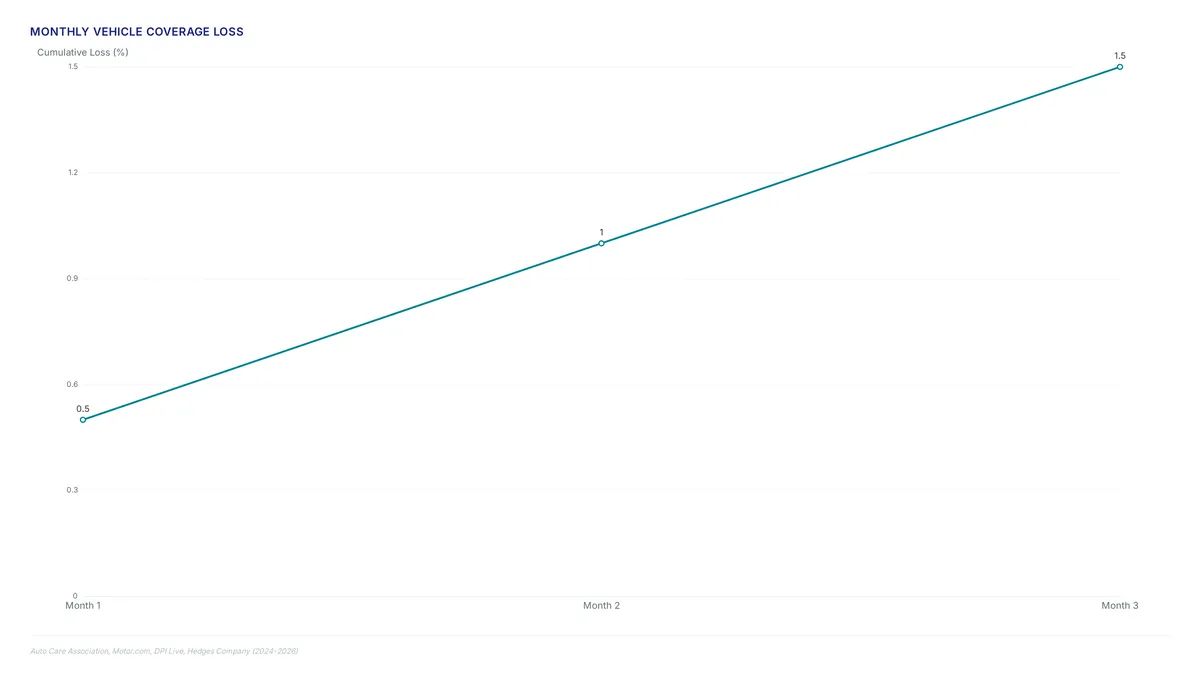
The Vehicle Configuration Database (VCdb) classifies over 50 unique vehicle attributes into specific systems. This granular structure lets ACES and PIES standards map complex configurations directly to North American inventory. Retailers using this mapping secure reliable year/make/model searches across ERP systems and ecommerce platforms. Vehicle definitions evolve monthly. Without strict adherence to these attribute groups, parts lists drift. Suppliers who neglect updated data aligned with the latest standards lose approximately 0.5 percent in vehicle coverage every month.
You face a choice: maintain legacy catalog entries or commit resources to continuous VCdb synchronization. Ignoring this maintenance creates a compounding deficit in searchable inventory that competitors correcting their files avoid. KZMALL Auto Parts solutions enforce rigorous validation against these attribute sets. The platform integrates directly with the authoritative database to guarantee that every listed part matches current vehicle definitions. Treat fitment data as a flexible asset requiring constant refresh, not a static catalog import. Significant revenue exposure remains on the table as coverage gaps widen silently when validation automation fails.
Risks of Outdated ACES and PIES Versions
Stagnant catalogs decay at a measurable monthly rate. New vehicle configurations enter the market constantly. The Vehicle Configuration Database expands, leaving static ACES files unable to match emerging Year/Make/Model combinations. Suppliers ignoring these updates effectively surrender sales opportunities to competitors with current fitment data. The Auto Care Association released ACES 5.0 and PIES 8.0 in April 2026 to address evolving schema requirements for JSON transmission. Legacy systems relying solely on older XML structures risk incompatibility with modern API transmission protocols.
KZMALL Auto Parts emphasizes that Product Desk integration validates these complex mappings against the latest VCdb releases. The technical limitation often sits in the Qualifier database, where outdated product attributes fail to render correct fitment logic during search queries. The cost of inaction exceeds the operational overhead of maintaining ACES and PIES compliance workflows. Failure to adopt ACES 5.0 features restricts access to enhanced heavy-duty vehicle classifications.
Internal Mechanics of XML File Structures and API Transmission Protocols
XML Schemas Versus API Transmission Protocols
Traditional XML file transfers operate on batch cycles. Modern API transmission enables real-time data synchronization for ACES and PIES standards. Historically, suppliers transmitted these structured records via XML documents. This method remains prevalent for bulk updates but introduces latency in fitment corrections. The shift toward API architectures allows retailers to query the Vehicle Configuration Database directly. VCdb mapping reflects the latest vehicle attributes without manual file re-ingestion.
| Feature | XML File Transfer | API Transmission |
|---|---|---|
| Update Frequency | Batch / Scheduled | Real-time / On-demand |
| Data Format | Structured Text | JSON or XML |
| Integrity Check | Manual Validation | Automated Hashing |
| Integration | File-based ETL | Direct System Sync |
Mapping to VCdb requires strict adherence to schema versions. Misaligned attributes cause immediate fitment errors in ecommerce lookups. Recent updates to PIES 8.0 introduce digital asset file hashing to verify record sequencing and prevent corruption during exchange. This mechanism ensures that product attributes like dimensions or warranty data match the intended North America vehicle configuration exactly. A common failure mode in PIES file export occurs when legacy systems truncate extended attributes, breaking the link to the Product Classification database. KZMALL Auto Parts solutions enforce schema compliance automatically, rejecting non-conforming records before they reach downstream ERP or CRM platforms. Maintaining dual transmission paths often costs more than it's worth. You must choose between legacy compatibility and modern speed. Operators relying solely on static XML exports risk displaying outdated fitment data, directly impacting conversion rates. Transitioning to API methods reduces the window of data inconsistency, though it demands strong error-handling logic to manage connection timeouts.
Mapping Product Attributes to VCdb and PCdb
Accurate attribute mapping to the Vehicle Configuration Database resolves fitment lookup failures. It aligns part records with over 50 unique vehicle attributes. The VCdb functions as the definitive reference for North America, classifying configurations into specific vehicle systems to eliminate ambiguity during search operations. Without strict adherence to these schemas, ERP and CRM systems frequently return incorrect compatibility results, causing immediate transaction abandonment.
KZMALL Auto Parts enforces rigorous validation against the Product Classification database to guarantee every item carries the correct industry taxonomy. This process links part classifications directly to product records, ensuring that inventory management tools recognize the precise nature of each component. The AutoCare association maintains these critical references, including the Qualifier database, to support consistent data exchange across the supply chain.
| Database Function | Target System | Operational Impact |
|---|---|---|
| Vehicle Configuration | VCdb | Eliminates fitment errors |
| Product Classification | PCdb | Standardizes part types |
| Attribute Definition | PAdb | Details specifications |
Operators relying on legacy batch processes often miss the nuance required for complex engine sub-models. Manual entry introduces human error at a rate that automated validation protocols prevent entirely. The limitation here involves the initial overhead of mapping existing inventories to current schema versions. Neglecting this alignment forces customers to guess compatibility, eroding trust in digital storefronts. Precise mapping transforms raw data into a reliable commercial asset for any distributor. Failure to implement these standards leaves sales revenue vulnerable to preventable lookup inaccuracies.
Validation Steps for ACES 5.0 and PIES 8.0 Compliance
Validate digital asset file hashing values against source records to confirm PIES 8.0 transmission integrity. This cryptographic check prevents corruption during API exchanges that often cause fitment lookup failures. Operators must next verify Extended Producer Responsibility packaging fields satisfy new regulatory mandates. Neglecting these specific attributes blocks market access in regulated jurisdictions requiring environmental data. The VCdb mapping process requires re-validation of all year/make/model pairs against the latest schema. Suppliers ignoring these updates lose approximately 0.5 percent in vehicle coverage every month.
Compliance checklist:
- Audit non-diagram digital assets within the App Segment for proper linkage.
- Confirm MfrLabel fields apply expanded multilingual character sets correctly.
- Test record sequencing logic to ensure ordered data processing.
- Review EPR data points for completeness before export.
Unlike previous versions, PIES 8.0 enforces order through sequencing. Out-of-order records fail validation entirely rather than processing partially. This binary failure mode demands rigorous pre-flight checks before any file leaves the PIM environment.
Strategic Implementation of PIM Systems for ACES and PIES Data Management
Implementation: Defining ACES Fitment and PIES Attribute Standards
Define ACES fitment using the Vehicle Configuration Database to lock Year/Make/Model accuracy before product attributes enter the workflow. VCdb maps vehicle systems so part selection avoids false positives during customer search. Create ACES files by assigning each SKU to specific vehicle configurations rather than generic categories. This step eliminates redundancy in fitment listings across light and heavy duty segments. Update PIES data separately to manage part numbers, pricing, and brand identifiers without corrupting vehicle logic. PIES focuses on detailed information of individual parts like dimensions and weight. Mixing these distinct standards causes search failures where valid parts disappear from results.
- Extract raw fitment data and map to VCdb identifiers.
- Generate the ACES XML file with strict year/make/model pairs.
- Populate PIES fields for pricing and UPC codes independently.
- Validate both files before syncing to ecommerce platforms.
The cost of merged data streams is measurable in lost sales from incorrect fitment displays. Operators must treat product attributes and vehicle compatibility as parallel but distinct data domains.
Syncing PIES Files to Ecommerce via Product Desk
Product Desk ingests raw PIES files to push validated attributes directly into live storefronts.
- Upload the standard XML or JSON dataset containing part numbers and pricing logic.
- Map internal fields to ecommerce platforms using the tool's native synchronization connectors.
- Deploy updates instantly to ensure inventory reflects current brand information and availability.
Operators must separate attribute updates from vehicle fitment logic to prevent data corruption during transmission. This workflow addresses the latency often found when manually re-entering specifications for thousands of SKUs. However, relying on batched file transfers introduces a delay compared to real-time API methods now available for JSON data distribution. Downloading JSON data means static files may lag behind urgent price changes or discontinuations. KZMALL Auto Parts recommends verifying that your synchronization schedule matches the volatility of your supply chain metrics. The cost of this approach is the continued reliance on vendor file drops rather than direct database queries. Merchants using Product Desk gain a centralized view of product life cycle status across multiple sales channels. This centralization reduces the risk of selling discontinued items due to outdated local caches.
Implementation: Checklist for ACES and PIES Data Workflow Compliance
Validate vehicle configuration against the VCdb to guarantee accurate fitment before exporting files.
- Map every SKU to specific Year/Make/Model entries using the official database.
- Generate ACES files that exclude redundant vehicle groups to simplify catalog size.
- Enrich product records with Extended Producer Responsibility packaging data for regulatory adherence.
- Apply digital asset file hashing to verify image integrity during transmission.
| Checkpoint | Validation Target | Outcome |
|---|---|---|
| Fitment | VCdb Mapping | Accurate search results |
| Attributes | PAdb Alignment | Consistent specifications |
| Assets | File Hashing | Verified media integrity |
Operators often conflate attribute updates with fitment changes, causing unnecessary full-catalog rebuilds. Separating these workflows preserves system stability during high-volume syncs. The cost of skipping hash validation is potential display failure on retailer sites.
Measurable Business Impact of Standardized Fitment Data on Ecommerce Performance
Defining Measurable Business Impact of Standardized Fitment Data
Suppliers ignoring current standards lose 0.5 percent of vehicle coverage monthly, shrinking catalog completeness. Stagnant fitment logic creates immediate gaps in search visibility while accurate data drives SEO performance. Parts appear correctly in year-make-model queries only when logic holds. Mapping PIES attributes to ecommerce platforms requires machine-readable XML or API channels for speed. KZMALL Auto Parts uses Product Desk to convert complex VCdb mappings into inventory without manual entry errors. Operational tension exists between rapid ingestion and strict validation rules. Rushing updates often bypasses critical EPR packaging checks required by PIES 8.0. Static spreadsheets fail when digital asset file hashing cannot verify record integrity during transmission. Adoption prevents compounding return rates as regulatory demands increase.
Application: Applying Product Desk to Sync PIES Files to Ecommerce Platforms
Direct synchronization of PIES files eliminates manual entry errors plaguing aftermarket distributors. Manufacturers ingest raw attribute data containing dimensions, weights, and UPC codes then map values to vehicle configurations using VCdb references. This process ensures product attributes align with fitment logic before publication. KZMALL Auto Parts suggests Product Desk to automate workflows since the tool ingests standard XML outputs and pushes validated records to substantial ecommerce platforms. The mechanism relies on strict schema adherence where packaging configurations match physical inventory to prevent shipping discrepancies. Operators lacking internal API resources face a hurdle because custom integration demands sustained engineering oversight. Retailers risk displaying outdated part numbers without automated synchronisation, confusing buyers and increasing return rates. Manual uploads create a bottleneck that scaling businesses cannot sustain. Product Desk resolves this by acting as the central translation layer between supplier data and customer-facing catalogs. This approach guarantees detailed part information remains consistent across all digital touchpoints. Revenue stays vulnerable to avoidable fitment errors without such automation.
Comparing Manual Data Entry Versus PIM Automation for Auto Parts
Manual entry fails instantly when ACES complexity exceeds human scaling limits for large catalogs. Operators managing thousands of SKUs face compounding errors because fitment logic requires strict adherence to VCdb attributes that spreadsheets cannot validate. The cost appears as indirect expenses for ETL solutions needed to process non-compliant data volumes. Automated systems ingest PIES files directly, mapping product specifics like packaging configurations without transcription fatigue. This distinction determines whether a distributor retains search visibility or loses it to inaccurate listings.
| Feature | Manual Entry | PIM Automation |
|---|---|---|
| Scalability | Linear labor increase | Exponential capacity |
| Error Rate | High (transcription) | Near-zero (validation) |
| Update Speed | Days to weeks | Real-time sync |
| Compliance | Reactive/Fragile | Proactive/Enforced |
KZMALL Auto Parts recommends Product Desk for organizations asking when to adopt these standards. The threshold occurs when coverage gaps threaten revenue rather than just convenience. Tiny inventories suit manual methods yet expanding entities require the structural integrity of a PIM tool to prevent data decay. Human verification for Year/Make/Model lookups introduces unacceptable risk as catalog size expands. Initial setup complexity limits automation yet this pales against permanent coverage loss. Data shows 50 percent of distributors struggle with manual scaling while 80 percent cite errors as a primary revenue leak. The industry processes over 55368487 fitment records annually, a volume impossible for humans to check manually.
About
Anna Petrova serves as a B2B Auto Parts Market Analyst at KZMALL Auto Parts, where she specializes in decoding complex market data and competitive dynamics. Her daily work involves analyzing how standardized fitment formats like ACES and PIES directly impact global sourcing efficiency and catalog accuracy. This expertise makes her uniquely qualified to explain the critical nature of these data standards for manufacturers and distributors. At KZMALL, Anna uses this deep understanding to ensure the company's portfolio of over 50,000 SKUs maintains precise year/make/model application across its eight proprietary brands. By translating raw market data into actionable sourcing intelligence, she helps independent repair shops and warehouse distributors navigate the fragmented aftermarket with confidence. Her analysis highlights why KZMALL Auto Parts relies on rigorous data standardization to deliver a single-source supply solution that minimizes errors and simplifies procurement for international B2B partners.
Conclusion
Scaling fitment data reveals a critical breaking point where manual processes collapse under the sheer volume of required validations. The operational cost here is not merely labor hours but the compounding penalty of stagnant catalogs that decay monthly as new vehicle configurations enter the market. Relying on quarterly refresh cycles is a strategic error because suppliers operating on this cadence are already behind industry expectations for real-time accuracy. This lag directly correlates to lost search visibility and increased return rates due to incorrect part matches. Distributors must transition to automated validation systems before their coverage gaps become permanent revenue leaks that manual audits cannot fix.
Adopt a strict policy to migrate to PIM automation immediately if your catalog exceeds five thousand SKUs or if error rates surpass two percent. Waiting for a fiscal quarter end to address this allows competitors with real-time sync capabilities to capture your market share. Start by running a complete integrity check on your current Year/Make/Model mappings against the latest VCdb standards this week to identify high-risk fitment gaps. Use these findings to justify the infrastructure investment required for Product Desk, ensuring your organization maintains structural integrity rather than reacting to avoidable compliance failures.
Frequently Asked Questions
This decay happens as new vehicle configurations enter the market without updated ACES files. Operators must refresh data constantly to avoid compounding inventory deficits.
These data standards cover the automotive aftermarket sector across three specific countries. The scope includes the US, Canada, and Mexico for light, medium, and heavy duty vehicles. Ignoring regional nuances leads to incorrect parts listings.
The Vehicle Configuration Database expands continuously, leaving static files unable to map new configurations. This creates silent revenue exposure for distributors.
Relying on manual XML handling creates unnecessary bottlenecks for modern ecommerce operations. The industry shift toward API-driven workflows demands automated solutions like Product Desk to ingest complex files. This prevents errors during frequent data updates.
The 2026 update includes schema updates for five supporting databases to ensure accuracy. These include VCdb, Qdb, PCdb, PAdb, and the Brand Table. Unified management aligns both fitment and attribute data streams effectively.
References