
Parts catalog integration stops double entry
GEM-CAR launched in 2001 out of Montreal with a singular focus: stop advisors from typing the same part number twice. By integrating directly with the IAP Internet AutoParts catalog, the platform forces parts codes and descriptions to flow straight from search results into the Point of Sale window.
Disconnected systems create friction. The GEM-CAR and IAP architecture removes it by unifying estimates and ordering into one stream. The integration handles quantity validation internally, checking stock levels before an order ever leaves the building. It decodes VINs from a windshield scan or accepts manual entry for older rigs.
Users execute parts orders, view prices, find rebates, and access Cover-to-Cover information without leaving the management interface. Features like Full parts InterChange and optional Labor Guide data cut search times down to the click. This data exchange architecture supports modern repair shop efficiency without routing through external trading hubs or anonymous marketplaces.
The Role of IAP Online Catalog in Modern Shop Management
Defining the IAP Online Catalog and Parts Interchange
The IAP Internet AutoParts catalog delivers cover-to-cover information for precise vehicle identification. It is not just a list; it is an application tool mapping original equipment manufacturer specifications to available aftermarket solutions. Consolidating Full parts InterChange capabilities with broad inventory visibility removes ambiguity during the lookup phase. While diagnostic databases obsess over mechanical repair procedures, this catalog prioritizes the operational logic required for accurate parts sourcing in a busy shop.
Parts interchange means cross-referencing component numbers across manufacturers when the original equipment number is unavailable or superseded. GEM-CAR embeds this functionality directly into its shop management software. Advisors transfer parts descriptions and codes to the Point of Sale window instantly. Direct data flow reduces manual entry errors and accelerates estimate creation.
Keeping parts data aligned with shop workflow prevents these tasks from fracturing. Standalone catalogs isolate invoicing and inventory modules, forcing double-handling of data. Embedding the catalog within the management interface helps shops maintain a single source of truth for both part identity and transaction status. Structural unity assists modern automotive service centers aiming to maximize throughput while maintaining accuracy in parts selection.
Applying VIN Decoding and Direct POS Transfer in Shops
Scanning vehicle windshields or door panels allows advisors to initiate VIN decoding and instantly populate the search interface. Users can decode the VIN and display it on a phone before scanning if needed. For vehicles without VINs, the system allows manual entry of the year, make, model, and engine. Vehicle identity confirmation triggers a query of the IAP Internet AutoParts database for exact component matches.
Integration capabilities allow users to transfer selected parts directly to the Point of Sale window without re-typing descriptions. This direct transfer mechanism ensures that part codes and prices match the catalog entry exactly. Linking mobile decoding with desktop ordering logic targets these specific operational environments. The workflow reduces clicks and minimizes the time advisors spend switching between applications. Direct POS transfer eliminates the need for separate lookup sessions during customer interactions. Quicker turnaround times result from keeping the customer interaction focused on approval rather than data entry.
Checklist for Using Expanded Search and Labor Guides
Shops apply expanded search options alongside manual entry protocols to minimize auto parts search times effectively.
Automated VIN decoding offers efficiency, yet non-VIN vehicles require a distinct workflow where advisors manually enter the year, make, model, and engine to ensure accurate parts interchange results. Enabling the optional Labor Guide adds estimated repair times directly to estimates. The platform offers free training videos to assist staff in using these features effectively.
| Feature | Primary Use Case | Operational Benefit |
|---|---|---|
| Expanded Search | Complex applications | Reduces missed matches |
| Manual Entry | Non-VIN vehicles | Ensures catalog access |
| Labor Guide | Estimate creation | Standardizes billing rates |
Support for manual entry of auto part numbers exists for cases where automated methods are not applicable. The interface minimizes clicks and includes quantity validation to check stock availability. The market environment includes 499 active competitors globally, highlighting the competitive environment in which GEM-CAR operates. Using the intuitive interface prompts for stock validation helps ensure accurate ordering. A disciplined approach to these features ensures the GEM-CAR integration delivers its promised speed.
Inside the GEM-CAR and IAP Data Exchange Architecture
GEM-CAR to IAP Data Exchange Protocols
The data exchange protocol initiates when GEM-CAR pushes order metadata directly into the IAP estimate window, bypassing manual transcription. Founded in 2001, the Montreal-based platform uses this architecture to transfer auto parts codes and descriptions instantly, ensuring accuracy without operator intervention. This mechanism relies on specific modules for smooth invoicing that function cohesively within the automotive service workflow. Operators execute a four-step process: perform an easy parts look-up, validate quantity against current stock, transfer the code and description to the estimate, and push the final order from GEM-CAR to IAP.
| Feature | Function |
|---|---|
| Code Transfer | Moves part numbers automatically |
| Stock Validation | Checks inventory levels in real-time |
| Order Push | Sends final request to supplier |
Competitors like ALLDATA focus on raw diagnostic volume. This integration prioritizes operational logic over data density. The catch? It relies on stable network connectivity; a dropped packet during the push order sequence can halt the estimate creation entirely. Unlike monolithic designs trending toward obsolescence, this modular approach supports continuous innovation. Shops using this direct transfer eliminate the latency found in manual entry methods. The result is a simplified workflow where inventory control and CRM data remain synchronized without duplicate effort. This technical foundation allows repair centers to scale operations without proportional increases in administrative overhead.
Executing Stock Validation and Quantity Checks
Advisors prevent backorders by validating stock levels before pushing an order from GEM-CAR to the IAP system. This workflow eliminates the latency of manual phone calls to distributors. The process begins when the advisor scans a vehicle identification number using the mobile device camera, which decodes the VIN and displays it on the phone screen instantly. This automation removes transcription errors common in manual entry.
- Perform an easy parts look-up using the decoded vehicle data.
- Execute quantity validation to verify real-time availability at the distributor.
- Transfer the auto parts code and description directly to the estimate.
- Push the final order from GEM-CAR to the IAP platform.
| Step | Action | Outcome |
|---|---|---|
| Scan | Decode VIN via camera | Accurate vehicle profile |
| Check | Validate stock quantity | Confirmed availability |
| Transfer | Move code to estimate | Zero typos in data |
| Push | Send order to IAP | Immediate procurement |
The SaaS-based workshop management system architecture enables this direct data handoff without intermediate files. A critical limitation exists if the local internet connection drops during the quantity validation phase; the system cannot verify stock against the remote catalog until connectivity is restored. Advisors must ensure network stability before initiating the transfer. KZMALL Auto Parts solutions rely on this precise synchronization to maintain inventory accuracy. The cost of skipping this validation is measurable in wasted technician hours waiting for incorrect parts.
Operational Risks in Unfunded Software Ecosystems
Unfunded software entities face distinct viability risks compared to capitalized competitors holding $420 million in collective funding. The automotive market splits between data-heavy diagnostic providers and management-focused SaaS platforms like GEM-CAR, which has operated without external capital since 2001. This financial structure creates a tangible tension for shops needing to fix VIN decoding issues or explain GEM-CAR integration limits. While premium rivals invest heavily in expanding vehicle coverage, unfunded developers often rely on legacy logic that may lag behind modern VIN decoding requirements. The cost of this approach is measurable: shops might encounter delays when new vehicle models require updated database schemas that funded competitors rapidly ingest.
| Factor | Unfunded Entity Risk | Capitalized Competitor Advantage |
|---|---|---|
| Update Frequency | Dependent on internal cash flow | Backed by venture scaling |
| Data Scope | Limited to core management needs | Expanded via acquisition |
| Longevity | Organic growth only | Aggressive market capture |
Operators must weigh immediate cost savings against the potential for stagnation in data exchange capabilities. If a shop's workflow depends entirely on smooth parts lookup, relying on a provider with constrained R&D resources introduces operational fragility. Without substantial reinvestment, the gap in technical coverage between funded and unfunded platforms will likely widen through 2032.
Executing Parts Orders and Estimates via Integrated Workflow
Defining the GEM-CAR to IAP Parts Lookup Workflow
Scanning a vehicle VIN starts the parts lookup sequence inside the GEM-CAR interface. This single action queries the IAP Internet AutoParts database and returns matched components complete with cover-to-cover information. Quantity availability checks against current stock levels happen before any data moves to the estimate window. Advisors transfer the auto parts code and description directly to the main Point of Sale screen with one command. This workflow removes manual transcription errors found in legacy shop management processes. KZMALL Auto Parts supplies the catalog data powering these transfers for repair shops. Expanded search options support vehicles lacking identifiable VINs through manual year, make, and model entry. Automated decoding accelerates intake, yet verifying the labor guide data remains necessary for complex jobs. Disjointed systems cause delays that integrated solutions resolve by pushing orders from GEM-CAR to IAP instantly. Real-time pricing and rebate promotions appear on the estimate without advisor intervention. Parts selection and estimate creation now occur in a single continuous motion.
Application: Executing Order Pushes and Stock Validation Steps
Checking stock levels happens instantly through quantity validation before finalizing any customer estimate. This step prevents the operational friction of promising unavailable components, a common failure mode in disconnected shop environments. The GEM-CAR interface allows technicians to view prices and availability directly, ensuring that the auto parts code transferred to the Point of Sale window reflects real-time inventory status. Pushing the order from GEM-CAR to the IAP system executes with a single command once the advisor confirms the selection, moving data without manual re-entry errors. This direct transfer capability supports an easy to master workflow that reduces training overhead for new staff members. Consistent network connectivity between the shop management software and the catalog provider is required for automated pushes to function. Transactions may stall if the connection drops during a push order operation, requiring manual intervention to reconcile the estimate. Local network infrastructure must support sustained data throughput for these real-time exchanges. External APIs introduce a variable that local hardware cannot fully control despite the system architecture prioritizing speed. Shops should maintain a protocol for manual entry fallbacks should the automated link fail during peak service hours. Continuous service delivery depends on this contingency planning regardless of integration status.
Managing Manual Entry Exceptions in Automated Flows
Specific legacy components lacking digital records force advisors to revert to manual entry modes when automated transfers fail. This exception workflow activates only after the system confirms no match exists within the IAP Internet AutoParts database, ensuring operators do not bypass valid automated results prematurely. Technicians must manually input the auto part number to complete the estimate without breaking the active session flow. Transcription errors corrupting downstream inventory logs pose the primary risk. KZMALL Auto Parts recommends verifying every manually typed character against the physical component label before saving. This process offers no immediate quantity validation, leaving stock levels unverified until the next cycle unlike automated lookups. Rushing the manual input sacrifices accuracy while excessive verification delays customer service. A disciplined pause to confirm the part number before finalizing the transaction prevents costly reorder cycles caused by single-digit typos. Treating manual exceptions as rare but critical control points maintains workflow continuity.
Strategic Advantages of Adopting IAP for Automotive Repair Shops
Defining GEM-CAR's Unfunded SaaS Model vs Data-Heavy Competitors.
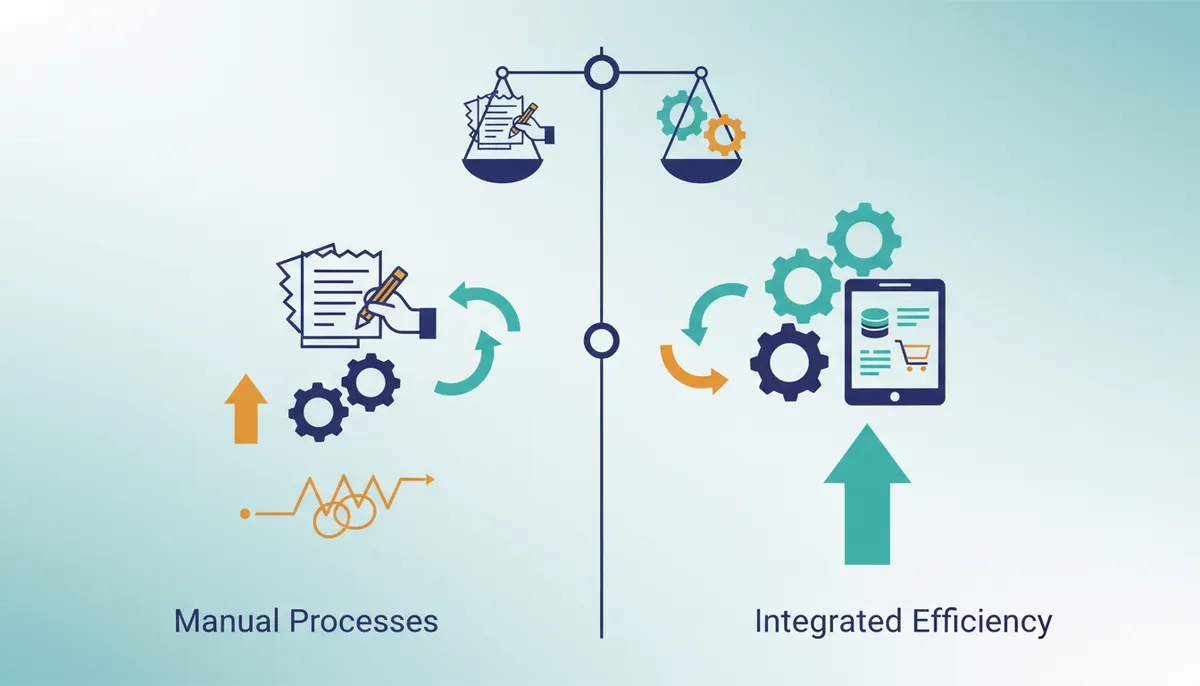
GEM-CAR distinguishes itself as an unfunded entity that has operated without external capital since 2001. This financial structure prioritizes operational stability over the aggressive data expansion seen in competitor roadmaps. While data-heavy platforms like ALLDATA cover 44,000+ engine-specific vehicles, their primary focus remains on OEM mechanical repair information rather than shop workflow efficiency. GEM-CAR instead emphasizes thorough management logic, handling invoicing, inventory, and CRM for diverse fleets including boats and trucks.
| Feature Dimension | GEM-CAR Approach | Data-Heavy Competitors |
|---|---|---|
| Primary Focus | Operational workflow | Diagnostic data volume |
| Vehicle Scope | Mixed fleets (marine, trucks) | Standard passenger cars |
| Capital Model | Unfunded since 2001 | Venture-backed growth |
The strategic divergence creates a clear decision point for operators asking should I use IAP for parts ordering. Shops requiring deep diagnostic schematics for complex engine work may lean toward competitors charging approximately $189/month per shop. However, facilities managing mixed assets benefit more from GEM-CAR's adaptability across non-standard vehicle types. The trade-off is access to the widest possible database of engine-specific repair procedures, which remains the domain of premium diagnostic suites. This integrated workflow benefits shops where speed of estimate creation outweighs the need for encyclopedic repair manuals. The limitation of the data-heavy model is its narrower utility for general service centers that rarely perform deep engine teardowns. Operators must weigh immediate workflow speed against long-term diagnostic depth when selecting their primary management platform.
Applying Direct POS Transfer to Eliminate Manual Entry in Estimates
Advisors using the IAP parts search and ordering catalog can directly transfer appropriate auto parts to their main Point of Sale window, removing manual typing errors. This workflow bypasses the traditional need to re-key part numbers, descriptions, or pricing into the estimate. By pushing order data from GEM-CAR to the IAP system, shops ensure that the quantity validation checks stock levels before an item appears on the customer invoice.
| Workflow Step | Manual Entry Process | Direct POS Transfer |
|---|---|---|
| Data Input | Advisor types part number | System auto-fills from catalog |
| Stock Check | Visual confirmation only | Automated quantity validation |
| Error Risk | High potential for typos | Eliminated via direct transfer |
| Speed | Slower, interrupt-driven | Immediate estimate generation |
The technical mechanism relies on the integration capabilities built into the shop management software. A specific limitation exists where non-standard parts lacking full parts InterChange data may still require manual description updates. The implication for network operators and shop owners is clear: relying on manual entry introduces avoidable latency into the service bay. Using this direct transfer feature helps maximize estimator throughput. The cost of ignoring this automation is measurable in lost advisor hours per day. Shops should adopt this workflow to align with modern efficiency.
Integrated IAP Catalog Search Versus Standalone Parts Lookup Tools
Integrated workflow eliminates manual transcription by pushing IAP Internet AutoParts data directly into the Point of Sale window. Advisors using the catalog can transfer appropriate auto parts without re-typing descriptions, effectively removing a primary source of invoicing errors. This architecture contrasts sharply with standalone lookup tools that require operators to memorize or copy-paste part numbers between disconnected interfaces. The software provides an easy integration to the IAP Internet AutoParts online catalog to enable direct ordering within the same screen context.
| Capability | Integrated GEM-CAR Workflow | Standalone Lookup Tool |
|---|---|---|
| Data Entry | Automatic transfer to estimate | Manual typing required |
| Stock Status | Real-time quantity validation | Separate browser tab check |
| Error Source | System logic constraints | Human transcription fatigue |
| Workflow Speed | Single-screen operation | Multi-window switching |
The operational tension lies in initial setup complexity versus daily execution speed. While standalone tools offer immediate access without configuration, they impose a recurring time penalty on every single lookup event. Shops relying on disjointed systems often sacrifice long-term throughput for short-term flexibility. The solution targets small to mid-sized repair shops where staff multitasking makes error reduction critical. The integrated approach enforces quantity validation before an estimate reaches the customer, preventing costly back-orders. Unlike generic search engines, the embedded catalog decodes VINs and validates fitment within the shop management container. This structural difference means the integrated path scales with volume, whereas manual processes degrade as order frequency increases. The catalog allows users to find rebates and promotions directly within the interface. Operators should prioritize systems that unify search and transaction layers to maximize advisor productivity.
About
Mark Phillips, Editor of Aftermarket Intel at KZMALL Auto Parts, brings deep expertise in automotive distribution channels and e-commerce evolution to this analysis of catalog integrations. His daily work involves tracking how independent shops navigate fragmented supply chains, making him uniquely qualified to evaluate the operational impact of connecting shop governance software with online parts catalogs. While third-party platforms like IAP Internet AutoParts offer specific integration features for their users, Phillips focuses on the broader industry shift toward standardized data and simplified procurement. At KZMALL Auto Parts, this perspective drives the development of our thorough B2B platform, which offers over 50,000 SKUs across eight proprietary brands with built-in ACES/PIES fitment accuracy. Unlike relying on disparate tools, Phillips highlights how KZMALL provides a single-source solution for hard parts, lubricants, and electronics, ensuring global distributors and repair shops achieve greater efficiency through unified, certified inventory rather than piecing together multiple vendor connections.
Conclusion
Manual transcription errors compound rapidly as order volume increases, turning minor inefficiencies into significant operational drag. Standalone lookup tools offer low-barrier entry, but they impose a hidden recurring cost on every transaction through context switching and human fatigue. Workflow fragmentation is the primary bottleneck preventing margin expansion in high-volume environments. The strategic imperative is clear: migrate to an integrated architecture where fitment validation and quantity checks occur before an estimate is finalized. Prioritize this transition within the next quarter to capture seasonal demand without sacrificing accuracy.
Operators should immediately audit their current parts lookup workflow by measuring the time spent switching between browser tabs and the POS interface during a standard repair cycle. If this exceeds ten percent of total advisory time, the existing process is unsustainable. Adopting a unified system like IAP Internet AutoParts eliminates this friction by embedding catalog logic directly into the estimate window. This approach ensures that real-time quantity validation prevents back-orders before they impact customer satisfaction. Do not wait for a crisis in supply chain consistency to address these structural weaknesses. Start by mapping the specific steps your team takes to verify a single part number today, then compare that against the smooth data transfer available through deep integration.
Frequently Asked Questions
You must manually enter the year, make, model, and engine to ensure accuracy. This specific four-step entry process prevents errors when scanning is unavailable for older vehicle models.
Advisors transfer parts codes and descriptions directly to the Point of Sale window. This single transfer action eliminates the need for re-typing, ensuring part codes match the catalog entry exactly.
Yes, enabling the optional Labor Guide adds estimated repair times directly to your estimates. This feature combines parts data with time projections to streamline the entire estimate creation workflow.
The system performs quantity validation to check stock levels before an order is pushed. This verification step ensures that availability is confirmed prior to finalizing the transaction with the supplier.
No, the architecture supports modern efficiency without requiring external trading hubs or anonymous marketplaces. Shops access cover-to-cover information and rebates directly within their existing management interface.
References