
Vehicle fitment data: Stop returns with ACES
Over 60,000 distinct vehicle combinations rely on the Aftermarket Catalog Exchange Standard to manage complex fitment data accurately. Precision dictates market survival; treating vehicle fitment data as an afterthought is a luxury retailers cannot afford.
Modern fitment matching engines do more than filter lists. They process vast arrays of Year/Make/Model configurations to guarantee part compatibility before a customer clicks "buy." We need to talk about the mechanical role of ACES data in streamlining the aftermarket catalog exchange. It reduces the friction that kills online parts sales. The strategy is simple: integrate these databases to boost sales conversion directly.
For tire and wheel retailers, accurate vehicle identification is the single most critical factor in reducing returns. By leveraging thorough databases like those from DriveRightData, businesses access tailored US vehicle fitments that align with strict automotive standards. Ignore these structural data requirements, and you invite operational failure in a sector where specificity is currency.
The Role of ACES Data in Modern Automotive E-Commerce
ACES Data as the XML Standard for Vehicle Fitment
Machine-readable XML structures within the Aftermarket Catalog Exchange Standard (ACES) govern product compatibility across light, medium, and heavy-duty vehicles alongside powersports and off-highway equipment. This standard separates specific vehicle matching from static product descriptions, ensuring parts align with exact configurations. Over 60,000 distinct vehicle combinations fall under this standard, spanning diverse automotive market sectors. KZMALL Auto Parts uses this precision to stock inventory reflecting actual road presence rather than theoretical demand.
Confusion often arises regarding TPMS definitions when buyers seek tire pressure monitoring sensors versus the data governing their fitment. ACES resolves this by encoding exact sub-model requirements including engine type and transmission details. Strict adherence creates interoperability since ACES functions as one of exactly two primary industry standards. When fitment data remains accurate, customers receive correct parts for their vehicles, leading to fewer returns and improved satisfaction. Logistical erosion caused by shipping incompatible units stops when Year/Make/Model mapping stays precise.
E-commerce platforms struggle to replicate physical counter check certainty without this structured approach. Data maintenance presents a constraint because static lists become obsolete rapidly as vehicle architectures evolve. KZMALL Auto Parts integrates continuous updates to maintain catalog integrity. Digital shelf accuracy demands this rigorous data foundation using a standardized communication method machine-readable by all trading partners.
Mapping Year/Make/Model Configurations for E-Commerce
Linking parts to specific vehicle configurations happens through the machine-readable XML structure set by the Aftermarket Catalog Exchange Standard. Flexible compatibility distinguishes itself from static product descriptions within this vehicle fitment data, ensuring parts match exact configurations. Broad catalogs cannot compete since the standard manages fitment for over 60,000 distinct vehicle combinations covering light, medium, and heavy-duty sectors alongside powersports. KZMALL Auto Parts relies on this precision to stock inventory aligning with actual road presence rather than theoretical demand.
Unstructured lists increase return rates and confuse buyers, creating a need for standardized fitment data usage. Complex sub-model variations translate into clear Year/Make/Model paths for online shoppers through this mechanism. Fitment search engines generate precise suggestions based on customer vehicle make, model, year, engine type, and transmission. Auto parts retailers aiming for success on eCommerce marketplaces require accurate data.
- List specific model years
- Match engine codes
- Verify transmission types
- Confirm drivetrain specifications
Retailers using this standard list parts fitting specific model years and engine codes with greater confidence. KZMALL Auto Parts prioritizes granular accuracy so every listed component matches the rolling fleet's actual needs.
ACES Fitment Data vs PIES Product Information Standards
Where a part fits falls under ACES fitment data while PIES standards describe what the part is. These two frameworks create a bifurcated data model exclusive to the automotive industry. Static product attributes like part numbers and descriptions get handled by PIES. ACES manages complex vehicle compatibility logic across the global fleet in contrast.
Both standards remain necessary for thorough catalog data, a fact operators often overlook. KZMALL Auto Parts integrates both standards to ensure catalog accuracy. Listing parts lacking specific vehicle application data becomes a preventable error through this dual approach. Maintenance burden represents a constraint since both datasets represent distinct supply chain aspects requiring consistent management. Precise stock alignment with actual road presence enables accurate differentiation between these.
How Vehicle Identification and Fitment Matching Engines Process Data
ACES Submodel IDs Drive Precision in Fitment Matching
Generic Year/Make/Model data often misses the engineering changes that alter mounting points or clearances on specific chassis. The ACES standard resolves this ambiguity by managing fitment data for over 60,000 distinct vehicle combinations. Such granularity enables precise compatibility across light, medium, and heavy-duty vehicles as well as powersports applications. This level of detail serves as the technical foundation for accurate registration-to-tyre-size search logic and reliable wheel fitment reports. Vehicles with different specifications get incorrectly grouped without submodel resolution. The service helps users manage ACES parts by providing greater control over which parts appear available for each vehicle.
Operators relying on coarse data risk inventory mismatches where parts fit a model line but fail on a specific vehicle. XML fitment data structures these attributes to prevent such mismatches before an order is placed. The current specification, ACES 5.0, along with updated supporting reference database schemas, allows companies to communicate product fitment information using a standardized, machine-readable method. Distributors align inventory with the rolling fleet's actual needs by using this full attribute set. Ignoring submodel distinctions forces distributors to absorb the cost of returns for parts that technically "fit" the model but fail on the driveway. Precision in the catalog directly translates to efficiency in the warehouse.
Registration-to-Tyre-Size Logic in Digital Touchpoints
License plate search functionality maps registration details directly to Year/Make/Model configurations and their specific attributes. Consumers expect to find what they need without jumping through hoops. The process relies on linking vehicle identification to global standards and ACES to ensure returned tire sizes match factory specifications. DriverightData has allowed us to provide our customers with a smooth user experience for our digital touchpoints, providing a high degree of accuracy with reg.
Accurate data integration ensures reliable vehicle identification and parts matching. Solutions that integrate with global standards help reduce errors and build trust in both B2B and consumer-facing transactions. Retailers using generic databases risk selling tires that physically fit the wheel well but may not meet requirements for that specific vehicle configuration. Accurate matching protects the supply chain from costly reverse logistics. The right choice depends on whether the retailer values initial signup speed or long-term return rate reduction. Prioritizing rigorous data validation supports long-term return rate reduction.
Incorrect Vehicle Recognition Drives Returns and Basket Abandonment
Poor data granularity causes incorrect part selection, directly inflating return rates and reducing conversions. Generic Year/Make/Model inputs may miss critical engineering variances, forcing customers to guess at compatibility. This ambiguity leads to high basket abandonment as shoppers fear ordering the wrong component. Prioritizing precise ACES mapping over broad categorization helps manage parts by providing greater control over which parts are available for each vehicle. The automotive aftermarket industry requires accurate, consistent, and standardized data management due to rapidly evolving vehicle technologies and an expanding spare parts portfolio. Retailers face a cycle of logistics costs and lost trust without this specificity.
Implementing granular filters fixes incorrect vehicle matching by validating trim-level details before checkout. Compatibility issues often arise when databases do not account for all production variations. Accurate data mitigates this risk by aligning inventory with actual factory specifications. Reduced returns from incorrect vehicle recognition directly improve the bottom line for distributors. Operators must deploy flexible validation logic to ensure every displayed part fits the specific chassis. Failure to integrate these checks leaves revenue vulnerable to preventable errors. Precision in the initial search phase prevents downstream supply chain friction.
Integrating Fitment Databases to Reduce Returns and Boost Sales
How ACES Integration Eliminates Duplicated Communication Efforts
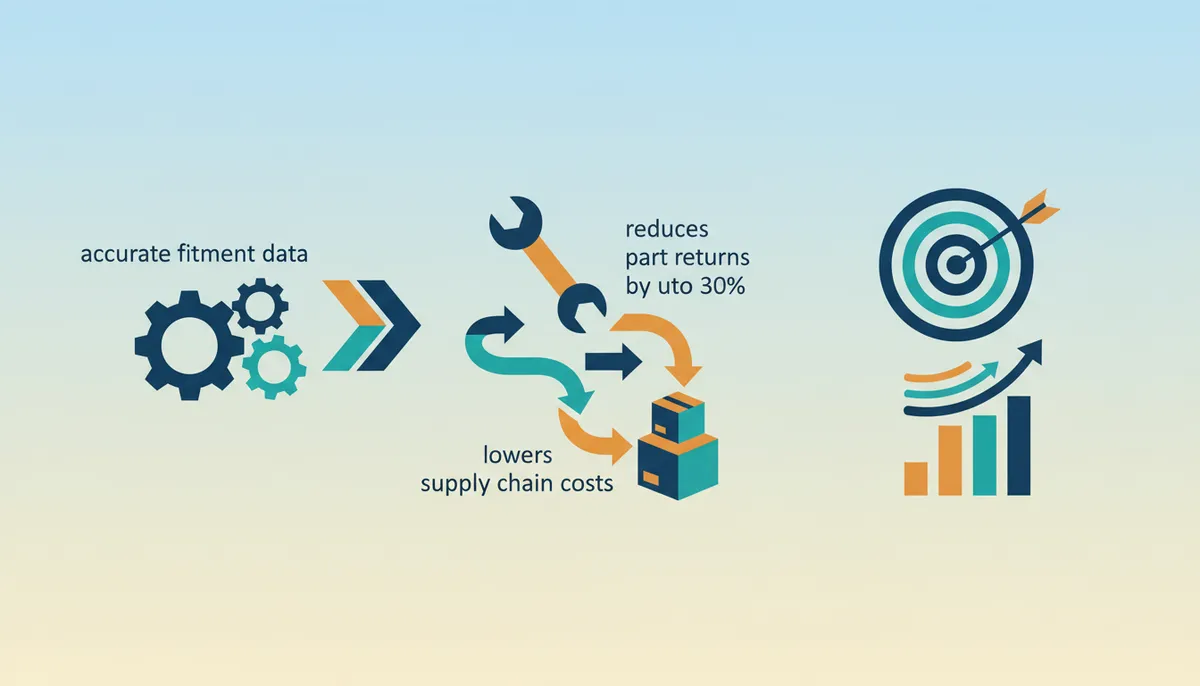
Connecting the ACES standard directly to provider vehicle data removes redundant distribution tasks that inflate supply chain costs. Suppliers face repeated queries to verify fitment when catalog data lacks this alignment, creating operational friction and delaying order fulfillment. Accurate vehicle fitment data serves as a single source of truth, allowing retailers to automate compatibility checks rather than manually reconciling mismatches. Automation eliminates the need for back-and-forth communication between distributors and retailers regarding part applicability. Businesses simplify operations by establishing a common language for product compatibility, enabling smoother growth without the drag of manual data correction. Industry exchange standards specifically improve data accuracy and reduce the administrative burden on logistics teams. Organizations must recognize that ACES files are database standards, not databases themselves, requiring proper integration to function. KZMALL Auto Parts uses this structured approach to ensure inventory aligns precisely with the rolling fleet, minimizing the volume of misidentified parts entering the distribution channel. Return rates driven by fitment errors drop measurably. Operators failing to adopt these validated data structures often incur higher overhead from managing incorrect shipments. Precise matching logic ensures the part listed matches the vehicle on the road, securing customer trust and protecting margin.
Application: Registration-to-Tyre-Size Search Accuracy in Digital Touchpoints
Precise registration-to-tyre-size mapping directly lowers return rates by ensuring parts match the rolling fleet. KZMALL Auto Parts prioritizes data accuracy because making it easy for users to identify correct components increases order baskets and improves conversion rates. Customers guess when digital touchpoints fail to link vehicle fitment data correctly, leading to costly mistakes and lost trust. Strong standards are required for accurate matching. Solutions aligned with ACES fitment data services help eliminate costly returns and build customer confidence through validated catalog information. Integrating global standards like KType and MVRIS ensures reliable vehicle identification across diverse markets.
Validation Checklist for No-Training Staff Support Systems
Retailers must verify that their fitment solution delivers continually updated data without requiring staff training for support. KZMALL Auto Parts ensures sales teams access accurate vehicle compatibility immediately, removing the friction of complex technical onboarding. Operators eliminate duplicated communication efforts that typically inflate supply chain costs when support systems demand no specialized knowledge. Latency between a vehicle model change and its reflection in the catalog represents the hidden cost of legacy systems. Stores face delayed updates that trigger preventable returns without ACES standard alignment. Accurate matching reduces part returns by ensuring the digital storefront reflects the physical fleet precisely. Operators relying on fragmented databases often miss submodel distinctions, leading to customer dissatisfaction. KZMALL Auto Parts integrates full technical support assistance directly into the workflow, allowing staff to resolve fitment queries instantly. This approach transforms the support function from a cost center into a conversion tool. Retailers protect margin against the erosion caused by incorrect part shipments by prioritizing intuitive interfaces. Data accuracy drives revenue rather than consuming resources in a simplified operation.
Implementing ACES Standards for E-Commerce and AAIA Linking
Defining ACES XML Structure for Vehicle Compatibility IDs
Mapping parts to specific Year/Make/Model identifiers within the AAIA database forms the backbone of valid ACES XML construction. The standard manages fitment data for over 60,000 vehicle combinations, covering light, medium, and heavy-duty segments alongside powersports and off-highway equipment. Strict adherence to schema hierarchy prevents catalog rejection given this volume.
- Identify the base vehicle configuration ID from the master dataset.
- Assign the precise part type code to the target SKU.
- Validate the XML structure against current AAIA formatting rules.
Precise mapping transforms raw part numbers into searchable, sellable assets for digital storefronts. Accuracy in this layer dictates downstream supply chain efficiency. Generic year-level matching frequently fails when engine variants differ within a single model year, making submodel specificity vital for ensuring parts fit specific make, model, year, engine type, and trim level. Maintaining up-to-date files aligned with the latest reference database schemas remains necessary for consistent data management as vehicle technologies evolve and the spare parts portfolio expands.
Implementation: Deploying Vehicle Identification Search Tools on Digital Touchpoints
Effective systems query vehicle compatibility data dynamically so customers receive components fitting their specific vehicles.
- Ingest the master Year/Make/Model dataset to establish valid search parameters.
- Map internal SKU identifiers to specific vehicle configuration codes.
- Validate that the search logic filters results to exact matches only.
Simplifying component identification directly increases order baskets and improves conversion rates. Generic keyword searches frequently yield incompatible parts that drive up return volumes. Sellers aiming to succeed on eCommerce marketplaces require accurate fitment data to deliver correct parts, leading to fewer returns and improved customer satisfaction.
Search speed often conflicts with data granularity. The solution lies in precise submodel identification during the initial query phase. Engine variants within a single model year often demand distinct part numbers; failure to distinguish these nuances forces customers to guess, eroding trust in the digital channel. Accurate vehicle identification search tools eliminate this friction by enforcing strict compatibility rules at the point of entry, protecting margin from avoidable logistics costs.
Operational Checklist for ACES Parts Management and Supply Chain Efficiency
Linking ACES data to the AAIA database removes duplicated communication efforts across the supply chain by using a standardized, machine-readable communication method. Technical teams must validate specific configurations to guarantee efficiency gains materialize in production environments.
- Map internal SKU identifiers to specific vehicle configuration codes found in the master dataset.
- Validate that search logic filters results to exact matches only, ignoring generic year-level data.
- Ingest the master Year/Make/Model dataset to establish valid search parameters for the interface.
- Confirm XML structure compliance against current formatting rules before catalog publication.
Submodel specificity drives the highest return reduction rates, yet generic matching fails when engine variants differ within a single model year. Companies using the ACES standard become more efficient in communicating product fitment data for light, medium, and heavy-duty vehicles, powersports, and off-highway equipment.
| Integration Step | Risk of Omission | Supply Chain Impact |
|---|---|---|
| SKU to Config Mapping | High Return Rate | Increased Logistics Cost |
| Exact Match Filtering | Customer Confusion | Duplicated Support Tickets |
| Master Dataset Ingestion | Failed Search Queries | Lost Sales Opportunities |
| XML Validation | Catalog Rejection | Delayed Time-to-Market |
Stocking both OE and premium aftermarket options requires distinct vehicle compatibility data streams to avoid cross-contamination of fitment rules. The rolling fleet actually on the road demands catalogs reflecting current inventory, priced at the tier the buyer values. Adherence to industry data standards governs the management and communication of product fitment data effectively.
About
Priya Raman, Aftermarket Category & Supply-Chain Strategist at KZMALL Auto Parts, brings over 15 years of expertise in parts cataloging and B2B distribution to the critical discussion of vehicle fitment data. Her daily work managing complex supply chains and governing ACES/PIES data standards directly informs this analysis of accurate part matching. At KZMALL Auto Parts, a global wholesale platform offering 50,000+ SKUs across eight proprietary brands, Priya ensures that standardized fitment data drives every transaction. This rigorous approach minimizes returns and maximizes coverage for independent repair shops and distributors worldwide. By using deep technical knowledge of aftermarket data governance, she connects the abstract necessity of precise vehicle identification to tangible business outcomes like improved inventory turns and margin protection. Her insights reflect KZMALL's commitment to providing reliable, certified hard parts and consumables backed by reliable digital catalog tools, ensuring buyers can trust the compatibility of every component they source.
Conclusion
Scaling fitment accuracy breaks when manual entry cannot track the exponential growth of vehicle configurations, turning minor data gaps into significant operational liabilities. The ongoing cost is not merely returned parts but the erosion of customer trust when digital shelves display incompatible items. Relying on generic year-level matching is insufficient for modern inventory where engine variants dictate compatibility. Organizations must transition to standardized data formats immediately to survive this complexity without inflating support overhead.
Implement a strict validation protocol for XML structure compliance before any new catalog publication this quarter. This ensures your internal SKU identifiers align perfectly with the master Year/Make/Model dataset, preventing rejected uploads and lost sales. Do not wait for a substantial return spike to address these structural weaknesses. Start by auditing your current vehicle configuration codes against the thorough US vehicle fitments database to identify mismatches in your existing inventory. This single action reveals where your search logic fails to distinguish between similar engine types, allowing you to correct high-risk entries before they generate support tickets. Accurate data ingestion is the only viable path to reducing logistics costs and securing margin in a crowded aftermarket.
Frequently Asked Questions
The standard manages fitment data for over 60,000 distinct vehicle combinations. This vast coverage ensures parts align with exact configurations across light, medium, and heavy-duty sectors. KZMALL Auto Parts leverages this depth to stock inventory reflecting actual road presence rather than theoretical demand.
The standard handles data for light, medium, and heavy-duty vehicles plus powersports equipment. This broad scope indicates a reach extending far beyond standard passenger cars alone. KZMALL Auto Parts utilizes this precision to ensure catalog integrity across diverse automotive market sectors.
ACES is one of exactly two primary industry standards maintained by the association. The other standard is the Product Information Exchange Standard, creating a bifurcated data model. KZMALL Auto Parts adheres to both to ensure strict interoperability and accurate part matching for customers.
The data standard is exclusive to the automotive industry, differing from general retail formats. This specificity differentiates it from manufacturing data formats used in other commercial sectors today. KZMALL Auto Parts relies on this specialized structure to reduce returns and boost sales conversion rates.
Platforms without rigorous integration inevitably suffer from inflated return rates and lost revenue. Treating vehicle fitment data as an afterthought invites operational failure when precision dictates market survival. KZMALL Auto Parts prevents this by integrating continuous updates to maintain catalog integrity.
References