
Fitment data cuts returns for auto parts sellers
Accurate fitment data eliminates buyer uncertainty to drive higher conversion rates and reduce costly returns. Centralized fitment management simplifies operations across substantial channels, while the azFitment architecture enables automated synchronization and precise ACES data creation for multi-marketplace setups.
Sellers struggle to maintain consistency when listing parts across Amazon, eBay, WHI, and Epicor. The azFitment platform solves this by allowing users to manage Make, Model, Year, and Engine attributes globally from one interface. This approach ensures that e-catalogs remain compliant with the latest AAIA standards while preventing the dissatisfaction that leads to returns. Automating these updates lets businesses focus on growth rather than correcting incompatible listings.
The following sections detail how specific architectural choices in azFitment enable this efficiency. Relying on disjointed spreadsheets or manual entry invites error; a unified system ensures every customer sees precise compatibility information before purchasing.
The Role of Centralized Fitment Management in Modern Auto Parts E-commerce
Defining azFitment and ACES Data Standards
azFitment consolidates fitment administration for Make, Model, Year, and Engine data across dispersed sales channels. This centralized architecture maintains AAIA compliance while removing the manual redundancy found in disjointed workflows. Sellers organize multiple e-catalogs (ecats) globally from one dashboard, pushing records to Amazon, eBay, WHI, and Epicor through automated or semi-automated pipelines. Consolidating these operations removes the fragmentation inherent in managing separate marketplace dashboards.
ACES (Aftermarket Catalog Exchange Standard) serves as the strict protocol governing fitment validity for light, medium, and heavy-duty sectors. An e-catalog acts as the digital expression of this standard, linking specific part numbers to valid vehicle configurations. Mapping errors directly trigger returns, making data accuracy necessary for operational integrity. Manual entry provides granular control yet often fails against the sheer volume of required vehicle permutations.
| Feature | Manual Management | Centralized azFitment |
|---|---|---|
| Data Source | Disparate Marketplace UIs | Single Unified Dashboard |
| Update Scope | Per-Listing Changes | Global Synchronization |
| Compliance | Reactive Correction | Proactive AAIA Validation |
Speed conflicts with data hygiene when rapid manual uploads bypass strict validation checks. Operators depending on siloed updates risk spreading fitment errors across multiple storefronts before detection occurs. Shifting to a centralized model moves the operational focus from reactive firefighting to proactive governance.
Synchronizing Fitment Data Across Amazon and eBay
Centralized synchronization pushes ACES records from a single node to Amazon, eBay, WHI, and Epicor simultaneously. This design removes the latency plaguing manual catalog updates across fragmented seller portals. Teams manage Make, Model, Year, and Engine attributes globally within one interface instead of logging into individual marketplaces. The system supports both automated and semi-automated transfer modes to satisfy varying validation needs.
| Feature | Manual Entry | Centralized Sync |
|---|---|---|
| Data Source | Disparate Dashboards | Single e-catalog |
| Update Scope | Per-Channel | Global |
| Error Risk | High | Minimized |
The "manage once, distribute many" model preserves inventory integrity across all connected channels. Upfront configuration of the central node presents an initial hurdle, yet this constraint is minor compared to the operational risk of inconsistent fitment tables. Precise data flow stops customers from buying incompatible parts, directly cutting return volumes. Automated synchronization ensures a change to a single Engine parameter propagates instantly to every connected storefront. This method turns fitment management from a reactive chore into a proactive asset for brand reliability.
Validating ACES XML and Mapping VCDB Attributes
Validating ACES XML structures prevents listing rejections by confirming schema compliance prior to distribution. Operators must verify that Vehicle Configuration Database attributes map correctly to avoid fitment mismatches on Amazon and eBay. The ACES standard handles fitment data for numerous vehicle combinations, demanding precise attribute alignment. Anzael LLC offers expertise in ACES XML Validator, PIES XML Validator, and VCDB Tools to handle these complex validation workflows efficiently. Correctly mapping Make, Model, Year, and Engine fields ensures parts display on the correct vehicle stripes.
Relying solely on automated validators without manual spot-checking can miss detailed category errors.
- Run validators to check product data integrity.
- Confirm output matches target marketplace requirements.
- Use workflow efficiency features to manage multiple fitments centrally.
- Sync validated records to Epicor or WHI only after final approval.
The sheer volume of vehicle combinations often overwhelms manual review processes. Centralized management mitigates this bottleneck by allowing global updates from a single interface.
Inside the azFitment Architecture for Automated Data Synchronization
Centralized Fitment Data Architecture
Managing Make, Model, Year, and Engine attributes in one location before global distribution defines the centralized sync model. Decentralized methods force sellers to enter data separately for each marketplace, a practice that invites human error. The architecture follows a "manage once, distribute many" model where fitment is managed centrally inside azFitment and then synchronized out to multiple endpoints. The system allows users to create and manage ACES (Automotive Catalog Exchange Standard) data for substantial marketplaces like Amazon, eBay, WHI, and Epicor from a single platform. By centralizing the process, users can organize and manage fitment data across various marketplaces to improve workflow efficiency.
Fragmented entry points often lead to inconsistent fitment data that increases return rates. A unified structure helps eliminate buyer uncertainties regarding part compatibility. Accurate data leads to more sales and fewer returns by ensuring clear and reliable information matches customer needs.
Automated Sync Workflows for eBay and WHI
Sellers synchronize fitment data with Amazon, eBay, WHI, and Epicor using either automated or semi-automated methods. Manual entry creates version drift where a corrected Make, Model, Year, or Engine attribute on one channel remains stale on another, triggering fitment errors and returns. The system functions as a controlled distribution pipeline: users manage fitment inside the central dashboard to update listing specifics across all connected stores. This approach saves time otherwise spent managing fitment manually across disparate seller portals.
Single-channel tools restrict visibility to one system. This platform ensures that a change to an Engine code propagates uniformly, preventing the scenario where a part appears compatible on WHI but incompatible on eBay. Relying on disjointed manual updates guarantees data divergence. Synchronized workflows maintain the integrity required to reduce return rates effectively. Users can configure their preferred method to handle complex fitment data while saving time and effort.
Preventing Returns Through ACES Compliance
Incorrect Make, Model, Year, and Engine attributes trigger immediate buyer dissatisfaction and costly product returns. Fitment data failing to align with AAIA standards causes customers to receive parts that do not physically install on their vehicles, creating a direct path to negative feedback and financial loss. Precise data reduces the chances of disappointment or dissatisfaction post-purchase by validating vehicle compatibility before the transaction occurs. Accurate fitment information eliminates buyer uncertainties regarding whether automotive aftermarket parts fit intended vehicles, effectively stopping returns at the source. Inconsistent data entry across disparate sales channels often causes these failures, as a correction on one platform never reaches others. By managing fitment inside azFitment, sellers ensure that updates to vehicle attributes are distributed to all connected endpoints. This architecture removes the latency inherent in human-driven updates, guaranteeing that the ACES data presented to buyers reflects the current inventory reality. Automated synchronization acts as a protective layer, preventing the distribution of non-compliant records that would otherwise trigger marketplace penalties.
Executing Accurate ACES Data Creation and Multi-Marketplace Setup
Implementation: Defining ACES Data Creation Within azFitment
Operators structure Make, Model, Year, and Engine attributes to satisfy strict AAIA validation rules before any external sync occurs. Creating this compliant data happens inside a single centralized interface. Disparate spreadsheets or manual XML editing become unnecessary. The process uses global features to manage multiple e-catalogs and fitments in one place.
- Input core product identifiers and select the target vehicle scope using the centralized interface.
- Map internal part numbers to standardized ACES fields to ensure data consistency.
- Run the built-in tools to organize fitment data prior to export.
- Commit the validated dataset to the central repository, enabling distribution to connected endpoints.
Accurate fitment stripes appear on Amazon listings when sellers adopt this structured approach. Buyer confusion drops. Costly returns decrease notably. Manual entry provides granular control yet introduces significant latency compared to the platform ability to manage multiple e-catalogs globally from one dashboard. Complex fitment data management saves time while maintaining catalog integrity as sellers scale operations. Rigid data structures enforced upfront prevent errors downstream.
Executing Multi-Marketplace Setup for Amazon and Epicor
Selection of the target marketplace initiates synchronization when configuring azFitment for Amazon and Epicor.
- Access the synchronization dashboard and choose between automated or semi-automated modes based on your catalog update frequency.
- Apply global ACES records to the selected channel, allowing the system to translate internal Make, Model, and Year attributes into the specific format demanded by the destination.
- Validate the output to ensure the vehicle fitment stripes appear correctly on product listings.
Fitment data synchronizes with Amazon, eBay, WHI, and Epicor through automatic or semi-automatic modes. Amazon integration focuses heavily on visible fitment stripes to reduce buyer uncertainty. Epicor connections often prioritize backend inventory consistency for wholesale distribution networks. A single global update might require different validation thresholds depending on whether the data feeds a retail storefront or a supply chain ledger. Operators relying on automated workflows must account for these structural differences to prevent rejection errors during high-volume syncs. Lost visibility and delayed listing activation measure the cost of ignoring these channel-specific nuances. Running a semi-automated test batch for new Epicor connections helps verify field alignment before switching to continuous synchronization. This cautious approach prevents corrupt data from propagating across complex wholesale networks where manual correction costs notably more than initial configuration.
Pre-Sync Validation Checklist for AAIA Compliance
Verification against the latest AAIA version starts the pre-sync sequence to block non-compliant records.
- Confirm Make, Model, Year, and Engine attributes match current database standards before export.
- Run the internal validator to ensure ACES data structure meets strict marketplace ingestion rules.
- Select automated or semi-automated distribution modes for target channels like Amazon and eBay.
Downstream rejection by marketplace engines occurs when teams skip this verification step. Invalid payloads waste synchronization cycles. Rapid deployment conflicts with data integrity requirements. Rushing the check often triggers catalog suspension. Strict adherence takes priority over speed to maintain listing visibility.
| Validation Step | Required Standard | Risk if Skipped |
|---|---|---|
| Attribute Match | Current Database Standards | Catalog Rejection |
| Structure Check | ACES XML Schema | Ingestion Failure |
| Channel Mapping | Marketplace Rules | Missing Fitment |
Fitment accuracy across all connected ecosystems improves when teams use this checklist.
Measurable ROI from Automated Fitment Accuracy and Reduced Return Rates
How Automated Fitment Accuracy Drives ROI
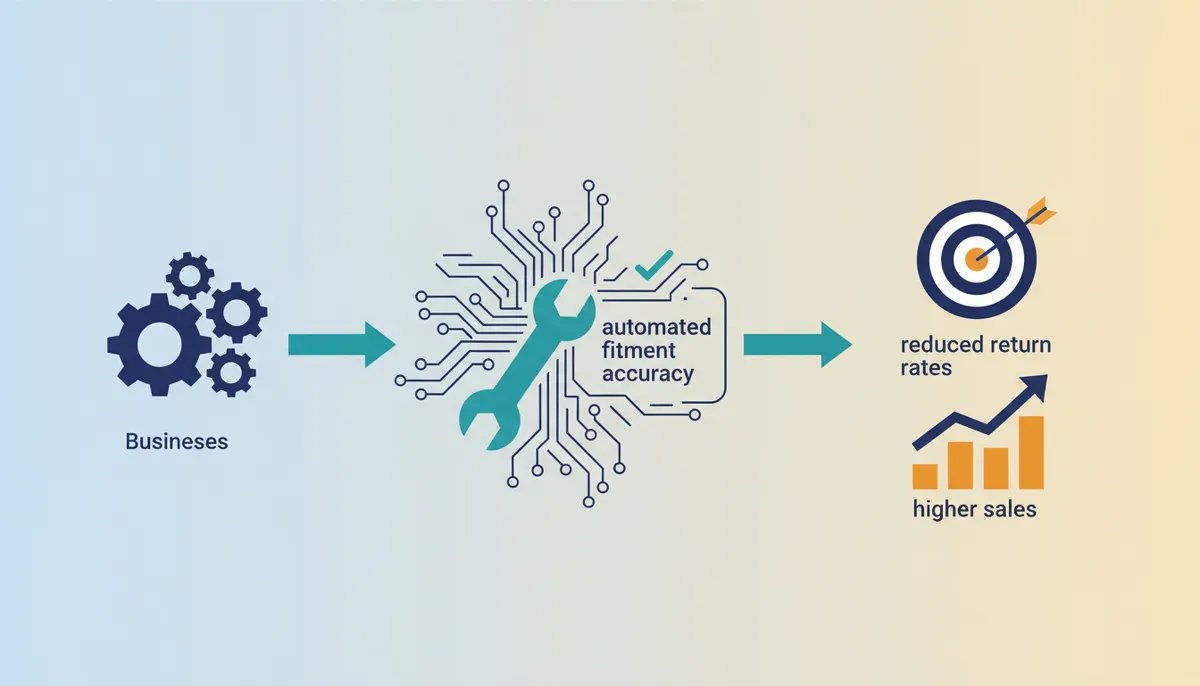
Precise fitment data eliminates buyer uncertainty regarding part compatibility, directly increasing conversion rates. When customers trust that a component fits their specific vehicle configuration, purchase hesitation drops significantly. This clarity transforms browsing behavior into confirmed orders, driving revenue growth without additional marketing spend.
The financial impact extends beyond initial sales to the substantial costs associated with returns. Inaccurate catalogs force sellers to absorb shipping fees and restocking labor, eroding profit margins on every mistaken order. Automated fitment updates prevent these errors by synchronizing ACES standards across all channels instantly. By managing data centrally within azFitment, operators ensure that changes to vehicle tables propagate immediately to Amazon, eBay, WHI, and Epicor. This centralized management architecture allows users to handle multiple fitments with ease, stopping incorrect fitments before they reach the marketplace.
Reducing return volume preserves capital that would otherwise vanish on logistics and inventory reconciliation. Sellers avoid the compounding penalty of negative feedback triggered by fitment failures, protecting long-term brand viability. The operational efficiency gained allows teams to focus on Identify Opportunities rather than correcting catalog errors. Accurate data serves as the foundation for scalable growth, turning the catalog from a competitive asset.
Centralized Fitment Management for Multi-Channel Sellers.
Sellers managing inventory across eBay, Amazon, and WHI benefit from a unified centralized fitment system. The architecture resolves complexity by allowing operators to manage ACES data once inside the platform before distributing it to multiple endpoints simultaneously. This "manage once, distribute many" approach eliminates the need for repetitive manual entry on individual marketplaces, directly addressing workflow inefficiencies found in listing-centric tools. Operational efficiency improves significantly because automated fitment updates propagate changes instantly across all connected channels. While competitors like myFitment focus heavily on eBay coverage, the broader synchronization capabilities support a wider system including Walmart and Epicor. This distinction matters for businesses scaling beyond a single channel, where maintaining separate catalogs creates unnecessary overhead. The system enables users to create and manage ACES data for substantial marketplaces from a single platform, ensuring global features and an intuitive interface.
- Manage vehicle compatibility data in one central dashboard.
- Synchronize e-catalogs to Amazon, eBay, WHI, and Epicor instantly.
- Eliminate manual re-entry errors through automated distribution workflows.
- Reduce return rates by ensuring accurate part-to-vehicle matching.
- Scale operations without proportional increases in administrative labor.
Businesses asking if they should use this solution must weigh the cost of manual errors against the investment in automation. The consequence of delayed updates is measurable in returned inventory and lost customer trust. KZMALL Auto Parts positions this centralized strategy as the definitive path for serious automotive sellers aiming to outperform the competition through superior data accuracy.
azFitment vs myFitment: Workflow Efficiency vs Listing Focus
Businesses should choose azFitment when operational scale demands a centralized architecture rather than single-channel listing precision. While myFitment emphasizes precision fitment data specifically for eBay, azFitment differentiates through a "manage once, distribute many" model designed for complex multi-channel synchronization. The tool allows users to handle multiple fitments with ease, improving workflow efficiency and streamlining data management tasks across Amazon, eBay, WHI, and Epicor. The solution is described as helpful for anyone serious about selling compatibility-enabled products mainly on eBay or Amazon. AzFitment positions its value proposition around improving workflow efficiency by managing fitment data internally before distributing it to a broader range of marketplaces.
| Feature | myFitment Approach | azFitment Solution |
|---|---|---|
| Primary Focus | Listing-centric precision | Centralized data management |
| Channel Scope | eBay specific | Amazon, eBay, WHI, Epicor |
| Update Method | Per-listing adjustment | Automated multi-channel sync |
| Data Standard | Basic compatibility | Full ACES compliance |
The architectural tension lies between immediate listing accuracy and long-term workflow efficiency. Operators relying on listing-centric tools often face compounding errors when expanding beyond their primary marketplace, as vehicle data remains isolated per channel. azFitment resolves this by managing ACES data internally before distribution, ensuring that a single correction propagates to every endpoint instantly. This approach eliminates the repetitive labor inherent in manual fitment processes.
KZMALL Auto Parts recommends this centralized strategy for sellers targeting diverse ecosystems like BigCommerce, Shopify, and Walmart alongside substantial marketplaces. The platform offers an effective and user-friendly solution, enabling automotive businesses to handle complex fitment data smoothly while saving time and effort. Sellers asking if they should use azFitment for their business must evaluate whether their growth trajectory requires scalable data governance.
About
Mark Phillips, Editor of Aftermarket Intel at KZMALL Auto Parts, brings deep expertise in distribution channels and e-commerce retail to the critical discussion of fitment data. His daily work involves tracking competitive moves and analyzing how standardized ACES compliance impacts global wholesale operations. This direct exposure to the fragmented automotive aftermarket makes him uniquely qualified to explain why accurate Make, Model, Year, and Engine data is necessary for modern sellers. At KZMALL Auto Parts, the entire catalog of over 50,000 SKUs across eight proprietary brands relies on rigorous fitment standards to serve independent repair shops and distributors worldwide. Phillips connects these operational realities to broader industry trends, illustrating how KZMALL's commitment to precise data engineering reduces returns and simplifies procurement for B2B partners. His insights reflect the company's core strategy: using high-quality, verified fitment information as a primary differentiator in the global independent aftermarket.
Conclusion
Scaling fitment operations reveals that isolated listing tools fracture data integrity, creating an unsustainable operational cost where every vehicle addition demands repetitive manual entry across channels. The real breaking point occurs when a single ACES correction requires touching dozens of siloed listings instead of updating one central source. Sellers relying on per-listing adjustments will find their expansion stalled by the sheer volume of reconciliation work required to maintain accuracy.
Adopt a centralized data management architecture immediately if your catalog exceeds five hundred distinct part numbers or targets three or more sales channels. Waiting until errors compound into customer returns is a strategic misstep that erodes margin quicker than the initial investment in proper governance. You must transition from reactive listing fixes to proactive data stewardship to sustain growth in the automotive aftermarket.
Start this week by mapping your current fitment update workflow to identify exactly how many discrete steps occur between a data change and its reflection on eBay and Amazon. If that count exceeds one action, your current process cannot support scale. Implement a single-source truth model for your compatibility data now to eliminate redundant labor and ensure every marketplace reflects the latest ACES standards instantly.
Frequently Asked Questions
Fragmented data causes high error rates and customer dissatisfaction. Manual updates often fail to catch every vehicle permutation, leading to incompatible listings. Centralized management ensures 100% consistency across all connected storefronts to prevent these costly mapping errors.
Manual entry requires logging into multiple dashboards for every single change. A unified system pushes global synchronization instantly to all channels. This approach guarantees 100% of your catalogs reflect the latest vehicle attributes without repetitive manual work.
The platform validates ACES XML structures to confirm schema compliance before distribution. This prevents listing rejections on major marketplaces by ensuring correct attribute mapping.
Precise fitment information eliminates buyer uncertainty about part compatibility. When customers receive correct parts, dissatisfaction drops significantly.
Users manage fitment once and distribute it to Amazon, eBay, WHI, and Epicor. This single-node architecture removes latency found in fragmented seller portals.
References