ACES data standards: separating fitment from product specs
Auto Care Association released ACES 5.0 and PIES 8.0 in early 2026 to define modern data exchange. Accurate fitment determines sales viability while rich product descriptions drive search visibility. These are distinct problems requiring distinct protocols. ACES fitment handles vehicle logic; PIES product data handles attributes. Conflating them creates operational chaos. This guide details how internal architectures apply VCdb references for compatibility and PAdb attributes for specification without dataset collision. We also examine the severe risks of non-compliance, where duplicate content and fitment errors directly correlate to returned inventory and lost revenue.
Ignoring the structural differences between XML structure requirements and API delivery methods invites costly inefficiencies. Proper implementation requires strict adherence to PCdb classification rather than ad-hoc tagging systems. Organizations that fail to align their databases with these updated standards face immediate friction when exchanging data with substantial distribution networks.
The Distinct Roles of ACES Fitment and PIES Product Data Standards
ACES Fitment and PIES Product Data Standards Set
Vehicle application data lives within the Aftermarket Catalog Exchange Standard (ACES) rather than inside a proprietary parts list. This schema maps components to specific vehicle configurations using the VCdb. A brake pad meant for a 2024 sedan stays off the listing for a 2025 truck model because the standard enforces strict year-make-model rules. Product Information Exchange Standard (PIES) handles everything else, including dimensions, materials, and marketing text. Rich product content moves between manufacturers and distributors through this second channel. Neither format acts as a car parts interchange database since the Hollander Interchange System fills that specific niche. Mixing up these exchange formats with actual databases breaks catalog architecture.
PCdb and PAdb Roles in ACES and PIES Ecosystems
Data chaos becomes impossible when the standard covers over 20,000 "part types" of aftermarket parts and accessories. Part types receive logical structure through the PCdb classification system. Every component gets a unique identifier within the Aftermarket Catalog Exchange Standard, ranging from spark plugs to suspension arms. Manufacturers struggle to exchange fitment information reliably without this rigid classification because resellers lack context for mapping applications correctly.
PAdb definitions control the physical and functional characteristics attached to those part types. Distinct attribute sets for different materials or dimensions fit onto a single part type without creating duplicate entries thanks to this granularity. The PCdb functions in conjunction with the PAdb and VCdb to ensure effective data exchange.
| Component | Primary Function | Data Scope |
|---|---|---|
| PCdb | Part Classification | Defines part types |
| PAdb | Attribute Definition | Specifies physical traits |
| VCdb | Vehicle Configuration | Maps year/make/model |
Isolated data streams create tension between catalog breadth and listing accuracy. Revenue loss from incorrect vehicle associations stops when operators align both databases. Returned inventory and diminished search visibility measure the cost of ignoring this interdependency. Fitment errors vanish before reaching consumers when KZMALL Auto Parts integrates these schemas. Unified infrastructure describes these standards improved than optional add-ons.
Risks of Ignoring ACES and PIES Updates
Suppliers who fail to align with current ACES and PIES standards face reduced vehicle coverage as new models enter the market without corresponding fitment maps. Specific gaps in vehicle configuration logic get addressed by recent releases that older versions cannot parse. Divergence happens between product interchange capabilities and actual catalog visibility when updates get ignored. Missing ACES application rows remain invisible to customers searching by vehicle even though PIES data enriches descriptions.
| Gap Type | Consequence |
|---|---|
| Missing VCdb links | Zero visibility in filtered searches |
| Outdated PAdb attributes | High return rates due to spec errors |
| Schema mismatch | Rejection by substantial distributor portals |
Manually rebuilding thousands of records later costs far more than maintaining continuous sync. Legacy systems often mask the deficiency until sales volume drops precipitously. Strict version adherence enforced by KZMALL Auto Parts solutions prevents this silent revenue leakage. Progressive catalog obsolescence finds its only defense in proactive migration.
Internal Architecture of Aftermarket Data Exchange via API and Database Structures
PIES Data Formats: JSON, ASCII, and SQL Server Structures
ACES and PIES function as the structured language defining vehicle fitment and product details, maintaining consistency throughout the supply chain. Various formats exist to suit different infrastructure needs, yet the primary goal remains establishing a common vocabulary that improves data accuracy and simplifies operations. KZMALL Auto Parts solutions accommodate these industry-standard formats to enable uninterrupted catalog updates.
| Format | Best Use Case | Post-2026 VCdb Status |
| Tab-delimited ASCII | Legacy bulk imports | Discontinued for VCdb |
| JSON | Real-time API calls | Supported |
| SQL Server | Enterprise warehousing | Supported |
| Microsoft Access | Small shop local DB | Supported |
Subscribers access files in Microsoft Access 2007, Tab-delimited ASCII, MySQL/PostgreSQL, SQL Server 2008 R2, and JSON formats. This variety enables teams to choose methods matching their specific integration requirements, whether depending on structured database engines or text-based parsers. KZMALL Auto Parts delivers compliant data pipelines managing these format transitions automatically.
Integrating the Auto Care API for Daily Data Downloads
This capability shifts the operational baseline for accessing the Vehicle Configuration database and Product Attribute database, enabling more frequent updates. Operators configure automated requests to maintain current fitment records by using the structured nature of these industry standards. Integration uses various programming languages supporting standard data protocols, with a focus on accurate and consistent data exchange. KZMALL Auto Parts solutions employ these standardized endpoints to synchronize catalog data without manual file handling.
| Database | Content Focus | Access Method |
|---|---|---|
| VCdb | Vehicle fitment | API/Standard Formats |
| Qdb | Qualifier data | API/Standard Formats |
| PCdb | Product classes | API/Standard Formats |
| PAdb | Attributes | API/Standard Formats |
Adoption timing depends on legacy system flexibility versus the need for real-time accuracy. Immediate migration prevents data staleness but demands strong error handling for network interruptions. Systems relying on static uploads risk listing parts for vehicles no longer in the database or missing new model year coverage. Catalog accuracy now relies on uptime and retry logic rather than scheduled batch windows due to the shift toward API-driven exchange. KZMALL Auto Parts manages these connection states automatically within its platform. This approach removes the burden of managing data synchronization from the end user. A live catalog reflecting the latest industry changes instantly results from this method.
VCdb Migration Checklist for Vehicle Segments
Updates to the Vehicle Configuration Database (VCdb) require attention to schema details to guarantee thorough inventory coverage. Validating year/make/model depth becomes necessary to secure accurate application data for a wide range of vehicles.
- Confirm vehicle configuration records exist for industrial and lawn and garden equipment.
- Validate attributes against the updated data structures.
- Ensure parsers handle the required industry-standard formats correctly.
Neglecting these specialized segments creates invisible inventory blind spots where valid products fail to display. Increased database complexity opposes total market coverage as a technical constraint. KZMALL Auto Parts solutions automate this verification to maintain thorough catalog accuracy.
| Segment Type | Validation Focus |
|---|---|
| Marine Propulsion | Engine displacement codes |
| Agriculture | Model year ranges |
| Construction | Equipment variant IDs |
Modern integration steps must structure product data to respect these dimensional requirements. Operators relying on outdated lookup tables may miss critical fits for older heavy equipment. KZMALL Auto Parts adapts infrastructure to these expanded dimensional requirements without manual re-engineering.
Operational Risks of Non-Compliance Including Duplicate Content and Fitment Errors
Defining Duplicate Content Risks in PIES Descriptions
Thousands of websites replicate word-for-word PIES descriptions, a practice that severely limits visibility. When multiple retailers list identical product attribute data without modification, distinguishing value propositions becomes impossible. This duplication pushes stores deeper into search results where customers rarely look.
The root cause lies in how Aftermarket Catalog Exchange Standard frameworks distribute information.
- Competitors using identical PCdb product classification descriptions create market noise.
- Visibility challenges occur when accurate parts remain difficult to find due to content saturation.
Generic descriptions fail to separate a retailer's inventory from competitors using the same VCdb vehicle configuration database outputs. Mechanical repetition of ACES and PIES data creates a homogeneous digital environment where no single seller gains an advantage. Lost clicks and diminished brand authority within the automotive aftermarket sector measure the cost of inaction.
Real-World Impact of Fitment Data Inaccuracies on Returns
Incorrect vehicle fitment data directly causes customers to order parts that physically cannot install on their specific car models. Shoppers face high frustration when delivered items fail to match their vehicle configuration without compliant auto parts fitment mapping. This mismatch forces immediate returns, creating logistical burdens that erase profit margins on every single transaction.
Operators ignoring strict ACES and PIES protocols face hidden operational costs that compound over time.
- Shipping fees for return logistics notably reduce the revenue share of the original sale.
- Restocking damaged or opened inventory often renders the unit unsellable for future customers.
- Search engines may deprioritize listings with duplicate product attribute data, further complicating recovery.
Copying manufacturer text saves time initially, yet the resulting loss in organic visibility outweighs any labor savings. Rapid catalog uploads often sacrifice the unique content signals required for strong search rankings. Failure to address fitment data accuracy problems inevitably leads to a shrinking addressable market as customer trust erodes.
Validation Steps to Prevent PIES Compliance Failures
| Validation Step | Risk if Skipped | Outcome |
|---|---|---|
| Rewrite Descriptions | Search de-ranking | Unique SEO value |
| Verify VCdb Mapping | Wrong fitment claims | Accurate vehicle coverage |
| Audit PAdb Attributes | Marketplace rejection | Simplified data sharing |
Strict adherence creates friction because customizing descriptions slows initial catalog uploads compared to copying manufacturer files. The cost of this delay is negligible against the revenue loss from returned inventory caused by inaccurate auto parts fitment. Sellers face higher return rates that erase profit margins entirely without validated vehicle fitment data. This approach transforms raw data into a competitive asset rather than a liability. Such errors destroy trust and increase logistical burdens immediately. Proper validation ensures quicker time-to-market while maintaining high data integrity.
Strategic Implementation of ACES and PIES for Catalog Accuracy and SEO Performance
Application: ACES 5.0 and PIES 8.0 Data Standard Specifications
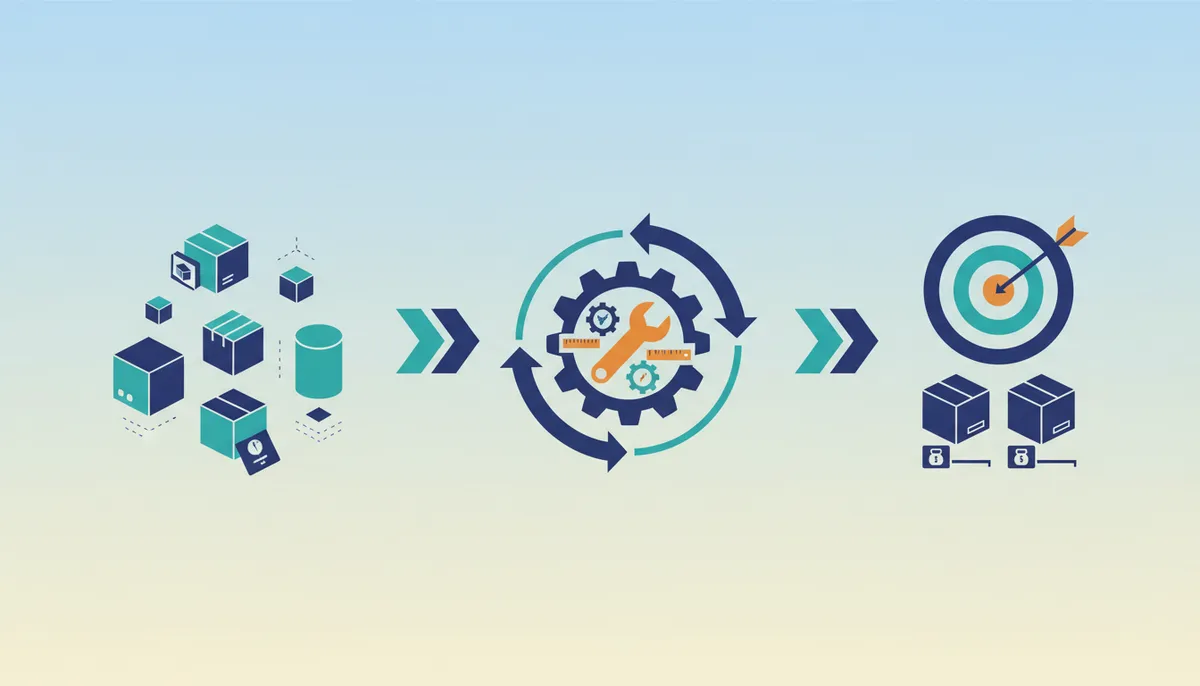
ACES 5.0 and PIES 8.0 function strictly as exchange protocols rather than centralized part number databases. This distinction clarifies that the standards provide a common language for vehicle fitment data and product attributes without hosting inventory records themselves. Manufacturers, distributors, and retailers apply these industry-standard formats to operate with a unified data structure, maintaining consistency throughout the supply chain. Frameworks simplify operations while improving accuracy across distribution channels by encompassing specific vehicle configuration details alongside rigorous product classification rules. Adherence reduces supply chain costs linked to incorrect listings.
Operators must recognize that files adhering to these versions are structured formats for transmission, not databases. ACES (Aftermarket Catalog Exchange Standard) supports automotive application data. PIES (Product Information Exchange Standard) supports product part number data. Manual effort is required to map legacy internal schemas to these rigid external requirements. Accurate mapping ensures aftermarket product data remains consistent when shared between trading partners. Strict validation against latest schema definitions is necessary before deployment.
Application: Implementing Data Standards for Catalog Updates
The Auto Care Association created and maintains these standards to ensure consistency, with ACES standardizing vehicle compatibility data and PIES standardizing product information. This structured approach enables operators to access VCdb and PCdb data so catalogs reflect current vehicle configurations and product classifications. Systems should incorporate these updates regularly. New vehicle configurations then appear in catalogs accurately. The standards provide a backbone for modern automotive product catalogs, simplifying the integration process for developers building custom connectors. Teams access PAdb attributes and qualifiers through these standardized formats instead of relying on inconsistent proprietary methods. Legacy systems relying on static file transfers must refactor ingestion pipelines to handle structured data exchanges. Managing the complexity of mapping internal schemas to external requirements presents a constraint. Maintaining accurate fitment data remains non-negotiable since precision directly impacts sales accuracy and customer satisfaction. Operators balance the need for fresh data against resources required to process standardized files. Using this architecture helps maintain superior catalog accuracy without manual intervention. Revenue loss associated with listing parts for vehicles that no longer match current database definitions is prevented.
SEO Penalties from Duplicate PIES Product Descriptions
Thousands of websites publish product descriptions from PIES files word-for-word, creating immediate duplicate content risks. Search engines choose a single canonical version, often excluding specific retailer pages from results. The data standard provides technical accuracy but lacks unique lexical signals required for high search visibility. Relying solely on manufacturer strings cedes ranking potential to competitors who enrich their product attributes. Tension exists between maintaining strict PIES compliance and generating distinct page content. Technical adherence to the schema does not guarantee market visibility if the text remains identical across the web. Distinct descriptions are required for search performance.
About
Mark Phillips serves as Editor of Aftermarket Intel at KZMALL Auto Parts, where he analyzes global distribution channels and e-commerce trends. His daily work involves evaluating how standardized data drives accuracy in the fragmented automotive aftermarket, making him uniquely qualified to dissect the complexities of ACES and PIES data standards. At KZMALL, a leading B2B platform offering over 50,000 SKUs across eight proprietary brands, Phillips oversees content that bridges technical fitment requirements with practical wholesale applications. He understands that precise vehicle configuration data is not merely administrative but fundamental to reducing returns and ensuring correct part application for independent repair shops and distributors worldwide. By connecting deep industry observation with KZMALL's commitment to standardized fitment data, Phillips provides an authoritative perspective on how proper data structuring directly impacts operational efficiency and catalog reliability in the independent aftermarket sector.
Conclusion
Scaling ACES and PIES adoption reveals a critical fracture where technical compliance diverges from market visibility. While standardized schemas ensure fitment precision, relying exclusively on manufacturer-supplied descriptions creates an operational ceiling where catalog accuracy does not translate to search dominance. The ongoing cost is not merely data maintenance but the silent erosion of organic traffic as duplicate content filters deprioritize identical product pages. Teams must recognize that strict adherence to VCdb and PCdb structures solves the engineering challenge but ignores the commercial imperative of unique lexical signals.
Operators should mandate a dual-layer strategy immediately: maintain raw PIES integrity for backend validation while enforcing a unique description layer for frontend presentation. This approach satisfies the technical requirement for structured data exchange without sacrificing the distinct narrative required for search ranking. Do not wait for a quarterly review to address this gap; the window to differentiate before algorithmic filters solidify is narrowing. Begin this week by auditing your top fifty selling parts to identify exact matches with manufacturer strings, then rewrite those descriptions to include specific application context and value propositions that static files cannot provide. KZMALL Auto Parts solutions enable this precise separation of structured fitment data and unique content, ensuring your catalog remains both technically sound and commercially visible.
ACES validates vehicle fitment while PIES defines product attributes, so mixing these formats breaks catalog architecture.
Q: Why do fitment errors occur when mixing VCdb and PAdb data streams?
A: Fitment errors occur when teams confuse the vehicle configuration database with the product attribute database. Separating these streams ensures that a brake pad for a 2024 sedan stays off the listing for a 2025 truck model.
Frequently Asked Questions
The current mandatory standards are ACES 5.0 and PIES 8.0 released in early 2026.
The PIES data standard encompasses over 20,000 distinct product types within the automotive aftermarket. This vast scope requires manufacturers to use strict PCdb classification rather than ad-hoc tagging to ensure their parts map correctly to reseller databases.
The official implementation date for ACES 5.0 and PIES 8.0 is March 26, 2026. Ignoring this deadline creates immediate friction when exchanging data with major distribution networks and results in lost revenue from returned inventory.
Neither format acts as a car parts interchange database since the Hollander Interchange System fills that specific niche. ACES validates vehicle fitment while PIES defines product attributes, so mixing these formats breaks catalog architecture.
Fitment errors occur when teams confuse the vehicle configuration database with the product attribute database. Separating these streams ensures that a brake pad for a 2024 sedan stays off the listing for a 2025 truck model.
References