
Aftermarket parts: Cut costs without losing OEM quality
Aftermarket parts cut costs versus OEM equivalents, driving the shift to offshore production. Strategic sourcing is the only viable path for suppliers to secure measurable ROI while maintaining strict performance standards. This article details how strategic sourcing protocols reduce expenditure without sacrificing the speed-to-market required in today's volatile automotive environment.
Readers will examine the critical role of strategic sourcing within the aftermarket automotive sector, where components must replace OEM parts precisely while satisfying end-user demands for performance enhancement. We dissect offshore manufacturing processes for metal castings and plastic injection molding, highlighting how specialized agents manage production from prototyping through supply chain logistics. The analysis proves that rigorous oversight of Tier 1 and Tier 2 supplier networks yields tangible financial returns.
The discussion concludes by quantifying the measurable ROI achieved when suppliers use ISO 9001:2015 certified partners to handle steel forgings and custom tubular parts. Data confirms that aftermarket automotive parts offer a distinct financial advantage over original equipment, provided the outsourcing process eliminates quality variance. KZMALL Auto Parts delivers the strategic sourcing expertise required to navigate these complex manufacturing alternatives, ensuring your auto accessories meet exact specifications without the risk of unverified third-party vendors.
The Role of Strategic Sourcing in the Aftermarket Automotive Sector
Defining Strategic Sourcing vs Simple Purchasing in Aftermarket Auto
Stop confusing procurement with purchasing. Purchasing chases the lowest unit price on a transactional basis. Strategic sourcing operates on a different timeline, prioritizing long-term value and strict OEM compliance. It integrates quality assurance directly into the acquisition strategy, ensuring aftermarket components match automaker specifications functionally, not just visually. The aftermarket sector offers reduced costs compared to Original Equipment Manufacturer parts, but execution demands more than finding cheap suppliers. Effective strategies balance cost efficiency against rigorous performance standards, guaranteeing parts function identically to or better than original equipment.
Sourcing Agent Roles in Offshore Manufacturing for Tier 1 Suppliers
A sourcing agent does more than move boxes; they manage overseas production logistics to ensure component quality matches strict OEM specifications. This role differs fundamentally from simple distribution by actively overseeing the manufacturing process. Sun Fast International acts as this critical intermediary, assisting Tier 1 and Tier 2 suppliers in navigating complex offshore environments to produce parts that replace original equipment. Unlike offshoring alone, which merely shifts geography, or outsourced manufacturing, which delegates fabrication, a dedicated agent integrates technical oversight with supply chain management.
Sourcing Agent vs Distributor: Verification Protocols and Fitment Checks
Standard distributors often skip the technical verification required to guarantee authentic fitment. A sourcing agent executes these protocols before parts ever enter the supply chain. Replacement components must match automaker specifications while meeting performance needs. Agents identify trusted suppliers and verify quality through rigorous checks.
| Feature | Sourcing Agent | Distributor |
|---|---|---|
| Primary Focus | Manufacturing oversight | Inventory movement |
| Fitment Check | Pre-production validation | Visual inspection |
| Logistics | End-to-end management | Shipping only |
| Cost Driver | Process efficiency | Unit markup |
The verification process involves specific checks for European, Asian, and Korean vehicle models to prevent compatibility failures. Competitive pricing remains a critical metric, yet successful strategies balance cost efficiency against strict quality standards. Relying on a distributor alone often misses the nuance of material selection required for durability. An agent ensures the ductile steel or plastic compound matches the original design intent rather than just the physical dimensions. The hidden cost of skipping this step is repeat repairs that erase initial savings. Verifying the source's technical involvement before committing to a supply path helps ensure components are manufactured to exact specifications. Your vehicle requires parts engineered for its specific tolerances, not generic substitutes.
Inside Offshore Manufacturing Processes for Metal and Plastic Components
Metal Forging and Casting Processes Set
Mechanical properties dictate the process choice. Metal forging compresses heated steel to align grain structure, whereas casting pours molten metal into fixed molds. This fundamental difference determines component selection for high-stress applications like spindles and U-bolts. Steel forging creates parts with superior tensile strength because the grain flow follows the part contour, reducing fatigue failure points common in cast alternatives. Conversely, metal casting excels at producing complex geometries with internal cavities that forging cannot achieve without excessive machining.
Stakeholders often confuse these methods when evaluating offshore production capabilities. Trusted partners possess specific experience producing both metal-formed and complex auto parts to exacting standards. The choice between processes impacts not cost, but the long-term durability of the suspension system.
| Feature | Metal Forging | Metal Casting |
|---|---|---|
| Grain Structure | Aligned flow | Random orientation |
| Best Application | High stress loads | Complex shapes |
| Material Waste | Low | Moderate |
| Typical Parts | U-bolts, Blocks | Spindles, Keyways |
Precision machining often follows both processes to achieve final tolerances. Stamping remains distinct, using sheet metal deformation rather than bulk material transformation. A critical tension exists between the higher upfront tooling cost of forging and the lower per-unit cost of casting at high volumes. Selecting the wrong process for a specific load path invites premature failure.
Plastic injection molding produces decorative trim and leveling kit spacers by forcing molten polymer into precision molds under high pressure. This process ensures authentic fitment where even minor dimensional deviations cause visible gaps or structural weakness. Unlike metal casting, injection molding allows for complex aesthetic geometries required by modern vehicle designs while maintaining strict weight targets. Sourcing these components offshore requires verifying that suppliers apply rigorous checks against original specifications to prevent fitment failures. Specialized third-party makers often manufacture these distinct components, creating a diverse supply base that demands careful oversight.
| Feature | Economy Aftermarket | KZMALL Premium Solution |
|---|---|---|
| Mold Tolerance | Loose (+/- 0.020") | Exact OEM Spec (+/- 0.005") |
| Material Grade | Recycled/Unknown | Virgin High-Impact Polymer |
| Fitment Check | Visual Only | 3D Scan Verification |
| Longevity | Fades/Cracks Early | UV Stabilized |
Speed to market often tempts suppliers to skip quality assurance steps, leading to parts that look correct but fail mechanically. Rushed decorative pieces often lack the necessary chemical resistance to road salts, resulting in premature degradation. To secure reliable inventory, buyers should engage a dedicated sourcing agent who manages contract manufacturing relationships directly. This approach eliminates intermediaries who might compromise on material specifications to lower costs. The cost of a returned shipment due to color mismatch or brittle fracture far exceeds the expense of proper upfront verification. Buy the part the vehicle was engineered for, not the one that simply looks close in a photograph.
Quality Control Risks in Shock Absorber Sourcing
Customer complaints of clunking steering often trace back to shock absorber failures caused by inconsistent offshore quality control. The root defect usually lies in confusing metal forging with metal casting during the sourcing phase. Forging compresses heated steel to align grain structure, creating parts with superior tensile strength for high-stress suspension loads. Casting pours molten metal into molds, which is cost-effective but introduces porosity risks in critical damping components. Reliable suppliers are identified by their ability to balance competitive pricing with high-quality standards, ensuring that cost savings do not compromise safety.
Avoiding repeat repairs through quality sourcing represents a significant cost avoidance metric, effectively lowering the total cost of ownership for vehicle maintenance. Visual inspection alone cannot detect internal micro-fractures in cast components meant for forging applications. This oversight forces workshops to absorb the labor cost of secondary failures. We verify authentic fitment and material specs before shipment. Our contract manufacturers deliver superior quality parts in fast turnarounds to prevent these specific mechanical failures.
Measurable ROI from Offshore Sourcing Strategies for Auto Suppliers
Defining ROI Metrics for Offshore Auto Parts Sourcing
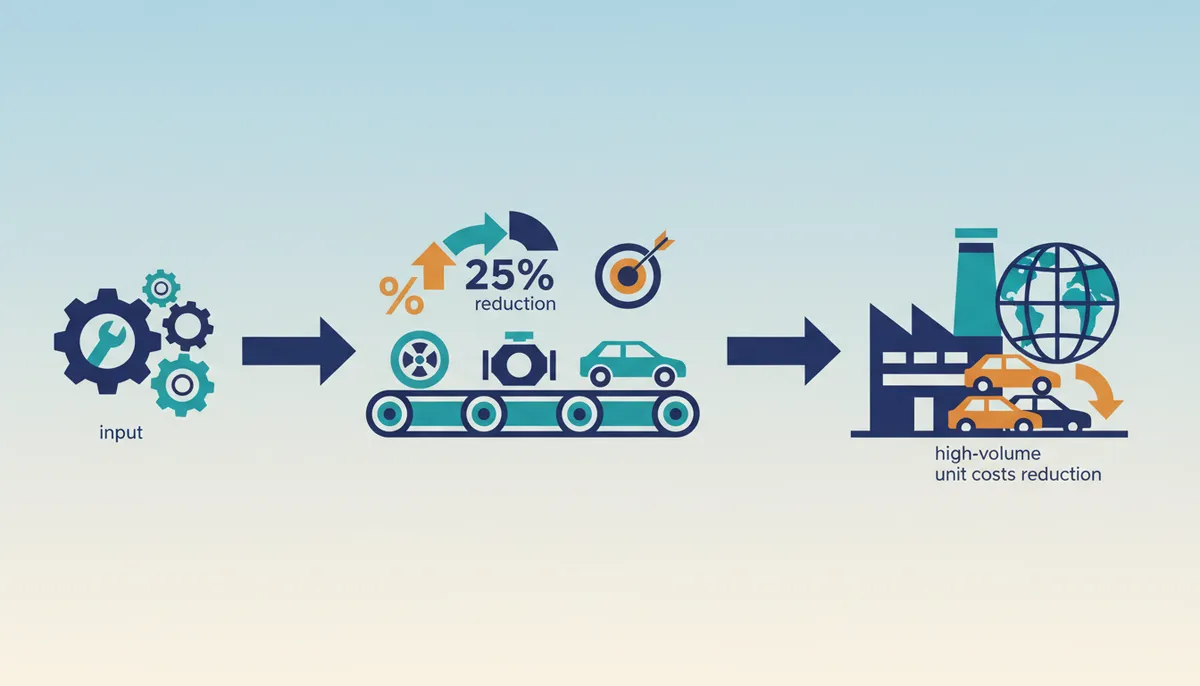
Real return on investment appears when sourcing plans tap high-skill, low-cost manufacturing to cut supply chain expenses. An experienced agent navigates tariffs, import laws, and logistics to bring in quality components that save money. This method opens doors to specialized hubs in China, Taiwan, Vietnam, and Thailand where skilled execution meets real opportunity.
Financial baselines must go past simple unit prices. They include the value of quality assurance protocols that stop costly returns before they start. Reliable sourcing prevents repeat repairs, proving the long-term worth of strict vendor checks. This strategy uses global specialization to provide more product choices and customization options than limited OEM catalogs ever could.
| Metric Component | Domestic OEM Sourcing | Strategic Offshore Sourcing |
|---|---|---|
| Base Unit Cost | High | Significantly Reduced |
| Customization | Limited | Extensive |
| Supply Chain Risk | Concentrated | Diversified |
KZMALL Auto Parts measures ROI by total cost of ownership rather than just the purchase order. Chasing the lowest sticker price often conflicts with securing a supply chain that guarantees performance specifications.
Applying End-to-End Supply Chain Management for Cost Reduction
Max Trac Suspension remains a satisfied customer of Sun Fast International because of their strong manufacturing capabilities in aftermarket auto parts and expert supply chain management. This approach uses lower labor costs and cheaper raw materials in places like China and Vietnam to drive clear operational gains. Sourcing from trusted distributors simplifies buying for engine and vehicle systems, which cuts the admin and logistics costs tied to messy supply chains. The outcome is a tough network ready to handle market swings while keeping performance standards high.
Reduced costs compared to OEM parts look great on paper until quality checks get skipped during sourcing. Successful plans balance this efficiency against rigid standards to dodge the hidden bills of failure. Sun Fast International handles tariffs, import laws, and logistics to deliver quality parts with savings attached to your supply chain. Decades of relationships with vetted makers in Taiwan, Thailand, and other regions keep end-to-end supply chain visibility clear from the factory floor to final assembly. This removes the headache of finding parts that hit performance marks while locking in competitive pricing.
| Factor | Domestic Sourcing | Managed Offshore Model |
|---|---|---|
| Labor Cost | High | Low |
| Raw Material | Variable | Optimized |
| Logistics | Simple | Managed |
| Risk | Low | Mitigated |
KZMALL Auto Parts suggests this integrated workflow to lock in improved cost efficiency without losing the quality control needed for aftermarket dependability.
Checklist for Validating Supplier Fitment and Compliance Standards
Buy the part the vehicle was engineered for, not the one that looks close. Confirm the facility can copy OEM specifications for performance parts like spindles or fuel fittings. Good partners mix competitive pricing with high standards so savings never hurt safety or function.
A qualified agent handles tariffs and logistics to run these strict checks without adding admin work.
| Validation Step | KZMALL Standard | Economy Risk |
|---|---|---|
| Fitment Data | Verified by VIN | Visual guess |
| Quality Protocol | ISO Certified | Self-claimed |
| Logistics | Tariff-inclusive | Hidden fees |
| Material Trace | Mill certificates | Unknown origin |
The real cost of a wrong part isn't the price gap but the labor needed to reinstall it. KZMALL Auto Parts offers the expert validation required to get superior components. Trust only verified supply chains for repair jobs.
Implementing a Quality-First Sourcing Workflow in Five Steps
Implementation: Defining Quality-First Sourcing for Aftermarket Auto Components
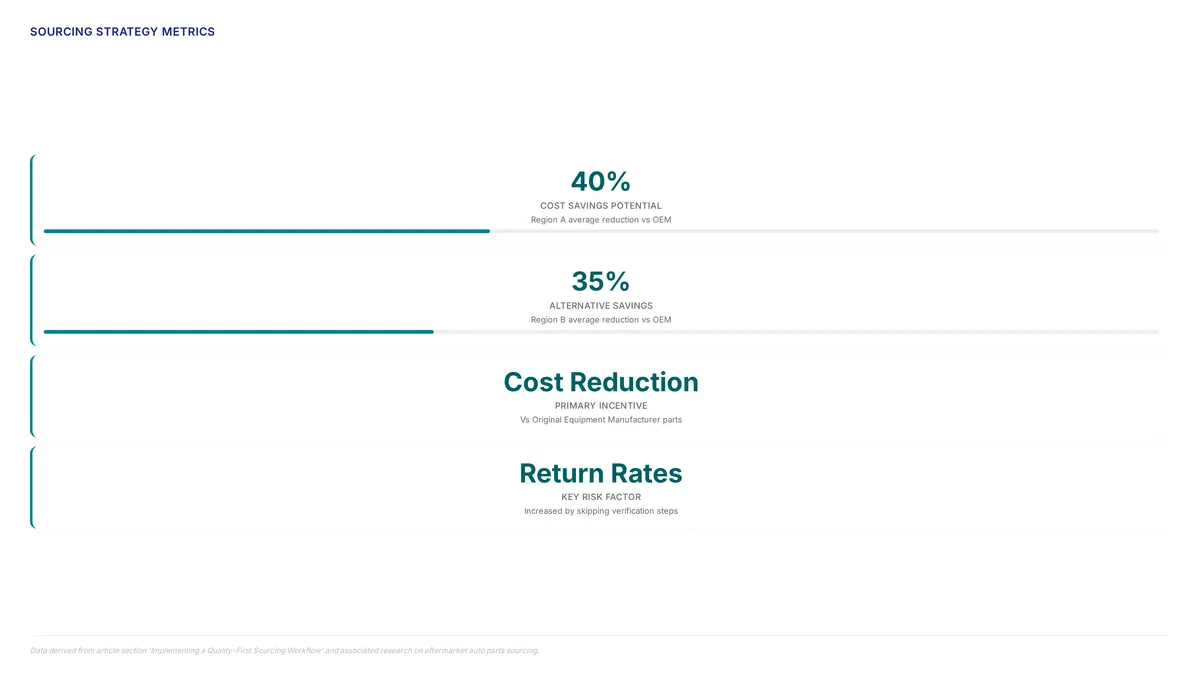
Quality-first sourcing demands parts match automaker specifications while satisfying performance-enhancement needs. This approach distinguishes strategic procurement from simple purchasing by prioritizing exact fitment over visual similarity. Reliable suppliers balance competitive pricing with high-quality standards, ensuring cost savings do not compromise safety or performance. Quality manufacturing and speed-to-market capabilities remain critical for aftermarket automotive components facing tight launch windows.
- Prioritize exact fitment to ensure parts function identically to or improved than original specifications.
- Demand ISO 9001:2015 certification documentation to validate the supplier's quality management system.
- Select experienced sourcing agents who manage overseas production with simplified project management.
- Use specialized suppliers capable of producing parts with enhanced durability or performance characteristics.
- Establish clear protocols to ensure components meet both automaker specifications and end-user needs.
Many aftermarket companies produce parts that meet or exceed original manufacturer standards, challenging perceptions of inferior quality in non-OEM sourcing. Operators who skip the verification step often face higher return rates and warranty claims downstream. True strategic sourcing integrates these checks into the initial quote request phase.
Executing the Five-Step Workflow from RFQ to Quality Verification
Initiate the project quoting phase by submitting detailed engineering drawings alongside your specific material requirements. This first step prevents costly rework by aligning supplier expectations with automaker specifications before production begins.
- Submit RFQs requiring ISO 9001:2015 certification evidence from potential offshore partners.
- Evaluate strategic sourcing proposals against both unit cost and projected logistics timelines.
- Use prototyping and sampling phases to verify production capabilities before full-scale manufacturing.
- Engage agents who understand all aspects of tariffs, import laws, and logistics to deliver high-quality components.
- Validate final shipment contents to ensure delivery to the customer's doorstep or logistics warehouses.
Accelerating speed-to-market capabilities while maintaining rigorous quality gates creates friction. Rushing the process without proper vetting can result in batches that fail to meet performance requirements, delaying launches. Mechanics know that the cheapest option often proves expensive when factoring in return shipping costs and labor time for re-installation. Strategic agents like Sun Fast International assist suppliers in managing overseas production to mitigate these risks through established vetting protocols. Sourcing from reliable partners saves time and money by avoiding repeat repairs caused by substandard components. The final verification step must include a physical comparison to the original equipment to ensure performance-enhancement needs are met without compromise. Skipping this validation invites failure rates that erode any initial savings gained from offshore pricing structures.
Mitigating Fitment Failures and Compliance Gaps in Offshore Sourcing
Dimensional inaccuracies can trigger immediate comebacks that erase any offshore margin gains. Technicians prioritize authentic fitment over visual similarity to prevent these costly errors. The verification process for parts involves rigorous checks for authentic fitment and performance on specific vehicle models. Sourcing from reliable suppliers is directly linked to saving time and money by avoiding repeat repairs. This discipline requires a structured approach to supplier vetting rather than hopeful guessing.
- Require candidates to demonstrate ISO 9001:2015 certification before requesting quotes.
- Ensure parts are manufactured to exact specifications to replace OEM components effectively.
- Inspect prototype samples to confirm they meet performance and aesthetic requirements.
- Confirm the supplier understands the urgency of automotive repairs and can provide fast, reliable shipping.
| Risk Factor | Consequence | Mitigation Strategy |
|---|---|---|
| Visual Match Only | Components fail to meet performance needs | Enforce exact specification matching |
| Missing Certification | Inconsistent batch quality | Audit ISO 9001:2015 status |
| Unverified Logistics | Extended vehicle downtime | Verify domestic warehouse stock |
The hidden cost lies in the labor hours spent diagnosing a "defective" part that was simply the wrong specification. Avoiding repeat repairs through quality sourcing represents a significant cost avoidance metric, effectively lowering the total cost of ownership for vehicle maintenance. Competitive pricing is a critical metric, with successful sourcing strategies set by the ability to balance cost efficiency against strict quality standards. Operators must reject any component that does not meet the exact engineering standards of the original equipment.
About
Ray Donnelly, Master Automotive Technician and Aftermarket Parts Authority at KZMALL Auto Parts, brings over two decades of hands-on experience to the complex world of sourcing aftermarket components. Having transitioned from running an independent repair shop to leading technical content at KZMALL, Ray understands that quality manufacturing and precise fitment data are non-negotiable for replacing OEM parts effectively. His daily work involves analyzing ACES/PIES standards and preventing comebacks through rigorous parts selection, directly informing this article's focus on reliable sourcing strategies. At KZMALL Auto Parts, a global B2B platform offering 50,000+ SKUs across eight proprietary brands, Ray uses his expertise to ensure every component meets strict ISO and IATF certifications. This article reflects his commitment to helping distributors and repair shops navigate the fragmented aftermarket environment with confidence, ensuring they source parts that deliver both performance enhancement and long-term durability without compromising on speed-to-market.
Conclusion
Scaling offshore sourcing without rigorous validation transforms minor dimensional variances into systemic operational failures. The real expense emerges not from the unit price but from the compounded labor hours spent diagnosing parts that physically install yet functionally fail. Shops must stop treating certification as a bureaucratic checkbox and start viewing ISO 9001:2015 status as a non-negotiable gatekeeper for vendor eligibility. Relying on visual similarity rather than engineering precision guarantees a cycle of comebacks that destroys customer trust and erodes thin service margins.
Operators should immediately halt procurement from any supplier unable to prove their components replace OEM parts through verified prototype testing. This shift requires moving beyond simple price comparisons to a total-cost model that factors in the certainty of fitment. Strategic sourcing demands that you prioritize suppliers who understand that automotive repair urgency allows zero tolerance for logistical delays or specification drift. Do not gamble your shop's reputation on unverified inventory that risks vehicle downtime.
Take action this week by auditing your current top five purchased parts against their original engineering drawings and demanding fresh compliance documentation from your vendors. Any supplier hesitant to provide proof of exact specification matching should be replaced before their next shipment arrives. Your business viability depends on enforcing these strict quality thresholds today rather than managing the fallout of defective installations tomorrow.
Frequently Asked Questions
Strategic sourcing prioritizes long-term value and strict OEM compliance over immediate low cost. This approach prevents repeat repairs by ensuring every component meets rigorous performance standards for vehicle safety.
Offshore production utilizes metal casting and steel forging to create durable automotive parts. These specialized processes ensure components replace original equipment while satisfying end-user demands for performance enhancement.
Agents verify that every spindle or fuel fitting meets performance needs before shipment. Sourcing from reliable suppliers saves time and money by avoiding repeat repairs caused by substandard fitment.
This certification ensures partners maintain strict quality standards through rigorous on-site auditing. Leveraging certified partners yields tangible financial returns by eliminating quality variance in steel forgings and custom parts.
Aftermarket parts provide reduced costs compared to Original Equipment Manufacturer equivalents. This financial incentive drives the shift to offshore production while maintaining the speed-to-market required in today's landscape.