
Strategic discipline beats speed in auto parts
Reaction is not strategy. When inflation spikes and trade policies shift overnight, the automotive aftermarket doesn't need speed; it needs a steady hand.
Meagan Moody's June 2026 analysis argues that strategic discipline defines durability far more than reflexive pivots. While distributors often chase volume or slash prices in real-time, winning companies are simply the most disciplined in how they decide. They avoid the critical error of treating short-term market recalibration as a permanent collapse, ignoring intact fundamentals like an aging vehicle parc and strong independent repair channels.
Demand for maintenance persists despite softening consumer spending in Canada. The winners separate signal from noise by deploying a balanced portfolio strategy that integrates digital B2B ordering with traditional local availability. This approach protects margins while offering value-tier options to price-sensitive workshops.
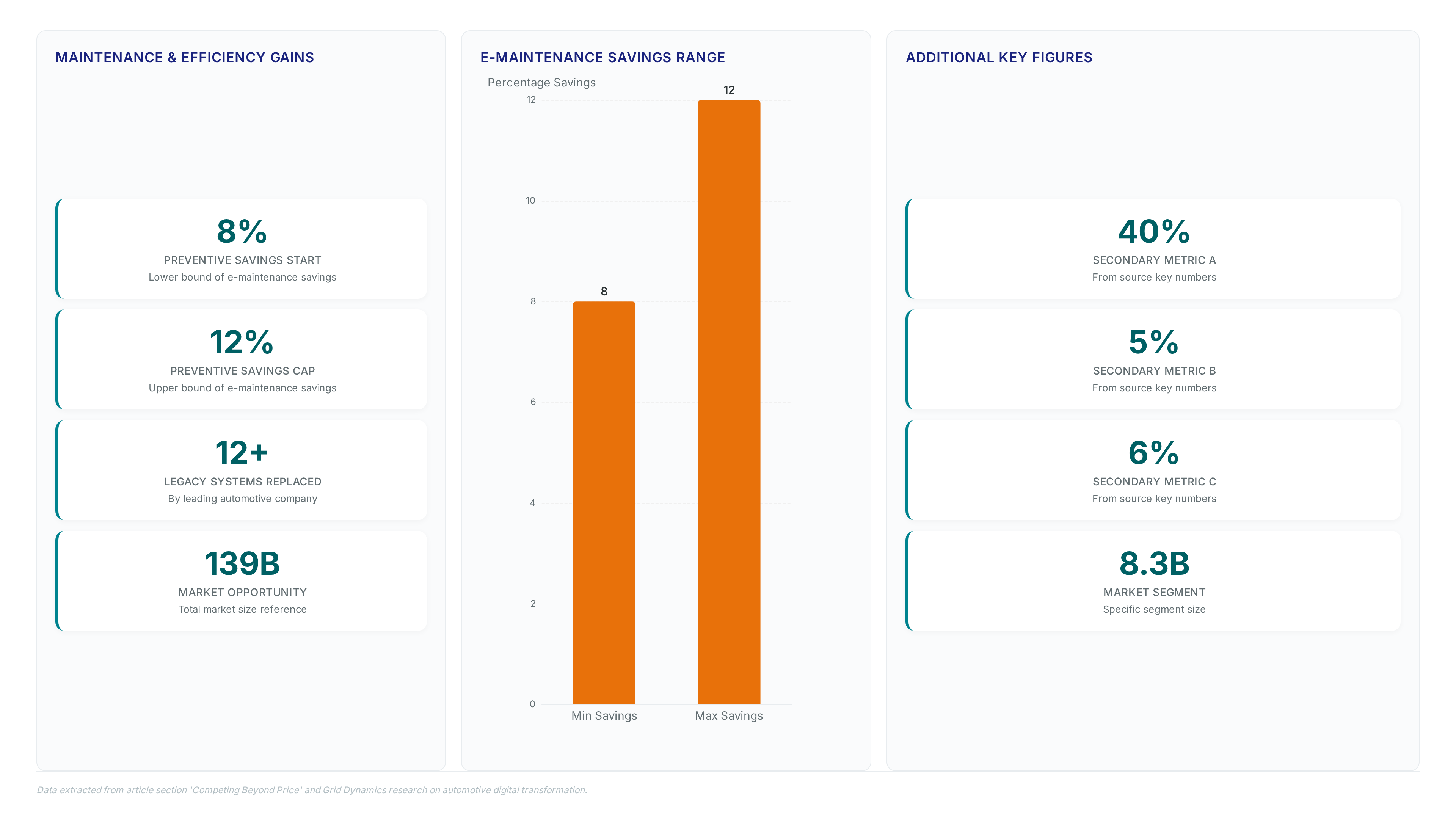
Operational efficiency drives survival here. The U.S. Department of Energy estimates that predictive maintenance strategies save 8% to 12% over preventive maintenance and up to 40% over reactive approaches. By applying such data-driven logic, distributors avoid the trap of reacting to every fluctuation, focusing instead on long-term capability building that aligns with actual market behavior.
Strategic Discipline Defines Durability Amid Market Volatility
Strategic Discipline: Distinguishing Signal from Market Noise
Strategic discipline filters temporary volatility from structural shifts to stop reactive mistakes. Supply chains face geopolitical disruption, yet reaction is not strategy. Winning firms during uncertainty are not the fastest to move but the most disciplined in how they decide. This approach stops short-term noise from looking like a long-term direction change. Spending on service and repair has softened in Canada, yet the underlying vehicle parc continues aging. The market recalibrates rather than collapses. Global exposure remains vast, with the United States importing $139 billion in automotive aftermarket parts in 2023. Such scale demands precise filtering of data signals. Leading automotive aftermarket companies have executed structured digital transformations to replace fragmented legacy systems, creating a unified environment for decision-making.
Ignoring this distinction forces binary choices that erode value. Distributors must complement premium positioning with credible value-tier offerings rather than abandoning brand standards. Failure to distinguish signal from noise causes measurable revenue loss as competitors capture share through clarity. Discipline provides the stability required to navigate inflation and evolving trade policies without overcorrecting.
Applying Portfolio Strategy to Price Sensitivity and Margin Protection
Binary pricing choices destroy margin when customers trade down to independent aftermarket parts. Tariff disruptions are projected to cut 5% to 6% of automotive aftermarket revenue, forcing distributors to protect cash flow without abandoning premium segments. The correct technical response is a portfolio strategy that layers credible value-tier options beneath established brands. This approach prevents the loss of volume to cheaper alternatives while preserving high-margin sales for quality-focused workshops. Consumers across markets trade down, yet demand for maintenance persists despite softer real-term spending.
Winning distributors avoid the trap of reacting to every price query by segmenting inventory into distinct performance tiers.
Organizations applying AI implementation to this segmentation act on analysis rather than generating unused data. Operational complexity is the constraint; managing dual supply chains requires rigorous data consolidation to prevent stock outs in either tier. Successful firms have replaced extensive legacy systems to create the unified data environment necessary for this balance. Price wars erode the entire catalog without such discipline. Convenience becomes the differentiator that protects margin when price sensitivity peaks. Distributors must integrate digital accessibility with local availability to support this mixed model effectively. Reaction remains the enemy of profitability in volatile cycles.
The Risk of Treating Short-Term Volatility as Long-Term Direction
Mistaking temporary market recalibration for permanent collapse triggers unfocused investment that erodes brand equity without solving margin pressure. Distributors often react to softening spending by slashing prices across the board, a reactive response that fails to address the root cause of consumer trading down. This approach ignores the structural reality that the vehicle parc continues aging, sustaining demand for repair even as households tighten budgets.
Predictive maintenance strategies save 8% to 12% over preventive maintenance and up to 40% over reactive maintenance approaches, yet reactive strategies incur costs notably higher than predictive models. Companies that pivot resources based on quarterly noise rather than long-term trends frequently find themselves unable to fund the very targeted capability building required for electrification and ADAS service. Successful firms avoid binary decisions, instead layering value-tier options to capture price-sensitive customers while preserving premium margins. This discipline prevents the permanent loss of positioning for a temporary gain in volume.
Balanced Portfolio Strategy Integrates Digital and Traditional Channels
Defining Balanced Portfolio Strategy for Channel Integration
Reaction is noise. Discipline is strategy. A balanced portfolio merges digital access with local stock and trusted bonds instead of swapping old methods for new screens. No single path solves the puzzle for distributors facing mixed buyer zeal where faith in the seller dictates the sale. Leaders see that volatile times do not alter the market itself but test how firms answer through reason rather than reflex.
| Channel Focus | Strategic Risk | Integrated Solution |
|---|---|---|
| Digital Only | Erosion of service-based trust | Online ordering with local pickup |
| Traditional Only | Reduced operational efficiency | Physical presence with digital tools |
| Balanced Mix | Integration complexity | Unified inventory and data visibility |
The sector moves from flash-in-the-pan transformation gigs to hard discipline, turning strategy into repeatable habits for clear choices. This stance stops the blunder of spinning entirely toward B2B web sales while ignoring the shop need for service proof. Executives pour capital into automation to build durability against swings instead of paying for reactive fire drills. The tug-of-war sits in keeping digital velocity without losing the local stock that garages demand for immediate fixes. Real integration means digital tools boost physical ties instead of trying to erase them completely.
Integrating Digital Accessibility with Trusted Local Relationships
Web ordering tools work best when they buttress, not bury, the trusted local ties that drive shop loyalty. Distributors must dodge the urge to over-rotate toward pure e-commerce models because buyer enthusiasm stays mixed where personal service calls the shots on purchases. The strategic job involves weaving these systems so digital reach lifts local stock without scrubbing out the human piece of the deal.
- Deploy online platforms that simplify the ordering process for workshop buyers.
- Maintain physical counter support to resolve complex questions that algorithms cannot address.
- Use data from digital interactions to inform inventory strategies for specific neighborhood repair profiles.
This hybrid style admits that no single lane fills every market need during shaky economic stretches. B2B sectors lean harder on automated ordering, yet the aftermarket still leans heavily on confidence built face-to-face. One leading automotive aftermarket company successfully replaced more than 12 legacy systems through structured digital transformation, highlighting the scale of integration required for disciplined operations. The limitation of this model is the operational complexity of synchronizing inventory data across physical and virtual storefronts simultaneously. Success requires viewing technology as an enabler of service quality, not a substitute for it. In contrast, a predictive model analyzes aging vehicle parc data to forecast demand for specific repair categories before workshops place orders.
| Strategy Type | Cost Profile | Operational Outcome |
|---|---|---|
| Reactive Expansion | High capital waste | Inventory mismatch |
| Predictive Planning | Optimized cash flow | Aligned availability |
| Hybrid Approach | Moderate overhead | Flexible response |
The mechanism relies on shifting from volume chasing to convenience protection, where digital tools serve local availability rather than replacing it. B2B online ordering grows, yet consumer enthusiasm remains mixed, demanding that distributors balance digital accessibility with trusted counter service.
3. Buy the part the vehicle was engineered for, not the one that looks close. True strategy integrates these channels so that digital speed supports, rather than supplants, the relationship-based trust that closes sales. Cost is the constraint when convenience vanishes.
Targeted Capability Building Prioritizes Electrification and ADAS Investment
Defining Targeted Capability Building Against Unfocused Investment
Buy the part the vehicle was engineered for, not the one that looks close, and apply that same logic to shop equipment. Uncertainty tempts workshops to swing wildly between buying unused machines or freezing spending entirely. Neither extreme builds a sustainable business. Measured investment moves with speed when demand exists, ignoring speculative headlines that distract from real repair volume. Executives are accelerating investments in automation and digital supply-chain tools to strengthen durability. Capital shifts from reactive firefighting to proactive infrastructure that handles today's workload.
| Investment Mode | Strategic Focus | Outcome |
|---|---|---|
| Unfocused | Future headlines | Capital waste |
| Hesitant | Risk avoidance | Capability gap |
| Targeted | High-probability areas | Sustainable margin |
Precision requires ignoring the urge to chase every new technology trend immediately. Many workshops acknowledge the need to build capability in electrification and ADAS. Investment remains uneven, particularly in markets like Canada where hesitation is still present. True capability means focusing on high-probability service areas rather than reacting to future headlines.
Aligning Electrification Capital with High-Probability Service Areas
Workshops must align electrification spending with current repair volume instead of speculative future headlines. Uncertainty frequently triggers binary errors: complete hesitation or over-investment in low-probability service bays. Many shops acknowledge the need for ADAS capability, yet capital deployment remains uneven across regions like Canada where market hesitation persists. Disciplined organizations avoid reacting to every technology shift by applying capital only to well-set, high-probability decisions. Undisciplined competitors generate excessive analysis on future trends they cannot realistically act upon, creating a dangerous gap between insight and execution. Top executives are now accelerating investment in automation to strengthen durability against volatility rather than funding reactive firefighting efforts. The strategic error lies in treating short-term signal noise as a permanent direction change for the entire vehicle parc.
Unfocused spending wastes capital compared to organizations that institutionalize capabilities. Distributors must guide shops to focus on high-probability service areas where vehicle age and failure rates justify immediate tooling upgrades. Measured investment is not slow; it is precise alignment with the actual demand signals present in today's aging fleet. Operators often mistake market noise for a mandate to retrofit entire bays. Such strategies work only for non-critical assets with cheap restoration profiles.
| Investment Approach | Capital Efficiency | Risk Profile |
|---|---|---|
| Unfocused Rush | Low | Critical cash flow erosion |
| Measured Precision | High | Controlled exposure |
| Total Hesitation | N/A | Market share loss |
Navigating uncertainty requires rejecting the binary choice between freezing assets and overspending on speculative capacity. Leaders must align capability building with actual service frequency rather than future headlines. Executives are currently accelerating investments in digital supply-chain tools to strengthen durability against volatility. This shift prioritizes infrastructure that supports known repair volumes over speculative expansion. When determining when to invest in electrification, the focus must remain on high-probability service areas. Distributors should support customers with targeted training rather than pushing hardware they cannot yet monetize. Precision protects margin when volume fluctuates.
Competing Beyond Price Delivers Measurable Value Through Convenience
Defining Convenience as Margin Protection in Price-Sensitive Markets
Margins vanish when price becomes the primary battleground because any competitor can copy a discount overnight. Real strategy shifts focus to convenience, turning service speed and simplified purchasing into defensible revenue streams that protect the bottom line. Customers facing long decision cycles and guarded spending prioritize clarity of outcome over rock-bottom costs, forcing retailers to invest in tools that reduce friction rather than pressure tactics. This approach protects profitability by making the transaction itself the product differentiator.
- Implement pick-up and drop-off logistics to remove time barriers for busy workshop owners.
- Simplify ordering interfaces to eliminate confusion during the purchasing process. 3.
| Strategy Element | Cost to Replicate | Margin Impact |
|---|---|---|
| Price Cutting | Low | Negative |
| Logistics Speed | High | Positive |
| Order Simplicity | Medium | Positive |
Balancing service investments against the instinct to slash rates during demand softness creates hidden tension. Cutting prices offers immediate volume but trains customers to wait for discounts, whereas reliable delivery and support build habitual reliance. Distributors must recognize that reaction is not strategy; calm execution of high-convenience models creates a moat that price warriors cannot cross. In a market where consumer sentiment remains guarded, providing a smooth experience acts as the ultimate shield against commoditization.
Implementing Faster Delivery and Simplified Purchasing Processes
Execute convenience by deploying reliable delivery windows that remove uncertainty from shop scheduling. Workshops are already shifting direction by offering differentiators such as pick-up and drop-off services to capture time-strapped customers. Distributors must match this operational tempo with quicker turnaround times that protect margin when price competition intensifies. For distributors and suppliers, this translates into quicker and more reliable delivery, improved order support and availability, and a simplified purchasing process.
- Integrate predictive inventory systems that apply bi-directional data flow for flexible plan adjustments.
- Replace static reporting with scenario planning to anticipate supply chain disruptions before they halt sales.
- Simplify purchasing interfaces to reduce order friction and improve support availability.
| Process Feature | Operational Impact | Strategic Value |
|---|---|---|
| Flexible Routing | Reduced fuel costs | Higher on-time rate |
| Real-time Visibility | Fewer support calls | Increased trust |
| One-click Reorder | Quicker transaction speed | Locked-in loyalty |
Improved order support prevents the revenue loss associated with stockouts during volatile import periods. A drawback of this approach is the required investment in digital infrastructure that some smaller distributors delay. In a price-sensitive market, these simplified processes become the actual product. In a market that feels unpredictable, discipline becomes your advantage. Companies reacting to every headline often over-invest in the wrong areas or hesitate completely, neither of which works. Instead, leaders should focus on targeted capability building aligned with actual demand.
| Decision Trigger | Reactive Response | Disciplined Strategy |
|---|---|---|
| Price War | Match discount immediately | Enhance delivery speed |
| Supply Shock | Hoard inventory | Diversify supplier base |
| Tech Hype | Retrofit all bays | Train on high-demand units |
- Assess if the change alters fundamental vehicle aging trends or just temporary sentiment.
- Verify that convenience investments protect margin rather than merely matching competitor pricing.
- Confirm alignment with actual shop demand instead of future industry headlines.
Reactive leadership erodes organizational clarity during critical decision windows, creating a hidden cost many ignore. Long-term objectives require distinguishing between short-term tactical responses and strategic goals rather than applying quick navigation fixes. Operators must recognize that calm execution serves as a defensible competitive advantage when competitors fracture under pressure. Buy the part the vehicle was engineered for, not the one that looks close, and apply that same specificity to your business model.
About
Ray Donnelly, Master Automotive Technician and Aftermarket Parts Authority at KZMALL Auto Parts, brings two decades of frontline experience to the critical discussion on strategic discipline. Having transitioned from running an independent repair shop to leading technical content for a global B2B distributor, Donnelly understands that reacting to market chaos without a plan leads to costly errors. His daily work involves analyzing fitment data, preventing comebacks, and guiding partners through complex supply chain variables, directly mirroring the article's thesis that "reaction is not strategy." At KZMALL, where managing over 50,000 SKUs across diverse vehicle technologies requires precise coordination, Donnelly sees how disciplined sourcing and standardized data outperform impulsive pivots. This article translates his technical expertise in diagnostics and parts selection into a broader business framework, helping distributors navigate economic uncertainty with the same methodical approach used to solve complex engine performance issues.
Conclusion
Scaling operations reveals that reactive volatility creates a hidden tax far exceeding the visible 5% to 6% revenue threat from tariff disruptions. While the market focuses on import costs, the real breaker at scale is the operational drag of inconsistent decision-making during supply shocks. Companies that chase every headline fracture their internal logic, leading to wasted capital on misaligned inventory or premature technology retrofits. The ongoing cost here financial; it is the erosion of organizational clarity when speed matters most.
Leaders must mandate a disciplined separation between temporary sentiment and fundamental aging trends immediately. Do not wait for the next quarterly report to audit your current response protocols against actual shop demand. If your strategy relies on matching competitor discounts rather than enhancing delivery speed, you are already losing margin. The window to lock in loyalty through reliable processes is open now, but it closes for those who prioritize hype over high-demand units.
Start this week by mapping your last three substantial purchasing decisions against the Disciplined Strategy column in your internal logs. If any choice was driven by fear of a price war or tech hype rather than verified vehicle aging data, flag it for immediate review. This specific audit isolates where your team reacts to noise instead of executing a plan. Protecting your position in the $139 billion automotive aftermarket requires this level of scrutiny on your own behavior before analyzing external threats.
Frequently Asked Questions
Tariff disruptions could cut 5% to 6% of automotive aftermarket revenue. This financial pressure forces distributors to adopt disciplined portfolio strategies rather than reacting with broad price cuts that erode long term brand value.
The United States imported $139 billion in automotive aftermarket parts in 2023. This massive exposure requires precise data filtering to distinguish temporary market noise from structural shifts during periods of economic uncertainty.
Predictive maintenance strategies save up to 40% over reactive maintenance approaches. Applying this data driven logic helps distributors avoid reacting to every fluctuation and instead focus on long term capability building.
Mistaking temporary recalibration for permanent collapse triggers unfocused investment that erodes brand equity. Leaders must recognize that the vehicle parc continues aging, meaning demand for maintenance persists despite softening consumer spending trends.
Reacting without a portfolio strategy forces binary choices that lose volume to cheaper alternatives. Distributors must layer credible value tier options beneath established brands to protect margins while meeting diverse customer price expectations.