
Yokohama Hill Climb: Why 2026 Matters
Over 20 drivers will pilot ADVAN tires for Team Yokohama at the 104th Pikes Peak International Hill Climb on June 21, 2026. This isn't just about lap times. Yokohama is using the treacherous 12-mile ascent as a crucible for its Yokohama Transformation 2026 sustainability mandates. While rivals chase seconds, Yokohama chases validation for sustainable materials intended for mass-market adoption.
The focus here is the special hill climb compound in the ADVAN A005 tires. It must handle thermal degradation unique to altitudes above 14,000 feet. Data from the Broadmoor Pikes Peak International Hill Climb directly informs the company's goal of reaching 28% sustainable material usage.
Yokohama's eco-centric trajectory contrasts sharply with Michelin's market dominance. The benchmark? An EcoVadis sustainability score of 84. Yokohama climbed from 76 in 2025. That jump suggests their medium-term management plan is driving operational shifts, not just marketing. The mountain does not forgive inefficiency. Neither does the modern supply chain.
The Role of Team Yokohama in the Race to the Clouds
Defining Team Yokohama and the Race to the Clouds
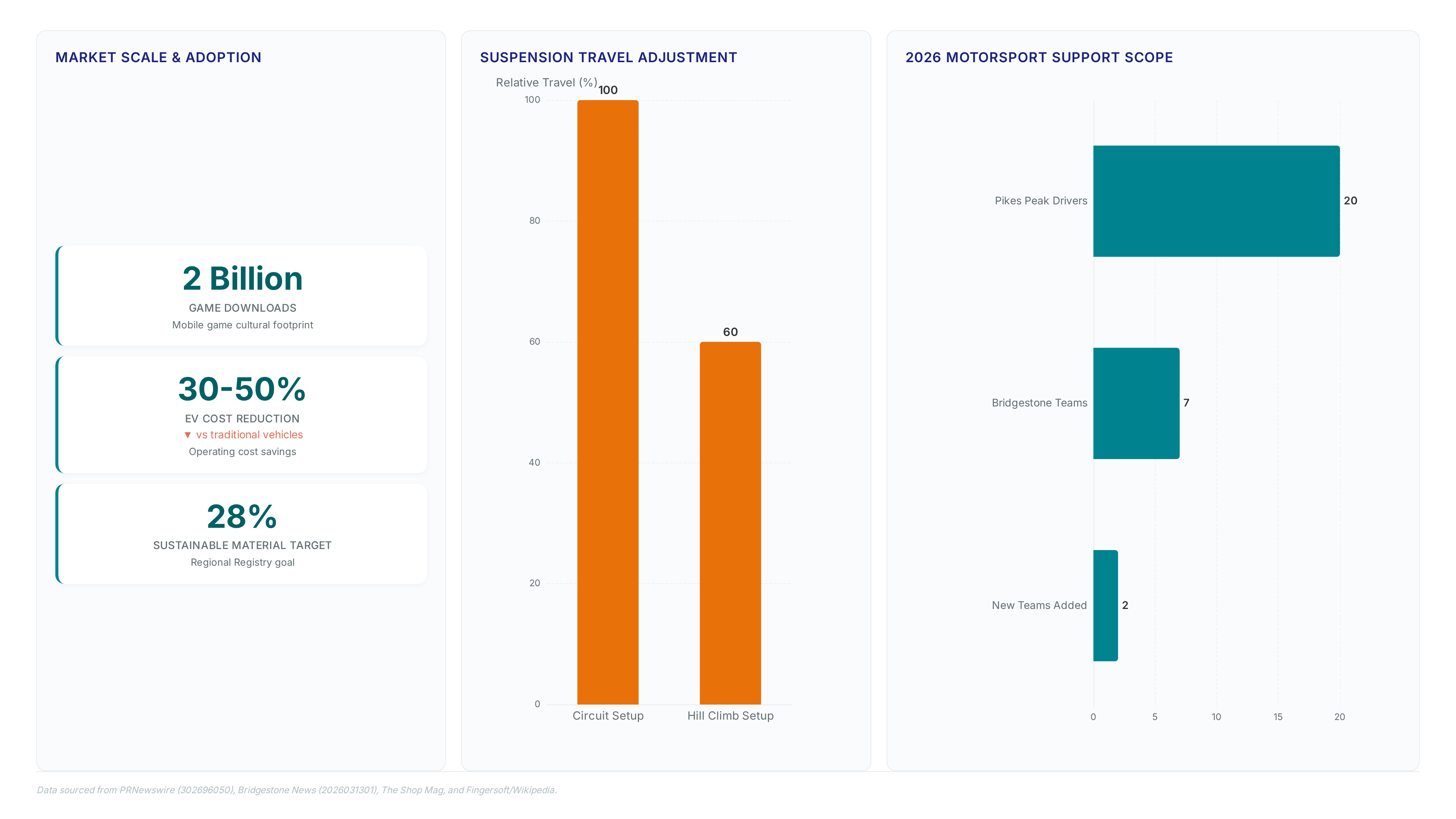
Team Yokohama comprises more than 20 sponsored drivers racing on specialized ADVAN tires. They target the Broadmoor Pikes Peak International Hill Climb, known as the "Race to the Clouds" due to its 4,720-foot elevation gain. The 2026 iteration marks the 104th running of the hill climb, an annual event since 1916. The upcoming event is scheduled for June 21, 2026. Drivers like Laura Hayes and Robin Shute use these platforms to validate rubber compounds under low-oxygen stress. The special hill climb compound in the ADVAN A005 tires addresses thermal degradation risks unique to the ascent profile. Motorsports participation drives consumer tire development by exposing materials to failure modes absent in standard testing. Note that data from this single vertical ascent does not fully replicate sustained high-speed cornering loads found on circuit tracks.
Operators must distinguish between hill-climb thermal limits and endurance durability. The extreme gradient forces heat buildup that standard road compounds cannot withstand, necessitating the specialized mixes seen in the Unlimited Division. This specific stressor validates the Race to the Clouds as a unique filter for material science.
Laura Hayes and Robin Shute on ADVAN A005 Tires
Laura Hayes relies on a specific rubber formulation to address thermal degradation risks inherent to the 4,720-foot elevation gain. The special hill climb compound maintains grip where standard slicks would overheat and lose cohesion.
Robin Shute His Unlimited Division entry relies on the same ADVAN A005 technology to manage extreme torque loads. The mechanical stress placed on the tire carcass during these runs exceeds typical circuit racing demands. Operators observing this deployment note that the compound stiffness must balance grip against structural integrity. A softer mix offers immediate traction but risks delamination under sustained high-load corners. Tracking Team Yokohama requires monitoring the specific division entries rather than general brand hashtags. Followers should focus on the Unlimited Division outputs for the most aggressive technology demonstrations. The data derived from these runs directly informs the thermal modeling for future consumer-grade racing tires.
- Monitor Unlimited Division telemetry for peak thermal data.
- Analyze compound wear rates post-run for degradation patterns.
- Review Shute's chassis setup notes for load distribution insights.
- Track Hayes's sector times to evaluate grip consistency.
Hill climb specific compounds lack the durability required for multi-lap endurance events. This cost is maximum performance for single-run qualification attempts but limited reuse.
Team Yokohama deploys more than 20 Yokohama-sponsored drivers across the event's multiple competitive divisions. This roster validates the ADVAN tires platform under extreme thermal and altitude stress conditions. The group includes Robin Shute His entry relies on the specialized hill climb compound found in the ADVan A005 line. Operators track this multi-division presence to gauge compound durability limits before commercial release. The sheer volume of entries creates a distributed test matrix that isolated lab trials cannot replicate. Data from the 104th running Teams monitor specific wear patterns on the special hill climb compound to adjust pressure recommendations for consumer products. Follow the team's progress through official Yokohama channels rather than general motorsport aggregators. Direct manufacturer feeds provide immediate telemetry context often missing from third-party reports. This direct line ensures accurate interpretation of how the ADVAN tires perform against the course's variable asphalt.
Engineering Tire Performance for Extreme Hill Climb Conditions
ADVAN A005 Hill Climb Compound Mechanics
The special hill climb compound in ADVAN A005 tires alters polymer cross-linking to resist thermal decomposition above 100°C. Standard racing slicks rely on uniform softness for grip, yet this approach fails when ambient air density drops and brake heat radiates into the wheel well. The chemical formulation prioritizes thermal stability over initial stickiness, creating a delayed peak-friction window necessary for long-duration climbs. Operators must balance grip consistency against warm-up time, a tension where premature hardening reduces cornering speed in lower sectors. Unlike street compounds that degrade via oxidation, this material resists chunking under high-slip angles typical of switchback sections.
| Property | Standard Slick | Hill Climb Compound |
|---|---|---|
| Thermal Peak | Immediate | Delayed |
| Degradation Mode | Oxidation | Mechanical Shear |
| Optimal Window | Short Burst | Sustained Load |
The limitation is a narrower operating temperature range; cold tires provide negligible traction until fully heated. Teams using more than 20 Yokohama-sponsored drivers Products and Brands recommends monitoring tire pressure evolution as a proxy for internal compound temperature during initial shakedown laps. Failure to account for this thermal lag results in early cornering errors that compound over the ascent.
Deploying ADVAN Tires Across Pikes Peak Divisions
The Unlimited Division requires ADVAN A005 tires with a special hill climb compound to survive the thermal load of the 104th running. Team Yokohama fields more than 20 Yokohama-sponsored drivers who validate rubber formulations against the specific stress profile of the mountain. Robin Shute returns in a self-designed Sendycar, relying on this specialized polymer matrix to maintain structural integrity where standard slicks fail. The hill climb compound resists softening during the extended climb, a failure mode that eliminates grip before the finish line. Operators face a tension between initial warm-up speed and late-stage durability. The chemical formulation sacrifices immediate stickiness to prevent thermal decomposition above critical temperatures. This trade-off demands precise pressure management during the staging phase.
| Division | Vehicle Type | Primary Constraint |
|---|---|---|
| Unlimited | Custom Sendycar | Thermal degradation |
| Open | Modified Production | Altitude compensation |
| Time Attack | Prototype | Consistency |
In practice, the Sendycar A loss of cohesion at high altitude offers no recovery margin for the driver. Teams must analyze wear patterns post-run to adjust camber settings for future events. Products and Brands recommends monitoring these deformation metrics to refine consumer tire architectures. The extreme environment acts as an accelerated aging test for commercial tread designs. Failure data from Pikes Peak directly informs the polymer cross-linking strategies used in street-legal performance tires.
Thermal and Durability Risks in Extreme Altitude Racing
Rapid altitude gain drives core temperatures beyond safe limits before the finish line without a special hill climb compound Standard rubber formulations rely on uniform softness for grip, yet this approach fails when ambient air density drops and brake heat radiates into the wheel well. Unlike flat-track events, the continuous climb prevents cooling airflow from regulating tire core temperatures. This specific stress profile demands ADVAN A005 tires to resist softening while maintaining structural integrity under load.
The drawback is reduced performance on cooler, lower-elevation circuits where the compound never reaches its operational window. Teams analyzing racing tire technology should note that Products and Brands solutions address this narrow band of extreme conditions specifically.
Yokohama vs Michelin in the Motorsports Arena
Yokohama YX2026 Strategy vs Michelin Premium Positioning
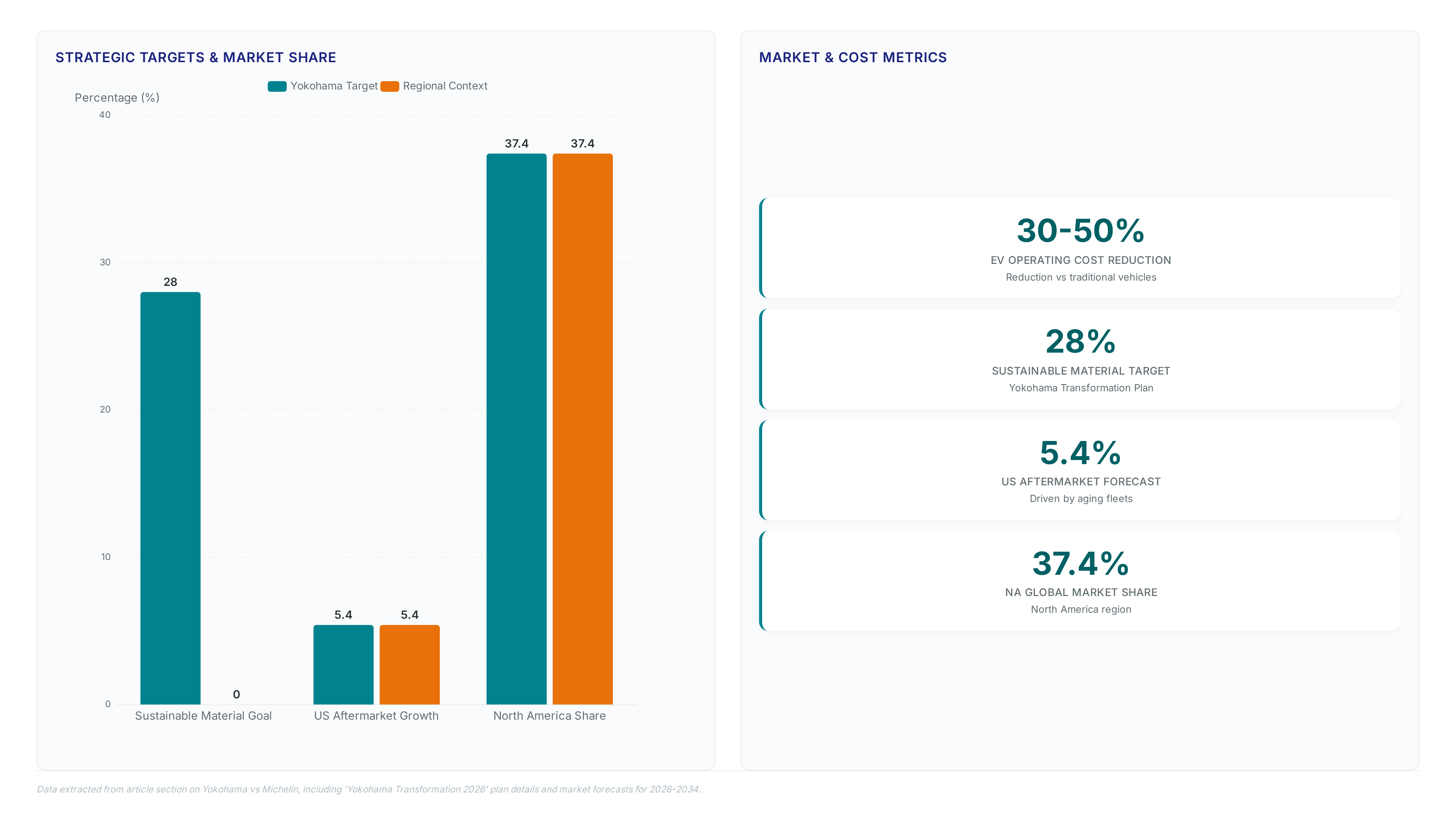
Yokohama targets 28% by 2027 sustainable material usage under its "Yokohama Transformation 2026" plan, contrasting Michelin's identity as a premium pioneer since 1889. Operators face a distinct choice between verified eco-metrics and established wet-weather dominance. Michelin compounds often exceed Yokohama equivalents in rain tests, creating a performance gap for safety-critical deployments. Prioritizing green supply chains may delay raw grip parity with French rivals in adverse conditions. Lower costs enable broader fleet adoption but signal a different value proposition to end users. Investors note the global racing tire market could reach a substantial value million by 2031, pressuring both firms to justify R&D spend. Yokohama bets that eco-friendly production appeals to modern sponsors more than legacy prestige alone. Michelin relies on brand equity to maintain margin leadership despite higher unit costs. Sustainability drives volume, while performance history secures elite contracts. Operators must weigh immediate grip needs against long-term corporate responsibility mandates.
Wet braking tests record the Michelin CrossClimate 2 outperforming the Yokohama YK-CTX in hydroplaning resistance. This performance gap forces network architects to prioritize safety-critical wet grip over raw mileage when deploying fleet assets in rain-heavy corridors. The chemical compound used by Michelin sacrifices some tread life to achieve superior water evacuation, a limitation evident in comparative drag races. Conversely, Yokohama tires report longevity reaching 85,000 miles, appealing to operators minimizing replacement frequency. The strategic choice depends on whether the deployment environment values immediate wet traction or total cost of ownership over time.
Investing in racing-derived technology makes sense only when the operational domain includes frequent high-speed wet maneuvers. Standard all-season compounds fail to evacuate water at speed, leading to loss of control. Teams should allocate budget to wet-performance tires if the route matrix includes significant exposure to rain or standing water. For dry-heavy routes, the longevity advantage of the YK-CTX reduces logistical overhead. The thermal stability of the rubber compound dictates the upper speed limit before grip degrades. Operators ignoring this distinction risk premature failure or reduced safety margins.
Market Value Leaders: Michelin vs Giti Growth Trajectories
Investment timing in racing tire technology hinges on the divergence between Michelin, the most valuable brand, and Giti, the fastest-expanding tire brand. This split creates a specific tension for capital allocation: prioritize established premium valuation or rapid market share expansion. The broader automotive sector reflects this volatility, with the U. S. Aftermarket forecast to grow 5.4% in 2026 as vehicle fleets age. Regional dominance further complicates the environment, as North America is projected to hold a 37.4% share of the global market by 2034. This concentration drives manufacturers to align motorsports sponsorships with regional production hubs.
Fans tracking Yokohama must recognize that its Pikes Peak participation serves as a high-altitude stress test for consumer products rather than pure branding. The hill climb compound developed for the event directly informs the durability of street tires sold globally. Investors should monitor when racing-derived material science transitions to mass production lines. The cost of waiting for perfect data often exceeds the risk of early adoption in this sector. Strategic entry points appear when racing success correlates with sustainable materials adoption in consumer lines. The window for using regional market shifts closes as competitors secure local supply chains.
Strategic Steps for Entering Hill Climb Racing
The Unlimited Division unrestricted engine displacement and forced induction, demanding tires that survive extreme thermal loads without structural failure. This classification requires a special hill climb compound distinct from standard track formulations used in lower divisions. Standard rubber relies on uniform softness for grip, yet this approach fails when ambient air density drops and brake heat radiates into the wheel well. Data from Firestone racing indicates similar industry shifts toward bio-based monomers to manage these thermal profiles sustainably. The cost of ignoring this specific chemical requirement is immediate blistering and loss of vehicle control above the tree line. Teams entering this category must s capable of surviving the "Race to the Clouds" environment without compromising safety margins. Products and Brands recommends validating compound specifications against altitude-adjusted pressure curves before committing to an entry. Failure to align tire chemistry with the Unlimited Division rules results in disqualification or catastrophic equipment loss.
Preparing a Sendycar Entry for the Unlimited Division
Robin Shute returns to the 104th running with a self-designed Sendycar, proving that custom chassis geometry dictates thermal management limits before the first turn. The Unlimited Division permits unrestricted engine displacement, forcing tire compounds to withstand extreme heat radiation from adjacent brake assemblies without structural failure. Operators fielding similar entries must prioritize a special hill climb compound over standard track rubber to maintain grip as air density drops at altitude. This chemical matrix sacrifices initial stickiness for thermal stability, a requirement documented in recent tire compound technology. However, the cost of this specialization is a narrow operating window; tires fail to reach optimal friction if the climb duration is too short for heat saturation. Most teams overlook that suspension travel must be reduced significantly compared to circuit setups to prevent bottoming out on the uneven mountain surface. The ADVAN A005 tires utilized by more than 20 Yokohama-sponsored drivers are engineered specifically for this delayed peak-friction window. Fielding a competitive entry requires logistics capable of supporting multiple compound swaps depending on daily temperature variances. Teams can source necessary racing support
| Preparation Phase | Critical Constraint | Operational Risk |
|---|---|---|
| Chassis Setup | Reduced suspension travel | Bottoming out on debris |
| Tire Selection | Thermal saturation time | Cold tire slip angle |
| Logistics | Altitude compensation | Incorrect air pressure |
Products and Brands recommends verifying all custom chassis components against current division rules prior to transport. The strategic implication is clear: without precise thermal mapping of the wheel well, even the most advanced compound will delaminates before the summit. This metric aligns with broader industry shifts where competitors integrate bio-styrene into compound structures. Durability validation requires stress-testing the special hill climb compound against thermal degradation specific to the 104th running. Data indicates the global racing sector faces valuation variance, with some analyses citing a market size of several hundred million dollars Operators cannot rely on average mileage ratings when ambient pressure drops near the summit. A failure to balance these factors results in premature tire delamination or missed corporate targets. Teams should cross-reference material sheets against the American Off-Road Racing Championship supply chain standards to ensure compliance. Products and Brands recommends documenting every batch code used during the June 21, 2026 event for post-race forensic analysis.
About
Dmitry Volkov serves as a Senior Automotive Technical Writer at KZMALL Auto Parts, where he specializes in translating complex engineering data into clear industry analysis. His daily work involves evaluating component standards and manufacturing processes across KZMALL's extensive catalog of over 50,000 SKUs, making him uniquely qualified to assess the technical demands of the Broadmoor Pikes Peak International Hill Climb. By analyzing how extreme altitude and terrain stress vehicle systems, Dmitry connects the high-performance requirements of Team Yokohama drivers like Laura Hayes to the rigorous fitment and durability standards upheld by KZMALL's proprietary brands. This event highlights the critical role of precise engineering, a core value shared by KZMALL Auto Parts as a global B2B supplier. Through his technical lens, Dmitry bridges the gap between professional racing dynamics and the reliable aftermarket parts that keep independent automotive operations running efficiently worldwide.
Conclusion
Scaling from circuit validation to the unique altitude profile of Pikes Peak exposes a critical fragility in standard thermal models. The significant reduction in suspension travel creates a narrow operating window where mechanical grip and thermal retention conflict, often causing unpredictable compound degradation that lab data fails to predict. As North American market share solidifies, the operational cost of ignoring these micro-environmental variables shifts from a performance deficit to a total reliability failure. Teams relying on generic setup sheets rather than site-specific thermal mapping will find their equipment unable to sustain the required pace through the tree line.
Organizations must mandate a dedicated altitude-specific validation protocol for all entries before the June 21, 2026 deadline. This is not merely about compliance; it is about ensuring the structural integrity of the tire carcass under rapidly changing atmospheric pressure. Do not wait for final practice sessions to identify delamination risks. Start by auditing your current suspension travel limits against the specific debris profiles of the upper mountain sections this week. Adjusting your baseline geometry now prevents catastrophic bottoming out later, securing both driver safety and competitive viability without relying on luck or average mileage ratings.
Frequently Asked Questions
Team Yokohama uses extreme hill climbs to validate materials for mass adoption. Their specific corporate goal involves reaching 28% sustainable material usage by leveraging data from the demanding Pikes Peak ascent conditions.
An aging vehicle fleet directly drives increased demand for replacement tires across the nation. The U.S. automotive aftermarket is forecast to grow 5.4% in 2026 as average vehicle age approaches thirteen years old.
Standard slicks overheat and lose cohesion during the massive elevation gain. The special hill climb compound maintains essential grip where thermal degradation would otherwise cause standard rubber mixes to fail completely.
Laura Hayes and Robin Shute pilot these specialized tires to manage extreme torque loads. Their entries in the Unlimited Division provide critical thermal modeling data for future consumer-grade racing tire development.
Hill climb specific compounds lack the durability required for multi-lap endurance events. The extreme gradient forces heat buildup that standard road compounds cannot withstand without specialized mixes.