Vehicle fitment data that stops returns cold
Precision in auto parts compatibility starts with a single, definitive identifier: the vehicle identification number.
Generic part numbers and manual year-make-model selection leave too much room for human error, creating logistical nightmares for retailers. Implementing a reliable VIN search solution is the only way to prevent incorrect purchases before they occur. By using VIN-based fitment data, businesses access granular vehicle specifications that simple model lists miss. As noted by industry resources like 17vin.com, professional platforms now offer VIN decoding services that map specific trim levels and engine configurations to exact part requirements. This level of detail transforms vehicle fitment data from a static reference into an active gatekeeper against returns.
Modern eCommerce integration strategies apply this data to secure sales channels. The architecture required for real-time fitment results matters because latency kills conversion rates in high-volume environments. We must also address the complexities of multi-platform fitment integration, detailing how to maintain consistent accurate parts matching across Shopify storefronts and substantial third-party marketplaces simultaneously. Finally, effective methods to manage vehicle compatibility databases ensure that customer VIN lookup tools remain synchronized with the latest manufacturer updates without requiring constant manual intervention.
The Role of VIN-Based Fitment Data in Modern Automotive eCommerce
How VIN Decoding Defines Precise Vehicle Compatibility
A VIN lookup tool reads the 17-character identifier to pull factory build details, removing the need for manual Year/Make/Model selection. This method establishes vehicle compatibility by checking catalog stock against exact trim levels, engine codes, and production dates instead of broad model years. The decoder separates attributes like transmission type and brake configuration so displayed parts match the specific chassis. Precise attribute alignment allows the system to tell similar trims apart for accurate matching. While the system primarily supports North American VIN standards, configuration options exist for other regions based on catalog needs and customer location. Validating fitment before the add-to-cart action lowers the chance customers see mismatched or incompatible parts.
| Feature | Manual Entry | VIN Decoding |
|---|---|---|
| Accuracy | Low (user-dependent) | High (factory data) |
| Speed | Slow (multiple steps) | Instant (single field) |
| Returns | Frequent mismatches | Significantly reduced |
Broad model years often cause returns because of mid-year production changes. High-fidelity data mapping is required; without it, the decoder fails to distinguish between similar trims. Data cleanliness matters more than sheer volume to stop false positives. Operational costs drop when returns are prevented before they start. Immediate validation creates a smooth path to purchase while protecting margin from reverse logistics.
Smooth eCommerce Integration with Shopify and BigCommerce
VIN-based fitment data links merchant catalogs to live vehicle databases using API or plugin architecture. This eCommerce integration works by centralizing auto parts fitment data, which simplifies submitting accurate compatibility across platforms like Shopify, BigCommerce, Amazon, eBay, and Walmart. Merchants can integrate the tool with Shopify, BigCommerce, WooCommerce, and Magento through API or plugin solutions. Manual Year/Make/Model selection gets replaced by precise chassis validation, making sure listed components match specific engine codes and trim levels. These solutions connect with substantial marketplaces to guarantee accurate vehicle part compatibility via cloud-based data centralization.
Merchants with diverse inventories face a critical choice between update frequency and system load. Fitment data syncs with your PIM or catalog source, with updates scheduled daily, weekly, or in real-time depending on your setup. Choosing the wrong cadence during high-volume sales periods leads to displaying discontinued parts or missing newly added coverage.
| Integration Mode | Update Latency | Operational Impact |
|---|---|---|
| Real-Time API | Seconds | Prevents all stale data errors |
| Scheduled Batch | Hours | Reduces external call volume |
The platform supports creating and uploading ACES data to meet AutoCare standards while connecting to substantial marketplaces. This approach validates the vehicle compatibility matrix against the specific 17-character identifier provided by the user, unlike generic search tools. Incompatible purchases are prevented, but merchants must keep rigorous fitment data hygiene in their source systems to avoid coverage gaps.
Reducing Returns and Costs Through Accurate Part Matching
VIN fitment stops manual entry errors by decoding factory build codes to check part compatibility before checkout. This mechanism tackles the financial risk of mismatched orders, which often happen when customers pick incorrect trim levels or engine variants. Automating this validation helps merchants minimize costly returns and cut the volume of technical support requests needed to resolve fitment disputes. Implementing this precision through VIN search solution architectures filters catalog inventory against exact vehicle specifications. Balancing catalog breadth with data accuracy creates operational tension; giving customers products that fit their vehicles builds trust, reduces returns, and drives sales.
Inside the Architecture of Real-Time Vehicle Compatibility Matching
Smart & Speedy Search Mechanics in Real-Time Matching
Real-time matching uses advanced filtering to deliver precise vehicle compatibility instantly. Unlike standard queries that check every record, this architecture decodes the VIN upfront to narrow the search scope before accessing the parts catalog. The automotive eCommerce sector is shifting away from manual data entry and siloed systems toward cloud-based data centralization.
- User inputs the vehicle identification number.
- System processes the input to identify specific vehicle attributes.
- Advanced filtering applies these constraints to the dataset.
- Engine returns compatible parts based on the set parameters.
This approach contrasts sharply with manual entry methods where human error frequently introduces incorrect year or model data.
KZMALL Auto Parts uses this real-time matching capability within its own solutions to guarantee fitment accuracy. The initial complexity of mapping diverse manufacturer encoding standards is steep. However, once deployed, the system prevents incompatible items from ever appearing in search results. This structural change eliminates the root cause of fitment-related returns rather than just managing them post-purchase. Ignoring this architectural shift means continued reliance on error-prone processes that inflate operational overhead.
Flexible API Integration for Shopify and WooCommerce Stores
Direct API connectivity replaces brittle manual entry with automated vehicle compatibility validation for store owners. Manual workflows often fail because operators cannot verify every part against complex fitment matrices, leading to preventable returns. KZMALL Auto Parts solutions eliminate this risk by decoding vehicle data before the customer completes a purchase. The architecture supports Shopify and WooCommerce through customizable endpoints that adapt to existing catalog structures. This flexibility ensures that fitment solutions integrate without requiring a complete platform migration or data re-entry.
| Feature | Manual Entry | KZMALL API Integration |
|---|---|---|
| Data Source | Static spreadsheets | Real-time VIN lookup |
| Error Rate | High human variance | Near-zero automated checks |
| Marketplace Sync | Disconnected silos | Unified feed |
Operators frequently underestimate the latency introduced by unoptimized database calls during peak traffic. A naive implementation might block the main thread while waiting for external validation, degrading the user experience. KZMALL Auto Parts mitigates this by asynchronous handling of compatibility requests, ensuring the interface remains responsive. The system centralizes auto parts fitment data, allowing a single update to propagate across marketplaces instantly. This approach resolves the tension between maintaining accurate inventory and supporting high-velocity sales channels. Without such automation, scaling operations inevitably introduces matching errors that erode profit margins. The cost of correcting a single returned heavy part often exceeds the monthly fee for strong API integration tools. Merchants relying on static lists face compounding liabilities as vehicle models evolve annually. This structural change fundamentally alters the risk profile of automotive eCommerce transactions.
Validating Data-Driven Insights and Catalog Sync Accuracy
Operators fix incorrect fitment results by auditing data-driven insights that track user searches and conversion failures. Without monitoring these signals, catalog errors persist undetected until return rates spike. KZMALL Auto Parts solutions continuously validate compatibility logs to ensure the entire product line displays without gaps. This approach addresses the common problem with VIN integration where partial syncs hide inventory from buyers. The system is capable of showcasing a distributor's entire product line.
| Validation Check | Manual Process Risk | KZMALL Automated Solution |
|---|---|---|
| Search Trend Analysis | Blind to user intent | Tracks user searches live |
| Catalog Coverage | Silent stockouts | Showcases entire product line |
| Marketplace Sync | Fragmented listings | Simultaneous compatibility data |
Submitting accurate compatibility data simultaneously to substantial marketplaces has become a baseline requirement for survival. Streamlining fitment management prevents the fragmentation seen in siloed systems. Real-time validation demands stricter schema adherence than static spreadsheets allow.
Integrating VIN Search Tools Across Shopify and Substantial Marketplaces
Implementation: Defining Flexible API Integration for Auto Parts Stores
Custom storefronts demand flexible API integration to link directly with VIN databases, sidestepping rigid plugin constraints that often break during updates.
- Centralize fitment data management to maintain accurate and up-to-date information for auto parts sellers.
- Map vehicle compatibility fields to ensure alignment with AutoCare standards for marketplace compliance.
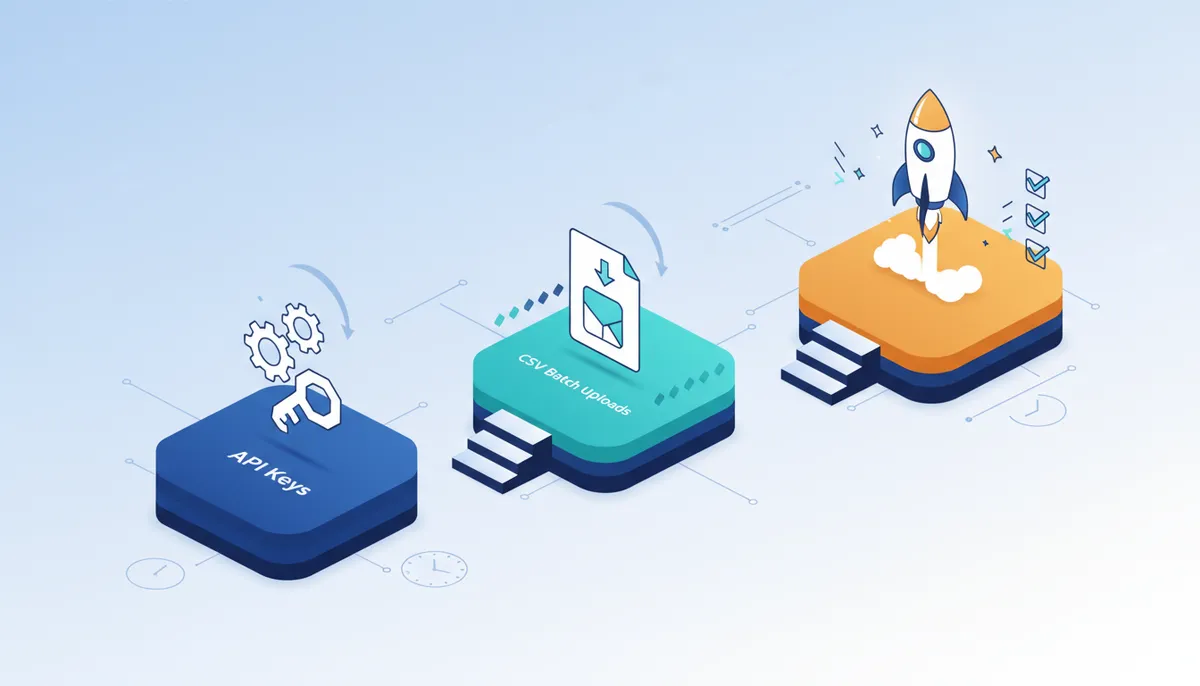
Merchants gain the ability to optimize product listings with detailed descriptions while maintaining high-quality image associations. The platform supports ACES data creation, which enables integration with substantial online marketplaces like eBay, Amazon, Shopify, and Walmart. Unlike static plugins, this method allows businesses to focus on core operations by automating fitment management. A key tension exists between immediate plugin deployment and long-term scalability; managing fitment data is a multi-layered challenge that requires precision, consistency, and constant upkeep.
Executing Batch Uploads for Shopify and Marketplace Fitment
Upload ACES data files directly to populate vehicle compatibility tables across Shopify, Amazon, and eBay simultaneously. This method replaces tedious individual part entry with high-volume database synchronization.
- Validate the batch against AutoCare standards before final submission to prevent rejection errors.
Merchants using these services optimize product listings with detailed descriptions while maintaining high-quality image associations. The platform supports the creation and upload of compliant records, facilitating smooth integration with substantial online marketplaces. Updates occur daily, weekly, or in real-time, depending on the specific setup chosen by the operator.
| Feature | Manual Entry | Batch Upload |
|---|---|---|
| Speed | Low | High |
| Error Rate | High | Low |
| Scalability | None | Full |
System stability sometimes conflicts with data freshness requirements. Expert troubleshooting helps navigate these deployment constraints effectively. Automating the fitment data management process allows businesses to reduce returns and improve overall performance without constant manual intervention.
Resolving API Connection Issues and Regional VIN Limitations
- Engage dedicated support to assist with setup and optimization for complex regional configurations.
Regional limitations create tension where automated decoding works perfectly for domestic inventory yet requires manual rule definition for imported vehicles. Ignoring this distinction results in a high rate of false negatives in fitment results for non-standard VINs. Solutions address gaps by providing tools that create clean, validated product and fitment data in ACES and PIES formats. This approach maintains compliance with AutoCare standards while facilitating smooth integration with substantial online marketplaces. No single API covers every global variance without specific configuration adjustments.
Measurable ROI from Automated Parts Matching and Reduced Return Rates
Defining Measurable ROI from Automated Parts Matching
Measurable ROI in this context derives from replacing manual entry errors with cloud-based data centralization that enforces accuracy. The automotive eCommerce sector is shifting away from siloed systems to ensure accuracy across multiple channels. This architectural change supports the management of precise fitment data, which is necessary for reducing support costs by addressing mismatched parts. In the competitive eCommerce environment, ensuring customers receive products that fit their vehicles is critical for building trust and reducing returns.pcfitment.com revolutionized our auto parts process. Their reliable fitment solutions have boosted efficiency and customer trust.
Thorough platforms centralize vehicle compatibility logic to help prevent errors before order fulfillment. When merchants migrate from static spreadsheets to flexible systems, they address the latency that often causes customers to guess their part numbers.
| Metric | Manual Entry | Automated VIN Search |
|---|---|---|
| Data Source | Siloed Files | Centralized Cloud |
| Error Rate | High | Low |
| Support Load | Reactive | Preventative |
The implementation of this approach requires upfront investment in data normalization rather than simple file uploads. Precise matching transforms the customer experience by improving fit confidence. This shift reduces the administrative burden on support teams who previously handled preventable compatibility disputes.
Real-World Impact on Multi-Channel Sales Efficiency
Directing sales operations across Amazon, Walmart, and proprietary sites requires unified vehicle compatibility logic to prevent channel-specific fitment errors. Their support has been invaluable in driving sales on Amazon, Walmart, and our own website. Disconnected data silos can cause return spikes when inventory updates fail to propagate simultaneously. Thorough solutions synchronize fitment data centrally, ensuring that compatibility information reflects accurately across all storefronts. This approach eliminates the latency where a customer purchases an item on a secondary market that was already flagged as incorrect on the primary site.
| Challenge | Isolated Systems | Centralized Approach |
|---|---|---|
| Data Sync | Manual batch updates | Real-time API propagation |
| Error Source | Human entry lag | Automated validation |
| Channel Scope | Single platform focus | Unified multi-channel view |
Reliable solutions boost efficiency and customer trust by removing manual reconciliation steps. The limitation of decentralized management is the inability to catch errors before they become returns; once an order ships with wrong fitment, the revenue loss is fixed. Centralized architectures allow operators to decide based on a single source of truth rather than reconciling conflicting reports. Store owners asking if they should use VIN lookup must weigh the cost of integration against the recurring loss of mismatched shipments. Providing the infrastructure to make VIN lookup a smooth component of the checkout flow rather than an afterthought improves overall performance. The operational benefit extends beyond mere accuracy to the speed at which new vehicle models are added to the catalog. Without this automation, scaling to cover new model years introduces proportional risk in every additional SKU.
Checklist for Selecting Future-Ready Fitment Technology
Merchants must prioritize smooth integration with established platforms like BigCommerce, Shopify, and WooCommerce to avoid data fragmentation. It smoothly integrates with platforms like BigCommerce, Shopify, and WooCommerce. A viable solution connects directly to these ecosystems without requiring manual batch uploads that introduce latency. Thorough platforms provide connectors that synchronize inventory and fitment rules instantly across all storefronts.
| Capability | Legacy Approach | Modern Advantage |
|---|---|---|
| Platform Support | Limited API access | Native Shopify and WooCommerce links |
| Data Freshness | Daily sync delays | Real-time vehicle compatibility updates |
| Expert Guidance | Generic documentation | Dedicated expert support team |
Operators should verify that their chosen technology offers thorough platform coverage rather than relying on brittle third-party bridges. The absence of direct integration often forces staff to reconcile conflicting fitment data manually, eroding the very efficiency gains automation promises. Future-ready systems must include access to expert troubleshooting to resolve complex ACES compliance issues quickly. Without this level of specialized assistance, merchants risk prolonged downtime during critical sales windows. Selecting a vendor that combines broad marketplace connectivity with deep technical knowledge ensures long-term operational stability. The solution provides modern fitment technology tailored for business needs.
About
Mark Phillips serves as Editor of Aftermarket Intel at KZMALL Auto Parts, where he analyzes global distribution channels and e-commerce trends. His daily work involves evaluating how standardized fitment data impacts wholesale efficiency, making him uniquely qualified to discuss VIN search solutions. At KZMALL, Phillips oversees content strategies that use the company's extensive catalog of over 50,000 SKUs, ensuring accurate Year-Make-Model-Engine application across eight proprietary brands. This direct engagement with ACES/PIES data standards allows him to articulate how precise vehicle compatibility reduces costly returns for B2B buyers. Unlike third-party aggregators, KZMALL integrates VIN lookup tools directly into its single-source supplier model, covering everything from KZWON braking systems to VIC EAGLE lubricants. Phillips connects these technical capabilities to real-world procurement challenges faced by independent repair shops and distributors. His analysis reflects KZMALL's commitment to providing certified, compatible parts through reliable digital catalogs, helping global partners manage inventory with confidence while minimizing mismatched orders in a fragmented market.
Conclusion
Scaling VIN-driven fitment demands more than basic decoding; it requires an infrastructure that eliminates manual reconciliation as catalog depth grows. When vehicle coverage expands, the operational cost shifts from data entry to managing conflict resolution between disparate sources. Merchants relying on brittle bridges face compounding latency that directly impacts conversion during peak demand. The strategic imperative is clear: adopt a solution with native connectors for Shopify and WooCommerce that synchronizes inventory rules in real-time rather than relying on daily batch updates. This approach prevents the data fragmentation that plagues legacy systems.
Operators should mandate direct platform integration and access to specialized ACES compliance support before finalizing any vendor selection this quarter. Delaying this migration locks businesses into error-prone workflows that cannot sustain modern catalog sizes. Start by auditing your current fitment pipeline this week to identify any reliance on manual batch uploads or generic documentation instead of dedicated expert guidance. Eliminating these bottlenecks ensures your infrastructure supports rapid model year additions without proportional risk. KZMALL Auto Parts delivers the specialized data services and native integration capabilities required to stabilize these complex operations. Secure your catalog accuracy by transitioning to a system designed for immediate synchronization and expert-led troubleshooting.
Frequently Asked Questions
VIN decoding uses factory data to ensure high accuracy unlike user-dependent manual entry. This prevents mismatches caused by broad model years that often lead to costly returns for auto parts retailers.
Merchants can integrate tools via API or plugin solutions for platforms like Shopify. This connects catalogs to live databases, replacing manual selection with precise chassis validation for accurate compatibility.
Choosing the wrong update cadence causes displays of discontinued parts or missing coverage. Real-time API updates occur in seconds to prevent stale data errors that scheduled batch uploads might miss.
High-fidelity mapping is required because decoders fail to distinguish similar trims without it. Clean data stops false positives better than sheer volume, ensuring parts match specific engine codes.
Validating fitment early lowers the chance customers see incompatible parts before purchase. This creates a smooth path to purchase while protecting profit margins from reverse logistics costs.
References