
Supply chain AI now leads disruptors
AI's impact on supply chains surged 25 percentage points in one year, with 48 per cent of leaders now calling it significant.
The 2026 MHI Annual Industry Report confirms that artificial intelligence has overtaken robotics as the primary disruptor, fundamentally altering how networks operate and compete. While robotics and automation trail at 39 per cent, the rapid ascent of agentic AI promises to eliminate repetitive tasks and drive a shift toward continuously adaptive, software-set models. This transition is not merely about installing new tools but requires a complete rethinking of capital allocation and labor deployment to address economic uncertainty and talent shortages.
You will learn how emerging technologies are reshaping forecasting accuracy and operational durability against geopolitical risks. We will also examine the specific barriers preventing scale, including unclear use cases and automation costs, while outlining the path toward real-time analytics and true supply chain visibility.
The Role of AI and Emerging Technologies in Modern Supply Chains
Defining Agentic AI and Software-Set Supply Chains
Agentic AI doesn't wait for a prompt. It acts. This capability pushes supply networks past passive analysis into autonomous action, fueling software-set supply chains where flexible logic overrides static physical limits to direct material flow. Data from the 2026 MHI Annual Industry Report indicates 48 per cent of leaders now view AI impact as significant, marking a 25 percentage points increase since 2025. Such growth signals a pivot where generative AI synthesizes data for scenario planning while agentic systems enforce those plans without manual intervention. Unlike traditional models bound by fixed routes, software-set supply chains abstract logistics control from hardware, enabling real-time reconfiguration during disruptions.
Speed creates its own problems. Systems self-correcting via predictive algorithms may optimize local efficiency while missing global strategic goals if guardrails stay undefined. Operators must set clear boundaries for autonomous execution to stop cascading errors from unchecked agent decisions. Rapid integration demands a workforce skilled in managing intelligent orchestration rather than manual processes. Theoretical adaptability in software-set models stays out of reach for production environments unless firms address this talent gap first.
How Intelligent Systems Orchestrate Adaptive Supply Networks
Static logistics die hard. Intelligent systems force a rewrite, turning rigid chains into software-set models where logic overrides physical constraints. This architectural shift allows networks to reconfigure flows dynamically rather than following fixed, pre-determined routes. Integrating generative AI with edge computing pushes organizations toward these continuously adaptive structures. One quarter of industry leaders describe this technological evolution as transformational. Such systems alter fundamental operational strategies by changing how companies solve problems, allocate capital and deploy labour.
Efficiency clashes with flexibility here. Traditional models optimize for lowest cost along a single path, whereas adaptive networks prioritize responsiveness to disruption. This constraint requires abandoning rigid planning cycles for real-time orchestration. Adaptive supply chains demand higher computational overhead but offer durability that static planning cannot match. Operators must accept increased complexity in system design to gain this agility.
Capital deployment shifts from heavy physical assets to scalable software infrastructure. Labor roles evolve from manual execution to overseeing autonomous agents that handle repetitive tasks. This transition creates a barrier for firms lacking digital maturity or specialized talent. Without skilled personnel to manage these intelligent orchestrators, the technology remains underutilized. Successful adoption depends on aligning workforce capabilities with advanced algorithmic tools.
AI Versus Robotics: Comparing Disruption Ratings in 2026
AI currently drives a 25-point surge in perceived disruption, outpacing the 16-point rise for robotics. This gap highlights how generative AI and agentic AI reshape decision logic quicker than physical hardware deploys. While robotics improve throughput, intelligent software changes the operational model itself.
| Technology | Significant Impact Rating | Year-Over-Year Change |
|---|---|---|
| Artificial Intelligence | 48 per cent | 25 percentage points |
| Robotics & Automation | 39 per cent | 16‑point increase |
Executives accelerating investments in automation often prioritize digital tools because software scales without linear capital expenditure. The distinction matters: generative AI synthesizes complex scenarios for planning, whereas agentic AI executes those plans independently. Robotics remains necessary for physical manipulation but lacks the adaptive reach of software-set networks.
Rapid AI ascent creates a specific talent bottleneck that physical automation does not. Organizations struggle to find staff capable of building business cases for autonomous agents. The limitation is clear: deploying an agent requires redefining the human role, not adding a machine. This friction slows the translation of high disruption ratings into realized value.
How Intelligent Systems Change Forecasting and Operational Durability
How Agentic AI and Generative Models Drive Forecasting Accuracy
High-volume repetitive tasks in demand planning vanish when agentic AI operates independently under human oversight. This autonomy permits generative models to synthesize unstructured market signals into precise inventory requirements without constant manual intervention. Organizations shifting toward software-set models build continuously adaptive networks that respond instantly to volatility.
Executives accelerate investments in digital supply-chain tools to enable these hybrid global-local operational structures. The technology integrates physical and edge AI to orchestrate complex logistics autonomously. Significant workforce development becomes necessary to manage these intelligent systems effectively. Talent shortages remain a primary barrier to scaling such advanced deployments across the enterprise.
Looking ahead, supply chain organizations are expected to increasingly rely on AI to enhance forecasting, improve visibility and address disruptions. Leaders reassess how their networks operate, invest, and compete as the emergence of AI prompts a rethinking of nearly every aspect of supply chain operations. Companies invest not only in advanced technologies but also in workforce development to deploy and scale those tools effectively. This tension between speed and reliability defines the current maturity curve for supply chain automation.
The 2026 MHI Annual Industry Report, Rewiring the Future: A Supply Chain Playbook for Innovation, reveals that nearly half of respondents, 48 per cent, now rate AI's impact as significant or greater. This figure represents a jump of 25 percentage points from 2025. One quarter (24 per cent) describe AI as transformational. Robotics and automation ranked second, with 39 per cent viewing their impact as significant or greater, a 16‑point increase year over year.
Integrating Real-Time Analytics to Address Disruptions and Visibility Gaps
Raw telemetry means nothing without action. Organizations deploy real-time analytics to convert that data into immediate inventory adjustments before delays cascade. This mechanism functions by ingesting continuous data streams from logistics partners, allowing intelligent systems to recalibrate demand planning models instantly rather than waiting for batch processing cycles. The process involves integrating generative AI, agentic AI, physical AI, and edge AI, pushing supply chains toward software-set models that are continuously adaptive and increasingly orchestrated by intelligent systems.
Premium Guard recently demonstrated this operational flexibility by completing Phase 2 of its acquisition strategy to secure scalability within the aftermarket sector. Such capital deployment addresses the chronic need for adaptive capacity when geopolitical tensions alter freight economics.
The shift toward software-set models introduces complexity in workforce alignment. Leaders report that talent shortages often stall deployment alongside other key barriers such as unclear use cases, automation costs, difficulty building business cases, and budget constraints. The cost of this gap is measurable: without skilled analysts to interpret algorithmic outputs, organizations risk automating poor decisions at scale.
Supply chain entities must therefore prioritize training programs alongside tool acquisition. AI already adds value across functions such as inventory management and logistics, yet human oversight remains a defining characteristic of agentic AI, which operates independently but retains human supervision. The limitation lies in the assumption that technology alone resolves visibility gaps. Operators who ignore the cultural shift required for autonomous operations will find their real-time data underutilized.
Overcoming Workforce Shortages and Economic Uncertainty in AI Deployment
Respondents ranked economic uncertainty, inflation and geopolitical risks as the most impactful trends affecting supply chains in 2026. These macro pressures coincide with a environment where robotics and automation ranked second only to AI in perceived impact, with 39 per cent viewing their impact as significant or greater. The tension lies in balancing this urgent need for automation against the parallel requirement for deep technical expertise to manage autonomous systems. Organizations are investing in workforce development to ensure they can deploy and scale those tools effectively. Without this parallel investment in human capital, sophisticated agentic AI frameworks often stall during the transition from pilot to production scale.
The dominant limitation remains that technology adoption accelerates quicker than the available talent pool can expand to support it. Executives apply digital supply-chain tools to enable hybrid global-local models, yet these systems demand higher-order troubleshooting skills. A failure to address the skills deficit means that organizations struggle with where to begin and how to scale AI initiatives, regardless of software capability. The cost is measurable in delayed rollout timelines and underutilized licensing agreements across the sector.
Strategic Implementation Frameworks for Scaling AI Initiatives
Defining the Five Core Barriers to Scaling AI Initiatives
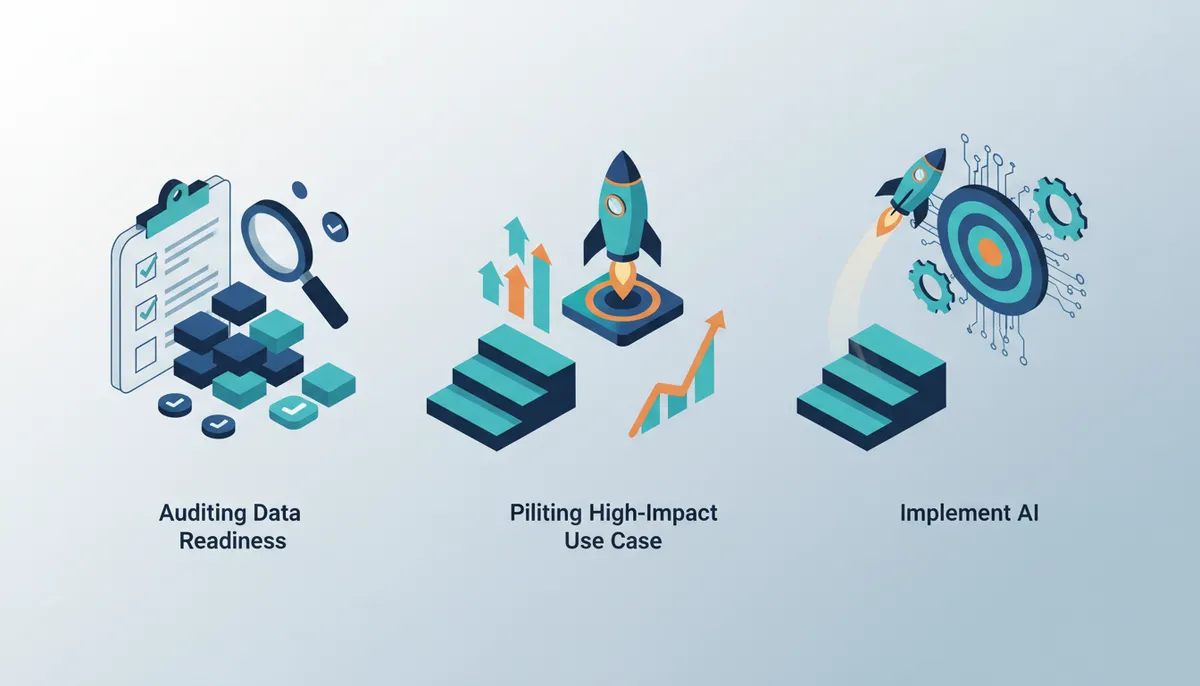
Organizations frequently stall because they cannot pinpoint viable starting points for deployment. Respondents identified five distinct obstacles: unclear use cases, automation costs, difficulty building business cases, talent shortages, and budget constraints. These gaps prevent firms from moving beyond pilot phases into production environments where value accrues.
- Unclear use cases obscure the path from concept to operational utility.
- Automation costs represent a significant financial hurdle for organizations attempting to scale.
- Difficulty building business cases complicates the justification for widespread AI adoption.
- Talent shortages create challenges in deploying and scaling advanced tools effectively.
- Budget constraints limit the ability of organizations to invest in necessary technologies and training.
Many leaders struggle with where to begin despite strong interest in scaling AI initiatives. Without clear metrics, justifying capital allocation becomes difficult for finance teams.
The emergence of AI is prompting leaders to rethink nearly every aspect of supply chain operations. While technology adoption is accelerating, uncertainty remains a dominant challenge alongside these implementation barriers. Addressing these core issues is critical as companies shift toward software-set models that are continuously adaptive and increasingly orchestrated by intelligent systems.
Deploying AI for Inventory Management and Demand Planning
Deploying AI for inventory management and demand planning requires structured steps to convert reactive logistics into proactive operations. AI is already adding value across functions such as inventory management, demand planning, and logistics. Organizations are investing not only in advanced technologies such as AI, robotics and real‑time analytics, but also in workforce development.
- Identify specific use cases where agentic AI can eliminate high-volume repetitive tasks and support more adaptive supply chains.
- Invest in workforce development to ensure organizations can deploy and scale tools like AI, robotics, and real-time analytics effectively.
- Integrate real-time analytics to support the transition toward software-set supply chains where logistics flows are dictated by software logic rather than static physical constraints.
The transformation extends beyond internal metrics; AI is forecasted to change the automotive aftermarket by addressing chronic issues such as high return rates and delivery delays. This shift moves the industry from reactive fixes to coordinated planning. However, a critical tension exists between rapid technological deployment and the challenge of building viable business cases amidst budget constraints. Organizations often struggle to scale initiatives because unclear use cases obscure the return on investment required to justify expenditures.
| Challenge | Impact on Scaling |
|---|---|
| Unclear use cases | Prevents transition from pilot to production |
| Talent shortages | Limits ability to deploy and scale tools |
| Budget constraints | Restricts investment in technology and training |
The consequence of ignoring this friction is a fragmented implementation where technology outpaces operational readiness. Leaders must align capital allocation with labor deployment strategies to avoid creating isolated pockets of automation that fail to improve overall visibility. Success depends on treating software-set models as continuous adaptation engines rather than one-time upgrades.
Checklist for Workforce Development and Technology Investment
Validate that capital allocation targets both robotics infrastructure and the human capital required to govern it.
- Map agentic AI deployments to specific high-volume repetitive tasks to eliminate manual bottlenecks.
- Fund workforce development initiatives that enable staff to oversee autonomous systems effectively.
- Prioritize real-time analytics tools that enhance visibility and address disruptions.
- Establish clear use cases to guide investment in automation and digital tools.
| Investment Focus | Primary Outcome | Operational Risk |
|---|---|---|
| Advanced Robotics | Enhanced operational capability | Implementation complexity |
| Talent Training | Effective tool deployment and scaling | Skill gaps |
| Real-time Analytics | Improved visibility and disruption management | Data integration challenges |
Top executives are accelerating investments in automation as a direct response to market volatility and the need for durability. This strategic pivot requires balancing technology adoption with the reality of persistent talent shortages. Agentic AI is highlighted as a technology with the potential to eliminate high‑volume repetitive tasks and support more adaptive, responsive supply chains.
Organizations ignoring the human element in their technology investment strategy risk deploying tools their teams cannot effectively manage. Leaders must recognize that scaling AI initiatives fails without parallel development of internal expertise to handle these sophisticated, software-set models.
Investment Decisions and Adoption Timelines for Autonomous Supply Chains
Application: Defining Investment Triggers for Software-Set Supply Chains
Capital allocation shifts as economic uncertainty and talent shortages influence how companies solve problems and deploy labour. The 2026 MHI Annual Industry Report reveals that 48 per cent of leaders now rate AI impact as significant, a surge of 25 percentage points from 2025. This statistical jump highlights the expanding integration of generative AI, agentic AI, physical AI, and edge AI, which is pushing supply chains toward software-set models that are continuously adaptive. Organizations are investing not only in advanced technologies but also in workforce development to ensure they can deploy and scale those tools effectively.
| Traditional Trigger | Software-Set Trigger |
|---|---|
| Fixed capacity thresholds | Real-time demand planning signals |
| Annual budget cycles | Continuous agentic AI orchestration |
| Reactive disruption response | Predictive logistics flows |
However, scaling these systems requires overcoming severe workforce development gaps that currently limit deployment speed. Respondents cited talent shortages, unclear use cases, and difficulty building business cases as key barriers. Operators face challenges in determining where to begin and how to scale AI initiatives. The Auto Service World discourse confirms that software logic must dictate flow rather than physical constraints. This shift is changing how companies solve problems, allocate capital, and deploy labour.
Calculating ROI for Agentic AI in Repetitive Task Elimination
Investment timing for agentic AI aligns with the potential to eliminate high-volume repetitive tasks. The 2026 MHI Annual Industry Report notes that 48 per cent of leaders now view AI impact as significant, marking a 25 percentage points rise from 2025. This statistical surge indicates that agentic AI, which can operate independently with human oversight, has the potential to eliminate high-volume repetitive tasks and support more adaptive, responsive supply chains. Unlike traditional automation, these systems are designed to address disruptions and improve visibility. The Automotive Aftermarket AI Transformation case study illustrates how AI is forecasted to change the automotive aftermarket supply chain specifically by addressing chronic issues such as high return rates and delivery delays. However, the limitation remains clear: unclear use cases and talent shortages prevent many firms from building viable business cases. Leaders must decide if their current workforce development gaps justify the transition cost now or later.
Navigating Economic Uncertainty and Geopolitical Risks in AI Deployment
Inflation and geopolitical instability force stakeholders to balance urgent automation needs against fiscal caution. Top executives are accelerating investments in automation and digital supply-chain tools as a direct response to market volatility.
| Risk Factor | Operational Impact | Strategic Response |
|---|---|---|
| Inflation | Budget constraints limit pilot scaling | Focus on high-volume task elimination |
| Geopolitics | Disrupted global-local flows | Deploy hybrid global-local models |
Uncertainty remains the dominant challenge, with workforce and talent shortages following closely behind economic factors. This hesitation creates a paradox where fiscal prudence may conflict with the need for resiliency and real-time data. Stakeholders must navigate barriers such as automation costs and difficulty building business cases. The cost of inaction is measurable in lost durability against supply chain disruption. Executives who navigate this uncertainty successfully will use digital tools to strengthen durability despite external turbulence.
About
Mark Phillips serves as Editor of Aftermarket Intel at KZMALL, where he daily analyzes the complex distribution channels and competitive dynamics of the global automotive aftermarket. This specific vantage point makes him uniquely qualified to examine how artificial intelligence will alter supply chains, a topic central to KZMALL's strategy as a multi-brand wholesale platform. His work involves monitoring how 50,000+ SKUs move through fragmented networks, directly connecting him to the challenges of inventory management and fitment accuracy that AI promises to solve. At KZMALL, the integration of standardized ACES/PIES fitment data mirrors the broader industry shift toward digital transformation discussed in recent industry reports. Phillips uses his deep experience tracking substantial distributors to explain why 48 percent of leaders now view AI as significant. By connecting daily operational realities at KZMALL with emerging robotics and automation trends, he provides a factual roadmap for B2B partners navigating this technological evolution.
Conclusion
Scaling AI beyond isolated pilots breaks when workforce development gaps prevent teams from interpreting real-time data during crises. The ongoing operational cost is not merely financial but manifests as a paralysis where fiscal caution directly undermines durability against inflation and geopolitical shocks. Companies that delay integration to avoid upfront transition costs ultimately pay higher penalties through lost durability when global-local flows fracture. You must treat talent shortages as a critical bottleneck equal to budget constraints, rather than a secondary HR issue.
Executives should commit to a hybrid global-local deployment model within the next two quarters, specifically targeting high-volume task elimination to offset inflation pressures. This approach prioritizes immediate ROI over speculative long-term transformation, ensuring that digital tools strengthen rather than strain current operations. Do not wait for perfect market clarity before acting, as uncertainty remains the dominant variable regardless of your timing.
Start this week by mapping your top three return-rate drivers against existing staff skill sets to identify exactly where automation can remove friction without requiring new hires. This specific audit grounds your business case in operational reality rather than theoretical efficiency gains. Addressing these specific workflow breaks now builds the necessary foundation for broader supply chain optimization before the next wave of market volatility hits.
Frequently Asked Questions
Forty-eight percent of leaders consider AI impact significant today. This surge of 25 percentage points means firms must prioritise intelligent systems over static planning to avoid falling behind competitors.
Agentic AI executes tasks without human prompts to drive autonomy. This shift eliminates repetitive manual work, allowing companies to reallocate labor toward strategic oversight rather than routine execution.
AI drives a 25-point surge while robotics rose only 16 points. Software changes operational logic faster than hardware deploys, forcing leaders to rethink capital allocation beyond physical assets.
Unclear use cases and automation costs block widespread adoption today. Organizations struggle to build business cases, requiring clearer strategies to overcome talent shortages and budget constraints effectively.
Specific dollar amounts like an undisclosed amount are not cited for infrastructure costs. However, capital must shift from heavy physical assets to scalable software to enable real-time reconfiguration during disruptions.
References