
Automotive supply chain: 30,000 parts
A typical passenger vehicle requires approximately 30,000 individual parts. This number defines the modern automotive supply chain: a fragile, highly coordinated global network where synchronization failures trigger immediate production halts.
The system relies on a rigid tiered supplier model transforming steel and rubber into complex assemblies. Boise State research highlights how this network must manage everything from simple nuts and bolts to complex transmission systems. Without precise timing, the flow of components from specialized vendors creating airbags or catalytic converters collapses.
This analysis examines the mechanics of moving goods from raw material procurement to final assembly lines. It exposes hidden vulnerabilities in global logistics that threaten vehicle production stability. Navigating an industry where AI-powered automation attempts to mitigate constant disruption risks requires understanding these dynamics.
The Role of the Tiered Supplier Model in Modern Vehicle Manufacturing
Defining the Automotive Supply Chain Tiers from Raw Materials to OEMs
Steel, rubber, and plastic enter a hierarchical network that transforms them into finished vehicles through synchronized manufacturing stages. This end-to-end process encompasses sourcing raw materials and managing final distribution logistics. A typical passenger vehicle comprises approximately 30,000 individual parts, creating immense complexity for Original Equipment Manufacturers (OEMs) who assemble these components.
The industry uses a multi-tier model to manage this flow. Tier 4 Suppliers provide very basic raw materials like steel, aluminium, and rubber. Tier 3 Suppliers produce raw materials or basic components such as plastics, metals, or rubber. Tier 2 Suppliers manufacture specialized components including sensors and wiring harnesses. Finally, Tier 1 Suppliers integrate these parts into substantial systems like engines before delivery to OEM assembly lines.
| Tier Level | Primary Function | Direct Customer |
|---|---|---|
| Tier 4 | Raw Material Extraction | Tier 3 Suppliers |
| Tier 3 | Basic Material Processing | Tier 2 Suppliers |
| Tier 2 | Component Manufacturing | Tier 1 Suppliers |
| Tier 1 | System Integration | OEMs |
Disruptions at the base propagate upward through this structure. Efficiency drives the current model, yet the lack of direct visibility beyond Tier 1 limits rapid response capabilities during global shortages.
Operational Flow of Tier 1 Engine Systems and Tier 2 Sensor Components
Tier 1 Suppliers provide parts or assemblies directly to OEMs, including manufacturers of engine systems and transmission systems. They often have direct relationships with automakers and can be heavily involved in design and engineering. Tier 2 Suppliers provide components or subassemblies, such as individual sensors or wiring harnesses, that are used by Tier 1 suppliers in the production of larger systems.
Engagement between tiers is critical as the supply chain starts with the procurement of raw materials which are then delivered to various tiered suppliers. These materials are transformed into components like engines, chassis, and electrical systems. Multiple suppliers may be involved, with some specialized in producing specific parts. The technical architecture demands that Tier 2 manufacturers produce specialized parts that fit the exact specifications required for final system integration.
| Feature | Tier 1 Suppliers | Tier 2 Suppliers |
|---|---|---|
| Primary Output | Assembled Systems | Individual Components |
| OEM Contact | Direct | Indirect |
| Example Item | Transmission Systems | Wiring Harnesses |
Rigidity defines the operational risk because physical components cannot be patched remotely once installed. Supply chain disruptions caused by events such as the COVID-19 pandemic, natural disasters, and geopolitical tensions have forced a fundamental shift in industry focus toward durability and flexibility over pure efficiency. Strategic diversification of sources is increasingly viewed as a method to mitigate single-point failure modes.
Synchronization Risks in the IATF 16949 Governed Hierarchical Model
This structure relies on the IATF 16949:2016 standard as a unified quality framework aligning global expectations. Original Equipment Manufacturers (OEMs) depend on this rigidity, yet the capability gap remains severe. Only a minority of supply chain organizations have successfully built the necessary capabilities to deliver on performance promises amidst current volatility. The primary risk emerges when suppliers cannot absorb shocks from upstream disruptions. The financial pressure of maintaining dual legacy and electric supply chains further strains these margins.
| Risk Factor | Impact Scope | Mitigation Constraint |
|---|---|---|
| Handoff Delay | System-wide Halt | Fixed Audit Cycles |
| Capability Gap | Performance Failure | Limited Durability Budget |
| Dual Cost Structure | Margin Compression | Legacy Infrastructure |
Maintaining certified quality protocols often conflicts with achieving operational agility. Most entities struggle to build durability because volatility is now considered the operational norm, requiring durability as a fundamental survival requirement.
Inside Automotive Supply Chain Mechanics from Raw Materials to Assembly
Raw Material Procurement and Component Transformation Workflow
Raw Material Procurement initiates the workflow by extracting steel, aluminum, rubber, glass, and plastic from global deposits. These fundamental inputs travel to specialized facilities where Part Manufacturing converts them into complex subassemblies like engines, chassis structures, and catalytic converters. This transformation phase relies on a strict hierarchy where Tier 3 Suppliers provide basic materials to Tier 2 entities that fabricate specific components.
- Global suppliers extract and refine raw ores and polymers.
- Transport networks move bulk materials to processing plants.
- Manufacturers change inputs into specialized mechanical systems.
- Final components ship to assembly lines for vehicle integration.
| Stage | Primary Input | Output Form |
|---|---|---|
| Extraction | Ore deposits | Refined metal ingots |
| Processing | Raw polymers | Molded plastic parts |
| Fabrication | Metal sheets | Engine blocks |
The semiconductor shortage demonstrated this fragility, costing the industry an estimated $210 billion in lost production output due to missing components. This shift requires mapping supply lines back to the source ore to anticipate disruptions before they halt component transformation.
Multi-Supplier Coordination in Final Vehicle Assembly
Final vehicle assembly converges thousands of specialized inputs at large-scale plants where robots and workers operate in tandem. Multiple suppliers may be involved, including those specialized in specific parts like airbags or catalytic converters. This Assembly stage integrates distinct flows from Tier 1 Suppliers delivering engine systems alongside entities producing safety features. The mechanism requires exact synchronization because a typical passenger vehicle comprises approximately 30,000 individual parts, necessitating a highly coordinated supply network. However, rigid single-sourcing strategies amplify these shocks rather than absorb them effectively. The cost of this rigidity is measurable in lost throughput when global logistics bottleneck. Operators must shift toward dual sourcing to mitigate such systemic exposure. Competitive advantage is shifting towards companies that reduce dependence on far-off regions versus those maintaining heavy reliance on distant, single-source suppliers. This dependency structure means durability now outweighs pure efficiency metrics for long-term survival.
Validation Steps for Tier 3 to OEM Handoffs
Validating handoffs between tiers prevents raw material delays from halting final vehicle assembly. The process begins when Tier 3 suppliers provide raw materials to Tier 2 manufacturers, who produce specialized parts for Tier 1 suppliers. This hierarchical flow requires strict verification because adherence to quality standards serves as a critical differentiator, enabling standardized audits and clearer quality expectations across the supply chain.
- Ensure raw materials meet global quality frameworks like IATF 16949:2016.
- Validate dimensional accuracy of specialized parts at the manufacturing facility.
- Audit synchronization logs between delivery schedules and OEM assembly windows.
| Validation Point | Responsible Entity | Risk of Failure |
|---|---|---|
| Material Purity | Tier 3 | Component fatigue |
| Part Geometry | Tier 2 | Assembly misalignment |
| Delivery Timing | Tier 1 | Line stoppage |
Tier 1 entities then assemble components into larger systems such as engines before delivering them to Original Equipment Manufacturers for final vehicle assembly. However, the rigid structure means validation errors compound rather than isolate. The cost of rework escalates as stakeholders balance operational efficiency with the rising costs of electrification and margin protection strategies.
Hidden Risks and Disruption Vulnerabilities in Global Auto Logistics
Defining Linear Supply Chain Fragility in Auto Logistics
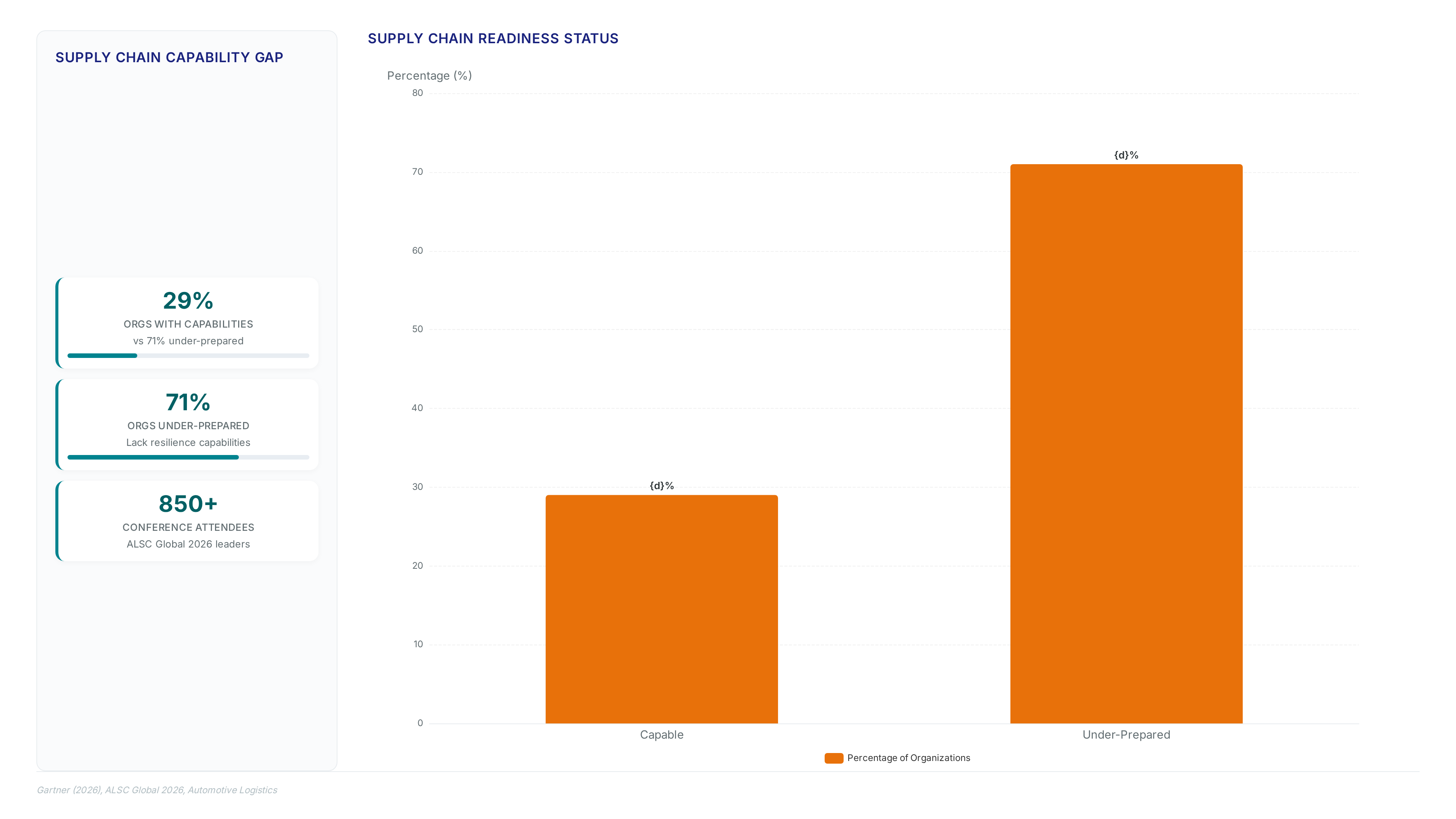
Linear supply chain fragility stems from rigid synchronization where a single missing component halts total production. This strict hierarchical model functions efficiently only during stability, yet external shocks instantly paralyze the entire workflow. When Tier 1 Suppliers await specific subassemblies, the inability to pivot sourcing creates immediate bottlenecks that ripple downstream. Traditional planning models lack the cognitive capabilities required to sense these changes before they become critical failures.
- Single-Source Dependency: Reliance on one region for vital materials amplifies geographic risk.
- Inventory Rigidity: Just-in-time protocols leave zero buffer for unexpected logistical delays.
Global carmakers like Ford, GM, and Toyota were forced to reduce production by millions of units due to reliance on semiconductors for infotainment, safety features, and powertrain management. The industry operates under a rigid hierarchy where a missing chip halts final vehicle assembly entirely. This single-point failure mode exposes the fragility of relying on distant, single-source suppliers for critical electronics.
- Production Halts: Missing powertrain management chips prevent completed vehicles from shipping.
- Feature Stripping: Some manufacturers shipped cars without infotainment systems to maintain throughput.
- Revenue Loss: The global automotive sector suffered massive financial hits from these disruptions.
The cost of inaction exceeds the investment in diversified sourcing. Operators must recognize that supply chain disruptions will persist without structural changes. Adopting localization mitigates the shock of future shortages.
Natural Disaster Disruption Risks from the 2011 Tohoku Earthquake
The 2011 Tohoku earthquake in Japan caused a global parts shortage affecting automakers worldwide by severing single-source links for specialized components. This event exposed how geographical concentration in the supply base transforms localized physical damage into systemic production halts across multiple continents. Raw material delays propagated rapidly because Tier 2 suppliers producing niche sensors lacked immediate alternatives for damaged fabrication lines.
- Inventory Void: Just-in-time protocols offered no buffer against sudden factory shutdowns.
- Substitution Lag: Qualifying new vendors for safety-critical parts required months of testing.
- Cascade Failure: Downstream assembly plants stopped entirely when one subcomponent vanished.
Measurable ROI from AI-Driven Supply Chain Optimization Strategies
Defining AI-Driven Supply Chain Digitalization and Visibility
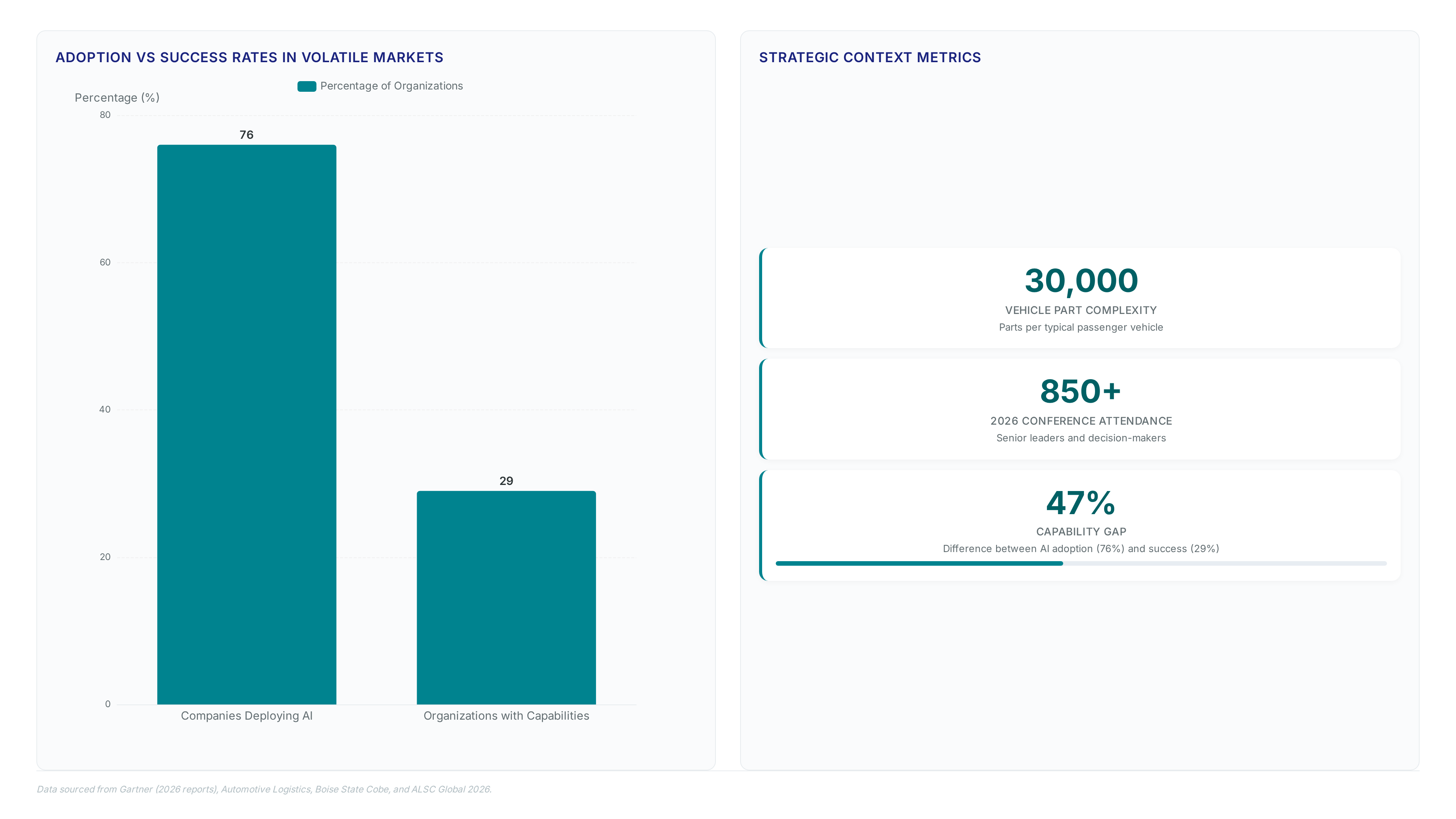
AI-driven supply chain digitalization transforms static logistics data into predictive operational intelligence through machine learning integration. Basic automation executes predefined rules, whereas true predictive analytics anticipate disruptions before they halt assembly lines. A distinct divide exists between organizations that have invested in cognitive supply chain capabilities using AI and advanced analytics to sense changes, and those relying on traditional planning models; the former are improved positioned to navigate volatility. Currently, a significant 76% of companies are deploying AI in supply chain management for predictive analytics and real-time monitoring.
| Feature | Basic Automation | AI-Driven Digitalization |
|---|---|---|
| Data Usage | Historical recording | Predictive modeling |
| Response Mode | Reactive alerts | Proactive mitigation |
| Scope | Single silo | End-to-end visibility |
Operators asking how to optimize the automotive supply chain must recognize that manual oversight cannot match the velocity of modern disruptions. Supply Chain Digitalization involves the adoption of IoT sensors and algorithms to create a transparent, self-correcting network. Those wondering should I adopt supply chain management software will find that traditional planning models face higher risks of disruption compared to hybrid global-local models adopting dual sourcing. The analytical reality is that supply chain networks involve multiple distinct tiers, with Tier 2 suppliers manufacturing specialized parts used by Tier 1 suppliers. However, the cost is significant computational overhead and the need for clean, standardized data inputs across all partners. Without this core data hygiene, even sophisticated models produce erroneous demand signals.
Implementing Real-Time Data for Ford-Level Demand Forecasting
Ford implemented a connected supply chain using real-time data to significantly improve demand forecasting accuracy, exemplified by partnerships with US semiconductor manufacturers to reduce dependence on far-off regions. Deploying these systems requires integrating cloud-based SCM systems that provide a clear overview of component locations throughout the network. The automotive supply chain network involves multiple distinct tiers, with Tier 3 suppliers providing raw materials, Tier 2 suppliers manufacturing specialized parts, and Tier 1 suppliers delivering assembled components to OEMs. Once integrated, these platforms reduce bottlenecks and accelerate production cycles by flagging material shortages before they halt robotics lines.
| Deployment Step | Operational Action | Outcome |
|---|---|---|
| Data Integration | Connect ERP with supplier IoT sensors | Unified visibility |
| Predictive Modeling | Apply AI to historical consumption patterns | Accurate forecasts |
| Supplier Sync | Share real-time inventory levels globally | Reduced friction |
Deep data integration often clashes with supplier readiness. Industry analysis indicates that prices for vehicles and components will remain high as stakeholders balance operational efficiency with the rising costs of electrification. Cost optimization strategies now explicitly include "localization," where automakers reduce dependence on far-off regions to avoid the hidden costs of logistics bottlenecks and supply friction. The cost is measurable: without standardized data practices, manual processes can lead to inefficiencies despite advanced analytics tools. Consequently, network operators must prioritize supplier synchronization protocols that enforce uniform data formatting across all tiers. This approach transforms raw data into actionable intelligence, allowing manufacturers to pivot sourcing strategies dynamically rather than reacting to crises after they occur.
Checklist for Supplier Diversification and GRI Sustainability Audits
Manufacturers optimize durability by establishing relationships with multiple Tier 1 and Tier 2 suppliers to mitigate disruption risks. This diversified structure prevents single-point failures that often halt production when specific subcomponents become unavailable. Operators must verify that new partners adhere to the unified IATF 16949:2016 quality framework to maintain consistent output standards across the network.
Sustainability Audits involve using tools to align with environmental and social governance standards. These audits ensure that raw material sourcing meets strict carbon reduction targets required by modern regulations.
| Audit Focus | Primary Metric | Strategic Outcome |
|---|---|---|
| Supplier Count | Multi-tier redundancy | Disruption mitigation |
| GRI Alignment | ESG compliance score | Regulatory approval |
| Quality Sync | IATF adherence rate | Defect reduction |
Rapid diversification often conflicts with deep compliance verification. While expanding the supplier base increases flexibility, it simultaneously complicates the synchronization required for just-in-time assembly lines. Balancing these goals requires prioritizing suppliers who can meet rigorous quality and sustainability standards amidst current volatility. This approach reduces the administrative burden of validating new entries while securing the supply chain against future volatility.
About
Anna Petrova serves as a B2B Auto Parts Market Analyst at KZMALL, where she specializes in dissecting market sizing, demand trends, and competitive dynamics within the global components sector. Her daily work involves transforming complex cross-border trade data into actionable sourcing strategies, making her uniquely qualified to analyze the intricacies of the automotive supply chain. At KZMALL, a leading multi-brand wholesale distribution platform, Anna navigates the very logistical challenges discussed in this article, from managing over 50,000 SKUs to ensuring accurate fitment data across diverse vehicle categories. Her direct experience with single-source supplier models and international certification standards allows her to offer practical insights on mitigating disruptions and optimizing procurement. By connecting real-time market intelligence with KZMALL's extensive distribution network, Anna provides a grounded perspective on how modern manufacturers and distributors can successfully navigate the evolving environment of global auto parts logistics.
Conclusion
Scaling supplier networks without resolving data fragmentation guarantees that operational costs will outpace the benefits of diversification. Adding partners to a disconnected system merely multiplies the noise, making the synchronization protocols mentioned earlier the single point of failure for any expansion strategy. Manufacturers must recognize that flexibility is impossible when incoming data streams lack uniform formatting, regardless of how many Tier 1 or Tier 2 sources exist. The industry cannot afford to treat data alignment as a secondary IT project when production continuity depends on it.
Organizations should mandate unified data formatting as a non-negotiable prerequisite for any new supplier onboarding starting immediately. Do not sign contracts with vendors who cannot integrate into your existing quality and sustainability frameworks within the first quarter of engagement. This strict condition prevents the administrative burden of retroactive validation from eroding the durability gained through diversification.
Start this week by mapping the data output formats of your top five critical component providers against your internal IATF 16949:2016 requirements. Identify exactly where manual translation occurs and quantify the time loss associated with those specific gaps. This targeted audit reveals whether your current network is truly diversified or simply fragmented, providing the concrete evidence needed to enforce stricter integration standards before committing to further expansion.
Frequently Asked Questions
Synchronization failures cause immediate production halts that cost the industry heavily. These disruptions result in an estimated $210 billion in lost production output due to severe volatility and capability gaps.
Most supply chain groups lack the tools to handle current market instability effectively. Only a portion of supply chain organizations have successfully built the necessary capabilities to deliver on performance promises amidst volatility.
Manufacturers are rapidly adopting artificial intelligence to mitigate constant disruption risks within their networks. Currently, a significant 76% of companies are deploying AI in supply chains to improve visibility and response times.
Manufacturers must maintain a highly coordinated global network to manage immense component complexity. A typical passenger vehicle comprises approximately 30,000 individual parts, ranging from complex engines to small nuts and bolts.
The rigid structure limits rapid response capabilities when global shortages occur unexpectedly. Disruptions at the base propagate upward, causing immediate production halts because physical components cannot be patched remotely.