
Rolling resistance testing must track thermal
Room temperature data fails EVs. The industry's obsession with single-condition metrics is obsolete. Accurate rolling resistance measurement now demands simulating the thermal extremes inherent to electric vehicle operation. With the National Highway Traffic Safety Administration enforcing stricter fuel economy standards for the 2027-2032 window, manufacturers cannot afford range anxiety caused by thermal variance. Old methods cannot capture how tire compounds behave when instant torque heats the contact patch beyond standard lab conditions.
Temperature-dependent performance dictates real-world efficiency. Environmental testing protocols must evolve to match regulatory pressure. This shift is a survival tactic. AI Integration in R&D, as demonstrated by ZC Rubber shortening development cycles by 50%, already outpaces traditional physical validation.
While Smithers uses its Virtual Tire Lab to merge modeling with physical data, the gap between static certification and flexible reality widens. Understanding these thermal dynamics is mandatory for engineers aiming to maximize EV range or comply with upcoming federal mandates. The era of testing tires as if they only operate in a climate-controlled vacuum ended with the internal combustion dominance of the past.
The Critical Role of Temperature in Rolling Resistance Definitions
ISO 28580 Steady-State vs SAE J2452 Coast-Down Definitions
Rolling resistance definitions diverge sharply. ISO 28580 enforces thermal equilibrium to isolate compound hysteresis. SAE J2452 captures deceleration forces before heat saturation occurs. Real-world driving rarely matches steady-state laboratory conditions. Operators relying solely on steady-state data miss the thermal lag inherent in stop-start traffic patterns. The Force Method used in steady tests calculates horizontal force on a loaded tire, whereas coast-down protocols derive resistance from deceleration rates.
A critical oversight occurs when manufacturers optimize compounds for the stable temperatures of ISO 28580, inadvertently degrading performance during the transient heating phases dominant in urban EV operation. A tire rated efficient at thermal equilibrium may exhibit notably higher resistance during the warm-up phase mimicked by flexible testing. Regulatory frameworks covering model years 2027-2032 demand accuracy that single-point steady measurements cannot provide. Ignoring the deceleration profile leads to range overestimation in electric fleets.
MTS Systems 60 kN Force Testing for EV Regulatory Compliance
Modern equipment specifications enable machines to apply 60 kN radial force on heavy tires. This capacity addresses the immediate need for high-load simulation required by electric vehicle architectures. Battery packs increase axle weights notably compared to internal combustion predecessors, demanding test beds that replicate these stressors without failure. The NHTSA CAFE standards covering model years 2027-2032 enforce strict fleet efficiency targets that manufacturers must meet.
Compliance requires measuring minute friction losses under maximum structural load. Steady-state thermal models fail to predict performance spikes during transient high-torque events common in EVs. Operators must prioritize flexible testing protocols over static baselines to avoid regulatory penalties.
- Radial force application up to 60 kN for truck segments
- Slip angle inputs of ± 2 degrees for cornering simulation
- Camber adjustments ranging from +6 to -2 degrees
- Transient thermal mapping during acceleration cycles
- Speed variance tracking across 53 distinct load points
Ignoring the latter risks non-compliance when real-world driving diverges from laboratory steadiness. Manufacturers relying solely on room temperature data face potential gaps in certification. Accurate rolling resistance measurement now dictates market access rather than serving as a secondary quality metric.
Silica Compound Limitations in Non-Equilibrium Temperature Testing
Silica-based treads introduced by Continental in the mid-1990s exhibit variable hysteresis when laboratory protocols fail to reach thermal equilibrium. This chemical filler reduces energy loss at operating temperature but behaves unpredictably during transient heating cycles common in stop-start traffic. Standard steady-state measurements miss these flexible losses entirely. The reliance on ISO 28580 Flexible coast-down scenarios reveal friction coefficients that steady-state data cannot predict. Manufacturers ignoring this gap risk non-compliance as regulations tighten.
Static environments suppress the very thermal variables silica compounds react to most strongly. EV range estimates derived from room-temperature data will consistently overestimate actual mileage. Engineers must validate compound behavior across a spectrum of thermal states rather than a single point. Failure to account for non-equilibrium conditions renders historical efficiency gains illusory under load.
Mechanics of Temperature-Dependent Tire Performance Variance
Thermal Equilibrium Gaps in ISO 28580 Testing Protocols
Real-world driving prevents tires from ever reaching the stable thermal state mandated by laboratory standards because road loads fluctuate constantly. This steady-state protocol enforces thermal equilibrium, isolating compound hysteresis while ignoring transient heating phases where energy loss spikes unpredictably. Constant temperature assumptions in ISO 28580 Efficiency ratings derived from static tests often overestimate actual fleet performance during stop-start traffic or steep grade ascents.
Real vehicles operate in a continuous state of thermal flux, whereas the test cell waits for temperature stabilization before recording data. This gap means silica-based treads may appear efficient in the lab but underperform when heat dissipation cannot match generation rates. Manufacturers relying solely on equilibrium data risk mischaracterizing the rolling resistance profile of new compounds. Operators must recognize that equipment specifications]( capable of 60 kN force still rely on user-set thermal targets. If the target assumes stability that never arrives on the road, the resulting data remains theoretically sound but operationally misleading. The cost is a systematic underestimation of fuel consumption in variable climates.
Modeling Transient Heat Cycles for EV Range Accuracy
Electric vehicle range projections fail when thermal transients in tire compounds distort rolling resistance data during short trips. Standard steady-state protocols ignore the heat buildup phase where energy loss spikes, creating a discrepancy between laboratory ratings and actual fleet performance. This gap forces manufacturers to rely on flexible modeling rather than static measurements. Giiresearch. Html) covering model years 2027-2032 mandate efficiency gains that static testing cannot verify under real-world load conditions.
Heavy battery packs generate instant torque that heats treads quicker than internal combustion vehicles, demanding new validation methods. Operators must integrate high-fidelity simulations with physical testing to capture these variances accurately. The Virtual Tire Lab approach combines modeling with physical testing to reduce prototype costs while addressing non-equilibrium states. This hybrid method reveals efficiency losses that pure ISO 28580 Some organizations report a 50% reduction in development cycles by adopting such AI-enhanced workflows. The limitation remains that transient data requires notably more computational power than steady-state analysis. Manufacturers ignoring this shift risk regulatory non-compliance as enforcement tightens. Precision in thermal modeling directly correlates to reported range accuracy.
Operational Risks of Static Temperature Assumptions in Tire Design
Static thermal validation ignores flexible heat buildup, risking the $193,600 monthly facility overhead against undetected performance failures. Validating compounds solely at room temperature creates a false sense of security before tires face real-world thermal loads. The rolling resistance coefficient shifts unpredictably as tread temperatures rise beyond standard test conditions, directly impacting fuel economy claims. Manufacturers relying on fixed-temperature data face compounding liabilities as global shipments approach a substantial number of units by 2030.
A single batch failure due to unmodeled hysteresis can compromise entire production runs. The financial exposure extends beyond recalls; inefficient tires increase fleet operating costs, triggering contractual penalties from commercial buyers. The cost of ignoring these variables is measurable in wasted R&D cycles and reputation damage. Yokohama Rubber utilized AI-driven feature engineering to extract critical correlations between process data and final characteristics, avoiding such blind spots. This approach highlights the danger of static assumptions where flexible interactions dominate. Facilities must integrate transient thermal modeling to protect capital investments. Ignoring temperature-dependent variance invites catastrophic efficiency gaps that steady-state protocols simply cannot detect.
Strategic Advantages of Advanced Environmental Testing Protocols
Digital Twin Integration in Virtual Tire Lab Workflows
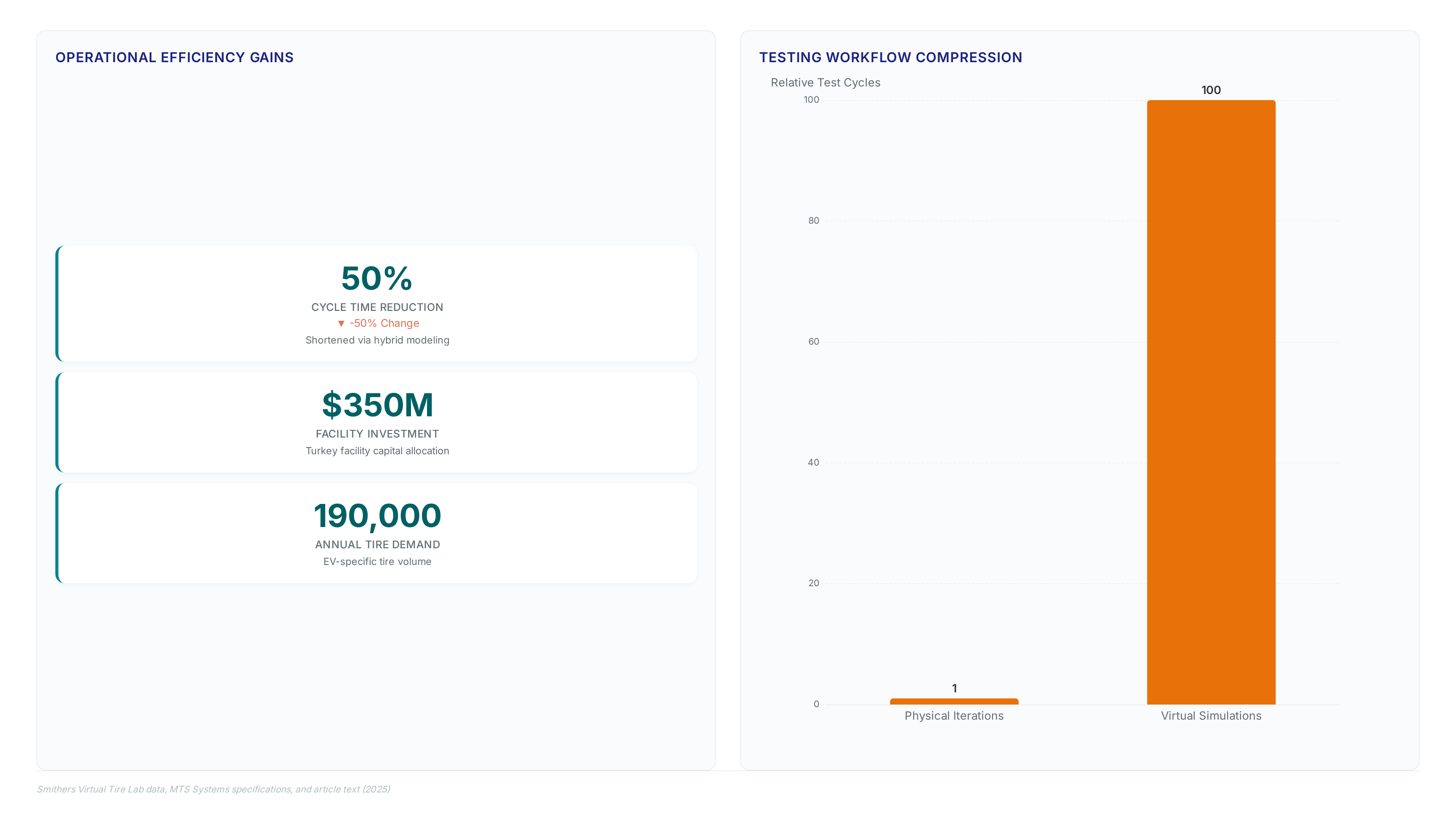
Hybrid modeling workflows at Smithers combine high-fidelity simulations with physical data to validate non-ambient performance without exhaustive physical iterations. This Virtual Tire Lab architecture simulates hundreds of durability tests per second, compressing months of physical validation into days for rapid tread design iteration. The mechanism replaces blind thermal assumptions with predictive hysteresis modeling that accounts for transient heat buildup during stop-start driving cycles.
However, the fidelity of these virtual prototypes depends entirely on the quality of initial physical inputs used to calibrate the simulation engine. Operators face a tension between reducing prototype counts and maintaining sufficient empirical data to prevent model drift under extreme load conditions. Failure to anchor simulations in rigorous physical testing risks validating designs against mathematical artifacts rather than material reality. The industry shift toward virtualization of testing supports sustainability goals by minimizing material waste during the development phase. Manufacturers ignoring this hybrid approach risk falling behind as competitors use predictive durability metrics to accelerate time-to-market. The cost of maintaining legacy static testing protocols grows as regulatory pressure demands precise efficiency data across diverse thermal environments.
Applying Nexen's 190,000 Tire Database to EV Range Validation
Nexen Tire America validates EV compounds against a proprietary database of 190,000 tires to bypass theoretical thermal models. This mechanism replaces static assumptions with empirical wear patterns linked to specific design permutations. Engineers query historical performance data to predict how new silica blends behave under instant torque loads without physical prototyping. The evidence shows that linking specifications to real-world test data accelerates time-to-market for new models significantly.
However, reliance on historical datasets limits innovation to known chemical boundaries, potentially overlooking novel compounds outside the existing parameter space. Operators must balance the speed of AI-driven validation against the risk of optimizing only for past failure modes. Manufacturers ignoring this data-driven approach risk misaligning rolling resistance ratings with actual fleet efficiency. A single thermal miscalculation can invalidate range claims across entire production batches.
| Testing Approach | Data Source | Thermal Accuracy |
|---|---|---|
| Static Lab | ISO Standards | Low |
| Digital Twin | Simulation Models | Medium |
| Historical AI | Real-World Fleet | High |
Product Development Manager Aaron Neumann notes that running predictions against this volume of data allows rapid evaluation of design changes. The implication for networked testing facilities is clear: thermal transients require flexible benchmarking rather than steady-state averages. Facilities should adopt AI predictions to ensure new compounds meet strict regulatory demands.
ROI Checklist for $350 Million Plant-Level Testing Upgrades
Capital allocation for the new $350 million Turkey facility depends on matching test throughput to the target of 1,500 truck and bus radial tires daily.
| Feature | Static Room-Temp Test | Flexible Non-Ambient System |
|---|---|---|
| Thermal Load | None | Simulates heat buildup |
| EV Torque Handling | Poor | High fidelity |
| Regulatory Fit | Legacy only | 2027-2032 compliant |
Operators must prioritize equipment capable of handling the instant torque loads unique to electric vehicle tires. The EV-specific tire market demands compound validation under thermal stress that legacy ISO methods miss entirely. Hankook expansion in Tennessee illustrates the industry-wide race to secure capacity for these advanced SKUs.
- Verify radial force capacity exceeds 60 kN for heavy truck applications.
- Ensure slip-angle simulation matches real-world suspension dynamics.
- Confirm data integration supports AI-driven development cycles.
- Audit fixed overhead against potential batch-failure liabilities.
The cost of skipping non-ambient validation is a product line that fails regulatory scrutiny before full-scale production begins. Manufacturers ignoring this gap risk stranded assets as efficiency mandates tighten globally.
Implementing Multi-Temperature Testing Frameworks for Modern Fleets
Defining Variable Temperature Conditioning in ISO 28580 Protocols
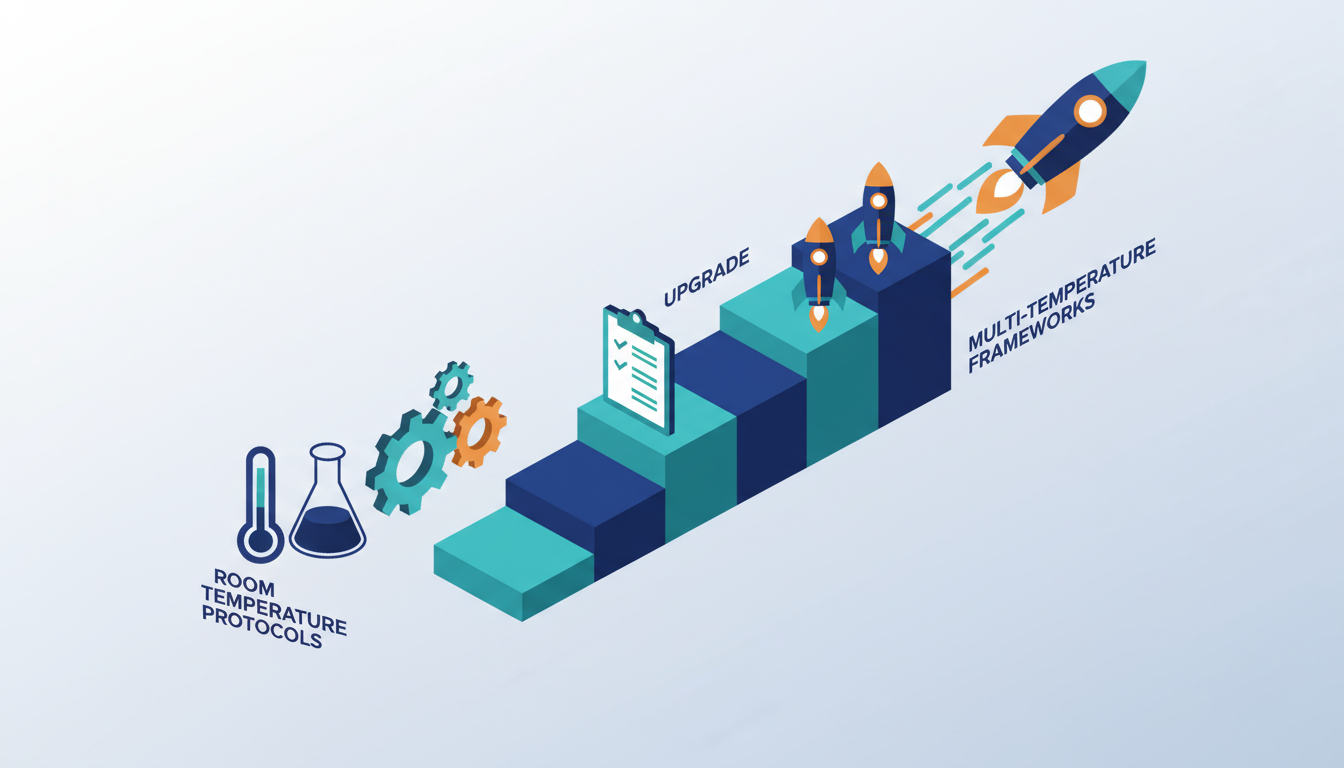
Legacy steady-state protocols measure rolling resistance under fixed thermal loads while ignoring the heat buildup that alters compound hysteresis in electric vehicles. Engineers must transition from static room-temperature baselines to flexible frameworks replicating transient thermal states. The industry historically relied on the Force Method for calculating horizontal force, yet this approach fails to capture resistance shifts as tires warm during highway driving. Modern validation requires simulating the non-equilibrium conditions found in the SAE J2452
Implementation demands a structured shift in laboratory procedures:
- Configure drum systems to vary ambient air temperature between -10°C and 60°C during the test cycle.
- Apply radial forces up to 60 kN to simulate heavy-load truck conditions while monitoring thermal equilibrium.
- Record deceleration rates rather than steady-state torque to capture transient rolling resistance coefficients.
Extended cycle times represent the price of this complexity, potentially delaying time-to-market for new silica blends. Skipping variable conditioning risks certifying tires that fail efficiency targets once deployed in hot climates. Products and Brands recommends integrating these flexible parameters immediately to align with upcoming regulatory frameworks.
Deploying MTS Systems 60 kN Force for Multi-Temperature EV Validation
Operators must configure MTS Systems hardware to apply 60 kN radial force while cycling thermal chambers between -10°C and 80°C. This setup replicates the extreme heat buildup found in heavy electric vehicle loads that static room-temperature tests miss entirely.
- Program the controller to ramp load from 0 to 60 kN over 300 seconds while monitoring internal tire temperature via embedded thermocouples.
- Introduce slip angle inputs of ±2 degrees to simulate lane-change dynamics under thermal stress.
- Compare resulting hysteresis data against ISO 28580 steady-state baselines to quantify efficiency losses.
The mechanism forces compounds to reveal thermal degradation points invisible during standard compliance checks. However, implementing this multi-temperature framework increases energy consumption for the testing facility substantially. Legacy equipment often lacks the power density required to maintain thermal equilibrium under full truck load conditions.
Tires passing room-temperature checks may still fail prematurely on hot highways. High-force thermal testing exposes these weaknesses before mass production begins. Engineers gain a predictive view of field failures rather than reacting to warranty claims later. This shift transforms validation from a passive checkpoint into an active design constraint. Production lines ignoring these thermal variables risk releasing products incapable of meeting future efficiency mandates. Operators must integrate these agents into thermal testing workflows to capture temperature-dependent rolling resistance data that static models miss.
- Configure virtual simulation agents to execute hundreds of durability tests per second under varying thermal loads.
- Link agent outputs to physical MTS Systems hardware capable of 60 kN force application.
- Validate silica blend performance against flexible SAE J2452 coast-down profiles rather than steady-state baselines.
Real-world efficiency now takes precedence over room-temperature compliance. The U. S. Automotive aftermarket is forecast to grow 5.4% in 202601, intensifying pressure to reduce time-to-market for EV-specific treads. Relying solely on historical datasets limits innovation to known chemical boundaries, potentially overlooking novel compounds outside existing parameters. Rapid deployment creates tension with the risk of over-fitting designs to historical data, which may fail under novel thermal stresses unique to next-generation electric platforms. Data shows testing must run over 300 seconds while monitoring internal tire temperat hures/100153049cTireRollingSys.pdf to ensure validity.
About
Anna Petrova serves as a B2B Auto Parts Market Analyst at KZMALL, where she specializes in dissecting market sizing and competitive dynamics for the global automotive aftermarket. Her deep dive into rolling resistance testing stems directly from her daily work analyzing how evolving regulatory standards impact parts sourcing and inventory strategy. As electric vehicle adoption accelerates, Petrova observes that traditional room-temperature testing no longer suffices for predicting real-world efficiency or range, a critical insight for KZMALL's network of wholesale buyers. Her role requires translating complex technical shifts, such as those highlighted by industry leaders like Smithers, into actionable intelligence for category managers. By connecting advanced testing methodologies to supply chain decisions, she ensures that KZMALL's extensive catalog of VIC EAGLE lubricants and KZWON braking components aligns with the rigorous performance demands of modern fleets. Petrova's analysis bridges the gap between laboratory innovation and commercial viability in the auto parts sector.
Conclusion
Static validation protocols fracture when thermal dynamics dominate performance metrics. Ignoring internal heat buildup during the critical 300-second window invites catastrophic efficiency losses that room-temperature checks simply cannot predict. The real danger lies not in the testing equipment itself, but in the operational lag between chemical formulation and thermal verification. Facilities continuing to prioritize steady-state baselines over flexible load profiles will find their development cycles bloating just as the market demands quicker EV-specific iterations. This misalignment turns potential competitive advantages into expensive warranty liabilities before a single tire hits the road.
Organizations must mandate flexible thermal profiling for all new compound formulations by Q3 2026. This deadline aligns with the ramp-up of next-generation electric platforms where heat management dictates range. Do not wait for field failures to dictate your testing parameters; the financial exposure from a single recall dwarfs the investment in upgraded thermal agents. You need a workflow where virtual durability agents drive physical hardware in real-time, ensuring every silica blend survives the specific thermal stresses of high-load highway driving.
Start this week by auditing your current test duration logs against the 300-second thermal equilibrium standard. If your current protocols terminate data collection before internal temperatures stabilize under full load, your validation data is incomplete and potentially misleading.
Frequently Asked Questions
AI integration significantly shortens tire development cycles by half. ZC Rubber demonstrated this efficiency by achieving a 50% reduction in their overall research and development timeframe through advanced digital tools.
Room temperature data fails to capture thermal extremes inherent to electric vehicle operation. Relying on steady-state metrics risks missing dynamic heat buildup that critically affects rolling resistance during real-world driving conditions.
Modern equipment must apply up to 60 kN radial force to simulate heavy EV axle loads accurately. This high-load simulation ensures compliance with strict fleet efficiency targets mandated for upcoming model years.
ISO 28580 enforces thermal equilibrium while SAE J2452 captures deceleration forces before heat saturation. This distinction is vital because real-world driving rarely matches the constant thermal state of steady-state laboratory conditions.
The U.S. automotive aftermarket is forecast to grow 5.4% in 2026. This expansion is driven primarily by an aging and expanding vehicle fleet requiring consistent maintenance and replacement parts.