
Marelli debt crisis: Why Nissan and Stellantis step
Nissan and Stellantis are negotiating to reclaim specific Marelli assets as the supplier restructures its multi-billion dollar debt pile.
Marelli Holdings faces an existential pivot. Its largest customers must intervene to secure critical supply lines. This article dissects the strategic context behind the potential divestiture, analyzing how Chapter 11 protection filed in June forces a reevaluation of ownership structures originally formed by CK Holdings and KKR. Readers will learn the specific corporate evolution details tracing back to the 2019 merger of Magneti Marelli and Calsonic Kansei, alongside the financial mechanics necessitating this asset separation.
Both automakers battle surging Chinese automakers and the shift to battery electric vehicles (BEVs). They view vertical integration as a defensive necessity. Recent import tariffs in the US have degraded liquidity, making the current debt mountain unsustainable without direct customer intervention.
Legacy suppliers cannot survive the capital intensity of the EV transition alone. By focusing on these manufacturing assets, the involved parties aim to stabilize production capabilities that remain vital for global operations. The outcome of these negotiations will likely redefine the supply chain hierarchy for two of the world's largest automotive groups.
The Strategic Context of the Marelli Holdings Acquisition
Marelli Holdings Chapter 11 Filing and Debt Restructuring
Marelli Holdings entered Chapter 11 protection in June within the US District Court for Delaware. This legal mechanism permits the automotive components supplier to reorganize its affairs while shielding operations from immediate creditor liquidation. The filing specifically targets a restructuring of the company's US$ 4.9 billion debt mountain, a figure driven by liquidity pressures and shifting global trade dynamics. Chapter 11 status in the US allows the debtor to remain in control of business operations as a "debtor in possession." Such standing proves necessary for maintaining the continuous flow of parts to Nissan Motor Company and Stellantis, who rely on these supply lines for production. Unlike Chapter 7 liquidation, this process prioritizes business continuity over asset dissolution.
The friction here is obvious. Debt reduction demands time; operational continuity demands cash flow now. For global automakers monitoring the situation, the outcome determines whether critical manufacturing assets remain viable or require direct acquisition to prevent supply disruption. Securing alternative sources for suspension and interior components becomes paramount when a primary supplier enters bankruptcy protection.
Nissan and Stellantis Asset Acquisition Targets
Stellantis targets suspension operations in Italy while Nissan seeks cockpit components to secure supply. Global automakers execute this separation to insulate production from the supplier's financial instability. The deal structure reflects a shift where OEMs reclaim critical manufacturing rather than relying solely on third-party vendors. Both entities remain the largest customers by volume, making direct ownership a logical hedge against disruption.
This move distinguishes itself from standard automotive industry consolidation driven purely by supplier expansion. Instead, it addresses specific vulnerability in the automotive supplier network during economic stress. Operational complexity presents a constraint; both automakers are struggling to keep up with surging competition from Chinese automakers and the global transition to battery electric vehicles (BEVs). Buyers should prioritize inventory turns on suspension and interior SKUs now, as supply chain realignment is underway. Stock the parts the rolling fleet actually needs, priced at the tier the buyer values.
Liquidity Risks from US Import Tariffs and High Debt
Marelli Holdings stated in June that the introduction of import tariffs in the US last year had affected its liquidity position. These tariffs directly degraded cash availability alongside a massive debt load. Discussions with creditors preceded the move to secure the future of Marelli Holdings. The introduction of import tariffs in the US last year compounded pressure on an already used balance sheet.
Maintaining low-cost global sourcing while ensuring supplier solvency during tariff spikes creates friction. Securing alternative sources for high-risk components mitigates exposure when a substantial supplier faces liquidity crises. Market participants track these 11 key indicators of distress before filing occurs. Data shows 4.9 billion reasons why capital structure matters. Seven months of negotiations shaped the final offer.
Corporate Evolution and Financial Mechanics of the Merger
Formation of Marelli Holdings via KKR's Calsonic and Magneti Marelli Merger
Marelli Holdings emerged in 2019 when CK Holdings merged Calsonic Kansei with Magneti Marelli. This transaction transferred ownership of the Italian manufacturer from Fiat Chrysler to the private equity firm KKR. The deal consolidated two substantial supply chains, linking Nissan's former internal unit with Stellantis's legacy sourcing network.
| Entity | Origin Asset | Current Status |
|---|---|---|
| CK Holdings | Calsonic Kansei | Parent Owner |
| Stellantis | Magneti Marelli | Former Owner |
| Marelli Holdings | Merged Entity | Chapter 11 Filer |
Constructing this corporate structure created a diversified supplier reliant on both automakers for volume. Concentrated risk followed, as the merged entity now faces liquidity constraints affecting its global operations. Asset reacquisition targets specific manufacturing lines rather than the whole. Private equity consolidation reshapes Tier-1 availability through such legal mechanisms. Court supervision allows the supplier to negotiate with creditors without immediate liquidation. The filing specifically targets liquidity issues caused by import tariffs and high use, aiming to stabilize the balance sheet. Global automakers actively restructure supply chains to reduce dependency on Asian suppliers, creating opportunities for stable partners. Proposing a reorganization plan often involves selling specific assets to strategic buyers like Nissan or Stellantis.
| Feature | Chapter 11 Protection | Liquidation (Chapter 7) |
|---|---|---|
| Goal | Reorganize debt | Sell all assets |
| Operations | Continue running | Cease immediately |
| Control | Debtor stays in control | Trustee takes over |
Balancing creditor recovery with the need to keep production lines active for OEM customers defines the strategic tension. Asset value drops notably if supply halts, hurting all stakeholders. Inventory solutions provide the operational excellence required to bridge gaps when tier-one suppliers face financial distress. Operators must verify fill rates against actual vehicle counts rather than relying on distressed supplier promises. Line stoppage costs far exceed the premium for verified stock availability.
Liquidity Pressures from US Import Tariffs on Auto Component Suppliers
Marelli Holdings stated that US import tariffs directly degraded its cash reserves last year. External trade policy shocks compressed working capital just as debt service obligations peaked. Tariff-induced liquidity gaps strike simultaneously across all imported SKUs, unlike organic demand fluctuations. This creates a systemic cash flow deficit that standard hedging cannot cover.
| Risk Factor | Impact Mechanism | Financial Consequence |
|---|---|---|
| Import Tariffs | Immediate cost escalation on cross-border parts | Reduced operating liquidity |
| Debt Service | Fixed interest payments on a significant principal | Accelerated cash burn rate |
| OEM Pressure | Inability to pass costs to Nissan or Stellantis | Margin erosion |
Maintaining supply continuity for substantial automakers while preserving solvency generates critical tension. Suppliers winning in 2026 share a common characteristic: operational excellence at world-class OEE levels provides the cost competitiveness that allows them to bid aggressively regardless of trade barriers. Even efficient manufacturers face insolvency without restructuring due to tariff exposure. Global automakers now secure assets to prevent future supply chain fractures driven by similar macroeconomic instability. The timeline extends from the initial 2019 merger through 1 restructuring event, aiming for resolution by 2027.
Strategic Drivers for Nissan and Stellantis Asset Reacquisition
Comparison: Strategic Logic Behind Nissan and Stellantis Asset Reacquisition
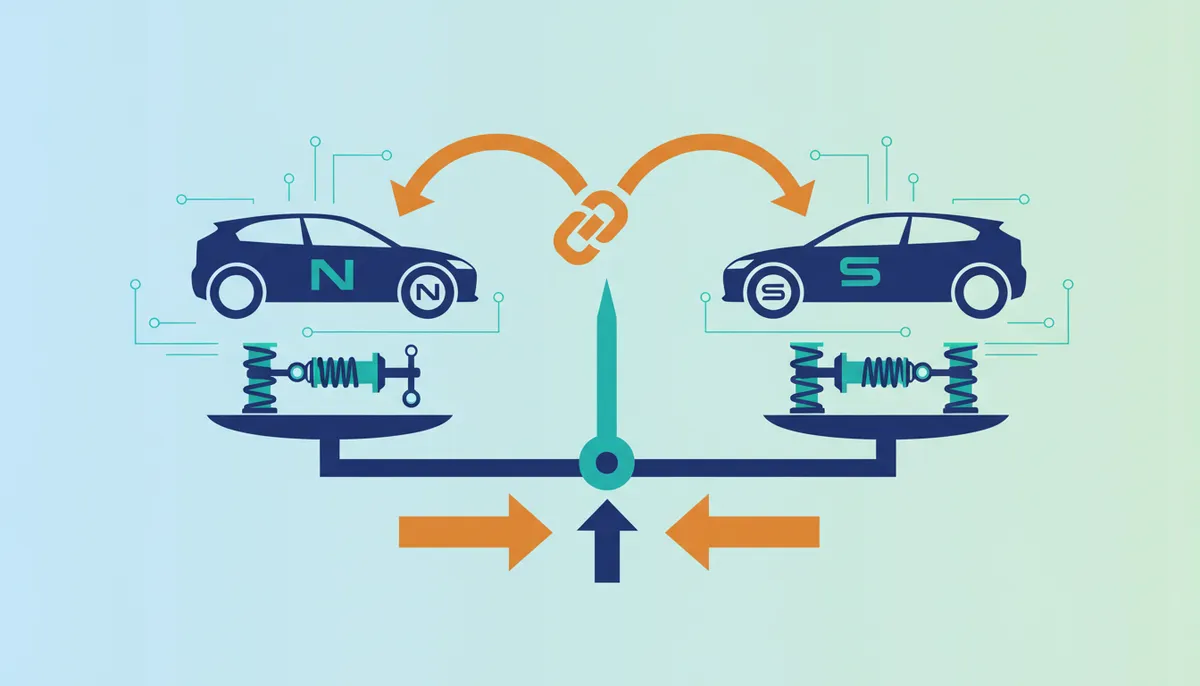
The primary driver for Nissan Motor Company and Stellantis is direct control over critical component supply following the Chapter 11 filing by Marelli Holdings Company. These global automakers seek to insulate production lines from the financial instability plaguing legacy Tier-1 suppliers. The strategic divergence lies in the specific assets targeted for reacquisition to support their each vehicle architectures.
| Dimension | Stellantis Strategy | Nissan Strategy |
|---|---|---|
| Target Assets | Suspension operations | Cockpit and interior components |
| Geographic Focus | Italy and international sites | Global manufacturing footprint |
| Operational Goal | Secure chassis dynamics supply | Control cabin integration |
Stellantis is looking to (re)acquire Marelli's automotive suspension operations located in Italy and other countries. Nissan is looking to (re)acquire the company's cockpit and interior component assets. This OEM-led consolidation differs fundamentally from supplier-led mergers intended merely to expand market share. The trade-off involves significant capital considerations during a period of intense competition from Chinese manufacturers transitioning to battery electric vehicles. Securing alternative sources for these specific systems now mitigates future stockouts for independent repair shops. The long-term implication is a market where OEMs internalize high-value component manufacturing while outsourcing commodity parts.
Operational Scope: Suspension Systems vs Cockpit Components
Meanwhile, stellantis targets suspension operations in Italy to secure chassis dynamics, while Nissan Motor Company focuses on cockpit interiors to integrate cabin technology. This divergence reflects distinct priorities: Stellantis requires hard-point control for vehicle handling, whereas Nissan seeks to unify user interface hardware with software development. The automotive components supplier environment shows that acquiring these specific assets allows original equipment manufacturers to bypass third-party bottlenecks during the transition to battery electric vehicles. If an automaker internalizes suspension geometry, the aftermarket must supply premium aftermarket control arms that match original equipment specifications without the original equipment price premium. Conversely, cockpit consolidation demands high-turnover electronic modules rather than mechanical linkages. The table below contrasts the supply chain implications for each asset class.
| Feature | Suspension Operations | Cockpit Components |
|---|---|---|
| Primary Driver | Chassis tuning and ride quality | User experience and digital integration |
| Inventory Risk | Low obsolescence, high weight | Rapid obsolescence, high-value density |
| KZMALL Solution | Heavy-duty forged replacements | Modular electronic sub-assemblies |
However, Marelli filed for Chapter 11 protection to restructure its debt while continuing to supply auto components to global customers. Unlike Autozi, which pursues mergers for end-to-end coverage in China, this strategy focuses on legacy manufacturing hubs to mitigate immediate supply chain disruption risks. Both automakers are struggling to keep up with surging competition and the global transition to battery electric vehicles (BEVs). Marelli noted that import tariffs had also affected its liquidity position. Operators should prioritize fill rate consistency for suspension parts, as vehicle downtime directly correlates with chassis availability.
OEM-Led Consolidation Versus Supplier-Led Market Patterns
Direct asset acquisition by OEMs secures physical production capacity that supplier-led mergers often overlook. This strategy diverges sharply from traditional consolidation where entities like Aptiv purchase design firms to expand capability portfolios rather than guarantee output. The distinction lies in the objective: global automakers prioritize supply continuity over portfolio expansion during distress events.
| Dimension | OEM-Led Reacquisition | Supplier-Led Consolidation |
|---|---|---|
| Primary Driver | Supply chain security | Capability expansion |
| Asset Target | Manufacturing lines | Design IP |
| Distress Response | Immediate control | Market share gain |
Nissan Motor Company targets cockpit assets to integrate hardware directly, while Stellantis seeks suspension operations to stabilize chassis sourcing. This approach ensures that critical manufacturing lines remain operational despite the parent company's liquidity crisis. However, owning legacy production facilities introduces fixed overhead that variable supplier contracts previously absorbed. The limitation is clear: reacquiring assets transfers the burden of modernization costs back to the automaker. Operators should align inventory with the specific suspension and interior architectures now under direct OEM control. This alignment minimizes mismatched parts in the rolling fleet. The trade-off for supply security is the loss of supplier-led innovation funding. Companies must decide if retaining control outweighs the capital intensity of manufacturing. Strategic clarity on this question determines long-term viability.
Executing Asset Acquisitions During Bankruptcy Proceedings
Chapter 11 Asset Sale Mechanics for International OEMs
Marelli Holdings filed for Chapter 11 protection in June, initiating a court-supervised asset sale under US law. Creditors engage in negotiations to secure the future of Marelli Holdings while the Bankruptcy Court for the District of Delaware oversees every transfer. Foreign entities navigate this framework knowing US import tariffs have previously strained liquidity. Global automakers differentiate their strategy from component suppliers like Aptiv by targeting core suspension and cockpit operations necessary for battery electric vehicles. Buyers acquire specific manufacturing units such as suspension and interior components, yet transitions demand careful management to maintain supply continuity. Stock planning for these acquired lines must account for potential production gaps during the legal handover period. Precise coordination between legal teams and supply chain strategists keeps operations running through this financial instability. Securing critical automotive components without inheriting the unsustainable cost structures that led to the initial filing remains the ultimate goal. Direct ownership justifies capital expenditure only when volume stability is verified.
Negotiating Suspension and Cockpit Asset Reacquisition Deals
Stellantis targets Marelli's suspension assets in Italy and other countries to secure immediate production continuity. Distinct considerations apply when negotiating asset sales for suspension versus interior lines during bankruptcy. Stellantis focuses on reclaiming suspension operations, while Nissan Motor Company pursues cockpit component manufacturing. This division reflects the specific operational focuses of Marelli's largest customers.
| Component Line | Strategic Driver | Acquisition Complexity |
|---|---|---|
| Suspension | Regional supply security | High ( |
| Cockpit | Integration with EV platforms | Medium (Tooling specificity) |
Court approval mandates every transfer within the Chapter 11 process, introducing timeline uncertainty. Creditors engage in months of discussions regarding the restructuring, with liquidity being a primary concern following the impact of tariffs. Speed of closure often conflicts with asset condition; moving quickly to secure assets may involve complexities regarding legacy liabilities or outdated tooling. Global automakers face surging competition from Chinese rivals and the transition to battery electric vehicles. Securing these specific manufacturing capabilities prevents competitors from accessing critical intellectual property or capacity. Reacquiring these assets obligates the OEM to absorb full operational risk previously outsourced. Only components with verified volume stability justify the capital expenditure of direct ownership. The alternative remains reliance on distressed third-party output, which carries its own interruption risks.
Liquidity Traps and Tariff Impacts on Distressed Supplier Valuations
External tariffs directly degrade the liquidity position of distressed suppliers, forcing asset valuations below book value. Marelli Holdings stated that import tariffs introduced last year affected its cash flow, creating a trap where debt restructuring cannot offset operating losses. Acquirers modeling these deals must account for how policy shifts erode the realizable value of manufacturing lines before bidding.
| Risk Factor | Impact on Valuation | Mitigation Strategy |
|---|---|---|
| Import Tariffs | Reduces net cash flow | Price adjustment clauses |
| Debt Overhang | Limits reinvestment capital | Asset-only purchase structure |
| Currency Volatility | Alters export margins | Localized production shifts |
Financial instability among automotive suppliers often masks the true cost of legacy debt inherited during such transactions. Unlike specialized firms focusing on China's auto parts supply chain, global automakers face unique exposure to cross-border trade friction. Global automakers must weigh tariff impacts against the strategic necessity of securing suspension and cockpit assets. Court-supervised sales rarely allow for contingency pricing based on future trade policy changes. KZMALL Auto Parts advises clients to prioritize asset-only structures that isolate manufacturing tooling from corporate debt obligations. This approach protects the buyer if the supplier's broader debt mountain triggers further liquidity crises. Ignoring these macro factors leads to overpaying for distressed inventory that cannot generate expected returns.
About
Priya Raman, Aftermarket Category & Supply-Chain Strategist at KZMALL Auto Parts, brings over 15 years of expertise in global parts sourcing and distribution economics to this analysis of Marelli Holdings. Her daily work involves navigating complex supply chains and evaluating how substantial OEM asset shifts impact the independent aftermarket. As Nissan and Stellantis negotiate for Marelli's suspension and control components, Raman's deep understanding of ACES/PIES fitment data and inventory coverage allows her to assess the ripple effects on parts availability for distributors. At KZMALL Auto Parts, she oversees the strategic alignment of over 50,000 SKUs across proprietary brands like KBASE for chassis solutions. This ensures that despite upstream consolidation among giants, independent repair shops maintain access to certified, high-quality replacement parts. The critical breaking point occurs when external tariffs compress margins so severely that even asset sales cannot generate sufficient liquidity to service the Marelli Holdings level of obligation. At this scale, the operational cost shifts from mere production inefficiency to the total erosion of enterprise value, rendering whole-company acquisitions financially toxic for potential buyers.
Buyers must strictly avoid assuming corporate liabilities in favor of isolated asset purchases that exclude debt overhang. We recommend executing this separation strategy immediately, as court-supervised timelines rarely allow for contingency pricing based on future trade policy shifts. Any delay increases the risk that currency volatility or new import duties will further degrade the realizable value of the manufacturing lines before a deal closes.
Start by auditing your current supply chain exposure to suppliers with high fixed-interest burdens before finalizing any renewal contracts this week. This proactive review identifies vulnerable links where liquidity traps could interrupt your flow of suspension or cockpit components. KZMALL Auto Parts provides the stable, debt-free sourcing infrastructure necessary to bypass these systemic risks entirely.
Frequently Asked Questions
Marelli filed for protection to restructure its massive billions debt pile. This financial burden forced the supplier to seek legal shielding while continuing operations for major clients like Nissan.
Stellantis aims to reacquire automotive suspension operations located in Italy and elsewhere. This move secures critical supply lines against the instability caused by the supplier's billions debt mountain.
Nissan seeks to reclaim cockpit and interior component assets to ensure production stability.
Import tariffs degraded cash availability and worsened the liquidity crisis facing the firm.
Reclaiming assets prevents disruption while they battle competition from Chinese automakers and transition to electric vehicles.
References