
Fitment data fixes: Stop broken searches now
Fitment data for 100K+ SKUs changes constantly, breaking standard search tools that mechanics cannot use. Modern B2B eCommerce platforms must replace generic catalogs with VIN-based search and core charge management to survive in the automotive aftermarket. Readers will learn how fitment catalogs resolve part identification errors by mapping OEM cross-references and supersession chains instead of relying on failed catalog numbers. We examine the technical requirements for garage portals that support distinct credit terms for fleet accounts and independent workshops. The discussion details why core charge tracking demands specific warranty claim logic rather than standard return processes.
Enterprise systems now require real-time inventory tracking across multiple locations to maintain distributor efficiency, according to SellersCommerce data. Cloudfy notes that deep ERP integration remains necessary for scaling these complex B2B workflows globally. Without these targeted capabilities, distributors fail to support the multi-brand catalog complexity required by today's OEM aftermarket suppliers.
The Role of VIN-Based Search and Fitment Catalogs in Modern Distribution
Defining VIN-Based Search and Fitment Catalogs
Professional buyers don't have time for generic keyword queries that ignore specific assembly line configurations. VIN-based part search replaces these broad filters with precise vehicle identification to eliminate fitment errors entirely. This mechanism decodes the 17-character Vehicle Identification Number to retrieve exact factory specifications, ensuring the selected component matches the specific chassis. Mechanics search by OEM number or application rather than catalog descriptions, creating a complexity that broad Year/Make/Model filters cannot address. Fitment catalogs serve as the structured database linking these decoded attributes to available inventory. Modern platforms like X-Cart integrate this decoding directly into core functionality, treating it as a mandatory requirement for Automotive Aftermarket distribution rather than an optional add-on. The system cross-references the decoded VIN against supersession chains and application-verified data to present only compatible parts.
Standard search tools collapse under the weight of professional requirements. Vendors such as SellersCommerce and PartsConnect now embed these capabilities to support complex B2B workflows. Data maintenance creates the real constraint; while VIN lookup ensures accuracy, the underlying fitment data for over 100K SKUs requires constant validation to prevent conflicts. Without automatic updates, even the most advanced decoder yields incorrect results, forcing distributors to choose between manual curation costs and automated API integration.
Applying Virtual Garage Features to Reduce Returns
Re-entry friction disappears when verified vehicle profiles persist for immediate access during future orders. Virtual Garage persistence captures the decoded VIN state once, binding subsequent searches to that specific chassis configuration to prevent application errors. By linking the Virtual Garage database to user accounts, the system ensures that repeat purchases automatically filter inventory against the saved asset. The primary benefit addresses the high cost of returns driven by incorrect part selection in complex catalogs.
Accuracy demands that fitment data updates occur automatically as manufacturers release supersession chains or correct errors. Static databases risk serving incompatible parts even when a profile exists, undermining the tool's value proposition. Operators must verify that their chosen platform supports real-time synchronization between the garage portal and upstream OEM data feeds.
Retaining exact vehicle context reduces support queries and accelerates order completion for automotive parts distributors. Buyers face the same identification complexity on every visit without this continuity, increasing the likelihood of abandonment. Implementing a Virtual Garage transforms the user process from repetitive verification to simplified procurement. The limitation remains the initial dependency on accurate catalog ingestion; if the base fitment data is flawed, the saved profile merely locks in an error. Distributors must prioritize data integrity alongside interface convenience to realize full operational gains.
Full-Site Suites vs Specialized Data Infrastructure
Consolidation defines full-site management suites, while specialized data infrastructure decouples catalog logic from presentation layers for enterprise scale. The technical divergence centers on where fitment intelligence resides. Thorough suites like those from SellersCommerce embed bulk ordering directly into the administrative interface, allowing mechanics to upload SKU lists efficiently. Conversely, API-first providers like Levam focus exclusively on high-volume identification, returning complete vehicle profiles that front-end applications consume. This separation enables large distributors to maintain custom user experiences while relying on external engines for complex OEM catalog navigation.
Administrative depth further distinguishes these architectures. Some vendors claim "10th power" admin capabilities to suggest exponential gains in management efficiency, contrasting with the simplified, single-purpose nature of pure infrastructure APIs. The former suits organizations needing immediate, all-in-one deployment, while the latter supports entities building bespoke ecosystems.
Operational convenience competes directly with architectural flexibility. Relying on a suite simplifies fix incorrect fitment data workflows through unified dashboards but may limit frontend customization. Selecting specialized infrastructure offers superior scalability for automotive aftermarket ecommerce volumes but demands internal resources to manage the integration layer. The optimal path depends on whether the organization prioritizes speed to market or total control over the customer interface.
Architecture of Core Charge Management and RMA Workflows
Core Charge Mechanics in Multi-Party Revenue Ecosystems
Core charges operate as refundable deposits designed to secure asset recovery within complex dealer-partner networks. This financial safeguard prevents revenue leakage when remanufacturable units leave inventory without a guaranteed return path. In a Multi-Party Revenue System, the mechanism bridges gaps between independent garages, distributors, and sales representatives who require distinct credit terms. Growmax Enterprise addresses this by connecting these stakeholders on one intelligent platform with full visibility from quote to fulfillment. The process relies on precise Core & Warranty Management workflows rather than manual tracking.
- System applies a mandatory deposit to the invoice based on the specific part category.
- Customer receives the unit and retains the deposit liability until the core is returned.
- Platform triggers a return merchandise authorization (RMA) upon physical receipt of the old unit.
- Automated credit releases the held funds once the return validates against warranty criteria.
Standard search fails to account for the reverse logistics necessary to profitability without this structured approach. VIN decoder tools ensure the initial part fits the vehicle, while the core charge ensures the cycle completes financially. A tangible tension exists between offering flexible credit terms to fleet accounts and maintaining strict collateral requirements for core returns. Loosening verification to speed up sales often increases orphaned cores that never return to the supply chain.
| Feature | Standard Invoice | Managed Core Workflow |
|---|---|---|
| Deposit Handling | Manual entry | Automated by part rule |
| Return Tracking | External spreadsheet | Built-in RMA workflow |
| Stakeholder View | Siloed by entity | 100% visibility across chain |
Disjointed systems cannot link the initial sale to the final credit across different organizational portals. Garage & Dealer Portals must display outstanding core liabilities clearly to encourage timely returns. Failure to integrate these steps leaves distributors exposed to significant balance sheet erosion.
Applying Supersession Chain Mapping to RMA Workflows
Supersession chain mapping resolves returns when a mechanic ships a part number that the OEM quietly replaced months ago. Standard search fails them when mechanics search by VIN, OEM number, or application instead of catalog number, creating immediate friction in the return process. The solution integrates supersession chain mapping directly into the RMA workflow to validate the current active part against the returned legacy unit. Platforms offering VIN-based search ensure the system recognizes the vehicle context even if the box label is obsolete. This technical alignment prevents automatic rejection of valid cores simply due to printed number mismatches.
| Workflow Step | Standard Process | Supersession-Enabled Process |
|---|---|---|
| Part Entry | Manual lookup of printed number | VIN decoder identifies active SKU |
| Validation | Exact match required | Chain map accepts predecessor IDs |
| Credit Issue | Delayed for manual review | Instant approval via OEM cross-reference |
Independent workshops need quick reordering, account statements, and warranty claim management, which branded garage portals now support with reorder history and core return management. Valid cores get denied when data depth is ignored, straining distributor relationships and halting the refurbishment cycle. Maintaining these chains requires constant data updates, as Year/Make/Model fitment data for 100K+ SKUs is constantly changing and hard to maintain accurately. The return authorization becomes a data verification step rather than a visual inspection task. Operators must prioritize systems that link Core & Warranty Management to live catalog updates to capture value from every returned asset. The Multi-Party Revenue System fractures without this link, leaving revenue on the table for parts that technically qualify for credit.
Revenue Loss Risks from Volatile Fitment Data
Unverified Year/Make/Model mappings silently convert valid cores into bad debt when returned parts fail application checks. Year/Make/Model fitment data for 100K+ SKUs is constantly changing and hard to maintain accurately, creating immediate exposure for distributors managing Core & Warranty Management. A mechanic may return a unit deemed "incorrect" by the system simply because the catalog lagged behind a manufacturer supersession without real-time synchronization. Revenue leakage occurs where the core charge is forfeited rather than recovered. Platforms enabling VIN-centric search mitigate this risk by anchoring transactions to the specific vehicle configuration at the point of sale. This prevents the initial mismatch that triggers downstream RMA failures.
| Risk Factor | Static Catalog Consequence | Flexible Fitment Outcome |
|---|---|---|
| Data Latency | Returns rejected due to outdated application lists | Real-time validation accepts valid legacy units |
| Identification | Manual lookup errors increase dispute volume | VIN decoder automates precise part matching |
| Recovery | Core deposits lost to administrative friction | Automated workflows preserve asset value |
Operators relying on manual updates face a structural deficit where inventory accuracy decays daily. The limitation is not data volume but the velocity of change across the rolling fleet. Implementing real-time tracking across multiple locations ensures the returned core matches the sold application context. Failure to automate this link turns the core charge from an asset recovery tool into a customer friction point. Distributors must treat fitment data as a live utility rather than a static reference table to protect margins. Kflow Stakeholder View Siloed by entity 100% visibility across chain. The limitation.
Operational Impact of Tiered Pricing and Portal Solutions for Garages
Defining Tiered Garage Pricing Structures for Fleets
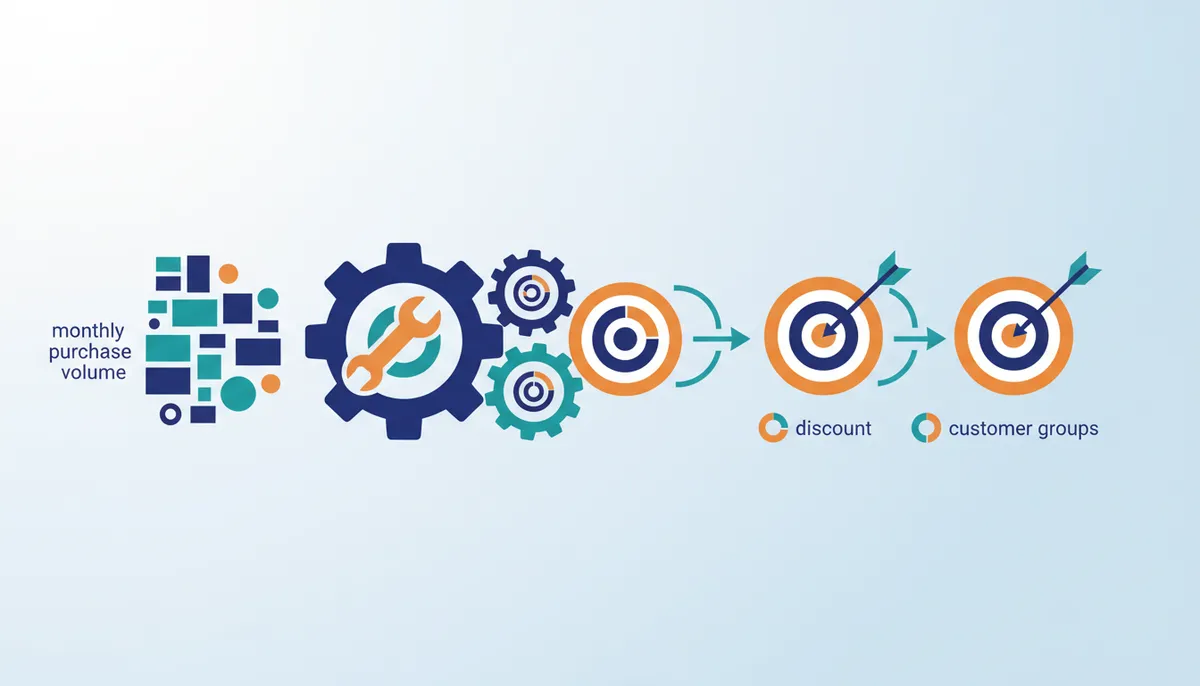
Stock the parts the rolling fleet actually needs, priced at the tier the buyer values. Tiered Garage Pricing assigns distinct price lists to fleet accounts and independent garages, distinguishing them from standard retail models. Mechanics search by VIN or OEM number, not catalog number, requiring systems that map these inputs to specific customer contracts. Fleet accounts often demand volume rebates and unique credit terms that differ notably from walk-in retail transactions. Platform providers like Square Parts emphasize flexible fulfillment and advanced pricing structures that adapt to complex brand requirements rather than flat fees. Similarly, Admark Automotive offers custom pricing models negotiated based on specific B2B needs instead of rigid subscription tiers. This approach ensures that independent workshops receive pricing aligned with their purchasing history while fleets secure contract-based rates.
| Entity Type | Pricing Driver | Contract Mechanism |
|---|---|---|
| Fleet Accounts | Volume Rebates | Account-specific contracts |
| Independent Garages | Purchase History | Custom negotiated rates |
| Retail Customers | List Price | Standard catalog rates |
Balancing simple catalog management against granular price points creates friction. If the system cannot handle OEM cross-reference data alongside custom pricing rules, distributors risk revenue leakage through incorrect charges. Without dedicated portals, garages lack quick reordering capabilities and clear account statements. The operational cost of manual price verification outweighs the investment in automated tiering logic. Distributors must deploy intelligent catalog management to prevent margin erosion across thousands of vehicle applications.
Replicating Dealer Experiences via Dedicated Garage Portals
Branded Garage & Dealer Portals convert independent workshops into high-volume accounts by mirroring the operational depth of franchise networks. Mechanics require immediate access to reorder history and account statements to maintain workflow velocity during peak service hours. Platforms enable bulk ordering capabilities, allowing teams to enter orders by SKU or part numbers efficiently without navigating complex retail interfaces. This direct entry method reduces transactional friction for fleets managing hundreds of line items daily. Distributors must configure Tiered Garage Pricing carefully to reflect contract-specific rebates while preventing margin erosion across customer segments. A common tension exists between offering deep visibility into live stock levels and maintaining system performance during high-traffic windows. Solutions enable inventory tracking across multiple locations in real-time, ensuring that displayed availability matches physical warehouse reality.
| Feature | Independent Garage Need | Dealer Equivalent |
|---|---|---|
| Search Method | VIN and application lookup | OEM catalog number |
| Pricing View | Contract-specific tier | Franchise wholesale list |
| Fulfillment | Multi-location visibility | Direct warehouse feed |
Generic B2B templates fail to handle Core & Warranty Management workflows natively within the user interface. Without specialized RMA integration, garages revert to phone calls for defective part claims, breaking the digital experience. The strategic implication is clear: portal adoption drives loyalty only when the digital toolset matches the physical complexity of the shop floor.
Application: Checklist for Validating Multi-Party Revenue Ecosystems
Validate that your platform connects sales reps, partners, and customers within a single Multi-Party Revenue System. Infopro Digital Automotive links dealers, parts manufacturers, distributors, repairers, oil, and tyre specialists to identify the right part for the right vehicle rapidly. Without this unified visibility, pricing conflicts between fleet contracts and independent garage rates create revenue leakage. Use this checklist to audit your current setup against b2b parts distribution requirements:
- Confirm the system supports Tiered Garage Pricing with account-specific contracts rather than flat global rates.
- Verify that VIN decoder integration exists to prevent fitment errors before order submission.
- Ensure bulk ordering capabilities allow entry by SKU or part number for high-volume workflows.
- Check that Core & Warranty Management tracks returns across all partner channels automatically.
Customization battles complexity; too many price tiers confuse sales reps, while too few erode margin. KZMALL Auto Parts recommends mapping your top three customer segments first, then expanding only when data confirms distinct buying behaviors. A unified view prevents the common failure where partner portals show outdated inventory or incorrect contract pricing.
Strategic Selection Criteria for Aftermarket Platform Adoption
Multi-Party Revenue System Architecture
Should you stock OE, premium aftermarket, or both for this application? Here's the math. A true Multi-Party Revenue System connects sales reps, partners, and customers on one intelligent platform rather than isolating them in single-user silos. This architecture delivers thorough visibility from quote to fulfillment, ensuring that tiered pricing for fleet accounts aligns instantly with inventory availability. Unlike basic storefronts, these systems link dealers, parts manufacturers, and repairers to manage the entire supply chain as a unified network.
| Feature | Single-User B2C Model | Multi-Party System |
|---|---|---|
| User Scope | Individual Buyer | Reps, Partners, Customers |
| Data Flow | Silosed Transaction | End-to-End Visibility |
| Pricing Logic | Static Retail | Flexible Tiered Contracts |
| Integration | Limited API | Full ERP Sync |
Organizations with 100+ employees require this depth to handle complex partner commerce and dealer portals effectively. The limitation is clear: generic platforms often lack the automotive-specific requirements like VIN-based search and core charge workflows without significant customization. Dedicated infrastructure supports account-specific contracts, volume rebates, and specialized core charge management necessary for Automotive Aftermarket Distribution. Integration with Epicor or SAP ensures that a quote generated by a sales rep reflects real-time stock levels across all warehouses. The cost of adopting such a tailored system is higher initially, yet the alternative is often the inability to scale partner networks without proportional administrative overhead. Growth depends on this structural choice.
Deploying Virtual Garage Profiles for Repeat Purchases
Saved vehicle profiles eliminate redundant VIN lookups for mechanics placing repeat orders. This workflow shifts the operational burden from data entry to order verification. By storing specific vehicle configurations, platforms enable users to execute bulk ordering by SKU without re-validating fitment for every transaction. The technical mechanism relies on a persistent database structure that links customer accounts to verified Year/Make/Model attributes. This approach simplifies the purchasing process by reducing the need for repetitive data entry. These features reduce return rates caused by incorrect part selection. X-Cart differentiates this capability through a dedicated My Garage feature, ensuring instant fitment validation on future visits. The system preserves the specific vehicle context, allowing sales reps to generate quotes that align with historical purchase data.
| Capability | Manual Entry Workflow | Virtual Garage Profile |
|---|---|---|
| Data Persistence | None per session | Permanent vehicle link |
| Search Method | Full VIN decode | Saved profile ID |
| Error Source | Typographical mistakes | Legacy data drift |
| Order Speed | Low ( repetitive steps) | High ( |
The limitation of this architecture is data stagnation; if a vehicle is sold or modified, the saved profile yields incorrect recommendations until updated. Maintaining accuracy requires users to update profiles when vehicle status changes. Relying on static data creates a hidden liability where old fitment rules apply to new inventory needs. The strategic choice involves balancing the speed of saved profiles against the necessity of fresh verification for critical safety components.
Comparison: Full-Site Suites Versus Specialized Data Infrastructure
Here's the math. The divergence between full-site management suites and specialized data system dictates whether your catalog scales by user count or transaction volume. Thorough suites like Growmax Enterprise deliver a Multi-Party Revenue System connecting sales reps and partners with full visibility from quote to fulfillment. This architecture suits organizations requiring deep ERP integration for complex dealer networks and custom pricing tiers. Conversely, enterprises decoupling catalog logic from presentation layers often adopt an API-first infrastructure model. Providers like Levam focus exclusively on high-volume OEM data processing, allowing platforms to build custom front ends atop strong fitment databases. This approach targets clients with enterprise-level budgets needing to handle massive throughput without the bloat of a full commerce suite.
| Feature | Full-Site Suite | Specialized Data API |
|---|---|---|
| Primary Focus | End-to-End Management | High-Volume Catalog Data |
| Integration Model | Pre-built ERP Connectors | Decoupled API/Widget |
| Ideal User | Distributors needing full ops | Large platforms building custom UI |
| Data Scope | Inventory + Sales + CRM | OEM Fitment + VIN Logic |
The trade-off is architectural control versus operational convenience. Specialized infrastructure solves the data heaviness but requires your team to engineer the surrounding commerce logic.
About
Priya Raman serves as the Aftermarket Category & Supply-Chain Strategist at KZMALL Auto Parts, where she directs the intersection of parts data governance and digital distribution. With 15 years of experience spanning catalog management and B2B sourcing, Priya is uniquely qualified to address the complexities of modern automotive eCommerce. Her daily work involves mastering ACES/PIES fitment standards and optimizing inventory coverage, directly informing her insights on why standard search methods fail mechanics. At KZMALL Auto Parts, a global wholesale platform managing over 50,000 SKUs, she oversees the integration of VIN-based decoding and OEM cross-referencing tools that solve critical part identification challenges. This article reflects her practical expertise in transforming raw parts data into actionable B2B eCommerce solutions. By using her deep understanding of supply-chain economics and digital catalog architecture, Priya provides authoritative guidance for distributors seeking to simplify procurement and enhance accuracy in the fragmented automotive aftermarket.
Conclusion
Scaling B2B operations reveals that siloed stakeholder views create a hard ceiling on growth, regardless of how reliable your underlying inventory data becomes. The architectural decision between a thorough suite and a specialized API is not merely technical; it defines whether your platform scales through user count or raw transaction volume. Companies must prioritize deep ERP integration if their primary friction point lies in complex dealer networks and custom pricing tiers rather than simple catalog depth.
Adopt a hybrid approach only if your team possesses the engineering bandwidth to maintain custom commerce logic around a decoupled data core. For most distributors, the immediate path forward involves consolidating around a unified system that connects sales representatives and partners from quote to fulfillment without requiring custom frontend development. Start by mapping your current quote-to-fulfillment workflow this week to identify exactly where data silos force manual intervention between your sales team and warehouse operators. This audit will reveal whether your current bottleneck is data heaviness or a lack of end-to-end visibility, dictating whether you need a specialized data API or a full-site management suite to resolve the disconnect.
Frequently Asked Questions
Static databases serve incompatible parts, causing costly returns and errors. Real-time updates are essential because fitment data for 100% of SKUs changes constantly, requiring automatic synchronization to prevent lock-in of flawed profiles.
Saved vehicle profiles eliminate re-entry friction by binding searches to specific chassis configurations. This persistence ensures repeat purchases filter inventory correctly, reducing the likelihood of application errors during urgent procurement cycles.
Generic queries ignore specific assembly line configurations, leading to incorrect part selection. Mechanics require VIN-based decoding to match factory specifications, as broad filters cannot address the complexity of OEM cross-references.
Fleet accounts and independent workshops need distinct credit terms and volume rebates. Standard systems fail here because tiered pricing structures must handle account-specific contracts alongside core charge management workflows effectively.
Core charge tracking demands specific warranty claim logic rather than generic return flows. This specialized architecture manages return merchandise authorization specifically for defective parts, ensuring accurate billing and inventory reconciliation.
References