
Door lock actuator fixes for 2015-2019 fleets
With 289 million vehicles on the road, aging fleets are creating a predictable surge in body electrical failures. As the average U.S. Light vehicle reaches 12.8 years old, components designed for shorter lifespans are failing in volume.
S&P Global Mobility data shows the average passenger car is now 14.5 years old, pushing models from the 2015 to 2019 sales years into the independent aftermarket. These vehicles feature standard keyless entry systems where small electric motors and cable mechanisms cycle repeatedly until they fatigue. Unlike intermittent network issues, these mechanical failures offer a bounded diagnostic path and low comeback rates when diagnosed correctly.
Readers will learn how to distinguish between simple actuator faults and complex body control module errors or wiring use damage. The analysis covers the specific failure mechanics of deadlocking systems found in European platforms that require precise calibration. Finally, the text contrasts dealer versus independent repair economics to demonstrate why mastering these body electrical services drives profitability in 2026.
The Role of Aging Fleets in Creating High-Margin Repair Opportunities
Defining Door Lock Actuators and Window Regulators as Wear Items
A door lock actuator functions as a small electric motor turning plastic gears that cycle repeatedly. These components lack engineering for fifteen-year lifespans. The window regulator operates as a cable or scissor mechanism dragging glass under constant load. Mechanical stress on plastic internals causes eventual stripping rather than sudden electrical death.
| Component | Primary Failure Mode | Audible Symptom |
|---|---|---|
| Actuator | Stripped plastic gears | Machine-gun clicking |
| Regulator | Cable fraying or binding | Grinding or dropping glass |
Vehicles from the 2015 to 2019 sales years now face these volume failures as they age past a decade. A deadlocking system complicates diagnosis by double-locking latches on European platforms. This security feature demands precise calibration after parts replacement. Operators must distinguish between actuator failure and module faults. A door locking via switch but ignoring the fob often indicates chafed wiring in the jamb. The distinction matters because misdiagnosis turns a bounded repair into an open-ended electrical hunt. Independent facilities face significant hurdles here, with over 60% reporting difficulties accessing proprietary data for complex electronic components. Ignoring the mechanical reality of these wear items leads to unnecessary part swaps. Technicians must verify current draw before condemning the motor. This diagnostic discipline separates profitable jobs from warranty headaches.
Targeting 2015-2019 Model Years for High-Margin Repair Revenue
Vehicles from the 2015 to 2019 sales years now enter peak failure cycles where standard keyless entry systems strain aging plastic internals. This specific cohort represents the convergence of high feature density and exhausted component lifespans. Independent shops capture margin by targeting these model years before catastrophic lockup occurs. Inspection becomes critical once a vehicle exceeds a decade of service life. The door lock actuator relies on small electric motors turning plastic gears that strip under repeated load cycles. Similarly, the window regulator drags glass against weatherstripping friction until cables fray or bind. These mechanisms were not engineered for fifteen-year durability, creating a predictable wave of volumetric failures across the fleet. Operators should inspect regulators when windows exhibit slow movement or audible grinding during operation.
| Failure Symptom | Likely Component | Operational Risk |
|---|---|---|
| Machine-gun clicking | Actuator gears | Total lockout |
| Glass drops internally | Regulator cable | Security breach |
| Intermittent fob response | Wiring or actuator | Inconvenience |
Car door locks fail primarily because plastic gear teeth shear off rather than electrical motors burning out. This mechanical limitation means the motor often spins freely while the latch remains stationary. A common oversight involves assuming fob silence indicates a dead battery rather than a stripped actuator gear. Shops must verify mechanical engagement before replacing electronics to avoid unnecessary parts costs. Big Mission Automotive notes that treating these complaints as simple fixes leaves revenue on the table. The strategic advantage lies in recognizing the plastic gear failures inherent to this vintage. Diagnostic depth separates a profitable repair from a warranty headache. Technicians who scope current draw and inspect door jamb wiring capture value that quick swaps miss. This approach turns a commodity part replacement into a defensible service niche.
Independent Shops vs Dealerships for Body Electrical Repairs
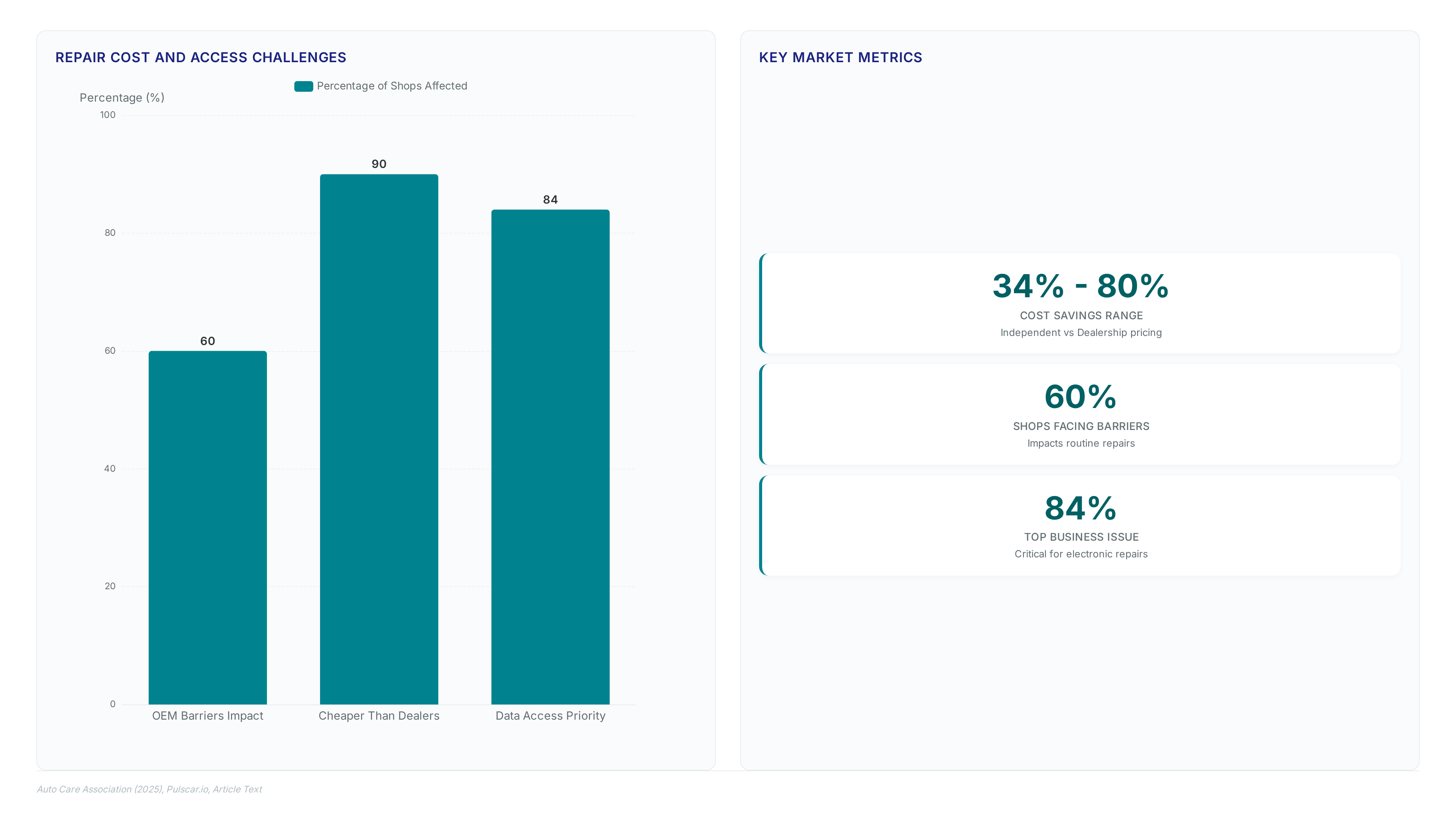
Distinguishing actuator vs module failure determines profit margins when independent shops compete with dealerships on body electrical work. Independent repair shops are cheaper than dealerships for 90% of repairs, creating immediate consumer demand for non-warranty door latch services. This price advantage drives volume, yet technical access remains a bottleneck for many facilities.
| Feature | Independent Shop | Dealership |
|---|---|---|
| Labor Rate | Lower market average | Premium OEM tier |
| Parts Access | Aftermarket or used OEM | Genuine OEM only |
| Diagnostic Data | Limited by OEM barriers | Full proprietary access |
| Repair Scope | Mechanical actuators | Module programming |
The strategic tension lies in balancing mechanical replacement against software dependency. While a shop can physically swap a window regulator or lock motor without issue, modern deadlocking features often require proprietary calibration tools inaccessible to the general aftermarket. Big Mission Automotive advises shops to name this service explicitly and stock high-failure actuators to capture same-day revenue before OEM barriers stall the job. The cost difference between dealership and independent repair services ranges from 34% to 80%, highlighting the margin potential if the shop can overcome the initial diagnostic hurdle. Dent repair services ranges from a significant share to 80%, highlighting the margin potential if technicians master the specific failure modes of this aging fleet segment.
Inside the Failure Mechanics of Electric Motors and Cable Mechanisms
Plastic Gear Stripping and Cable Fraying as Primary Failure Modes
Plastic gear stripping inside the door lock actuator creates the distinct machine-gun clicking heard before total lockup. The actuator functions as a small electric motor turning plastic gears that cycle every time the door opens, and these components are not built to run for fifteen years. Simultaneously, the window regulator suffers cable fraying as the mechanism drags the glass up and down under load. These physical degradations differ fundamentally from electrical faults where power fails to reach the motor entirely. With approximately 289 million vehicles on the road, the sheer scale of potential serviceable units grows as drivers retain older vehicles, expanding the pool of at-risk mechanical systems across the market.
Tension exists between quick part replacement and thorough diagnostic validation of the mechanism. Replacing a stripped gear without checking for binding cables often leads to immediate repeat failure of the new unit. Technicians must distinguish between a motor that cannot turn and a mechanism that refuses to move. This distinction prevents the misdiagnosis of simple mechanical binding as complex electronic control module errors. Independent shops capture value by identifying this specific physical wear before condemning expensive electronic components. The repair strategy shifts from guessing at circuits to inspecting the physical integrity of the drive train. Such precise mechanical diagnosis turns a commoditized part swap into a high-margin technical service event.
Deadlocking Protocols and Body Control Module Faults in European Platforms
European platforms present additional complexity due to deadlocking, an anti-theft mode that double-locks the latch and demands precise calibration. This security state prevents interior release even if the window is broken, complicating access during diagnostic procedures. Misdiagnosing this electronic state as a binding mechanism leads technicians to replace functional hardware unnecessarily. Throwing an actuator at that problem without scoping the module or the door wiring first is how a profitable job turns into a warranty headache.
Technicians must verify communication between the latch and the body control module before authorizing parts. A door locking from the switch but ignoring the fob often indicates a chafed wire in the door jamb or a security-system fault. Modern integration allows radio frequency remote keyless systems to command window movement, signaling deep electronic interdependence that requires scoped diagnostics. Ignoring these signals results in incorrect repairs and customer dissatisfaction.
To properly diagnose a window that drops suddenly or fails to rise, follow this sequence:
- Pull the door card to expose the internal wiring use.
- Check actuator current draw to distinguish between mechanical binding and electrical failure.
- Confirm the module is commanding the lock signal before condemning the part.
- Inspect wiring for fatigue fractures where the door flexes.
Projections indicate that vehicle complexity will remain a primary challenge for repair facilities through 2026. Shops that invest in technicians capable of navigating these electronic intricacies will improved control costs and retain customers.
Door Card Removal and Wiring Inspection Protocol
Proper diagnosis demands pulling the door card to inspect wiring harnesses before condemning a part. Technicians must verify physical integrity at the jamb flex point where conductors often fracture internally.
- Remove the interior panel to expose the latch mechanism.
- Check actuator current draw against specification to distinguish mechanical binding from electrical open circuits.
- Confirm the module commands the lock signal using a scan tool.
| Symptom | Likely Cause |
|---|---|
| Clicks, no move | Stripped plastic gears |
| Silent operation | Chafed wire or fuse |
| Intermittent function | Failing body control module |
A door locking from the switch but ignoring the fob may indicate a security fault rather than motor failure. European platforms complicate this with deadlocking features that require precise calibration after service. Shops must navigate increasing vehicle complexity, making manual current testing necessary for accurate repairs when direct data access is limited. Skipping these steps to swap parts immediately creates warranty liabilities and unhappy customers. Verifying command signals first isolates the root cause effectively. This disciplined approach separates professional diagnostic revenue from simple guesswork.
Dealer vs Independent Repair Economics for Body Electrical Services
Defining the Dealer vs Independent Cost Disparity Metrics
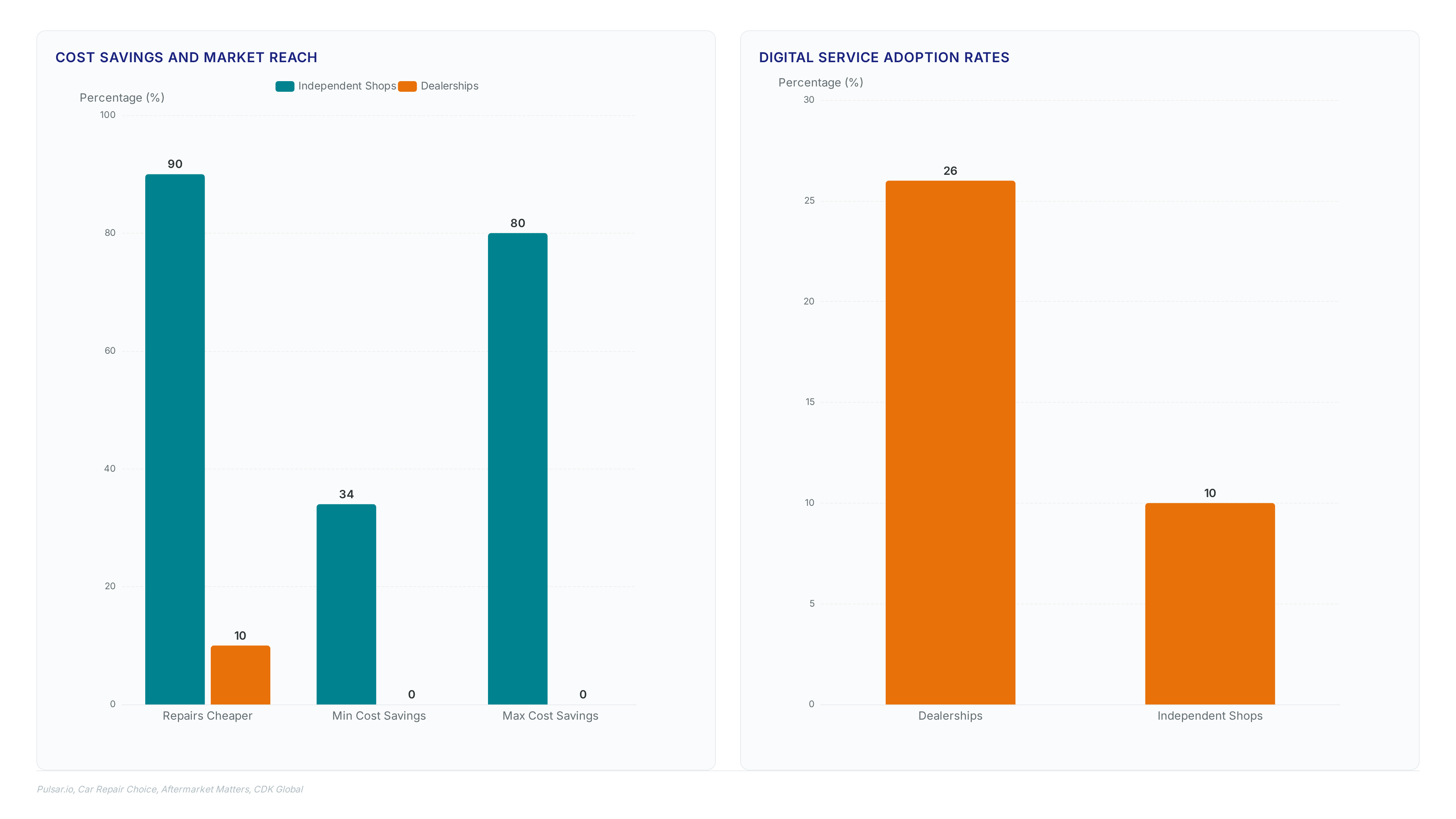
Franchise dealers charge notably more than independent facilities for identical body electrical labor, creating a stark baseline for consumer decisions on non-warranty items. Independent repair shops undercut dealership pricing for the vast majority of repairs while maintaining similar technical proficiency. Lower hourly rates drive this price difference, yet the margin profile remains distinct because independents face unique operational hurdles. Many independent repair facilities report experiencing difficulties with routine repairs due to OEM barriers, a factor that directly impacts the ability to service complex components like electronic door locks without proprietary data access.
Digital adoption rates reveal another layer of separation between the two service models. A smaller percentage of independent shop customers book services online compared to dealers, suggesting independents may miss initial diagnostic opportunities despite lower prices. Window regulator replacement becomes a volume game for these shops, relying on word-of-mouth rather than integrated scheduling platforms. Consumers realize immediate savings with this approach. The limitation involves less smooth digital integration during the service intake process.
Applying Margin Logic to Door Lock Actuator Replacement
Replacing a single door lock actuator often favors independent shops because the part remains inexpensive relative to the required labor. The repair workflow consists of door-panel removal, an actuator swap, and a final function test, allowing technicians to complete the job within a single service visit. This predictable scope contrasts sharply with complex electrical diagnostics that consume hours of billable time without guaranteed resolution.
Customers asking whether to replace all door actuators simultaneously face a choice between immediate cost and future failure risk. A targeted approach fixes the immediate security concern. Monitoring remaining doors for the characteristic clicking of stripped gears allows for honest preventive advice when a door is already apart.
The market opportunity is substantial as the U.S.2 percent year over year and pass $500 billion by 2029. Shops that master this specific diagnostic path capture high-margin work that dealerships often overlook due to scheduling inefficiencies. Success requires avoiding the practice of throwing an actuator at a problem without scoping the module or door wiring first, as this turns a profitable job into a warranty headache. Properly identifying the root cause keeps the repair profitable rather than becoming a liability.
Right to Repair Barriers and the Digital Adoption Gap
Telematics access restrictions create a structural ceiling where independent shops cannot diagnose integrated body control modules without proprietary dealer tools. Parts remain accessible, yet the inability to read secure diagnostic trouble codes forces technicians to rely on time-consuming methods rather than precise data. A significant majority of independent repair shops view vehicle data access as the top issue for their business, indicating that digital locks and integrated window systems are becoming primary bottlenecks for service revenue. This information asymmetry prevents accurate root-cause analysis for complex electrical failures, often leading to unnecessary part replacement and reduced customer confidence in non-dealer solutions.
Customer acquisition habits driven by digital convenience extend the barrier beyond technical access. Dealerships use digital capabilities to capture high-margin initial diagnostics before independent facilities can intervene. This disparity creates a feedback loop where lack of data access reduces diagnostic success rates, further discouraging customers from seeking independent service for advanced electrical issues.
Independents risk becoming locked out of the most profitable diagnostic tiers despite offering lower labor rates. The market flexible suggests that without legislative intervention or standardized data ports, independent shops face significant challenges in accessing the intellectual property required for deep electrical troubleshooting. This separation effectively cements a two-tier repair economy based on information access rather than technical skill, with vehicle complexity cited as a top challenge for shops in the coming years.
Executing Profitable Door Lock and Window Regulator Replacements
Diagnosing Body Control Module Faults Versus Actuator Failure
Silence from a door lock actuator often points to the body control module rather than a burned-out motor. Modern power locks rely on radio frequency handshakes that fail silently when security protocols glitch. A stripped plastic gear inside the latch creates a distinct mechanical resistance absent in communication breaks. Conductors fracture inside the door jamb wiring use after thousands of flex cycles, severing the link between switch and motor.
| Symptom | Probable Cause |
|---|---|
| Motor clicks rapidly | Stripped plastic gears |
| Total silence | Blown fuse or chafed wire |
| Intermittent response | Failing control module |
Proprietary diagnostic software remains apaywall for many independent shops attempting these electronic repairs. Swapping parts without tracing the circuit converts a clear profit center into an open warranty liability. European platforms layer deadlocking modes over standard latching mechanisms, requiring exact calibration sequences to function.
- Pull the door card to inspect the wiring before condemning a part.
- Check actuator current draw to confirm mechanical binding versus electrical issues.
- Confirm the module is commanding the lock before replacing the actuator assembly.
Labeling this procedure as a dedicated diagnostic service captures the true labor value. Inventory waste accumulates when network faults masquerade as bad motors, eroding both margins and customer confidence in independent technical skill.
Executing Same-Day Window Regulator Replacement on European Platforms
Removing door cards on aging European vehicles reveals regulator status before motor condemnation. Frayed cables plague high-mileage German platforms, yet stocking these high-failure items enables same-day completion. Waiting for special orders delays security repairs that customers need immediately.
Deadlocking systems on these vehicles double-lock latches and demand precise calibration after reassembly. Simple mechanical swaps fail without this step, forcing customers to return for adjustments. Factory-trained independents compete directly with dealerships by mastering these calibration routines. Skipping this phase turns a profitable job into a warranty headache.
| Diagnostic Step | Standard Practice | European Requirement |
|---|---|---|
| Initial Check | Listen for motor noise | Verify deadlock status |
| Disassembly | Remove panel only | Disconnect battery power |
| Calibration | Manual window cycle | Module synchronization |
OEM barriers complicate routine fixes, yet specialized inventory management bypasses the bottleneck. Advisors identifying machine-gun clicking as stripped gears quote with confidence. Bundling inspections of adjacent door components captures latent failures before they strand motorists. This method treats the aging fleet as a predictable revenue stream rather than random breakdowns. Honest preventive advice on matching components grows the ticket size while securing trust through transparent counsel.
Application: Preventive Inspection Checklist for Door Panel Removal and Wiring
Preventive inspection begins once the door panel is removed and the actuator is exposed. Technicians must examine door jamb wiring for fractured conductors caused by repeated flexing, a failure point mimicking motor death.
| Check Point | Failure Indicator | Action Required |
|---|---|---|
| Jamb Use | Cracked insulation or exposed copper | Replace full pigtail assembly |
| Regulator Cable | Fraying or uneven tension | Swap regulator and motor unit |
| Actuator Gears | Plastic debris in latch housing | Install new actuator kit |
| Module Command | No voltage on switch trigger | Scope body control module output |
Independent repair facilities face OEM barriers restricting digital data access, making physical inspection critical. Vehicles from the strong sales years of 2015 to 2019 now enter peak repair cycles, driving demand for these specific replacements. Complex extrication scenarios require understanding how full-frame window structures interact with body panels to prevent costly damage. Bundling this inspection across all four doors identifies matching wear patterns before reassembly. This approach converts a single complaint into a thorough safety advisory. Missing a frayed wire during reassembly costs far more than the time spent checking it initially. Proper documentation justifies the labor rate and prevents warranty comebacks. Advisors recognize symptoms by ear, such as machine-gun clicking indicating stripped actuator gears or a window dropping and not returning pointing to regulator failure.
About
Dmitry Volkov, Senior Automotive Technical Writer at KZMALL Auto Parts, possesses the precise engineering background required to analyze the rising demand for door lock actuators. His daily work involves translating complex component specifications and manufacturing standards into clear technical guidance for the independent aftermarket. This expertise allows him to accurately identify why vehicles from the 2015, 2019 model years are experiencing specific electrical failures as they age out of warranty. At KZMALL, a global B2B distributor offering over 50,000 SKUs including the KTOP line for electronic components, Dmitry bridges the gap between raw engineering data and practical shop application. His analysis connects the mechanical realities of power lock systems with the strategic inventory needs of repair shops. By using KZMALL's standardized fitment data, Dmitry helps service providers understand that these failures represent a significant, repeatable revenue opportunity rather than minor inconveniences, ensuring shops can source certified replacements efficiently.
Conclusion
Scaling this inspection model reveals that labor efficiency collapses when technicians treat symptoms rather than systemic wear. The real cost lies in repeated comebacks caused by missed wiring fractures or unaddressed regulator tension. Shops must pivot from reactive part swapping to thorough door system audits to capture the full margin potential hidden in adjacent component failures. Relying solely on customer complaints about locking mechanisms ignores the high probability of concurrent electrical degradation in the jamb use.
Facilities should mandate a four-door inspection protocol for any vehicle exceeding eight years of age before quoting specific latch repairs. This timeline aligns with the peak failure window for models sold between 2015 and 2019, ensuring shops address the root cause before reassembly. Ignoring this window cedes high-value diagnostic revenue to competitors who document full system health.
Start by updating your service order template this week to include a mandatory wiring use continuity check whenever a door panel is removed for any reason. This single step prevents costly warranty disputes and validates higher labor rates through verifiable data. Technicians can cross-reference part interchange data during this pause to confirm OEM compatibility before ordering new kits. This disciplined approach secures customer trust while maximizing the value of every opened door panel.
Frequently Asked Questions
Machine-gun clicking means stripped plastic gears inside the motor. This mechanical failure affects over 60% of shops facing data access issues when diagnosing these complex electronic components accurately.
Over 60% of facilities report difficulty accessing proprietary data needed for diagnostics. This barrier complicates repairs on 289 million aging vehicles currently requiring specialized body electrical service attention today.
Independent shops are cheaper than dealerships for 90% of all repairs. This price advantage helps consumers manage costs on the 289 million vehicles now needing frequent actuator or regulator replacements.
Incorrect calibration causes total lockout or security system faults in European models. Shops must verify current draw before swapping parts to avoid turning a bounded job into an open-ended electrical hunt.
These models feature plastic gears not built for fifteen-year lifespans.
References