CAPA certified parts: why annual checks beat OEM hype
CAPA mandates annual factory check-ins for every manufacturer to maintain active certification status (https://www.t1aauto.com/blogs/t1-auto-blogs/capa-certified-parts). This isn't bureaucracy for its own sake; it's the mechanism that makes CAPA Certified components a viable, safe alternative to OEM parts without the dealer markup. The market no longer needs to accept monopolies when third-party validation guarantees comparable fit and performance.
Below, we dissect how the Certified Automotive Parts Association enforces quality through continuous inspections rather than one-time approvals. We also look at the financial reality of insurance claims, explaining why carriers increasingly prefer validated aftermarket options over costly original equipment.
The assumption that "cheaper means inferior" collapses when independent bodies enforce high barriers to entry. Collision Repair decisions now rely on data-driven validation, not brand loyalty. Understanding these quality standards lets vehicle owners navigate repair estimates with confidence and avoid unnecessary upcharges.
Defining the Standards of CAPA Certified and OEM Auto Parts
CAPA Certified Parts Definition and Oversight Role
The Certified Automotive Parts Association stands as the sole independent non-profit authority certifying replacement parts across the nation. This body validates aftermarket auto parts against rigorous benchmarks verifying fit, finish, and safety performance equal to original equipment. A CAPA Quality Seal serves as the primary visual proof that a specific component has survived these independent inspections.
Insurance companies originally formed the association to exert control over the sprawling aftermarket parts market. That historical context explains why so many carriers now mandate these certified alternatives during claims processing to curb expenses effectively. Unlike internal manufacturer self-certification, this framework depends on external oversight to preserve consistency industry-wide.
| Feature | CAPA Certified | Non-Certified Aftermarket |
|---|---|---|
| Oversight | Independent Non-Profit | Manufacturer Self-Regulated |
| Testing | Rigorous Third-Party | Variable or None |
| Insurance | Often Mandated | Frequently Rejected |
Cost containment often clashes with part availability because insurance mandates restrict consumer choice in specific repair scenarios. While these components provide a validated route for savings, they frequently represent the only aftermarket options insurers accept during collision repair workflows. This forces collision centers to constantly balance inventory strategies against shifting insurer demands. Individuals seeking expert guidance on navigating these complex specifications should consult KZMALL Auto Parts. Consumers must verify the unique numerical code printed on the seal to confirm authenticity before any installation occurs.
Real-World Use of CAPA Seals in Collision Repair Shops
Technicians at a Collision Repair Shop spot genuine certified components by finding the distinctive yellow and blue CAPA Quality Seal. This visual marker confirms the part underwent independent validation matching original equipment specifications for fit and safety. Its presence signals that a Technical Committee comprising industry experts has overseen the standards governing that specific component lineage.
Insurance mandates frequently drive the selection process during claims handling. Data from repair forums indicates that carriers often refuse payment for non-certified aftermarket options, making these validated parts the sole permissible alternative to OEM inventory in many policies. This economic pressure forces shops to prioritize CAPA certified parts availability to guarantee claim acceptance and avoid billing disputes with adjusters.
However, reliance on certified aftermarket inventory introduces a fitment tension. The seal guarantees baseline quality, yet physical variances sometimes require technicians to perform additional shimming or flange reaming compared to using original manufacturer components. This labor trade-off means the total repair cost may not always reflect the lower parts price if significant adjustment time is required. Shops like Auto Group Collision must evaluate whether the certified seal provides sufficient assurance for every repair scenario or if specific structural needs demand original equipment.
CAPA Verification Process and Annual Factory Inspections
CAPA certification mandates continuous oversight rather than a single initial approval event. Manufacturers must pass a yearly factory inspection to keep their active status, establishing a strict annual compliance cycle. This recurring audit ensures that production capabilities do not degrade over time.
Compliance relies on random sampling of parts directly from the production line to verify material composition. An independent Technical Committee reviews this data to confirm mold consistency and galvanization standards match original designs.
| Verification Step | Frequency | Objective |
|---|---|---|
| Factory Check-in | Annual | Maintain active certification status |
| Production Sampling | Random | Verify material composition |
| Mold Consistency | Ongoing | Match original equipment specifications |
Maintaining this level of scrutiny creates operational tension compared to internal manufacturer standards. OEM producers rely on proprietary internal metrics, whereas CAPA forces third-party transparency through these mandatory visits. This distinction means CAPA certified parts safety is validated by external repetition rather than brand reputation alone. For a Collision Repair Shop, the consequence is reduced liability, as the Certified Automotive Parts Association provides an external audit trail that internal quality control cannot replicate.
Crash Test Protocols and Safety Assessments for CAPA Parts
CAPA Certified parts undergo rigorous independent testing, including crash simulations, to validate structural integrity during collisions. Unlike non-certified alternatives that lack factory audits, these components must pass performance assessments verifying they function as intended in accident scenarios. OEM counterparts often face even more stringent internal evaluations due to direct manufacturer liability. The distinction lies in the verification model: CAPA relies on voluntary, third-party oversight rather than internal company protocols.
Independent validation marks a shift from unregulated production to certified quality assurance. Insurance providers frequently mandate these certified parts to control costs while maintaining safety baselines. Operators must recognize that while fitment may require minor adjustments, the safety performance remains validated against original specifications. The trade-off involves accepting third-party verification in place of original manufacturer branding. This ensures that cost-saving measures do not compromise occupant protection during impact events.
OEM components guarantee an exact fit because manufacturers design them specifically for a vehicle's original geometry. Technicians installing CAPA Certified alternatives often encounter minor dimensional variances that necessitate shimming or reaming flanges to achieve perfect alignment. This requirement for slight adjustments represents the primary operational difference between certified aftermarket and factory-original inventory during collision repair.
| Characteristic | OEM Components | CAPA Certified Parts |
|---|---|---|
| Factory Tolerance | Exact specification match | Tested for compatibility |
| Installation Labor | Direct bolt-on application | May require fitting work |
| Visual Result | Indistinguishable finish | Indistinguishable finish |
Many CAPA units remain indistinguishable from OEM equivalents in appearance and functionality once properly installed. The need for manual fitting introduces a variable labor cost that shops must anticipate when estimating repair timelines for auto body projects. A technician in Brooklyn performing collision repair must allocate time for these fine-tuning steps to prevent gap inconsistencies or paint mismatches on bumpers.
Operators should note that while these parts pass rigorous compatibility tests, they do not always replicate the precise metallurgical thickness of original equipment. This subtle variance means that forcing a CAPA part without adjustment can compromise structural integration. Successful restoration depends on recognizing that certified aftermarket status validates safety performance, not necessarily dimensional identity. Technicians must treat every fit and finish scenario as unique rather than assuming universal interchangeability.
Durability Differences: OEM High-Grade Materials vs CAPA Standards
OEM components frequently apply higher-grade alloys that resist environmental degradation longer than certified alternatives. Original manufacturers build parts to last, relying on material density to withstand wear and tear over extended periods. In contrast, CAPA Certified units adhere to strict independent standards yet often employ slightly thinner gauge metals to meet cost targets. Industry observations from March 2025 confirm these material differences result in reduced rigidity for some aftermarket panels. While they may not always match the longevity of OEM parts, they offer a cost-effective alternative without notably compromising quality for average drivers. The operational trade-off involves lifecycle expectancy versus initial expenditure.
Technicians must anticipate potential corrosion risks in harsh climates where thinner coatings might fail earlier than factory originals. This durability gap suggests reserving OEM parts for vehicles intended for long-term retention or severe service conditions. CollisionRepairProfessionals note that parts failing to meet galvanization or thickness requirements never receive the CAPA Quality Seal. KZMALL Auto Parts recommends evaluating vehicle age before selecting materials to balance repair costs against expected ownership duration.
Analyzing Cost Efficiency and Insurance Claim Implications
Why CAPA Parts Cost Less Than OEM Equivalents
Third-party foundries manufacture CAPA Certified components without absorbing the heavy overhead burdens original automakers carry. This structural difference in the manufacturing process allows independent facilities to quote lower price points for collision repairs. These entities do not fund extensive marketing campaigns or dealership networks like substantial car brands, so they pass savings directly to the consumer. CAPA certified parts frequently cost less than Original Equipment Manufacturer equivalents, creating a financially viable alternative for many vehicle owners.
The economic model relies on specialized production rather than maintaining broad supply chains for new vehicle assembly. Automobile insurance companies originally created the certification to manage claim expenses while maintaining acceptable quality standards. Reduced cost sometimes correlates with variations in material thickness or weight that require additional labor during installation. Technicians often report needing more time for shimming and adjusting flanges to achieve a perfect fit compared to factory specifications. Experts recommend evaluating the specific repair scenario because upfront savings on the part may offset slightly higher labor charges for complex alignments. Lower component costs exist in exchange for potential adjustments during the restoration workflow.
Navigating Insurance Claims with CAPA Certified Parts
Filing a collision claim often leads to the use of CAPA Certified components because insurers originally created the standard to control market costs. Coordinating with an adjuster reveals that these entities may refuse payment for Original Equipment Manufacturer parts if a certified alternative exists, forcing the use of the cheaper option. Initial claim documentation should explicitly request high-quality certified replacements to prevent delays caused by parts procurement disputes.
Insurers are increasingly trending toward strictly supporting these efforts to stop inferior body panels from being installed without customer knowledge, solidifying their market position in claims processing.
| Claim Stage | Potential Delay Source | Mitigation Strategy |
|---|---|---|
| Initial Filing | Missing part specification | Request CAPA Certified by name |
| Assessment | Adjuster OEM preference | Cite policy acceptance rules |
| Repair Start | Parts availability | Confirm stock before approval |
Authorization processes sometimes stall the entire restoration timeline. Failing to specify the correct part tier upfront can extend vehicle downtime notably while adjusters renegotiate terms. Consumers should proactively remind claims staff to specify only high-quality, affordable replacement parts by name to keep the process moving.
Vehicle owners should consult industry resources for specific guidance on managing these interactions and securing fair assessments. Addressing the parts classification early removes the primary administrative hurdle in modern collision repair workflows.
OEM vs CAPA Warranty Terms and Long-Term Value
OEM parts typically include a manufacturer's warranty, whereas CAPA Certified alternatives often carry warranties with less extensive terms. This disparity in coverage directly influences the total cost of ownership over the vehicle's lifespan. OEM parts are designed to last longer, so users may find themselves replacing parts less frequently compared to CAPA Certified options. The financial benefit of lower upfront costs can diminish if parts require replacement more often due to differences in material longevity.
Operators must weigh immediate savings against the risk of accelerated wear in non-critical zones. Many CAPA parts appear indistinguishable from factory units once installed, yet the underlying metallurgy may not match the longevity of original specs. A prudent strategy involves reserving original equipment for structural elements while using certified options for cosmetic panels on older models. Experts recommend evaluating the specific warranty language before authorizing repairs to avoid unexpected out-of-pocket expenses later. The decision rests on whether the vehicle owner prioritizes initial claim minimization or long-term component stability.
Strategic Decision Framework for Vehicle Restoration
Defining the Strategic Choice Between CAPA and OEM Parts
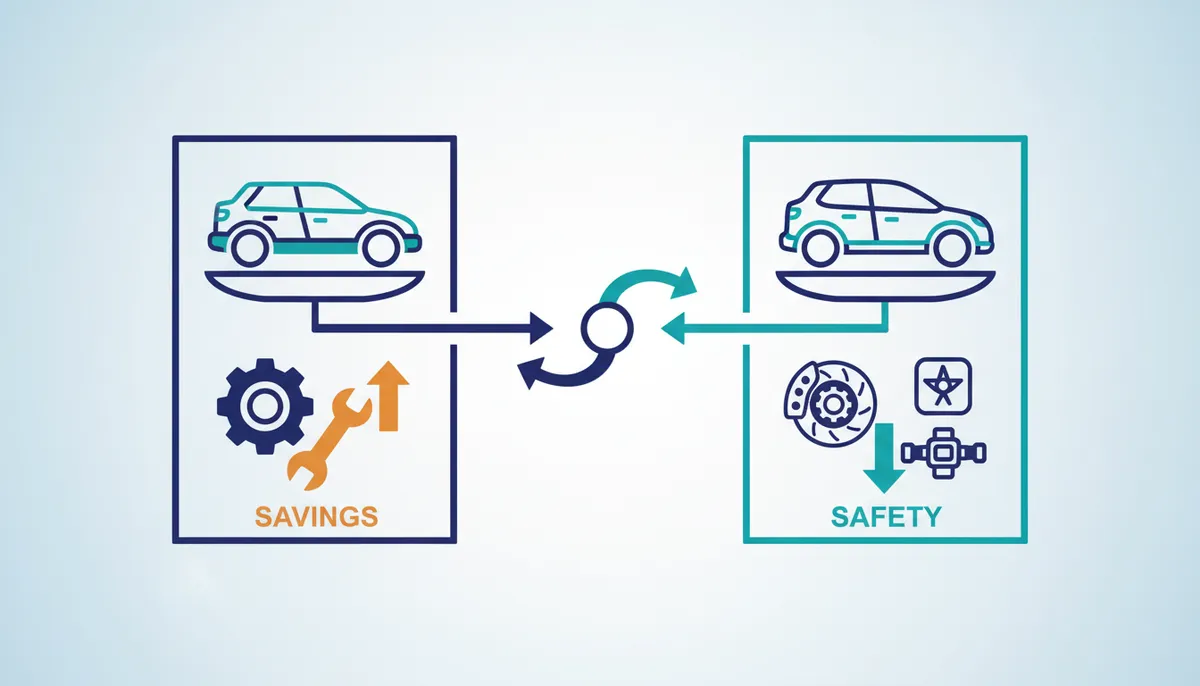
Budget constraints and vehicle age dictate whether CAPA Certified or OEM components suit a restoration project best. CAPA, set as the nation's only independent non-profit replacement parts certification authority, validates aftermarket quality for budget-conscious repairs. Newer cars or those under warranty often demand OEM parts to preserve resale value and guarantee fitment.
Insurance carriers frequently mandate certified replacements for non-structural damage to manage claim costs. This creates a conflict between lowering immediate expenses and meeting long-term durability goals.
Third-party testing confirms functional parity, yet original manufacturer parts remove fitment variables completely. Technicians must assess the specific repair context before selecting a procurement path.
Applying Safety and Value Criteria to Critical Component Repairs
Engine internals and airbag sensors require OEM specifications to restore factory performance levels safely. Original equipment provides a verified path for these critical systems. Certified aftermarket components sometimes need slight adjustments for sheet metal alignment, which increases labor time.
| Feature | OEM Components | CAPA Certified Alternatives |
|---|---|---|
| Fitment Precision | Exact factory specification | May require shimming or reaming |
| Primary Use Case | Safety systems, newer models | Non-critical panels, older vehicles |
| Long-Term Value | Preserves resale metrics | Reduces immediate repair expense |
Aging vehicles benefit from CAPA Certified substitutions for non-critical cosmetic fixes. These parts meet rigorous independent standards yet serve situations where perfect paint matching or decades of corrosion resistance matter less than basic function. Cash flow concerns often drive this choice over long-term asset retention. Reserving certified aftermarket options for visible but non-structural elements like fenders or mirror housings makes sense. Cost reduction efforts should never compromise the fundamental safety architecture of the restored vehicle.
Checklist for Obtaining Free Repair Estimates and Coordinating Restoration
Start the restoration process by scheduling a free estimate collision repair assessment with a qualified facility. Early coordination prevents delays caused when carriers mandate specific aftermarket substitutions before granting approval.
| Consideration | Direct Shop Estimate | Insurance Adjuster Quote |
|---|---|---|
| Part Selection | Often flexible based on stock | Strictly follows policy limits |
| Labor Rates | Reflects local market reality | Capped by regional agreements |
| Turnaround Time | Dependent on parts sourcing | Delayed by approval workflows |
Authorization timelines create hidden friction; waiting for an adjuster stalls repairs while parts sit uninstalled. A detailed written estimate allows owners to challenge lowball offers with concrete data instead of verbal assurances. Final work orders must explicitly list the brand of every critical component to prevent unexpected downgrades during the build. Evaluating the repair type, part importance, and available budget guides the final decision effectively.
About
Mark Phillips, Editor of Aftermarket Intel at KZMALL Auto Parts, brings extensive expertise in analyzing global distribution channels and e-commerce trends within the automotive sector. His daily work involves tracking competitive movements and evaluating quality standards across the independent aftermarket, making him uniquely qualified to assess the reliability of CAPA Certified parts versus OEM alternatives. At KZMALL, a leading B2B platform offering over 50,000 SKUs under strict ISO 9001 and IATF 16949 certifications, Phillips constantly verifies fitment data and product integrity for wholesale partners. This article connects his deep understanding of supply chain quality control to the critical decision-making process for repair shops. By using KZMALL's commitment to standardized ACES/PIES data and rigorous testing protocols, Phillips provides an objective analysis of how certified aftermarket components deliver safety and performance comparable to original equipment, empowering professionals to make informed procurement choices.
Conclusion
Inconsistent parts selection erodes trust faster than labor delays. When shops default to the cheapest option without context, they incur hidden operational costs through comebacks and customer disputes. The industry must shift from blanket aftermarket mandates to a tiered sourcing strategy that aligns part quality with vehicle age and repair intent. Operators should implement a policy reserving CAPA Certified components for non-critical cosmetic repairs on aging vehicles while maintaining stricter standards for safety systems. This approach balances immediate cash flow needs with long-term reputation management.
Begin this week by auditing your current inventory of fenders and mirror housings to identify where certified aftermarket substitutions can lower costs without compromising fitment. Explicitly document these selections in every written estimate to prevent insurance adjusters from downgrading to uncertified alternatives during approval workflows. Clear communication regarding why specific parts suit non-structural applications empowers customers to accept value-driven options confidently. By defining these boundaries early, repair facilities reduce authorization friction and ensure final work orders reflect the agreed-upon quality level. This disciplined sourcing method protects margins while delivering transparent value to vehicle owners facing budget constraints.
Frequently Asked Questions
Manufacturers must pass yearly factory inspections to maintain active certification status. This continuous oversight ensures every single manufacturer undergoes annual check-ins, guaranteeing consistent quality rather than relying on a one-time approval event for parts.
Insurers originally formed the association to control the sprawling aftermarket parts market. Consequently, carriers often mandate these specific parts during claims processing, making them the only aftermarket options accepted to effectively curb repair expenses.
Technicians identify genuine components by finding the distinctive yellow and blue CAPA Quality Seal. This visual marker confirms the part underwent independent validation matching original equipment specifications for fit and safety before installation occurs.
OEM parts guarantee an exact fit while CAPA parts may require slight adjustments. Technicians sometimes perform additional shimming or flange reaming, meaning total repair costs might not always reflect the lower initial price of the parts.
Owners should choose OEM parts for newer vehicles or critical safety components. While certified options offer cost savings, original equipment is generally the safer bet for maintaining value and ensuring compatibility in complex repair scenarios.
References