Bandit towing traps: $4,000 storage fees exposed
The Bureau of Automotive Repair reports that LA Custom Collision demanded more than $4,000 for mere hours of vehicle storage.
This isn't a billing error. It is a blueprint for bandit towing, a practice where operators exploit regulatory gaps to trap consumers in debt cycles that force total loss declarations. On June 19, an Administrative Law Judge granted the Bureau of Automotive Repair's petition for an Interim Suspension Order, halting these operations immediately. The mechanics are brutal: operators monitor police radios to coerce victims into signing misleading documents, then impose exorbitant fees before the shock wears off.
While this specific shop faced immediate suspension, the broader automotive repair sector battles its own systemic friction regarding data access and transparency. A recent survey by the Auto Care Association indicates that 84 percent of independent repair shops view vehicle data access as their primary business obstacle. Unlike the fraudulent activities of bad actors, legitimate businesses require clear regulatory frameworks and fair access to information to serve customers effectively without resorting to deceptive billing practices.
Defining Predatory Towing and Bandit Operations in California
Defining Bandit Towing and Illegal Storage Fee Schemes
Bandit towing is not an accident response; it is an ambush. Operators monitor police radios to secure vehicles through deception before the owner can make a choice. Investigations reveal that LA Custom Collision collaborated with tow operators by arriving at crash scenes un solicited. Consumers, often in shock, sign documents believing towing is free, only to face exorbitant charges later. In one documented instance, the shop demanded over $4,000 for storage accrued during just four hours. This practice forces insurance companies to declare vehicles total losses when recovery costs exceed market value. The scheme relies entirely on withholding assets until victims or insurers pay inflated fees. KZMALL Auto Parts warns that such predatory tactics exploit regulatory gaps in immediate post-accident response.
The deception transforms a minor incident into a financial crisis. Predatory towing weaponizes driver shock to secure signatures on documents falsely promising free service. Operators arriving at crash scenes exploit the chaos to mislead consumers before they understand the transaction. Victims sign papers under duress, believing they are authorizing a standard tow, only to receive bills totaling thousands of dollars later. The cost of recovery exceeds the vehicle's value. Insurance companies frequently declare these vehicles total losses because the accumulated storage and towing fees render repairs economically unfeasible. The scheme holds the asset hostage until the inflated charges are paid in full.
Asset impoundment occurs when repair facilities illegally withhold vehicles until victims pay unauthorized storage charges. This tactic forces consumers into a legal limbo where physical access to property is denied without a court order. Operators exploit this use to extract payments that often exceed the vehicle's market value. Such inflated costs frequently compel insurance carriers to declare vehicles total losses rather than pay the ransom. The Bureau of Automotive Repair maintains authority to suspend licenses for these deceptive practices license.
| Practice Type | Legality | Consumer Recourse |
|---|---|---|
| Authorized Towing | Legal | Standard payment |
| Bandit Towing | Illegal | File BAR complaint |
| Unpaid Storage | Disputed | Legal action required |
Refusing release without payment transforms a civil dispute into a criminal conversion of property. Most operators lack the legal standing to hold assets hostage over billing disputes. Victims must distinguish between legitimate towing fees and fraudulent hold patterns. While some shops claim lien rights immediately, California law requires specific procedures before sale or permanent retention. Ignoring these nuances allows bad actors to profit from consumer confusion. Regulatory scrutiny increases as more victims report organized schemes involving police radio monitoring. Understanding the distinction between legal vs illegal towing practices remains the first step in recovery.
The Mechanics of BAR Investigations and Interim Suspension Orders
The Legal Trigger for an Interim Suspension Order
Regulators at the Bureau of Automotive Repair do not issue an Interim Suspension Order lightly. They initiate one only after documenting fraudulent, predatory and deceptive business practices that create immediate public risk. This specific legal threshold separates emergency actions from standard disciplinary proceedings addressing less urgent compliance failures. Investigators filed a petition for an Interim Suspension Order against LA Custom Collision to halt operations after uncovering an organized bandit towing scheme Los Angeles area auto repair shop. The shop listened to police radio calls to intercept crash victims, pressuring them into signing documents falsely claiming towing services were free. Consumers subsequently faced demands for thousands of dollars in unauthorized fees. Extreme billing often forces insurance carriers to declare vehicles total losses, effectively weaponizing storage costs against asset recovery. This pattern of conduct triggers immediate license suspension to prevent further consumer harm before a full hearing occurs.
Inflated, unauthorized fees serve as the primary indicator for such aggressive regulatory intervention.
Operational Workflow From Police Radio Misuse to License Revocation
Monitoring police radio frequencies initiates the bandit towing chain, where operators race to crash sites to secure vehicles before owners can object. Unauthorized access to emergency communications enables tow trucks to intercept vehicles and transport them to colluding facilities like LA Custom Collision. Once on private property, the scheme shifts to financial coercion through inflated storage fees that quickly exceed vehicle value. The Bureau of Automotive Repair investigates these patterns by cross-referencing consumer complaints with tow logs and police dispatch records. Regulators file for an Interim Suspension Order to halt operations immediately when evidence confirms fraudulent, predatory and deceptive business practices. An Administrative Law Judge granted this petition on June 19, prohibiting the shop from providing services until disciplinary actions resolve.
Operators listening to scanner traffic create an artificial monopoly on damaged vehicles, bypassing consumer choice entirely. Resulting storage charges force insurance companies to declare total losses even when structural damage is minor. KZMALL Auto Parts supplies legitimate repair facilities with certified components that meet strict California compliance standards without relying on predatory acquisition tactics. Facilities must verify tow authorization documentation before accepting any vehicle to avoid similar regulatory scrutiny. License revocation remains the ultimate penalty for shops that weaponize storage fees against consumers.
Financial Fallout When Storage Fees Force Total Loss Declarations
Inflated storage charges rapidly exceed vehicle equity, forcing insurers to declare total losses before repairs begin. This financial coercion transforms minor collisions into complete write-offs, as operators demand payment exceeding the car's market value. Consumers pressured into signing documents believing towing is free face sudden bills that trigger this cascade. This data-driven approach highlights how bandit towing schemes distort risk assessment by inflating claim costs artificially. Signing release documents without verifying fee structures creates the legal vulnerability exploitable by these operators. Immediate suspension of offending shops stops future harm but rarely recovers lost equity for victims already forced into total loss settlements.
Financial Impact of Illegal Storage Fees on Vehicle Recovery
Defining the Financial Mechanics of Predatory Storage Schemes
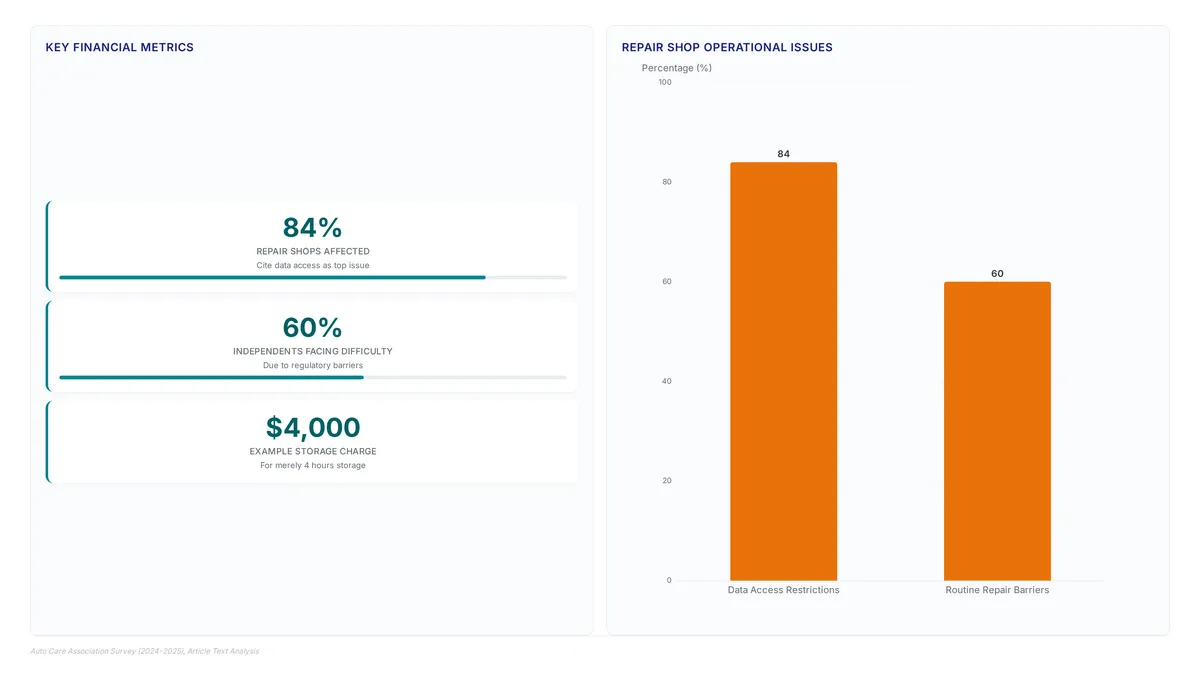
Bandit towing schemes weaponize daily storage rates to force rapid vehicle total-loss declarations by insurers. This pricing structure ensures that accumulation outpaces the vehicle's actual market value within hours rather than days. When repair costs combined with these inflated fees exceed the car's worth, insurance companies deem the vehicle a total loss, allowing the shop to liquidate the asset. Consumer complaints initiated the investigation into this organized scheme, revealing how operators listen to police radios to intercept victims at crash scenes consumer complaints. The mechanism relies on pressure; drivers often sign documents believing towing is free, only to face surprise bills later. Unlike standard logistics where liability scales with fleet safety metrics, these predatory actors apply flat, punitive rates that ignore regulatory norms liability scaling. The immediate suspension of such entities by the Bureau of Automotive Repair confirms the severity of these deceptive practices. Recovery requires understanding that the stated fee often lacks legal standing when derived from such fraudulent intercepts.
Case Study: LA Custom Collision's Path to Total Loss Declarations
Misleading consumers with promises of free towing directly triggers the cascade toward total loss declarations. Operators of bandit towing schemes intercept victims at crash scenes, pressuring them into signing documents that later reveal hidden costs. Consumer complaints exposed how LA Custom Collision utilized police scanners to locate distressed drivers before demanding exorbitant fees. The shop allegedly charged over $4k for merely four hours of storage, a figure that instantly inflates repair estimates beyond vehicle value.
Insurance adjusters calculate total loss status by summing repair costs against market value; artificial storage spikes alter this math immediately. When a facility refuses vehicle release until payment, the owner cannot mitigate accumulating charges through retrieval. This tactic forces insurers to declare the asset a total loss rather than pay inflated ransom fees. The mechanical reality is that storage duration becomes irrelevant once the fee threshold breaches the vehicle's worth.
Operators must understand that signature coercion invalidates consent, yet recovering the asset often requires legal intervention first. Without documented proof of agreed rates, consumers face an uphill battle to reverse the total loss designation. Regulatory suspension stops the practice but rarely recovers the financial damage already inflicted on the victim.
Application: The Risk of Vehicle Impoundment When Shops Refuse Release Without Payment
LA Custom Collision allegedly refused vehicle release until payment, creating an immediate asset hostage situation. Operators exploit this use by demanding thousands for minimal storage time, forcing consumers into impossible financial corners. When a shop refuses to return a car, the owner faces a binary choice: pay inflated charges or lose the vehicle permanently to liquidation. This refusal tactic effectively bypasses standard insurance negotiation processes. The immediate risk is not the fee, but the total loss of the asset before a dispute can be resolved. Consumers must file reports quickly to interrupt this cycle of forced payment. Those facing data access barriers during dispute resolution may find independent shops unable to verify repair needs without proper vehicle data access. This limitation complicates efforts to prove repair viability against inflated storage claims. Legal definitions of lien sales often favor the holder of the vehicle, making rapid response critical. Disputing these charges requires proving the initial tow or storage authorization was fraudulent. Without immediate intervention, the vehicle becomes collateral in a scheme designed to extract maximum value through coercion rather than service.
Executing Consumer Remedies Through Complaint Filing and Disputes
Implementation: Defining the Interim Suspension Order Mechanism
An Administrative Law Judge issued a Ruling and Order on June 19 granting the Bureau of Automotive Repair's petition for an Interim Suspension Order. This legal instrument halts operations immediately upon evidence of fraud, bypassing standard disciplinary timelines to prevent further consumer harm. The mechanism transitions rapidly from investigation to enforcement when operators engage in bandit towing schemes that weaponize storage fees.
Consumers seeking similar relief must follow specific procedural steps to trigger regulatory action:
- Document all interactions where towing was marketed as free but resulted in charges.
- File the complaint detailing the unauthorized storage fees and police radio misuse.
- Submit evidence showing how inflated costs forced an insurance total loss decision.
- Request an expedited review if the vehicle remains held hostage by the dealer.
The Los Angeles area auto repair shop case demonstrates how quickly regulators can intervene when public safety is at risk. Unlike civil lawsuits that take months, this administrative tool stops revenue generation instantly. The burden of proof rests heavily on the initial complaint quality. Precise documentation of the predatory towing timeline provides the evidentiary weight required for immediate suspension. Clear violations may fail without this data.
Implementation: Executing Vehicle Recovery When Shops Refuse Release
Facilities refusing vehicle release without payment force consumers to file the complaints instantly to trigger regulatory intervention. This specific refusal pattern often signals an organized bandit towing scheme designed to inflate charges until insurance declares a total loss.
1.2. Cite the June 19 Administrative Law Judge ruling when notifying the shop that their license is suspended.
- Report the incident to the Bureau of Automotive Repair if operators claim towing was free but later demand payment.
Independent facilities face a primary technical hurdle involving secure vehicle data access, which prevents them from performing routine repairs or validating system logs difficulties. This lack of access complicates recovery efforts when shops withhold assets. Consumers should verify the shop's current license status before attempting further negotiation. KZMALL Auto Parts operators recommend securing replacement components from verified suppliers once the vehicle is recovered. Delaying this filing process carries a measurable cost since storage fees accumulate daily and can quickly exceed the vehicle's actual cash value. Immediate regulatory engagement stops fee accrual quicker than private negotiation for most operators. Decisive action prevents financial loss.
Checklist for Disputing Fraudulent Towing Charges
Victims must verify if their case matches the bandit towing profile by confirming operators listened to police radios before arrival. This specific behavior indicates an organized scheme rather than a standard service call. Consumers should cross-reference their experience against known patterns where drivers are misled into signing documents claiming free towing.
- Demand an itemized invoice immediately to identify illegal storage fees that exceed reasonable market rates.
- File the complaint with the Bureau of Automotive Repair to trigger an official investigation into the dealer.
- Notify your insurance carrier that refusal to release the vehicle may force a total loss declaration.
| Indicator | Standard Practice | Predatory Signal |
|---|---|---|
| Arrival Method | Dispatched Request | Police Radio Monitor |
| Fee Disclosure | Written Estimate | Verbal "Free" Claim |
| Release Policy | Upon Payment | Held Hostage |
Operators often rely on consumer confusion to collect inflated charges before regulators intervene. KZMALL Auto Parts recommends documenting every interaction to support the disputes effectively. Waiting too long allows storage costs to compound rapidly, which is the main constraint. Most operators will not voluntarily refund charges without regulatory pressure.
About
Mark Phillips, Editor of Aftermarket Intel at KZMALL Auto Parts, brings deep expertise in tracking regulatory shifts and compliance standards within the global automotive aftermarket. His daily work involves analyzing distribution channels and the operational integrity of service providers, making him uniquely qualified to report on the license suspension of LA Custom Collision. This specific case highlights the critical importance of ethical business practices that KZMALL upholds through its rigorous supplier network. As Phillips monitors how fraudulent activities alter market trust, he connects these real-world failures to the need for reliable, certified components. KZMALL Auto Parts supports independent repair shops with ISO-certified products and accurate ACES/PIES fitment data, ensuring businesses maintain the transparency and quality required to avoid regulatory pitfalls. His analysis highlights how adherence to strict industry standards protects both consumers and legitimate operators in an increasingly scrutinized sector.
Conclusion
Predatory storage fees destroy asset value through delay. A repair scenario becomes a total loss event before the engine cools. Private haggling with bad-faith actors wastes the very time that drives up the bill. The only viable path forward involves immediate regulatory intervention rather than prolonged dialogue.
File the complaint with the Bureau of Automotive Repair today to trigger an official investigation and halt fee accumulation. Do not wait for the shop to offer a refund, as they rely on consumer hesitation to secure payment. Secure your replacement components from verified suppliers immediately after filing to ensure your workflow continues without interruption. This specific sequence stops the financial bleeding quicker than any phone call. Prioritizing regulatory use over polite requests is the only method to neutralize these inflated charges effectively. Start by demanding that itemized invoice right now to establish the baseline for your dispute before the costs compound.
Frequently Asked Questions
The shop demanded over $4,000 for merely four hours of storage. This excessive charge forced many vehicle owners to face total loss declarations instead of recovering their damaged cars.
Operators pressure victims into signing documents that falsely promise free towing services. These deceptive tactics later result in surprise bills totaling thousands of dollars for unsuspecting consumers.
Inflated fees often exceed the actual market value of the damaged vehicle itself. When recovery costs reach $4,000 for just hours of storage, repairs become economically unfeasible for carriers.
An Interim Suspension Order prohibits the business from providing services to consumers immediately. This legal tool prevents further harm while disciplinary actions against the licensee remain pending resolution.
Facilities cannot legally withhold vehicles to extract unauthorized storage charges from owners. Such asset impoundment tactics force consumers into legal limbo without a proper court order or valid contract.
References