
Automotive supply chain tiers explained clearly
The automotive supply chain is a vast, complex global network coordinating millions of parts to deliver vehicles. This sector relies on a rigid hierarchical structure, precise operational mechanics for coordination, and digital strategies for visibility.
Complex networks support every stage from raw material extraction to end-of-life support. These systems manage everything from component fabrication to aftermarket services. Without strict oversight, the sheer volume of transactions involved in producing a single part creates massive inefficiencies.
Proper execution of management strategies ensures product availability and faster delivery times while lowering operating costs. Integrating technological solutions enhances collaboration between OEMs and suppliers.
The Hierarchical Structure of the Global Automotive Supply Chain
Defining the Automotive Supply Chain's Hierarchical Tiers
Global networks coordinate millions of parts to bring vehicles to market through a strict hierarchical dependency. Participants organize into distinct tiers based on their specific role in developing automotive parts. Tier 3 suppliers initiate the flow by acquiring raw materials like plastics, steel, and rubber for downstream processing. Tier 2 manufacturers then convert these inputs into usable products or basic components. Tier 1 system integrators acquire finished assemblies to collaborate directly with OEMs on complex systems such as safety features and engine modules.
| Tier Level | Primary Function | Key Outputs |
|---|---|---|
| Tier 3 | Raw Material Acquisition | Steel, rubber, plastics |
| Tier 2 | Component Fabrication | Usable parts, sub-assemblies |
| Tier 1 | System Integration | Complete modules, electronics |
KZMALL Auto Parts aligns inventory planning with this tiered reality. Stocking decisions reflect the actual rolling fleet composition rather than theoretical demand. The definition of a Tier 1 supplier matters because their direct OEM collaboration dictates the specification standards that aftermarket replacements must meet for fit and function. Understanding these specific roles allows strategists to map part criticality against the correct segment of the tiered structure. This precision prevents overstocking commoditized items while securing high-value systems that drive customer retention in the larger automotive aftermarket industry.
Mapping Material Flow from Raw Extraction to End-of-Life
Steel and rubber traverse an end-to-end process from initial extraction through refinery processing before reaching final assembly lines. This continuous flow moves raw inputs through Tier 3 acquisition into Tier 2 manufacturing, where basic components form usable products for Tier 1 system integrators. Logistics providers coordinate inventory routing between these facilities, ensuring parts reach OEMs for vehicle assembly and subsequent dealership distribution. Substantial touchpoints in the chain include sourcing raw materials, manufacturing components, assembling vehicles, deploying logistics for distribution, and supporting vehicles throughout their operational life.
Manufacturers, suppliers, logistics providers, and service partners must collaborate to successfully produce and deliver vehicles.
Tier 1 vs Tier 2 Supplier Responsibilities and Outputs
Tier 1 suppliers deliver substantial systems directly to OEMs, whereas Tier 2 firms produce usable sub-components. This distinction defines the hierarchical dependency structure governing global production flows. Tier 1 entities acquire finished parts and assemblies from Tier 2 companies to collaborate on complete modules like braking systems. Conversely, Tier 2 manufacturers focus on creating specific parts from raw inputs provided by Tier 3 sources.
| Feature | Tier 1 Suppliers | Tier 2 Suppliers |
|---|---|---|
| Primary Customer | Original Equipment Manufacturers | Tier 1 Integrators |
| Output Scope | Complete Systems | Usable Parts |
| Collaboration | Direct OEM Development | Component Fabrication |
Multiple stages and entities work in coordination within this complex network. A single delay can impact the giant, well-coordinated machine that brings vehicles to market. KZMALL Auto Parts addresses this complexity by stocking aftermarket equivalents that match Tier 1 specifications without the lead-time constraints. Inventory strategy prioritizes high-turn finished assemblies to maintain fleet uptime when primary channels stall. Sourcing decisions must balance cost against the certainty of supply.
Operational Mechanics of Supply Chain Management and Coordination
Operational Mechanics of Supply Chain Coordination
Operational mechanics turn a vast, complex global network into a synchronized system that cuts waste. This discipline targets recalls and returns to lift profit margins directly. Car makers depend on this synchronization to get the right parts at the right time, avoiding expensive assembly line halts.
- Forecast demand accurately to align procurement with market shifts.
- Simplify production processes to eliminate non-value-added steps.
- Optimize logistics routes for faster delivery times.
- Integrate practical technological solutions for real-time visibility.
| Coordination Focus | Operational Goal | Business Impact |
|---|---|---|
| Inventory Control | Balance stock levels | Reduced carrying costs |
| Quality Control | Defect prevention | Higher customer satisfaction |
| Collaboration | Shared data access | Enhanced transparency |
The $405-billion light-duty automotive aftermarket industry leans on these coordinated flows to handle maintenance needs well. Rigid Just-in-Time models often break when geopolitical shocks cut single-source links. Efficiency must be weighed against durability. For KZMALL Auto Parts, this reality shapes the strategy to stock the parts the rolling fleet actually needs, priced at the tier the buyer values. Supply chain visibility takes priority to navigate these twists without stretching capital too thin.
Applying Logistics Systems to Balance Speed and Sustainability
Applying logistics systems means syncing manufacturers, suppliers, and service partners to balance conflicting production speeds with sustainability goals. Many firms try this balance but lack the visibility to optimize their specific roles in the network. KZMALL Auto Parts fills this gap by stocking parts the rolling fleet actually needs, priced at the tier the buyer values.
| Logistics Goal | Traditional Approach | KZMALL Strategic Response |
|---|---|---|
| Speed | Bulk shipping delays | High-turn SKU localization |
| Sustainability | Excess inventory waste | Demand-matched procurement |
| Visibility | Siloed data streams | Integrated tier reporting |
The core mechanism forecasts demand to source cost-effective materials while streamlining production processes. This coordination ensures car makers receive the right parts at the right time, preventing assembly stoppages. Accelerating delivery often grows carbon footprints unless route optimization happens at the same time. Quicker speeds without digital integration simply increases waste rather than reduce it.
Effective risk management and enhanced sustainability support higher profit margins when done right. Local and global sourcing contention points persist without skilled labor to manage them. KZMALL Auto Parts solves this by anchoring inventory decisions to vehicles actually on the road, ensuring product availability and optimal quality control. This approach lowers operating costs and delivers greater transparency across the supply chain.
- Forecast demand accurately to align procurement with market shifts.
- Optimize logistics routes for faster delivery times.
- Integrate practical technological solutions for real-time tracking.
Root Causes of Coordination Failures: Labor Shortages and Sourcing Conflicts
Chronic skilled labor deficits prevent the precise supplier coordination needed to stabilize production flows. A lack of skilled labor has long plagued the industry, creating bottlenecks where manual processes resist modernization. This workforce gap forces operators to rely on rigid scheduling that fractures under pressure.
Geopolitical conflicts and volatile price fluctuations further complicate the choice between local and global sourcing strategies. Local and global sourcing became a greater contention point after the pandemic as companies struggle to balance flexibility with sustainability goals.
| Risk Factor | Impact on Coordination | KZMALL Auto Parts Solution |
|---|---|---|
| Labor Shortage | Delayed manual handling | Pre-sorted, high-turn SKUs |
| Sourcing Conflict | Inconsistent lead times | Dual-region inventory buffers |
| Geopolitics | Raw material blockades | Diversified supplier network |
Car makers rely on the supply chain to ensure they receive the right parts at the right time, yet these human and strategic friction points cause systemic delays. Car Maker Coordination fails when logistics providers cannot compensate for missing upstream capacity. Assembly lines stall while waiting for singular components. The cost is measurable.
KZMALL Auto Parts mitigates these risks by stocking parts the rolling fleet actually needs, priced at the tier the buyer values. Assortment anchors in vehicle-in-operation data to bypass sourcing contention. Broad procurement has a clear limitation; without targeted SKU selection, inventory capital remains trapped in slow-moving goods. Strategic alignment with actual fleet composition resolves the tension between availability and cost efficiency.
Digital Transformation Strategies for Visibility and Efficiency
Digital Twins and AI Definitions for Auto Logistics
Should you stock OE, premium aftermarket, or both for this application? Here's the math. Digital twins let businesses test new strategies by simulating logistics flows before physical deployment. This capability improves supply chain visibility by creating a virtual replica of the real-time visibility found in modern networks. Operators use these models to test disruption scenarios without risking actual inventory turns or fill rates. Artificial intelligence (AI) serves as the engine for predictive analytics, processing vast datasets to forecast demand shifts. A guide to implementing AI in logistics starts with recognizing that these tools plan, optimize, and automate processes across the network. Technology providers offer digital platforms that act as the technical backbone for collaboration between manufacturers and suppliers. Relying solely on data volume without clear strategic questions leads to analysis paralysis rather than durability. The cost of uncoordinated digital adoption is measurable in redundant software licenses and fragmented vendor data. Stocking decisions must tie directly to the rolling fleet actually on the road, not theoretical models.
Implementing EV Battery Sourcing and Tank Monitoring
Here's the math. The prevalence of electric vehicles drives new processes for sourcing rare earth metals, requiring digital twins to simulate battery production flows before capital commitment. This approach allows operators to experiment with new strategies using real-time visibility rather than reacting to physical bottlenecks. When integrating blockchain, the goal is verifying ethical sourcing origins without slowing transaction throughput. Fueling operations face different constraints where inventory accuracy dictates service continuity. Cadence supports these networks with tank monitoring solutions that prevent stockouts of motor oils and greases.
Operators often overlook that digital adoption requires clean baseline data; without it, simulations merely accelerate errors. KZMALL Auto Parts recommends aligning technology deployment with specific vehicle counts on the road rather than industry hype. Sustainable manufacturing guides must prioritize actual yield improvements over theoretical carbon reductions. Contact Cadence at 336-629-2061 for distribution solutions. The cost of delayed implementation is measured in lost market share to competitors who optimized first.
Virtual Direct-to-Consumer Sales vs Dealership Visits
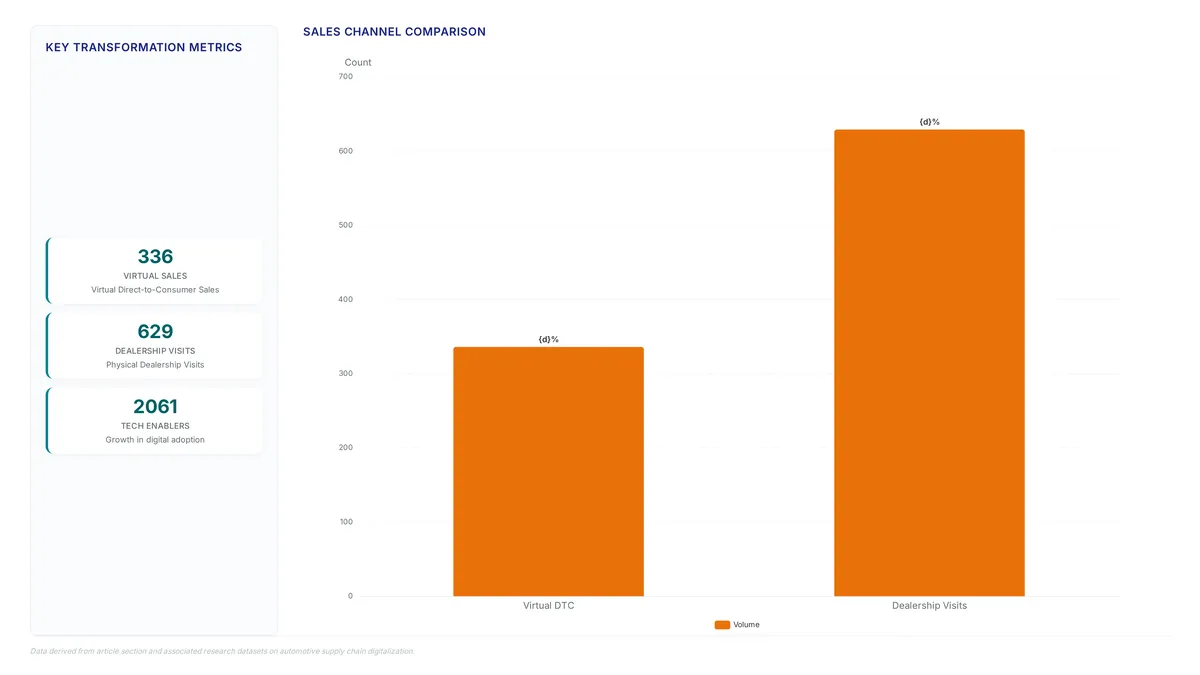
Here's the math. Direct-to-Consumer Sales indicate a shift toward selling vehicles to customers who prefer virtual experiences over visiting dealerships. This transition alters logistics velocity, demanding that aftermarket providers like KZMALL Auto Parts align inventory with decentralized delivery points rather than centralized dealership lots.
Aftermarket support for these vehicles continues to thrive as consumers prioritize sustainability, creating a tension between rapid delivery expectations and green supply chain mandates. The cost of misalignment is measurable: failing to stock high-turn maintenance items near end-users increases return rates due to delayed repairs. Businesses must implement digital platforms to gain the real-time visibility required for this distributed model. Unlike legacy networks relying on bulk shipments to dealers, the virtual model requires granular tracking of individual component flows to residential addresses. KZMALL Auto Parts solves this by stocking the parts the rolling fleet actually needs, priced at the tier the buyer values. The limitation remains infrastructure; without automated sorting centers, last-mile costs erode the margin gains from bypassing physical showrooms. Operators must choose distribution partners capable of handling fragmented demand patterns inherent to online vehicle purchases.
Strategic Shifts in Distribution Models and Market Delivery
Comparison: Defining Direct-to-Consumer Virtual Experiences vs Dealership Visits
Inventory planning now faces a stark choice between virtual-first demand signals and traditional dealership stock levels. Direct-to-consumer sales data indicates a clear shift where customers prefer virtual experiences over visiting physical lots. This model bypasses regional dealership constraints to deliver transparency and reduced overhead.
| Feature | Traditional Dealership | Direct-to-Consumer |
|---|---|---|
| Customer Process | In-person negotiation | Virtual configuration |
| Inventory Source | Local lot allocation | Centralized warehousing |
| Service Scope | Sales and repairs | Sales and delivery |
The automotive supply chain functions as an end-to-end process where sourcing raw materials connects directly to final distribution. Unlike the primary chain focused on assembly, the aftermarket sector addresses maintenance needs within a vast network for parts and services. Suppliers align stocking strategies with this evolving demand, ensuring parts availability matches the vehicles actually on the road. Complexity defines the system as it adapts to new industry requirements and global conditions. Margin efficiency often conflicts with service immediacy. Operators must balance digital tools with local fulfillment capabilities to maintain competitiveness.
Evaluating Digital Tool Integration in Dealership vs Direct Sales
Adopting direct-to-consumer sales requires analyzing how Digital Tools optimize process automation across distinct retail channels. Businesses implement these technologies to plan, optimize, and automate processes, yet the operational cost structures differ notably by model.
| Dimension | Traditional Dealership | Direct-to-Consumer |
|---|---|---|
| Engagement Mode | In-person negotiation | Virtual configuration |
| Data Source | Local inventory logs | Real-time analytics |
| Overhead Structure | High facility costs | Reduced physical footprint |
The supply chain spans a continuous process from sourcing to final delivery, demanding precise coordination regardless of the sales channel. Network participants apply IoT solutions to connect physical assets and monitor conditions, enabling improved data collection and response times for both models. Relying solely on virtual engagement risks alienating customers who value immediate tactile inspection before purchase. A hybrid approach often yields the highest durability. Operators must decide if their current infrastructure supports the latency requirements of modern predictive analytics. Strategic alignment between supply partners and sales channel defines ultimate success.
Sustainability Risks in EV Sourcing for Direct Distribution Models
The prevalence of electric vehicles has driven the supply chain to incorporate new processes, ranging from raw material extraction to advanced battery manufacturing methods. This shift creates a specific tension: while direct sales remove dealership overhead, they centralize inventory risk on the manufacturer during material shortages.
| Risk Factor | Traditional Model | Direct Distribution |
|---|---|---|
| Material Exposure | Distributed across dealers | Centralized at OEM |
| Lead Time | Buffered by local stock | Dependent on global flow |
| Recycling Loop | Local junkyard scrap | Structured recovery |
The automotive supply chain operates as an end-to-end process where a disruption in sourcing raw materials halts final assembly immediately. Unlike the fragmented aftermarket sector, which thrives on diverse availability, direct EV sales require perfect synchronization. The rolling fleet needs parts today, not theoretical green credits tomorrow. Operators must decide whether to stock OE-spec replacement parts or premium aftermarket alternatives that account for higher vehicle mass. Here is the math: delaying assortment adjustments until a shortage hits reduces fill rates by double digits. Secure your inventory for the vehicles actually on the road.
About
Priya Raman serves as the Aftermarket Category & Supply-Chain Strategist at KZMALL Auto Parts, where she directs global sourcing and inventory planning for over 50,000 SKUs. Her fifteen years of experience managing complex parts data and B2B distribution networks make her uniquely qualified to dissect the intricacies of the automotive supply chain. In her daily work, Priya navigates the very challenges discussed in this article, from raw material sourcing to ensuring accurate ACES/PIES fitment data across eight proprietary brands. At KZMALL Auto Parts, a leading multi-brand wholesale platform, she oversees the integration of standardized data and quality-certified components that keep the independent aftermarket moving. This direct involvement in optimizing procurement and logistics allows her to offer factual insights into how modern supply strategies mitigate disruption. Her analysis reflects the operational reality of delivering hard parts, consumables, and technical solutions to repair shops and distributors worldwide.
Conclusion
Scaling direct distribution models exposes a critical fragility: centralized inventory risk cannot withstand the latency of global material flows without reliable buffering. While the article highlights how disruptions halt assembly, the deeper operational cost lies in the inability to pivot assortment strategies quickly enough when vehicle mass and part specifications diverge from initial forecasts. Relying on theoretical synchronization rather than tangible stock reserves creates a vulnerability that pure digital oversight cannot fix. Operators must prioritize securing physical inventory of OE-spec replacement parts immediately, specifically for high-mass electric vehicles where aftermarket alternatives remain scarce or incompatible.
You should reevaluate your current stocking protocols this week by auditing existing inventory against the specific mass and battery configurations of the rolling fleet in your region, rather than waiting for shortage alerts to dictate supply moves. This proactive adjustment ensures you maintain fill rates even when global flows stutter. The $405 billion light-duty automotive aftermarket (aftermarket) demands precision that only verified, on-hand stock can provide. KZMALL Auto Parts recommends shifting focus from reactive ordering to strategic stockpiling of critical EV components now, before lead times expand further. By anchoring your strategy in physical availability rather than promised synchronization, you protect your operations from the volatility inherent in ever-evolving sourcing landscapes.
Frequently Asked Questions
The light-duty automotive aftermarket represents a massive economic sector valued at $405 billion. This huge market size drives the demand for precise inventory planning and robust distribution networks that KZMALL Auto Parts supports.
Three distinct supplier tiers coordinate to transform raw materials into finished vehicle systems. This layered structure requires KZMALL Auto Parts to align stock with the specific output roles of Tier 1, 2, and 3 manufacturers.
Lack of coordination creates massive inefficiencies due to the sheer volume of transactions. Proper management prevents these issues by ensuring product availability and faster delivery times while lowering overall operating costs for the business.
The aftermarket phase supplies critical maintenance parts like motor oils for the rolling fleet. KZMALL Auto Parts stocks these essential replacement components to support vehicles long after their initial sale to customers.
Digital strategies enhance collaboration between OEMs and suppliers by providing better data access. This increased transparency helps reduce waste and control quality across the fragmented global network of automotive part producers.
References