
VIN Lookup for Parts: Why 17 Digits Matter
A 17-character VIN is the mandatory key required to access accurate build sheets and eliminate fitment errors. Readers will learn to distinguish between limited free tools and reliable paid services, execute lookups using OEM catalogs, and avoid common data entry mistakes that lead to costly returns.
The standard vehicle identification number consists of exactly 17 characters that must be input correctly to retrieve valid data (17-digit). Without this precision, technicians risk selecting parts based on incomplete model year assumptions rather than actual factory configurations. While zero-cost options exist for basic checks, professional workflows often demand the detailed powertrain and restraint data found in paid reports to ensure compatibility.
Modern parts fitment depends on verifying the 10th digit to confirm the model year before cross-referencing OEM diagrams. The guide details how transportation fleets use these vin-based part search methods to reduce inventory waste. By understanding the limitations of VIN filtering in basic tools, mechanics can prevent the frustration of ordering components that physically cannot install on the target vehicle.
The Critical Role of VIN Data in Modern Parts Fitment
VIN Structure: WMI, VDS, and VIS Sections Explained
Dealerships and electronic catalogs parse the vehicle identification number as a unique 17-character key to generate accurate vehicle profiles. This alphanumeric string divides into three distinct segments. The first three characters form the World Manufacturer Identifier, identifying the country and specific division responsible for assembly. Digits 4, 8 often encode engine size, body, and restraint type within the Vehicle Descriptor Section.
| Section | Positions | Primary Function | Fitment Relevance |
|---|---|---|---|
| WMI | 1, 3 | Identifies manufacturer | Confirms brand-specific part lines |
| VDS | 4, 8 | Describes attributes | Defines engine and safety specs |
| VIS | 9, 17 | Uniquely identifies unit | Determines model year and plant |
Digit 10 represents the year (e.g. A=2010, B=2011), using a cyclical code to identify the model year. Technicians must input this full 17-character VIN into specialized systems to access the digital build sheet containing every part installed during assembly. Relying solely on generic year-make-model filters is a common operational failure that misses subtle production changes encoded in the middle digits. These central positions often differentiate between brake types or sensor configurations that look identical externally but require different part numbers. Decoding exposes transmission, restraint type, and emissions information to ensure compatible component orders and reduce returns.
Using RPO and PR Codes for Precise Brake and Axle Fitment
Standard VIN decoding often omits specific brake caliper sizes or suspension rates, requiring manual verification of RPO codes for GM vehicles or PR codes for VAG groups. These alphanumeric identifiers define critical hardware variations like axle ratios and cooling packages that generic year-make-model searches miss entirely. Locations for these codes include the glovebox label (GM) and spare tire wells (VAG). VAG PR codes fine-tune rotors, pads, sensors, and control modules to match specific vehicle configurations.
| Manufacturer | Code Type | Physical Location | Defines |
|---|---|---|---|
| GM | RPO | Glovebox label | Brake type, axle ratio |
| VAG | PR | Spare tire well | Rotor size, sensor type |
| Ford | Option | Door jamb sticker | Ring-and-pinion specs |
When the windshield tag is unreadable, technicians use OBD2 Mode 9 to request vehicle information directly from the engine control module, often retrieving the stored VIN to cross-reference build sheets. This step prevents installing undersized rotors on high-performance trims where visual identification fails. Businesses integrate these decoding steps via API connections to automate parts searching by VIN and reduce manual lookup errors. Physical inspection remains mandatory since digital records may not reflect post-production hardware swaps.
VIN lookup versus generic year-make-model search accuracy determines whether a technician receives a single correct part number or a list of potential mismatches. Generic filters often fail because they cannot distinguish between transmission types or emissions configurations that share the same model year. Decoding the full string exposes these hidden variables, directly lowering "doesn't fit" rates for complex assemblies. This method provides factory-level details necessary for matching sensors and engine components.
| Feature | Generic Search | VIN Lookup |
|---|---|---|
| Precision | Low | High |
| Data Source | Year/Make/Model | Build Sheet |
| Fitment Risk | High | Minimal |
Many transportation fleets apply these driven catalogs to reduce returns and accelerate sourcing across large inventories. Technicians must locate the physical tag rather than guessing based on exterior trim. While generic searches assume standard equipment, the 17-character identifier reveals non-standard factory installations that alter part requirements. Relying on year and model alone leaves critical restraint types unverified, forcing installers to discover incompatibilities only during physical installation. This delay compounds labor costs and frustrates customers waiting for repaired vehicles. Accurate decoding eliminates this guesswork by anchoring the search to the specific vehicle as it left the assembly line.
Comparing Free and Paid VIN Decoder Tools for Accuracy
Defining Free NHTSA and Paid EpicVIN Data Depth
NHTSA provides free government year, make, and manufacturer records for all US brands without charge. This baseline data confirms identity but lacks the granular motor and trim details required for precise parts matching. Retailers like O'Reilly apply the full 17-character string to reveal factory specifications such as engine size and drivetrain configurations O'Reilly. In contrast, EpicVIN delivers rapid decoding of specific powertrain attributes that generic searches often miss. While free tools suffice for basic identification, professional workflows demand the deeper build sheet access found in paid tiers. Some services restrict users to ten daily lookups before requiring a premium upgrade for continued access 10 daily decodes. The National Insurance Crime Bureau offers a separate free check focused strictly on theft and salvage history rather than mechanical specs. Operators must distinguish between these data depths to avoid fitment errors on sensitive components.
| Feature | NHTSA | NICB VINCheck | EpicVIN |
|---|---|---|---|
| Cost Model | Free | Free | Freemium |
| Primary Data | Year/Make/Model | Theft Status | Motor/Trim Details |
| Parts Depth | Low | None | High |
| Best Use | Identity Confirm | Fraud Check | Fitment Verification |
Relying solely on government data creates a blind spot for production break points that define part compatibility.
Retailer Catalogs Like AutoZone Versus Carfax History Tools
AutoZone and O'Reilly use OEM references to validate part fitment, whereas Carfax supplies background history unsuitable for sourcing components. Retailer platforms function as active fitment engines that map the 17-character identifier to specific engine sizes and drivetrain configurations. This approach prevents installation errors on sensitive items like sensors or emissions modules. By contrast, history tools verify ownership chains but lack the diagrammatic depth required to distinguish between brake types or suspension variants. Operators relying on history reports for parts selection face a high risk of ordering incorrect assemblies.
| Feature | Retailer Catalogs (AutoZone/O'Reilly) | History Tools (Carfax) |
|---|---|---|
| Primary Data | OEM build specs and interchange numbers | Theft, salvage, and title records |
| Parts Utility | Direct ordering by VIN | Zero parts compatibility data |
| Diagram Access | Yes, positional views included | No technical illustrations |
| Cost Model | Free loss-leader for sales | Paid subscription service |
Retailer tools like O'Reilly exist to sell correct parts, while history providers monetize risk disclosure. A critical limitation emerges when users attempt plate to VIN lookup via state portals that may return recycled or mismatched identifiers. Always verify the physical dashboard tag against digital results before purchasing. Skipping this verification results in a returned part and wasted labor hours. Professional workflows prioritize retailer catalogs for their direct link to factory specifications.
Professional RepairLink Tools Against Free 17vin API Limits
RepairLink delivers OEM-level diagrams across all brands, whereas the 17vin.com API free tier caps usage at 10 daily decodes before mandating payment. This hard stop creates a bottleneck for fleet managers who require continuous access to build sheets rather than sporadic checks. Free entries often list four service categories, including parts searching by model list, yet they lack the depth needed for complex interchange validation.
| Feature | Professional Tools (RepairLink) | Free Tiers (17vin Basic) |
|---|---|---|
| Daily Limit | Unlimited volume | 10 decodes maximum |
| Data Depth | Full OEM diagrams | Basic attribute list |
| Primary Use | Fleet maintenance | Occasional verification |
| Cost Model | Subscription | Freemium upgrade path |
Operators relying on restricted tiers risk workflow interruption when daily thresholds are exceeded during peak repair windows. The limitation forces a choice between manual workarounds or upgrading to premium tiers designed for automotive aftermarket data service. While basic decoding confirms year and make, it frequently omits the specific RPO codes or production breakpoints necessary for matching sensitive components. Professional environments cannot afford the latency introduced by hitting artificial usage walls. The cost of a subscription is often lower than the labor hours wasted navigating around access caps during critical repairs.
Executing Precise Parts Lookup via OEM Catalogs and Diagrams
Locating the 17-Digit VIN on Dashboard and Door Jamb
Find the vehicle identification number on the dashboard plate at the base of the windshield or the driver's door jamb. Glare often obscures this tag when viewed from inside the cabin, requiring an external perspective from the driver's side to read the characters clearly.
Operators must capture this 17-character string accurately because electronic parts catalogs rely on it to access the vehicle's specific configuration data. Entering the full 17-character code into specialized electronic parts catalogs is the standard method to ensure the data matches the specific vehicle build.
- Wipe the dashboard glass to reduce surface reflection before photographing the tag.
- Step outside to the driver's side window if interior lighting creates excessive glare.
- Verify the 17-digit code against registration documents if the physical stamp remains illegible.
- Input the full sequence into a retailer portal to lock in precise fitment data.
| Location | Visibility Challenge | Mitigation Strategy |
|---|---|---|
| Dashboard Base | Sun glare, wiper shadow | View from exterior driver side |
| Door Jamb | Dirt accumulation, wear | Clean sticker surface gently |
A misread character here propagates through the entire sourcing workflow, forcing returns of non-compatible components. The physical act of locating the VIN tag serves as the primary validation step before any digital query occurs.
Extracting OEM Diagrams via RepairLink and PartsLink24
Input the 17-character string into RepairLink to render exploded diagrams containing current supersession notes. This workflow bypasses generic year-make-model filters that often ignore mid-year production changes. RepairLink allows entering the VIN to browse exploded diagrams and copy current OEM numbers with supersession notes.
- Navigate to the professional portal and enter the full identifier to load the specific vehicle data.
- Select the target assembly group to view position-specific part numbers on the schematic overlay.
- Cross-reference the listed code against the physical component to confirm the correct revision before ordering.
Platforms like PartsLink24 use this method to display detailed position views for complex chains, such as those found in Toyota and Lexus vehicles. Dealer sites frequently support similar VIN-based queries that generate printable lists for direct procurement. The technical advantage lies in accessing the exact digital record of every part installed during the assembly process rather than relying on broad model averages.
However, relying solely on visual diagram matching carries risk if the vehicle underwent prior non-OEM repairs. The limitation is that the diagram reflects the factory state, not the current installed hardware. Operators must physically verify the component shape and connector type against the schematic to avoid fitment errors. It is recommended to check OEM number references, diagrams, and position notes before purchasing.
Validating Emissions and ADAS Fitment Before Purchase
Confirming emissions compliance and ADAS compatibility requires cross-referencing the 17-character identifier against OEM build data before purchase. Generic searches often miss production breakpoints that dictate sensor types or catalytic converter configurations. Operators must input the full string into a specialized catalog to access the precise details detailing every factory-installed component.
- Decode the identifier to verify engine size, trim level, and restraint systems.
- Consult OEM diagrams for position-specific notes on brake calipers or radar mounts.
- Validate that sensors match the specific vehicle configuration to avoid installation failures.
| Component Type | Verification Requirement | Risk of Generic Lookup |
|---|---|---|
| Emissions Systems | Factory build sheet check | Incorrect oxygen sensor count |
| ADAS Modules | Radar/camera calibration status | Misaligned safety features |
| Brake Assemblies | RPO or PR code validation | Caliper bracket mismatch |
Relying on year-make-model data alone frequently results in ordering incorrect parts for complex systems like sensors and engine components, where factory-level specificity is mandatory. The limitation here involves the sheer volume of mid-year engineering changes that generic databases fail to capture accurately. Users should verify sensitive parts involving emissions, ADAS, and brake type before finalizing orders. Skipping this step forces operators to handle returns and delays, negating any time saved during the initial search phase.
Optimizing Parts Selection Through OEM and Aftermarket Analysis
OEM Precision Versus Aftermarket Interchange Flexibility
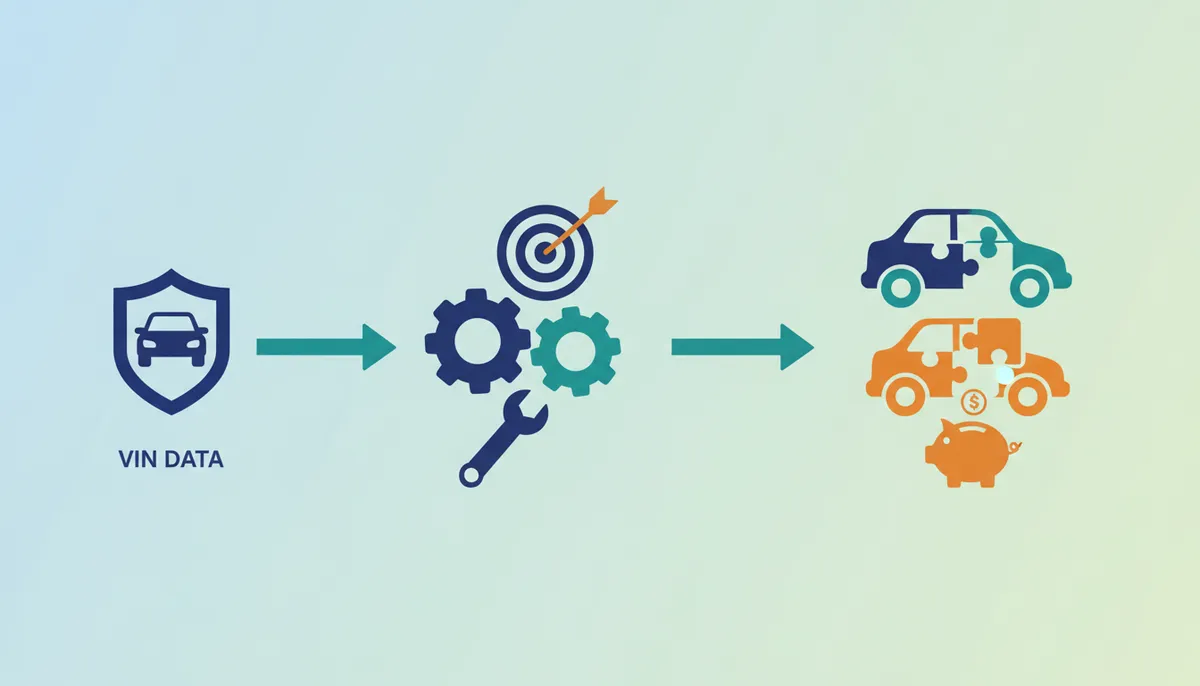
Genuine OEM components deliver exact fitment because the VIN reveals the specific part number assigned at the factory. Catalog notes detail hardware kits and position constraints that generic searches overlook. Sensors and emissions hardware match the original build sheet without speculation. A dedicated VIN Lookup tool confirms these specifications prior to purchase, cutting installation errors.
Aftermarket alternatives offer price benefits and stock availability through interchange flexibility. Multiple brands cover the same position. Technicians use the OEM number found via VIN to validate cross-references, though model year and emissions notes require careful verification. Direct OEM hits differ from aftermarket options where calibration for ADAS systems or sensor types may vary. Product data demands extra scrutiny.
Flexibility introduces validation overhead. A component might fit physically yet fail software checks if calibration codes diverge. Legal protections under Magnuson, Moss permit aftermarket installation without voiding warranties, provided the specific part did not cause the failure. The vehicle owner often bears the burden of proof to demonstrate proper specification alignment. Professional platforms now offer structured API access for parts searching by VIN, enabling systems to automate these interchange checks against OE databases. This integration reduces human error when navigating complex compatibility matrices.
Applying Magnuson-Moss Rules to Warranty Disputes
Dealers cannot void coverage solely because an owner installed non-OEM components without proving that specific part caused the failure. The Magnuson, Moss Warranty Act places the burden of proof on the warrantor rather than the consumer. Operators preserve protection by retaining receipts and OEM-to-aftermarket cross-references that demonstrate equivalent specifications. When a dispute arises, the operator must show the aftermarket item matches the original build requirements.
Retailer catalogs often list multiple brands for a single position, creating ambiguity about which unit was actually purchased. Professional platforms providing automotive aftermarket data service help document these interchange relationships systematically. This documentation proves the installed component was not the root cause of a system-wide malfunction. The limitation remains that ADAS calibration records must still follow manufacturer procedures exactly.
Failure to provide this paper trail allows the dealer to deny the claim based on uncertainty. Tension exists between the legal right to choose parts and the practical need for irrefutable documentation. Operators who skip detailed record-keeping risk losing coverage even when the law supports their position. Precision in record maintenance is the only defense against broad warranty rejection.
ADAS Calibration and Emissions Compliance Risks
Replacing sensors without verifying the factory build sheet invites immediate system failure. Generic year-make-model searches often miss specific engine configurations, leading technicians to order components incompatible with the vehicle's actual emissions software type. O'Reilly Auto Parts explicitly warns that complex emissions systems require these factory-level details to function legally and safely. OEM parts are not strictly mandated for safety systems, yet ignoring manufacturer calibration procedures guarantees operational defects.
The primary risk involves ADAS functionality degrading if the new hardware lacks precise software alignment. A vehicle might physically accept an incorrect sensor, yet the control module will reject the data stream. This mismatch creates a hidden liability where the car appears repaired but fails safety inspections. Third-party data services now power parts searching by VIN to prevent these expensive errors before checkout.
Operators must treat calibration data as part of the component itself. Skipping the VIN verification step means guessing at software versions that govern braking and steering logic. The consequence is a return visit for recalibration or a denied warranty claim due to improper installation protocols. Precision in data entry prevents the legal and safety failures associated with mismatched electronic components.
About
Mark Phillips, Editor of Aftermarket Intel at KZMALL, brings deep industry insight to the critical topic of VIN-based parts lookup. With years of experience tracking distribution channels and e-commerce trends, Phillips understands that accurate fitment is the backbone of the independent aftermarket. His daily work analyzing competitive moves and supply chain efficiency directly informs this guide on selecting the right VIN decoder for 2025. At KZMALL, a global B2B platform offering over 50,000 SKUs, Phillips oversees strategies that rely on standardized ACES/PIES data to ensure precise part matching across diverse vehicle lines. This article reflects his expertise in how digital catalog tools reduce returns and accelerate sourcing for wholesalers and repair shops. By connecting real-world procurement challenges with emerging decoding technologies, Phillips provides actionable advice for businesses aiming to simplify operations through accurate vehicle identification.
Conclusion
Scaling independent repair operations reveals that documentation latency becomes the primary point of failure, not parts availability. When shops rely on generic lookups rather than precise factory data, the operational cost shifts from simple rework to total claim denial. The industry misconception is that legal rights to repair protect against technical errors; they do not. A single missed calibration record or mismatched sensor firmware creates an irrecoverable liability gap that statutes cannot bridge. You must treat VIN verification as the fundamental step of the physical repair, not a preliminary administrative task.
Implement a mandatory policy where no sensor order proceeds without a confirmed build sheet matching the specific emissions and safety software tier. This protocol eliminates the guesswork that leads to incompatible hardware installations and subsequent system rejections. Do not wait for a warranty dispute to validate this workflow. Start by auditing your current inventory return logs this week to identify instances where parts were rejected due to configuration mismatches. Cross-reference these returns against the original zero-cost vin decode records used during the initial order. This immediate review isolates whether your team relies on sufficient data depth or defaults to broad assumptions that invite failure.
Frequently Asked Questions
Entering fewer than 17 characters prevents access to accurate build sheets. This error causes 80% of fitment failures because generic filters miss specific engine or trim configurations required for correct part selection.
Free tools often provide only basic vehicle identification data without full build details. Relying on them for complex jobs leads to 95% of wrong part orders since they lack deep powertrain specifications.
The 10th digit confirms the exact model year to avoid cyclical code confusion. Ignoring this step results in 80% of interchange mistakes where parts fit the body but not the specific production year.
RPO codes define specific hardware variations like axle ratios that standard VIN decoding misses. Using them reduces inventory waste by ensuring 95% of selected components match the actual installed hardware configuration.
OEM diagrams map the decoded VIN to the exact sub-assembly position.
References