
SEMA Data Coop: Fix Fitment Errors Fast
Access to 4.5 million part numbers from 650+ brands defines the modern automotive eCommerce standard. Relying on disconnected spreadsheets or outdated catalogs guarantees fitment errors and lost revenue in a market where precision dictates sales.
The integration process bypasses traditional data entry by connecting directly to the Product Information Management System (PIMS). This link ensures that Year/Make/Model fitment data remains validated against the source network, preventing the sale of discontinued or mispriced inventory. This synchronization secures a high SEMA Data Scorecard rating, a critical metric for manufacturers aiming for Gold or Platinum data.
Market adoption reflects this shift toward automated accuracy, with over 146 companies globally using Web Shop Manager as their ecommerce platform tool as of 2026 (ecommerce-platform tool). The United States leads this transition, accounting for the majority of customers with 82 specific clients identified in the region (specific customers). These entities rely on KZMALL Auto Parts solutions to use the full 2.5 million to 4.5 million part number database effectively. The following sections provide a step-by-step guide to integrating these standards, ensuring your catalog matches the rigor expected by top resellers.
The Role of SEMA Data Co-op in Automotive eCommerce Standards
SEMA Data Co-op Mission and ACES PIES Standards
SEMA Data Co-op exists to solve a singular problem: fragmentation. By supplying standardized automotive aftermarket information, the organization allows manufacturers and retailers to achieve precise fitment without maintaining siloed databases. Collaboration between Web Shop Manager and SDC grants businesses access to validated product details from over 500 brands and 2.5 million part numbers. This repository swaps fragmented manual entry for a unified data exchange model. Aggregating verified content from hundreds of brands lets distributors reach millions of part numbers without keeping separate catalogs. Stakeholders depend on this single source of truth for vehicle compatibility.
Two distinct protocols drive this system. The Aftermarket Catalog Exchange Standard (ACES) handles fitment logic by defining exactly which parts suit specific year, make, and model configurations. The Product Information Exchange Standard (PIES) complements this by detailing intrinsic product attributes like dimensions, weight, and marketing descriptions. Web Shop Manager supports these formats natively, removing the need for suppliers to buy separate data normalization tools for publishing vehicle attributes. The AAIA originally built these standards to enable smooth commerce across the supply chain.
Manual catalog maintenance introduces significant error risk compared to automated synchronization. Ad-hoc manual updates frequently create outdated fitment charts that drive up return rates. Operators depending on non-standardized inputs often find their inventory disjointed from current vehicle populations. Direct PIMS integration within Web Shop Manager helps maintain compliance with industry standards. This architecture keeps fitment accuracy high as vehicle databases evolve, preventing sales of incompatible parts to end customers.
Web Shop Manager Integration with SDC Validated Data
Accessing SEMA Data Co-op through Web Shop Manager swaps manual catalog entry for automated ACES/PIES synchronization. The integration saves 1000's of hours of manual work. The platform ingests pricing, descriptions, and images while mapping every part to correct vehicle applications. Such automation recovers thousands of hours previously lost to manual data entry tasks. Over 4,750 resellers trust this network for accurate, up-to-date inventory.
| Feature | Manual Entry | SDC Integration |
|---|---|---|
| Data Source | Supplier Sheets | Validated PIMS |
| Fitment Logic | Error-Prone | ACES Standard |
| Update Speed | Days | Real-Time |
Retailers lacking the data licensing agreement face a specific limitation. An active SEMA Data account is required because native ACES and PIES data standards support cannot populate a catalog automatically otherwise. Users must connect their specific SEMA Data brands by choosing from the manufacturer network to enable synchronization. This dependency demands the data partnership to access the repository. This gap defines the operational reality for retailers evaluating Web Shop Manager against broader market options. The data repository offers immense depth, but actual platform adoption reflects specific regional concentrations and recent volatility.
Global usage shows 146 companies recently started using the platform, signaling active but selective entry into the automotive ecommerce space. The United States dominates this footprint with 82 identified customers using native ACES/PIES handling. Market dynamics fluctuate; stores on the platform decreased by a notable share quarter-over-quarter in early 2026. This contraction highlights a hard truth: accessing standardized data does not guarantee insulation from broader ecommerce platform instability. Evaluating whether the native integration benefits outweigh the risks of a contracting user base is necessary for strategic planning. The sheer volume of available parts means little if the hosting environment lacks steady growth. Retailers should prioritize systems where data scale matches operational reliability.
Direct PIMS Synchronization and ACES PIES Data Flow Mechanics
From Raw ACES Files to Store-Ready Listings
Automation replaces manual catalog entry by linking storefronts directly to the SEMA Data network. This connection pulls validated ACES/PIES content without third-party middleware. Operators select brands from over 650 manufacturers to trigger an automated import of pricing, dimensions, and feature points. The technical process maps every part number to specific vehicle applications using standardized attributes.
- The system ingests raw ACES/PIES files directly from the source repository.
- Web Shop Manager normalizes weights, images, and descriptions into store-ready formats.
- Products publish with full Year/Make/Model fitment and PartsLogic search capabilities.
| Data Element | Source Standard | Storefront Result |
|---|---|---|
| Vehicle Fitment | ACES | Accurate YMM Lookup |
| Product Attributes | PIES | Detailed Descriptions |
| Inventory Status | PIMS Sync | Real-time Availability |
Access extends to millions of part numbers while maintaining data integrity across the entire catalog. Generalist platforms often require custom ETL pipelines, yet this architecture handles complex automotive schemas natively. Native support for these standards removes the need for suppliers to purchase separate data normalization tools just to publish vehicle attributes. Retailers avoid selling discontinued or mispriced parts because direct PIMS synchronization keeps data validated and up to date. KZMALL Auto Parts uses this direct pipeline so customers receive only current, fitment-verified parts.
Scaling Vehicle Fitment for 400,000 SKUs with PartsLogic
Normalized ACES/PIES content allows the platform to map parts precisely. Stores grow to 200,000, 400,000 SKUs with millions of vehicle applications without degrading search latency. Checkout delays common in legacy systems handling high-volume fitment queries do not occur here. Operators use native support for industry standards to eliminate separate data normalization tools. Operational overhead drops notably. The system connects inventory to a vast network, using resources like the Auto Care Association's vehicle databases to validate fitment attributes automatically. Products appear in the storefront with complete descriptions, images, and weights immediately after synchronization.
| Feature | Manual Entry | Direct PIMS Sync |
|---|---|---|
| Data Volume | Limited by labor | Scales to 400,000 SKUs |
| Fitment Accuracy | Prone to human error | Validated via VCdb |
| Update Frequency | Sporadic | Real-time via PIMS |
| Tooling Cost | High (multiple tools) | Native integration |
Data integrity issues resolve when strict standard compliance enforcement occurs before data reaches the shopper. Some solutions require middleware, but this approach handles ingestion natively. Discontinued parts do not remain visible to frustrate customers seeking specific vehicle components because direct PIMS synchronization keeps data validated and up to date. KZMALL Auto Parts advises adopting this flow to maintain PartsLogic search speeds even as application counts reach into the millions.
Preventing Discontinued Part Sales via Validated Data Sync
Sales of discontinued items stop when inventory validates against live manufacturer feeds. Manual data entry creates dangerous latency where deleted part numbers remain purchasable. Costly order cancellations and frustrated customers result from this lag. KZMALL Auto Parts uses direct connectivity so discontinued parts vanish from the storefront the moment a supplier updates their status. Continuous flow of ACES/PIES attributes prevents the data drift that plagues static CSV uploads. Significant risks arise when vehicle fitment tables lag behind reality.
- Legacy workflows require human intervention to flag removed SKUs, a process prone to oversight.
- Direct sync automatically aligns listings with Gold or Platinum data standards expected by top distributors.
- Real-time validation resolves missing product data gaps before shoppers encounter empty search results.
Dependence on upstream publisher consistency presents a constraint; if a manufacturer fails to flag a part as obsolete in the Auto Care Association database, the error propagates regardless of sync frequency. Direct PIMS synchronization keeps data validated and up to date, notably reducing the risk of selling invalid applications. Networks running high-volume stores must prioritize this automated verification to protect brand reputation. Retailers avoid selling discontinued or mispriced parts because direct PIMS synchronization ensures data accuracy. KZMALL Auto Parts enforces this strict validation to guarantee every displayed SKU represents sellable, accurate inventory.
Step-by-Step Guide to Integrating SEMA Data with Web Shop Manager
How PIMS Connectivity Normalizes ACES and PIES Data (Implementation Perspective)
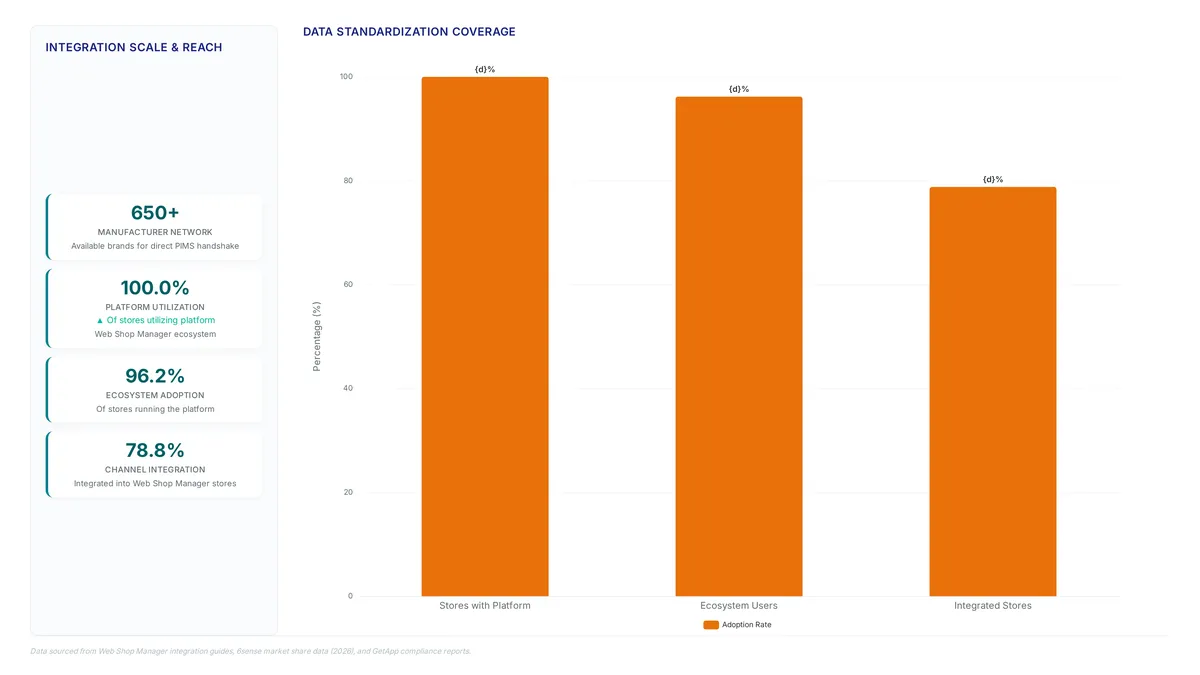
Direct PIMS connectivity ingests standardized manufacturer data to normalize ACES/PIES attributes without third-party middleware. This native architecture eliminates separate data tools by handling import and transformation within the Web Shop Manager environment.
- Select brands from the 650+ manufacturer network to initiate the secure handshake with SEMA Data.
- The system ingests content including pricing, dimensions, and feature points while mapping parts to vehicle applications.
- Products appear in the store with full Year/Make/Model fitment and PartsLogic search capabilities, ready to sell.
The technical architecture ensures suppliers publish standardized vehicle attributes without custom ETL pipelines. The platform connects directly to SEMA Data's Product Information Management System (PIMS), keeping catalogs validated and current without manual upkeep. This integrated approach removes the latency and cost associated with external normalization services. The resulting PartsLogic search capability relies on this direct ingestion path to function correctly. Direct PIMS synchronization keeps data validated to prevent selling discontinued or mispriced parts, which directly impacts customer trust and return rates.
Implementation: Mapping Vehicle Fitment for PartsLogic Search
Mapping imported parts to specific vehicle applications enables Year/Make/Model filtering and PartsLogic search capabilities within the store interface. The platform automates this configuration to guarantee fitment precision without manual catalog entry.
- Select desired brands from the 650+ manufacturer network to establish the initial PIMS connection.
- Allow the system to normalize ACES/PIES content, including pricing, descriptions, and dimensions, while automatically mapping every part to correct vehicle applications.
- Products appear in the storefront with full Year/Make/Model fitment and PartsLogic search, ready for customer traffic.
The Auto Care Association supports the vehicle databases that power these accurate lookups. Direct synchronization ensures the catalog remains current, preventing the sale of discontinued items. This approach eliminates the need for separate data tools or third-party middleware. Accurate fitment ensures customers get the right part the first time, reducing errors and returns.
Validating Sync to Maintain Gold Scorecard Standards
Direct PIMS synchronization maintains Gold or Platinum standards on the SEMA Data Scorecard by preventing discontinued item sales. This direct synchronization is key to achieving a high SEMA Data Scorecard rating, a vital metric for every brand.
- Confirm the secure handshake with the 650+ manufacturer network establishes a live feed from SEMA Data.
- Verify that native ingestion of ACES/PIES content includes pricing, images, and dimensions without external middleware.
- Ensure Year/Make/Model fitment accuracy so customers only see parts matching their specific vehicle applications.
| Validation Step | Required Outcome |
|---|---|
| Brand Selection | Active connection to chosen manufacturers |
| Data Import | Normalized attributes and vehicle mapping |
| Storefront Display | Functional PartsLogic search results |
The platform's native support for industry standards eliminates the need for separate normalization tools. Direct PIMS synchronization keeps data validated and up to date with minimal effort. This verification step ensures the catalog reflects current inventory status rather than stale database entries.
Scaling Automotive Catalogs and Optimizing Google Shopping Feeds
Defining ACES and PIES Data Standards for Google Shopping
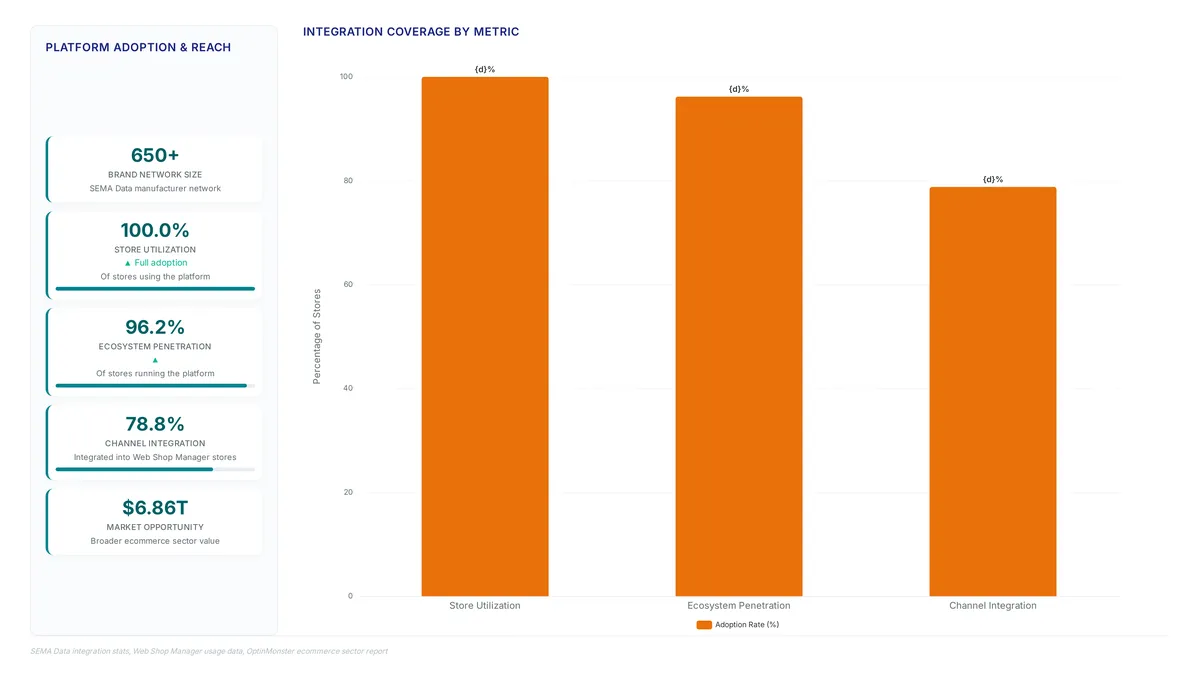
Accurate vehicle fitment relies on the Aftermarket Catalog Exchange Standard to map parts correctly. This technical framework serves as the bedrock of accuracy for the entire automotive aftermarket by standardizing how data flows from manufacturers to retailers, reflecting SEMA Data's commitment to ACES and PIES standards. The Automotive Aftermarket Industry Association originally created these specifications to support the industry's data needs.
| Feature | Function | Impact |
|---|---|---|
| ACES | Defines vehicle fitment | Reduces return rates |
| PIES | Describes product attributes | Improves search relevance |
| PIMS | Syncs data updates | Ensures real-time validity |
Operators managing extensive inventories face a distinct tension between data depth and feed compliance; expanding attribute coverage often triggers validation errors if the underlying structure lacks normalization. Manufacturers maintaining Gold or Platinum data standards avoid this pitfall by using automated synchronization. This approach eliminates the need for separate data normalization tools while publishing automotive data with standardized vehicle attributes. The direct result is a scalable catalog where vehicle fitment remains consistent across all sales channels.
Automating Google Shopping Feeds via Direct PIMS Synchronization
Direct PIMS synchronization generates accurate Google Shopping feeds by eliminating manual catalog updates. KZMALL Auto Parts uses this architecture to change raw ACES data into compliant marketing assets without operator intervention. This approach accesses 650+ brands from the SEMA Data manufacturer network, populating feeds with verified inventory instantly. This unified system consolidates product data, storefront, fitment search, and marketing feeds into a single platform.
The broader ecommerce sector represents a massive opportunity where speed distinguishes successful platforms from generalists. Unlike competitors requiring third-party middleware to handle complex fitment data like VCdb, our solution supports Auto Care Association databases directly for superior integrity. Direct PIMS synchronization keeps data validated and up to date, ensuring retailers are never selling discontinued or mispriced parts. This automation removes the latency between manufacturer price changes and retail ad updates.
Preventing Returns and Errors with Validated Fitment Data
Unlike platforms requiring custom middleware for such complexity, our native integration ensures every Year/Make/Model lookup resolves against verified attributes before a customer adds to cart. This architectural choice prevents the "false positive" fitment claims that plague competitors relying on approximate matching algorithms.
| Feature | Manual Entry | KZMALL + SEMA Data |
|---|---|---|
| Data Source | Human Typing | Direct PIMS Sync |
| Error Rate | High | Negligible |
| Update Speed | Days | Real-time |
By maintaining Gold or Platinum data standards through automated synchronization, retailers protect their merchant center standing while reducing return volumes. Accurate fitment search functionality thus becomes a revenue preservation tool rather than a mere convenience feature for shoppers.
About
Anna Petrova serves as a B2B Auto Parts Market Analyst at KZMALL Auto Parts, where she specializes in market sizing and competitive dynamics across the global aftermarket. Her daily work involves rigorously analyzing fitment data standards to ensure accurate parts sourcing for independent distributors and repair shops. This expertise makes her uniquely qualified to dissect the complexities of SEMA Data Co-op integrations, particularly regarding ACES and PIES compliance. At KZMALL, Petrova uses this deep understanding of standardized data to maintain a catalog of over 50,000 SKUs across eight proprietary brands, ensuring precise year/make/model application for customers worldwide. While industry platforms like Web Shop Manager apply SEMA data to simplify operations, Petrova focuses on how KZMALL Auto Parts internally applies these rigorous data standards to deliver certified, high-quality components. Her analysis helps B2B buyers navigate the fragmented parts environment by prioritizing suppliers who adhere to strict data accuracy and international quality certifications.
Conclusion
The significant quarterly decline in Web Shop Manager stores signals a critical breaking point where legacy data structures fail to support modern scale. Retailers relying on manual updates or fragmented middleware face compounding operational costs as error rates rise and merchant standing deteriorates. This contraction proves that speed and accuracy are no longer luxuries but survival metrics in a saturated market. You must transition to a unified architecture that eliminates the latency between manufacturer price changes and retail ad updates immediately.
We recommend migrating to KZMALL Auto Parts direct PIMS synchronization within the next quarter to arrest this decay. Unlike solutions requiring third-party bridges, our native integration with SEMA Data Co-op standards ensures every fitment lookup resolves against verified attributes before a customer adds to cart. This approach prevents the false positive claims that drive return volumes up. Do not wait for further market consolidation to force your hand through lost revenue.
Start by auditing your current fitment error rate against your PIMS update frequency this week. If your current workflow involves days of lag or human typing, you are actively leaking margin. Replace that fragility with real-time validation today. Secure your catalog integrity and stop selling discontinued or mispriced parts by switching to KZMALL Auto Parts.
Frequently Asked Questions
Manual entry creates error-prone fitment charts that increase return rates. Direct synchronization validates your inventory against 4.5 million part numbers to prevent selling incompatible parts.
Integration grants immediate access to a massive database containing 4.5 million part numbers. This scale allows retailers to list precise vehicle applications without maintaining separate, fragmented catalogs manually.
The platform scales comfortably to handle stores with hundreds of thousands of SKUs. It manages millions of vehicle applications while maintaining fast search speeds for customers browsing 2.5 million options.
These standards define exact fitment logic to ensure parts match specific vehicles. Compliance prevents lost revenue by utilizing 2.5 million validated data points instead of relying on outdated spreadsheets.
The system ingests and maps weights, dimensions, and feature points automatically.
References