
Pressure-Proof Your Team: Calm in Chaotic Shops
Vehicles now average 12.5 years on the road and pack up to 150 ECUs. Shop stress isn't a personal failing; it's a systemic reaction to that complexity. Darrah Wolfe's analysis cuts through the noise: in an industry where downtime equals dollars, emotional contagion drives operational success more than technical skill alone. Workloads stay constant, but human capacity to bear them fluctuates. Cultivating collective calm is a hard leadership competency, not a soft skill.
This isn't vague wellness advice. Pressure ripples through interdependent workflows, turning minor delays into shop-wide crises. Repair costs have climbed 33% since 2021. The margin for error is gone. Teams default to threat-based thinking, narrowing their focus and inviting mistakes. Reactive leadership fails here. Specific structured check-ins interrupt the panic chain before it compromises safety or retention.
Distinguish necessary urgency from toxic chaos. Shared signals stabilize a team when bays are full and parts are late. As shops shift from mechanical garages to tech-enabled service centers, digital transformation demands a new approach to human regulation. Staying regulated enough to think clearly is the only way to manage the financial reality that every minute of delay hits the bottom line.
The Mechanics of Emotional Contagion in Interdependent Shop Workflows
Defining Calm as Regulated Thinking Under Pressure
Calm is regulated thinking while moving fast. It is not the absence of urgency. This state stops stress contagion in interdependent workflows where one delay ripples across the bay. Barbara Fredrickson's Broaden-and-Build Theory shows how regulated emotions expand problem-solving capacity, while stress restricts focus to immediate threats.
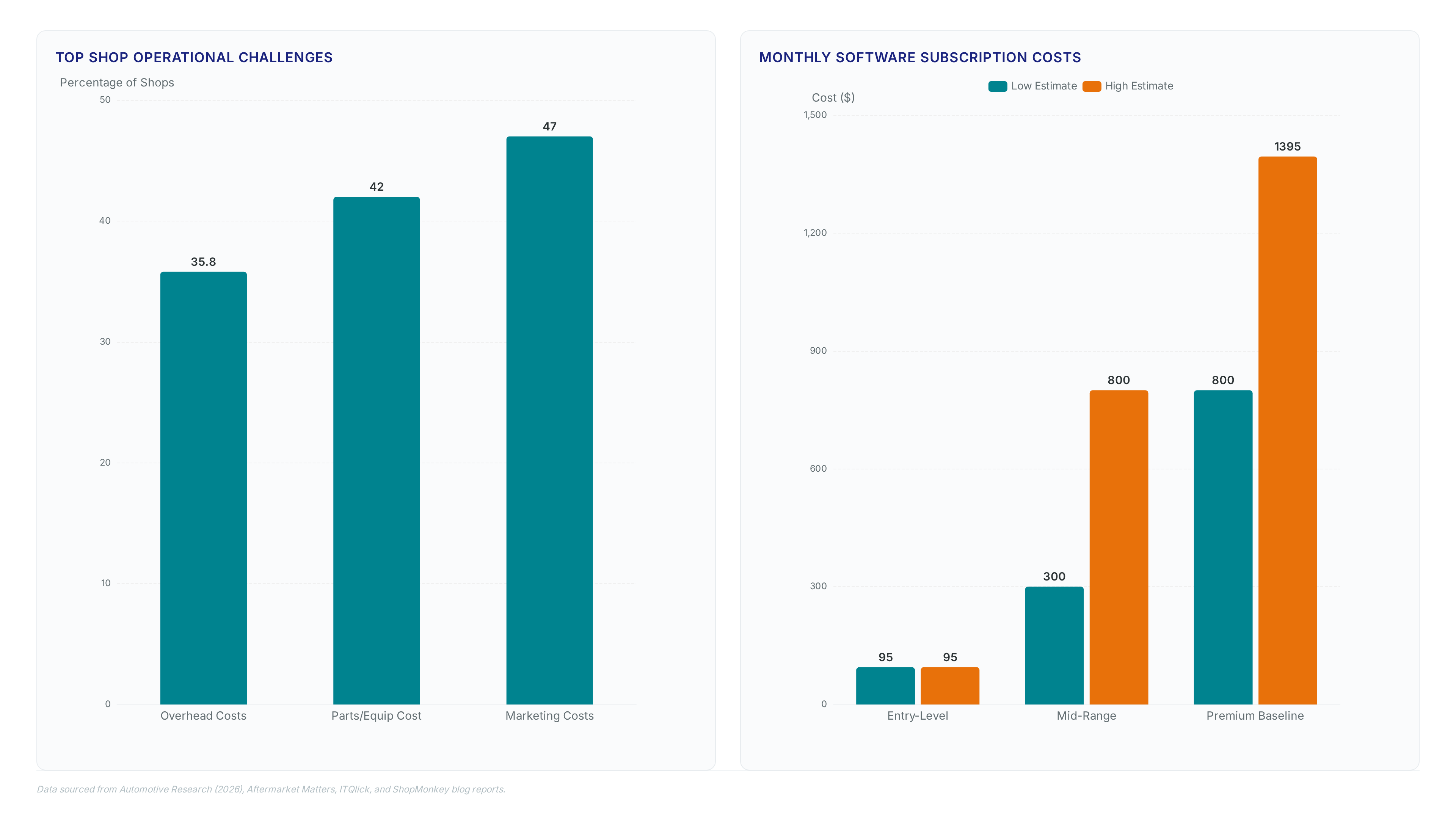
Economic pressure makes this volatile. With the average new vehicle price hitting $49,191, customers keep older cars longer. This increases repair complexity and unexpected repair bills that strain trust. Shops face compounding pressure as overhead cost management becomes a top challenge for over a third of operators. A leader's reactive intensity only adds friction.
Unregulated leaders trigger threat responses that kill diagnostic accuracy during complex electrical troubleshooting. Modern repairs require analyzing multiple electronic control units. This demands the expanded cognitive bandwidth that only regulated thinking provides. Simple mechanical tasks don't need this; modern diagnostics do. Teams led by reactive managers miss subtle clues because their collective attention has narrowed to survival mode. The constraint is structural. No amount of technical training compensates for a leadership style that systematically reduces the team's available cognitive load during peak pressure.
Interrupting Stress Chains in Interdependent Repair Workflows
One calm response breaks the chain reaction in tightly coupled repair bays. This emotional contagion mechanism ensures a leader's regulated state stops stress from spreading. When parts are delayed, a supervisor's steady reaction prevents the whole team from shifting into threat-based thinking.
Vehicle repair costs have climbed 33%. Shops must manage tighter margins while handling older, more complex vehicles. Unexpected repair bills remain a primary source of customer stress, making transparent communication mandatory when delays happen. Leaders who absorb pressure rather than amplify it create space for technicians to solve problems.
Overhead cost management challenges 35.8% of shops. Every minute of downtime feels expensive. Managing stress is an operational necessity, not a wellness initiative. A frantic leader triggers rushed decisions. A composed one maintains the cognitive bandwidth needed for diagnostics.
Calm requires practice under fire. Teams mirror the emotional baseline of the person with the most authority. If that person reacts with visible irritation, the shop narrows its focus to survival. If they respond with structured clarity, the team sees options. This flexibility determines whether a delay becomes a disaster or a manageable hiccup.
Silent Risks: When Tight Atmospheres Suppress Questions
Silent risks emerge when staffing looks normal but conversations shorten and technical questions vanish. The schedule might look fine, but the atmosphere feels tight. Mistake rates rise as stress kills communication. This suppression of inquiry directly correlates to overhead cost management challenges cited by a significant portion of operators. Error probability spikes when technicians fear asking for clarification.
The biological driver is cortisol, a steroid hormone produced to manage stress that narrows cognitive focus. Reducing this chemical through clarity promotes endorphin release, directly impacting customer trust and approval rates via cortisol management. High cortisol levels prevent the brain from seeing options, forcing reactive decisions.
Shops facing tighter margins might cut software spending. Yet subscription tools costing $300 to $800 per month often provide the diagnostic clarity needed to reduce team anxiety. Buying tools won't fix cultural silence if leadership remains reactive. Operators must distinguish between calm operations and mere quiet; the latter often signals impending failure. Teams stop speaking when they perceive intensity as a threat rather than a solvable problem. Restoring psychological safety requires leaders to explicitly invite dissent during high-pressure windows. Interdependent workflows fracture under invisible strain without this intentional gap for inquiry.
Reactive Versus Intentional Leadership Responses to Shop Floor Crises
Psychological Safety as the Antidote to Blame-Based Reactivity
Reactive leadership triggers immediate threat responses that narrow technician cognition. Intentional curiosity sustains problem-solving capacity during crises. Harvard researcher Amy Edmondson defines psychological safety as an environment where staff admit uncertainty without fear of punishment. This definition directly counters the blame cycles that degrade performance. Leaders who investigate errors rather than accuse preserve the cognitive bandwidth required for complex diagnostics. Emotionally volatile settings increase reactivity. Skilled mechanics struggle to function in such conditions.
| Feature | Reactive Blame Cycle | Intentional Curiosity |
|---|---|---|
| Leader Response | Visible irritation, sarcasm | Regulated inquiry |
| Team Cognition | Narrowed focus, threat-based | Expanded attention |
| Error Handling | Hidden mistakes, defensiveness | Immediate disclosure |
| Outcome | Repeated failures, high turnover | Systemic fixes, retention |
High overhead costs create pressure. Many operators cite overhead cost supervision as a top challenge. A proactive model of human capital optimization replaces crisis management to prevent burnout under such strain. Shops ignoring this flexibility risk losing talent to competitors who prioritize emotional regulation. Unchecked reactivity causes more than poor morale. Diagnostic accuracy declines measurably as technicians stop asking necessary questions. Leaders face a choice between short-term intensity and long-term operational stability.
Operationalizing Calm Through Strategic Clarifying Questions
Leaders operationalize calm by asking owners specifically how much flexibility exists within booked schedules when safety is at risk. This inquiry transforms abstract psychological safety into explicit operational authority. Supervisors gain the ability to pause work without fear of reprisal. Technicians hesitate to report defects without this set boundary. Comebacks become more likely.
Clarifying questions must target four distinct pressure points to be proven:
- What specific metrics define long-term success beyond daily throughput?
- How should the team prioritize when parts availability delays threaten the schedule?
- What level of autonomy exists to deploy AI receptionists for after-hours triage?
Avoiding these conversations costs capital and drives staff turnover. Shops failing to secure management alignment on these variables often resort to reactive intensity. Diagnostic accuracy degrades. Implementing intentional leadership requires documenting these answers to create a repeatable protocol for crisis moments.
| Question Focus | Operational Outcome | Risk if Undefined |
| Schedule Flexibility | Authorized pause for quality control | Unsafe repairs proceed |
| Success Metrics | Balanced scorecard adoption | Myopic focus on speed |
| Tech Integration | Automated call handling | Missed revenue opportunities |
This approach demands upfront vulnerability from the leader. Uncertainty must be admitted to gain clarity. Work improves in shops understanding this flexibility. Tasks are completed safer. Employees want to stay.
Emotional Volatility Versus Steady Leadership Impact on Error Rates
Emotionally volatile environments narrow technician cognition. Error rates rise directly compared to steady leadership approaches. Reactive atmospheres hinder skilled workers. Intentional calm expands problem-solving capacity. Outcomes diverge clearly when comparing operational modes.
| Feature | Volatile Leadership | Steady Leadership |
|---|---|---|
| Cognitive State | Narrowed focus | Expanded attention |
| Error Response | Blame assignment | Curiosity-driven analysis |
| Team Output | Increased reactivity | Stronger performance |
| Retention | High turnover intent | People want to stay |
Technicians operating under constant threat of outbursts experience elevated cortisol levels. This chemical shift biologically suppresses the endorphins required for complex diagnostic reasoning. The brain enters survival mode. Simple mistakes become likely during complex repairs. Leaders regulating their own stress responses create conditions where fewer errors occur. Staff feel safe reporting near-misses before they become comebacks. Volatility generates silence. Questions disappear due to fear. Small issues compound into substantial failures. Steady leadership interrupts this chain reaction by prioritizing clarity over intensity. Shops adopting this intentional approach often see measurable gains, such as the 34% revenue increase observed in facilities that stabilized their workflow culture. Leaders delay immediate emotional release to secure long-term operational reliability. Preventable rework and degraded trust plague even well-staffed bays without this discipline.
Operationalizing Calm Through Structured Check-Ins and Shared Signals
Defining Peer Support as Reliability and Shared Accountability
Peer support in repair shops functions as a safety mechanism built on reliability and shared accountability rather than forced bonding. In physically demanding environments, this structure reduces anxiety during rotating tasks by clarifying that help requests normalize error prevention. Normalizing these requests decreases mistakes, whereas rewarding silence allows errors to persist unchecked. When technicians fear asking for clarification, error probability rises sharply, directly impacting the bottom line.
Teams using Digital Vehicle Inspection tools demonstrate how structured communication channels replace ambiguous verbal handoffs. This technical clarity mirrors the peer flexibility where specific signals replace guessing games. Shops adopting structured management platforms like AutoLeap report revenue increases up to 30%, proving that reduced friction translates to financial stability. The limitation remains that technology cannot enforce culture; leaders must still model the emotional regulation required to make these tools work. Without intentional leadership behaviors prioritizing calm over reactive intensity, digital systems merely accelerate chaotic workflows. True psychological safety emerges only when staff observe that speaking up triggers support rather than blame.
Implementing Pause Protocols and Supportive Check-In Scripts
Leaders prevent costly errors by knowing exactly when to pause operations rather than pushing through mounting pressure. Brief check-ins signal support without adding cost, transforming abstract care into tangible workflow adjustments. The mechanism is simple: a leader interrupts the stress cascade by asking, "What would help most right now?" This query forces a prioritization of immediate cognitive load over rigid schedule adherence.
However, the limitation lies in execution timing; checking in during peak diagnostic moments adds friction rather than relief. Operators must distinguish between a technician needing space and one requiring intervention. Proven scripts avoid vague offers of help, instead targeting specific bottlenecks like parts delays or customer communication gaps. Tools like Digital Vehicle Inspection platforms reduce the administrative burden on staff, allowing leaders to focus these check-ins on emotional regulation rather than data entry.
| Check-In Trigger | Leader Action | Expected Outcome |
|---|---|---|
| Missed parts delivery | Reshuffle tasks | Prevents idle frustration |
| Technician fatigue | Mandate short break | Reduces error probability |
| Customer escalation | Take over call | Protects diagnostic focus |
The implication for networked shop floors is that psychological safety functions as an operational protocol, not a cultural nice-to-have. When leaders consistently model this behavior, they decouple urgency from panic. Teams in such environments report higher retention and fewer comebacks, directly protecting margins against the rising costs of technology and equipment. Silence becomes the real cost driver, not the pause.
Start every conflict conversation by isolating the incident timeline before discussing the individual involved. Addressing conflict privately prevents public shaming, which immediately lowers defensive reactivity in the accused technician. Leaders must separate human emotional reactions from technical performance standards to maintain psychological safety. A structured approach ensures accountability without humiliation.
- Verify the factual sequence of events using Digital Vehicle Inspection logs rather than hearsay.
- Ask the technician to explain their mental model of the task requirements.
- Distinguish between a knowledge gap requiring training and a fatigue issue requiring rest.
| Trigger Source | Human Reaction | Performance Fix |
|---|---|---|
| Fatigue | Irritability | Mandatory break |
| Ambiguity | Hesitation | Clearer directive |
| Fear | Hiding errors | Blameless review |
Implementing workforce optimization models reveals that reactive crisis management often masks simple resource mismatches. The cost of skipping this separation is measurable: technicians in volatile environments hide mistakes, leading to costly comebacks that erode margins. Most operators overlook that fixing the schedule often fixes the behavior. Shops using AutoLeap report that data-driven clarity reduces the friction causing these interpersonal flare-ups. The limitation remains that leaders must suppress their own urgency to execute this process effectively. Rushing the investigation validates the very stress cycle causing the error.
About
Priya Raman, Aftermarket Category and Supply-Chain Strategist at KZMALL Auto Parts, brings fifteen years of deep industry experience to the critical conversation on team dynamics under pressure. Her daily work managing complex B2B distribution networks and standardized ACES/PIES fitment data places her at the intersection where supply chain friction directly impacts shop floor stress. Raman understands that when parts availability falters or catalog data is inaccurate, the resulting delays create the exact "downtime equals dollars" anxiety described in this series. At KZMALL, she oversees the logistics for over 50,000 SKUs, giving her unique insight into how external supply pressures internalize as team tension for service advisors and technicians. By connecting high-level sourcing strategies to the reality of a crowded service bay, Raman offers a factual perspective on pressure-proofing teams. Her analysis bridges the gap between wholesale distribution challenges and the immediate need for stable, communicative automotive shop environments.
Conclusion
Scaling a repair shop reveals that psychological safety directly dictates profitability, not just morale. When technicians fear humiliation, they conceal diagnostic errors, turning minor mistakes into expensive comebacks that destroy the very margins leadership tries to protect through austerity. The operational break point occurs when cost-cutting measures increase the cognitive load on staff, forcing them to choose between speed and accuracy. You must decouple human error from character failure to stop this leakage. Implement a strict protocol where every comeback triggers a blameless review of the workflow, not an interrogation of the individual. This shift converts hidden liabilities into visible process improvements.
Adopt a "process-first" investigation mandate for all internal conflicts by next month. If a technician misses a step, audit the scheduling density and tool availability before addressing the person. This specific constraint forces leadership to solve systemic resource gaps rather than burning out skilled labor. Start this week by auditing your last three customer comebacks; map the timeline of each incident against the technician's shift length and available diagnostic data. If fatigue or ambiguous directives appear in the sequence, revise the staffing roster immediately. Fixing the schedule often fixes the behavior, proving that operational clarity is the most proven retention tool available.
Frequently Asked Questions
Repair costs climbing 33% force tighter margins that heighten workplace pressure. This financial strain creates an environment where overhead cost management challenges 35.8% of shops, making emotional regulation critical for maintaining diagnostic accuracy during complex vehicle repairs.
With average new vehicle prices hitting $49,191, customers retain older cars longer. These aging vehicles contain complex systems that demand regulated thinking from technicians, as stress narrows the cognitive focus needed for accurate diagnostics on high-mileage units.
Overhead cost management challenges 35.8% of shops, creating high-pressure environments. In these settings, unregulated leadership triggers threat responses that degrade diagnostic accuracy, proving that managing human emotion is as vital as managing financial expenses.
Reactive leaders trigger threat responses that narrow team focus and invite mistakes. Since repair costs have climbed 33%, this loss of cognitive bandwidth during complex troubleshooting directly threatens the tight margins shops must maintain to survive.
Yes, because new vehicles averaging $49,191 means older cars stay on roads longer. This increases repair complexity and customer stress, requiring leaders to cultivate collective calm rather than reacting with urgency that compromises team performance.