
Auto parts delivery under 60 mins now
On June 24, 2026, AutoParts.com flipped the switch on the first native catalog embedded directly into the DoorDash Marketplace, unlocking hundreds of thousands of parts for immediate local procurement. This isn't an incremental update; it is a structural pivot from centralized warehousing to distributed, real-time inventory access.
The architecture behind this shift relies on real-time inventory aggregation, connecting local distributors directly to consumer apps via AutoParts.com's partnership with The Automotive Parts Services Group. We are looking at the technical execution of immediate auto parts procurement where speed is the primary metric.
CEO Richard Keller calls this a significant inflection point, noting that life does not stop simply because a car will not start. Unlike previous e-commerce models tethered to slow shipping windows, this system leverages geo-located stock to promise delivery in under an hour based on average times. DoorDash data confirms the catalog includes more than 200,000 auto parts and accessories available for immediate purchase. This move restores competitiveness to local retailers previously boxed out of the digital space by complex technological barriers.
The Role of Native Marketplace Integration in Modern Auto Parts Retail
Native Integration of AutoParts.com Catalog into DoorDash Marketplace
AutoParts.com has baked its catalog directly into the DoorDash Marketplace interface, eliminating the need for external links. Users access a complete inventory of auto parts without ever leaving the delivery application. This is deep technical integration, not a redirect. The launch features more than 200,000 accessories available for immediate purchase through a unified checkout flow, streamlining parts discovery, fitment verification, and rapid on-demand delivery logistics.
| Feature | Traditional Link-Out | Native Integration |
|---|---|---|
| User Context | Lost during redirect | Preserved in-app |
| Inventory Depth | Limited SKUs | Hundreds of thousands |
| Fulfillment Speed | Days or weeks | Under an hour |
Friction between part identification and last-mile logistics has been eliminated. By embedding the geo-located inventory system within the delivery app, the partnership transforms local stock into an on-demand resource. The operational model shifts from mere listing maintenance to synchronized inventory management across thousands of locations. Success here is defined by the balance between speed and data fidelity. Consumers gain rapid access to critical components via a unified commerce network designed to make auto parts easier to find, verify, purchase, and receive.
Delivering Heavy Drivetrain Components Under 60 lbs in Under an Hour
Last mile auto parts delivery now handles heavy drivetrain components weighing up to 60 lbs. This capability solves a historical bottleneck where weight limits precluded rapid courier options for batteries and tires. Richard Keller noted that for years, e-commerce customers waited days or even weeks to receive a part. The current architecture uses precision fitment technology to match specific vehicle attributes before dispatching weight-intensive inventory from local hubs.
The integration bypasses legacy constraints by utilizing existing local retailer stockpiles rather than distant centralized warehouses. This approach eliminates the standard latency associated with freight classification for medium-weight mechanical assemblies.
| Constraint | Legacy E-Commerce | Native Marketplace |
|---|---|---|
| Weight Limit | Often under 30 lbs | Up to 60 lbs |
| Transit Time | Days to weeks | Under one hour |
| Inventory Source | Centralized | Geo-located local |
Speed relies entirely on the density of participating local retailers holding verified stock. The system aggregates localized inventory data across thousands of locations to simplify parts discovery and rapid on-demand delivery logistics. When local nodes maintain accurate real-time data feeds, consumers benefit from immediate resolution. The service promises to deliver the exact part for a customer's car in under an hour based on average delivery times, a pace previously unheard of in the aftermarket e-commerce world.
AutoParts.com Real-Time Tech Stack Versus Traditional Auto Parts Stores
AutoParts.com replaces static supply chains with flexible, geo-distributed fulfillment by aggregating localized inventory data.
| Feature | Traditional Retail | AutoParts.com Stack |
|---|---|---|
| Inventory Source | Centralized Warehouse | Geo-located Network |
| Data Sync | Daily Batch | Real-Time |
| Fulfillment Radius | National | Localized |
The proprietary real-time tech stack synchronizes availability across thousands of locations, ensuring fitment verification occurs against physically present stock rather than distant warehouse projections. This architectural difference means the platform identifies parts closest to the customer instantly, preventing the overselling common in legacy systems. However, this model requires strong retailer participation to maintain density; the network connects distributors, independent suppliers, and retail locations into a unified commerce network.
New customers accessing this network on DoorDash receive a 20% discount on orders totaling $60 or more, lowering the barrier for immediate procurement. While traditional models optimize for bulk storage efficiency, the instant commerce approach optimizes for time-to-repair urgency. Operators must choose between deep but slow stockpiles or shallow but immediate local pools. The system effectively monetizes the idle capacity of local retailers by exposing their stock to digital demand streams previously inaccessible without complex integration.
Inside the Real-Time Inventory Aggregation and Delivery Architecture
Aggregating Localized Inventory from Mom and Pop Retailers
Pooling stock from thousands of independent retailers replaces the single central depot model. The platform connects with substantial automotive groups to create a unified digital inventory pool that geolocates items close to the buyer. This approach contrasts sharply with centralized warehouse models where parts ship from distant hubs, often causing delays for urgent repairs. The explicit goal is to bring local independent retailers back to main street and give them a chance to compete in the e-commerce space.
| Feature | Centralized Warehouse | Distributed Retailer Network |
|---|---|---|
| Stock Location | Single Region | Geo-distributed Local Stores |
| Fulfillment Speed | Days | Minutes to Hours |
| Inventory Owner | Platform Operator | Independent Retailers |
Independent operators apply this infrastructure to sell components to a broader consumer base without building their own logistics networks. The technical mechanism aggregates localized data across the national network, allowing a customer query to instantly identify available stock within a viable delivery radius. Unlike batch-processed wholesale directories, this architecture treats every local shelf as a potential fulfillment node for immediate dispatch. The platform aggregates localized inventory data across thousands of locations to simplify parts discovery, fitment verification, and rapid on-demand delivery logistics for consumers and commercial customers.
Delivering 60 lb Drivetrain Components via Instant Commerce
Support for drivetrain components weighing up to 60 lbs removes weight barriers that previously blocked instant courier options for batteries and tires. This logistical shift allows local retailers to fulfill orders for dense mechanical parts within an hour, replacing multi-day shipping windows with rapid localized delivery. The system relies on geo-located inventory to match buyer proximity with available stock, ensuring that heavy items dispatch from the nearest node rather than a distant central depot.
| Constraint | Traditional Model | Instant Commerce Model |
|---|---|---|
| Weight Limit | Often restricted | Up to 60 lbs |
| Fulfillment Speed | Days to weeks | Under one hour |
| Inventory Source | Centralized | Distributed Local |
In this distributed architecture, immediate availability takes priority over bulk storage efficiency. Heavy and oversized automotive components now move through channels promising delivery times measured in hours. A significant reduction occurs compared to the days or weeks often associated with traditional auto parts supply chains. The automotive sector is shifting toward instant commerce infrastructure, moving away from traditional shipping windows measured in days or weeks to delivery timelines measured in hours. This model effectively turns local auto shops into micro-fulfillment centers, using existing precision fitment technology to verify part compatibility before a driver ever lifts a battery.
Third-party retailer reliance introduces variability in packaging and handoff speed that centralized control avoids. Network operators must balance the speed gains of localization against the complexity of managing fragmented supply sources. The company is designed to make auto parts easier to find, verify, purchase, and receive through a quicker, more connected aftermarket supply network.
Executing Immediate Auto Parts Procurement Through the DoorDash Platform
Navigating the Native AutoParts.com Storefront Interface
External browser redirects disappear when the full catalog embeds directly inside the delivery application. Shoppers enter vehicle specifications to filter inventory that reflects real-time stock from local partners instead of distant central warehouses.
- Enter your vehicle make, model, and year for accurate fitment.
- Browse the native catalog to locate specific components in stock nearby.
- Apply code AUTOPARTS at checkout to redeem available discounts.
Data synchronization across thousands of independent retailers confirms physical presence for immediate dispatch. A national network of distributors, many locally owned and operated, feeds this unified commerce network. Independent suppliers gain entry to the e-commerce space through this connection.
Validating Order Subtotal and Delivery Time Constraints
Cart subtotals must hit the required minimum before tax application to activate the discount code. Promotional terms exclude fees from the threshold calculation, so light consumables often fail validation without additional items. Buyers aggregate sufficient parts to meet this financial constraint while the system computes final offer eligibility.
- Review the itemized list to verify the pre-tax sum meets the floor requirement.
- Enter the promo string only after the subtotal displays correctly in the summary pane.
Arrival windows vary naturally because delivery estimates depend on a nationwide retailer network rather than fixed warehouse slots. Average times indicate rapid fulfillment, with the service promising delivery in under an hour based on average delivery times, though delivery times may vary and are not guaranteed. A geo-located inventory system fulfills orders at the rapid pace DoorDash customers expect. This last-mile solution gets parts to DIYers quickly.
Strategic Value of On-Demand Delivery for Time-Sensitive Vehicle Repairs
Defining On-Demand Auto Parts Delivery Economics
Local fulfillment measured in hours replaces the multi-day shipping windows of the past. This economic model moves capital expenditure away from massive centralized warehouses toward a distributed network using existing retailer proximity. Traditional e-commerce leaves inventory sitting idle until an order arrives, yet this approach activates geo-located inventory to match immediate consumer demand with nearby supply. The automotive aftermarket industry is expected to grow to over $660 billion in the next 2 years, creating intense pressure to capture market share through speed rather than price alone.
Platforms reduce the costly friction of returns that plague standard online parts purchases by integrating fitment verification with real-time stock data. Independent retailers introduce variability in stock accuracy that centralized models do not face. Operators balance the marginal cost of rapid logistics against the premium consumers pay for immediate vehicle repair capabilities. Instant commerce infrastructure fundamentally alters the value proposition from lowest price to fastest resolution. Consumers facing broken vehicles prioritize time over cost, which validates the higher operational expenses of last-mile delivery. Traditional distributors must upgrade their tech stack or risk obsolescence in a speed-driven market. This partnership aims to rapidly get parts in the hands of DIYers, so that they can get the job done and get back on the road quicker.
Applying Rapid Part Acquisition for DIY Repairs
Immediate part acquisition through DoorDash resolves the stalled vehicle scenario by delivering heavy components like batteries directly to the driveway. The platform explicitly supports oversized items weighing up to 60 lbs, enabling the transport of tires and drivetrain parts that standard same-day services typically reject. Bypassing traditional shipping windows activates the U.S. DIY market for consumers who require specific Year/Make/Model matches to complete repairs outside of retail operating hours.
Operational tension exists between maintaining broad inventory depth and achieving sub-hour fulfillment speeds. Centralized warehouses offer vast selection but introduce latency, whereas this model uses geo-located inventory from local retailers to prioritize speed over absolute catalog comprehensiveness at any single node. A DIYer might find a specific alternator available for immediate delivery in one zip code while it remains out of stock in a neighboring region. Success depends heavily on the density of participating local distributors rather than a single monolithic supply chain.
Instant commerce system fundamentally alters repair economics by reducing the cost of vehicle downtime. Consumers avoid paying for a tow truck or renting a replacement vehicle while waiting for a sensor to arrive via ground shipping; the consumer absorbs a delivery fee to restore functionality immediately. This trade-off favors urgency, transforming auto repair from a multi-day logistical challenge into a same-day task.autoparts.com intends to capitalize on a expanding industry and serve customers at a speed that was previously unheard of in the auto sector.
AutoParts.com vs Traditional Stores: Speed and Inventory Access
Traditional retail limits consumers to single-store stock, whereas AutoParts.com aggregates localized inventory across thousands of retailers to guarantee superior part availability. This distributed model contrasts sharply with centralized warehouse approaches that often lack immediate geographic relevance for urgent repairs. A nationwide retailer network transforms fragmented local stock into a unified, high-velocity supply chain capable of under-hour fulfillment.
Physical stores suffer from finite shelf space, which frequently results in missed sales for non-standard components. Accessing a vast network ensures that even obscure parts are discoverable through advanced fitment verification engines. This approach uses geo-located inventory to match customers with nearby suppliers rather than distant distribution centers. Reliance on third-party retailers introduces variability in real-time stock accuracy that centralized models do not face. Operators must trust the synchronization latency of independent systems. Speed now depends on data fidelity across a decentralized mesh rather than mere physical proximity to a single warehouse. Success requires trusting the tech stack to coordinate these disparate nodes instantly.
About
Dmitry Volkov serves as a Senior Automotive Technical Writer at KZMALL Auto Parts, where he specializes in translating complex engineering specifications into clear, actionable industry analysis. His daily work involves rigorous validation of ACES/PIES fitment data and OE cross-referencing across over 50,000 SKUs, making him uniquely qualified to evaluate the technical significance of AutoParts.com integrating its full catalog natively into the DoorDash Marketplace. This partnership demands absolute precision in year/make/model application to ensure rapid, accurate deliveries, a challenge that mirrors Volkov's core responsibility of maintaining data integrity for global B2B distribution. By using his deep understanding of standardized parts classification and supply chain logistics, Volkov provides an expert perspective on how digitizing the auto parts aisle transforms speed and reliability for independent repair shops. His analysis bridges the gap between raw technical data and real-world procurement efficiency in the evolving aftermarket environment.
Conclusion
Scaling this distributed model exposes a critical fragility: the entire value proposition collapses if data synchronization lags behind physical reality. While aggregating local inventory solves availability, it introduces an operational dependency on the real-time accuracy of thousands of independent retailer systems. The ongoing cost here is not merely logistical but reputational, as promising under-hour fulfillment while relying on disjointed stock feeds creates a high risk of order failure.autoparts.com must prioritize tech stack integrity over sheer network size to prevent eroding consumer trust before the market matures.
Operators should commit to a strict six-month stabilization phase focused exclusively on API latency reduction rather than expanding partner count. Growth without data fidelity turns the distributed network into a liability rather than an asset. The industry trajectory toward a $660 billion valuation demands reliability that fragmented systems often lack by default. Do not assume local density guarantees performance; it only guarantees proximity.
Start this week by auditing the synchronization delay between your central catalog and the top ten highest-volume local distributors to identify specific latency bottlenecks.
Frequently Asked Questions
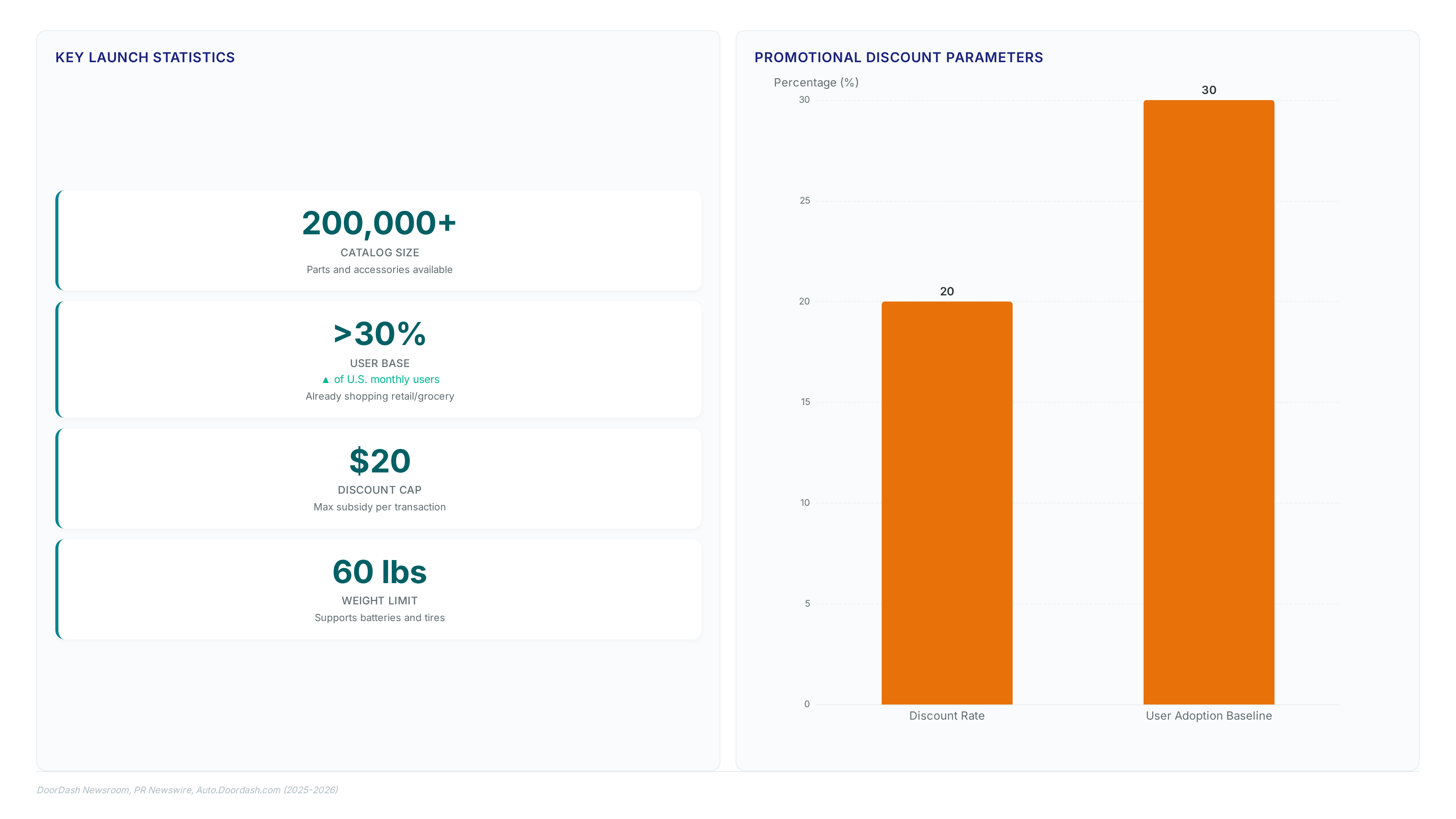
New customers receive a 20% discount on qualifying purchases. This offer applies to orders totaling $60 or more, with the total savings capped at a maximum value of $20 per transaction.
The platform now supports delivery for components weighing up to 60 lbs. This capability allows heavy items like batteries and tires to reach customers quickly without traditional freight delays.
Users can access more than 200,000 auto parts and accessories immediately. This extensive native catalog ensures drivers find exact matches for their vehicles without leaving the app interface.
The automotive aftermarket industry is expected to grow significantly soon. Analysts project the sector will reach over $660 billion in the next 2 years, creating pressure to capture market share.
This threshold ensures the 20% discount applies correctly while helping customers save money on essential repair supplies.