
vPIC Platform Access: Decode DOT Plant Codes
The vPIC platform, updated as recently as May 1, 2024, serves as the definitive federal source for decoding Vehicle Identification Numbers. This system replaces the tedious manual retrieval of PDF documents with a centralized data architecture governed by CFR 49 Parts 551 through 574. By converting static manufacturer reports into machine-readable formats, the National Highway Traffic Safety Administration enforces a new standard for vehicle safety transparency.
Readers will examine how the Manufacturer Information Database functions as the backbone for federal compliance tracking. The discussion details the specific tags used to identify DOT plant codes, glazing materials, and brake hose specifications within the catalog. We also analyze the shift from viewing static records to using flexible API modules for real-time data access.
The guide concludes with a technical breakdown of integrating these resources into modern development workflows. Developers will learn to use the VIN Decoder to extract precise equipment plant identification without legacy friction. This approach ensures that data intelligence remains accurate and directly traceable to official government submissions.
The Role of vPIC in Federal Vehicle Safety and Data Transparency
NHTSA vPIC Platform and CFR 49 Regulatory Scope
The NHTSA vPIC platform functions as a consolidated system presenting data collected from manufacturer reports based on CFR 49. This centralized repository transforms static regulatory text into queryable digital records, ensuring that safety compliance data remains accessible without the friction of manual document retrieval. The dataset was issued on 2015-10-05 and last modified on 2024-05-01, representing a living repository that evolves as manufacturers update their filings. The platform hosts the Manufacturer Information Database (MID), where original documents remain available for viewing within the module.
Meanwhile, the VIN Decoder module transforms static regulatory filings into immediate, structured vehicle specifications. The platform allows the public to freely use data without the burden of manual retrieval from electronic documents. This approach supports Open Data initiatives, allowing the public to freely use federal records without cost. The platform relies on a state-federal partnership, with the full dataset hosted via the Virginia.gov open data portal. While basic decoders often return limited text, commercial alternatives augment federal data with proprietary build sheets to enhance parts matching capabilities. ### vPIC Free Public Access vs 17vin.com Commercial Limits
The NHTSA vPIC platform provides unrestricted federal data access, contrasting sharply with commercial tiers that enforce hard daily caps. While the federal catalog supports unlimited queries for safety compliance, competitors like 17vin.com restrict their free tier to exactly 10 daily decodes before requiring payment. This limitation means high-volume API access and customizable databases are monetized by commercial entities, whereas the federal vPIC platform operates as a zero-cost resource. The VIN Decoder module allows developers to bypass manual PDF retrieval entirely, granting machine-readable access to CFR 49 filings at no cost.
| Feature | NHTSA vPIC | 17vin.com Free Tier |
|---|---|---|
| Daily Limit | Unlimited | 10 decodes |
| Cost Structure | No cost (Public Data) | Freemium / Premium |
| Data Depth | Regulatory Compliance | Parts Matching Focus |
| Access Method | API & HTML | API & Web Portal |
Educational entities use this open architecture to provide free, accurate vehicle identification tools for student literacy, using a resource identified as "zero-cost." The trade-off is data specialization; while vPIC covers mandatory safety reporting, it lacks the granular parts-matching logic found in proprietary systems. Users seeking deep supply chain integration or specific brand-focused data sets often incur costs for premium available upgrades. The federal dataset remains indexed at catalog.data.gov, serving as a persistent government resource.
Internal Mechanics of VIN Decoding and Data Resource Architecture
Mapping Raw VIN Digits to CFR 49 Safety Specifications
Parsing a 17-character VIN string against the federal database exposes specific CFR 49 compliance attributes like glazing materials and brake hose configurations. The NHTSA Product Information Catalog acts as a relational map that parses every digit to link raw input with mandatory safety reporting requirements. This process extracts data points including the DOT plant code and tire identification numbers that define a vehicle's legal build sheet.
- Input the full VIN into the decoder interface.
- System parses digits against the Manufacturer Information Database.
- Output displays validated safety equipment and part specifications.
Commercial providers often layer proprietary algorithms over this core data to claim enhanced precision. For instance, VinSnap asserts a 99.8% parts accuracy rate by mapping optional packages and warranty details not explicitly detailed in standard federal outputs. Cost is the constraint; while the federal tool remains a zero-cost resource for transparency, high-volume commercial decoders monetize advanced matching logic. Operators requiring immediate parts compatibility for aftermarket sales may need these paid layers, whereas regulatory audits rely on the unadorned federal record. Relying solely on basic decoding risks missing detailed equipment variations necessary for correct part selection.
| Feature | Federal vPIC | Commercial Enhanced |
|---|---|---|
| Data Source | Manufacturer Reported | Aggregated + Proprietary |
| Safety Specs | CFR Mandated | Extended + Optional |
| Cost Model | Zero-cost | Subscription / Per-Call |
Rigidity defines raw decoding because it confirms what the vehicle was built with, not necessarily what the current owner installed.
Deploying the VIN Decoder HTML Resource for Batch Processing
Manual entry via the VIN Decoder HTML interface remains the standard for single-vehicle lookups, not automated batch workflows. This Popular resource decodes a Vehicle Identification Number and other basic specifications directly within a browser session. Operators retrieve vehicle specs by typing the 17-character code into the input field and reviewing the returned safety data. The tool excels when verifying CFR 49 compliance details like glazing materials or brake hose configurations for individual units. However, the HTML form lacks native bulk-upload capabilities, forcing technicians to process large inventories one line at a time. These services often reveal optional packages and warranty details that basic decoders omit. Use the HTML tool for occasional checks against the federal record, but switch to scripted API calls for any operation requiring more than a few decodes per hour. Human speed becomes the bottleneck when the HTML interface meets fleet-scale requirements.
Federal vPIC Granularity Versus Commercial 100+ Spec Outputs
Buy the part the vehicle was engineered for, not the one that looks close. Commercial databases expand output to over 100 specifications, capturing optional packages and warranty details absent from standard federal records. The NHTSA Product Information Catalog serves as the core authority, yet it omits the trim-level nuance required for precise component matching. Cost is the factor; federal tools provide regulatory compliance data at zero cost, while commercial APIs monetize the granular build-sheet data necessary for complex repairs.
| Data Attribute | Federal vPIC Output | Commercial Premium Output |
|---|---|---|
| Cost Structure | Zero-cost resource | Paid API tiers |
| Spec Depth | Basic identifiers | 100+ specifications |
| Package Data | Not available | Optional packages included |
| Warranty Info | Not available | Detailed warranty status |
Technicians relying solely on the VIN Decoder HTML interface risk missing critical factory options that dictate part geometry. A brake caliper might fit the chassis code but fail on a vehicle with a specific performance package. The limitation of the free federal model is its focus on safety manufacturing requirements rather than aftermarket serviceability. Operators must verify if their workflow demands simple identification or deep specification matching before selecting a data source. Ignoring this distinction leads to return rates that erode profit margins quicker than API subscription fees.
Practical Implementation of the vPIC API for Developers
Defining the vPIC VIN Decoder HTML Resource Scope
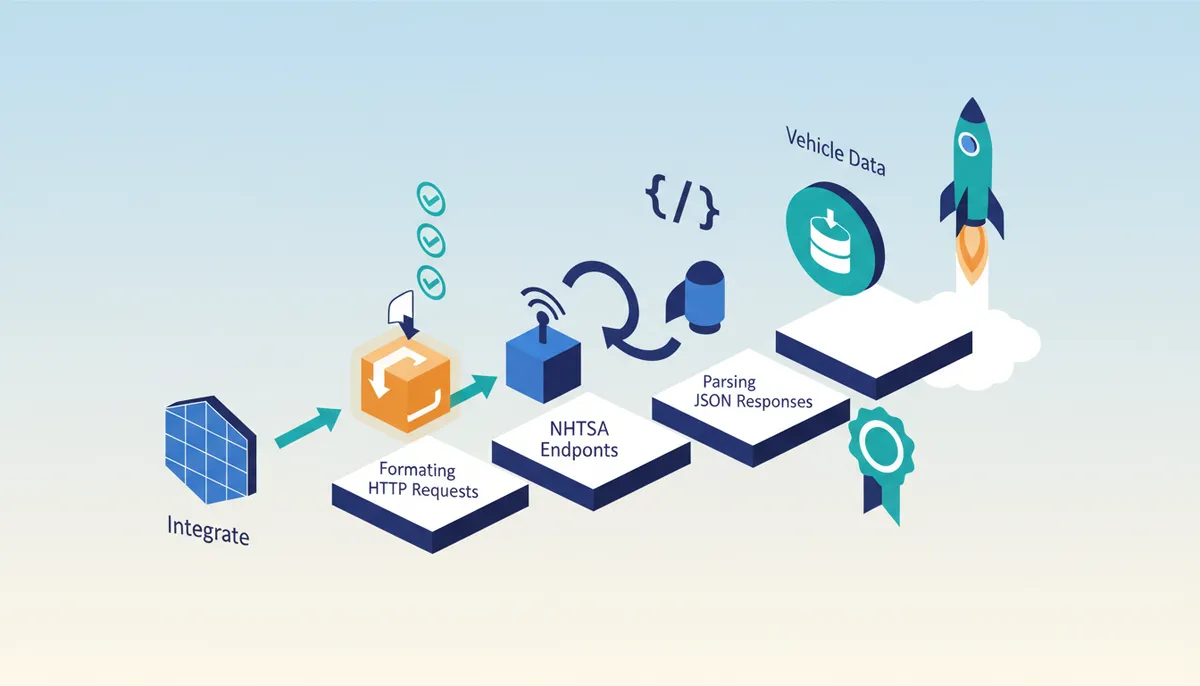
The VIN Decoder HTML tool functions as a browser-based interface for retrieving basic vehicle specifications without coding. This popular resource decodes a Vehicle Identification Number to reveal Year, Make, Model, and critical safety details like brake hoses or tire code compliance. The platform delivers this zero-cost access by mapping raw manufacturer data against CFR 49 requirements. Users must recognize that output remains limited to government-recorded attributes rather than optional equipment packages. Implementation requires a simple HTTP request structure to the endpoint:
Operators should note that relying solely on this free tier creates a data gap for trim-level validation. While sufficient for broad categorization, the decoded result lacks the granularity needed for precise parts matching in complex repair scenarios. Developers building inventory systems must supplement this stream with additional sources to avoid misidentifying vehicle variants.
Integrating vPIC API Requests for CFR 49 Compliance Data
Format the HTTP request string to extract specific CFR 49 safety attributes like glazing materials or brake hoses directly from the federal catalog. Developers must construct a GET query targeting the base endpoint, appending the 17-character VIN and the desired variable name to retrieve structured JSON responses. This method bypasses the interactive VIN Decoder HTML interface, enabling automated compliance checks for equipment reporting requirements under Parts 551 through.
- Identify the target VIN and the specific regulation code, such as 566 for tire identification.
- Construct the URL path using the `MakeVarList/` or `DecodeVin/` endpoints found in the NHTSA Product Information Catalog. 3.
Missing manufacturer inform usually indicates the target vehicle predates modern electronic reporting or falls outside U.S. Federal jurisdiction. Developers must verify the 17-character code against the catalog.data.gov index before assuming an API failure, as gaps often reflect regulatory scope rather than technical errors.
- Confirm the assembly plant code corresponds to a facility required to report under CFR 49 Parts 551 through 574.2. Check if the specific equipment category, such as aftermarket glazing, lacks a mandatory DOT plant code entry.
- Route requests for non-domestic builds through specialized databases since the federal system remains strictly U.S.-centric.
Commercial alternatives often fill these voids with estimated specifications, yet the federal catalog prioritizes verified regulatory compliance over complete commercial coverage. This architectural choice means a null response correctly signals unverified data rather than a missing record. Operators building parts compatibility tools must handle these empty fields gracefully instead of forcing a match. Relying on the Virginia.gov mirror ensures access to the latest synchronized updates when local caches stall.
Strategic Value of Open Government Data Versus Commercial VIN Services
Defining vPIC Zero-Cost Access Versus Commercial Data Granularity
Developers asking should I use vPIC API for their project need to separate federal transparency from commercial depth. The NHTSA vPIC platform acts as a zero-cost resource delivering year, make, and model without licensing fees. This open data stance aids basic validation yet misses the proprietary matching algorithms found in paid services. Commercial entities layer these algorithms over raw inputs to deliver over 100 specifications, including optional packages and warranty details. Basic decoder sites offer limited information suitable for general lookup but fail complex supply chain tasks. Government data availability does not guarantee the granular fitment data required for aftermarket parts distribution. Commercial providers monetize high-volume API access and specialized regional data, whereas the federal platform targets researchers and the general public via open data portals. Cost is the constraint when choosing between raw, unformatted federal data versus paying for cleaned, enriched datasets ready for inventory systems. Choosing the right tool depends entirely on whether the application requires simple verification or detailed parts compatibility.
Selecting vPIC for Basic Decoding vs Commercial APIs for Optional Packages
Standard safety data comes from the federal tool, while optional packages require commercial services. The NHTSA vPIC platform acts as a zero-cost foundation hosted on the Virginia.gov open data portal, delivering verified year, make, and model attributes without licensing fees. This approach satisfies basic inventory validation yet lacks the optional packages and warranty details found in premium outputs. Commercial providers layer proprietary algorithms over raw inputs to reveal over 100 specifications, including warranty details and trim-specific equipment. Developers asking should I use vPIC API for their project must weigh this gap in granularity against budget constraints. Basic sites often lack the complex attributes found in premium databases, leading to fitment errors in complex repairs. Government transparency does not provide the customized databases or global coverage that aftermarket businesses require for high-volume operations. A hybrid strategy often works best: validate the VIN federally, then enrich the record commercially for detailed fitment. This method balances compliance with the precision needed for modern automotive repair.
Evaluating vPIC Unlimited Public Use Against 17vin.com Daily Decode Limits
Daily transaction volume dictates the choice between unlimited public access and strict commercial caps. The federal catalog offers unlimited public access, whereas the free tier at 17vin.com restricts users to exactly 10 daily decodes before mandating a premium upgrade. This hard ceiling forces high-volume operations toward paid tiers or alternative zero-cost government sources immediately upon exceeding the threshold. Federal tools satisfy bulk data ingestion needs yet lack the specialized parts matching depth found in commercial databases designed for aftermarket trade. Operators relying on the free commercial tier for anything beyond trivial validation will hit the paywall instantly, disrupting automated workflows. The strategic decision rests entirely on whether the application requires deep optional package data or simply verified basic vehicle attributes. Large fleets cannot depend on the 10 daily decodes allowed by private vendors without incurring significant monthly expenses. Government data remains a viable path for unrestricted, high-volume decoding tasks that prioritize cost efficiency over proprietary enrichment.
About
Ray Donnelly, Master Automotive Technician and Aftermarket Parts Authority at KZMALL Auto Parts, brings over two decades of hands-on diagnostic and fitment expertise to the complex subject of the NHTSA vPIC platform. Having transitioned from running an independent repair shop to leading technical content strategy, Ray understands that accurate VIN decoding is the critical first step in preventing costly parts returns and ensuring vehicle safety. His daily work involves interpreting ACES/PIES fitment data and cross-referencing OEM specifications for KZMALL's global B2B catalog, making the standardized data provided by vPIC necessary to his operations. By using vPIC's centralized manufacturer reports, Ray ensures that KZMALL Auto Parts maintains precise year/make/model application accuracy across its 50,000+ SKUs. This article reflects his commitment to using authoritative government data to drive precision in the independent aftermarket, bridging the gap between regulatory compliance and practical parts selection for repair professionals worldwide.
Conclusion
Scaling VIN decoding operations reveals that unlimited federal access cannot replace the granular fitment data required for complex repairs. While the NHTSA vPIC platform removes cost barriers for basic attributes, it lacks the optional package details necessary to prevent parts mismatches in high-volume environments. Relying solely on free government sources creates an operational debt where staff must manually verify trim levels, slowing down service lanes and increasing return rates. The market shift toward instant API integration confirms that manual lookup is unsustainable for expanding businesses, yet blindly purchasing premium data without a validation layer wastes budget on already-verified records.
Organizations should adopt a hybrid architecture immediately: route all initial requests through the federal system for baseline validation, then trigger commercial enrichment only for vehicles requiring deep optional equipment mapping. This approach optimizes spend by reserving paid API calls for cases where basic data proves insufficient for accurate parts selection. Start by auditing your current decode logs this week to identify how many queries fail due to missing trim data, then configure your middleware to filter those specific edge cases through a paid provider. This targeted strategy ensures you pay only for the critical depth your operation actually needs while maintaining unlimited throughput for standard requests.
Frequently Asked Questions
Developers can access unlimited vehicle decodes on the federal platform for exactly $0. This zero-cost structure allows high-volume API usage without the daily caps found in commercial freemium tiers.
The federal system provides regulatory baseline data rather than the 99.8% parts compatibility rate claimed by some commercial vendors. Users needing optional package details must layer proprietary algorithms over this official government data.
The full dataset is hosted via the Virginia.gov open data portal through a state-federal partnership. This distribution method ensures public access to the Manufacturer Information Database without manual PDF retrieval burdens.
The platform consolidates manufacturer reports based strictly on CFR 49 Parts 551 through 574. This regulatory scope covers safety elements like glazing materials and brake hoses while excluding proprietary warranty or option codes.
The system does not delete original documents but separates them from the machine-readable data modules. Users can still view archived PDFs in the Manufacturer Information Database while using the API for dynamic decoding.
References