
Jobber loyalty dies as shops seek 7+ suppliers
The 2026 Annual Shop Survey confirms what many suspected: the era of the loyal local jobber is dead. Availability priorities have dropped to a significant share, ceding ground to part reliability and technical accuracy. With vehicle ages hitting record highs and new car prices skyrocketing, the cost of a single failed repair now dwarfs the savings of a cheap component. Survival demands a pivot toward dealer-sourced parts and rigorous supplier diversification.
Canadian shops are abandoning single-source loyalty. They now manage relationships with multiple distributors to mitigate warranty exposure and protect against the financial ruin of comebacks. The surge in electronic control unit complexity accelerates this trend; the margin for error in modern diagnostics approaches zero.
This analysis details how the erosion of jobber dominance reshapes supply chains, why Electronic Control Unit compatibility drives mass migration to dealer inventories, and how strategic supplier diversification hedges rising warranty liabilities. With electronics projected to comprise 50% of a vehicle's value by 2030 according to DesignNews, sourcing accuracy is existential. Trust, not proximity, dictates profitability.
The Erosion of First-Call Jobber Dominance in Modern Sourcing
Defining the Erosion of First-Call Jobber Dominance
Physical proximity no longer grants first-call jobber status; brand reliability does. Availability topped the priority list for 45 per cent of shops in 2024 before slipping to 41 per cent in 2025 and falling further to 39.5 per cent in 2026. Meanwhile, specific brands gained ground as their importance climbed to 13.2 per cent from 8.2 per cent a year ago. These figures mark an industry abandoning single-source dependence. Shops now manage accounts with seven or more distributors to mitigate warranty risks tied to unreliable aftermarket components. Complex vehicle architectures demand parts meeting strict OEM specifications, especially for electronics where failure modes carry high costs.
Expanding Supplier Networks Beyond Three to Four Sources
Only 37 per cent of shops now limit sourcing to three or four distributors, down from half in 2024. This contraction forces diversified supplier networks where 21 per cent of operators now engage seven or more sources to secure reliable inventory. Shops actively bypass traditional friction by using digital ordering platforms that connect directly to distributed stock, fundamentally altering the jobber relationship flexible. The shift addresses chronic bottlenecks where U. S. Delivery constraints previously stalled repairs on complex vehicles. Installers increasingly reject single-source dependence because composable architectures in modern supply chains allow smooth integration of multiple vendor APIs into one workflow. This technical flexibility enables shops to cross-reference availability instantly rather than waiting on hold. Managing seven accounts increases administrative overhead and requires rigorous vendor scoring to prevent fatigue. Operational complexity rises while the risk of installing defective components drops notably. Shops prioritizing technical accuracy over speed find that casting a wider net reduces warranty claims associated with substandard aftermarket parts. The definition of a reliable partner has shifted from who delivers fastest to who delivers the correct brand consistently.
Risks of Relying on Single Jobbers Amid Inventory Gaps
Single-source dependence exposes shops to warranty failures when primary vendors stock unreliable components. Shops report frustration with a flood of unreliable components in the aftermarket, leading to a strategic shift favoring brand reputation over price to avoid labour costs and reputational damage from warranty failures. The importance of the relationship between the shop and the jobber dropped notably to 24 per cent, down from 31 per cent in 2025. This erosion of trust forces operators to validate fit form and function against stricter OEM standards rather than accepting generic substitutes. Advanced vehicle architectures demand parts that pass rigorous quality gates similar to AI systems used for defect detection during manufacturing. Relying on one supplier limits access to these verified components, increasing the risk of comebacks. Modern repair workflows require specialized training that generic parts often fail to support effectively. A single jobber model cannot cross-reference inventory during critical shortages. Operators must now balance speed against the certainty of part integrity.
Electronic Control Unit Compatibility Drives Dealer Parts Adoption
Electronic Control Unit Handshake Protocols and VIN Matching
Modern vehicles reject aftermarket electronics when handshake protocols detect VIN mismatches during installation. Vehicle computers run a cryptographic verification sequence that checks the electronic control unit identity against factory databases. This security measure blocks unauthorized parts from functioning, a critical safeguard as electronics are projected to represent 50% of vehicle value by 2030. Without precise VIN matching, engine management systems generate "ghost codes" that mimic electrical faults despite correct physical installation. The industry shift toward a data-centric model demonstrates that access to vehicle-specific calibration data now outweighs mere parts availability. Independent shops lack direct OEM data streams needed to validate these handshakes. Technicians cannot flash or code generic replacements, forcing reliance on dealer-sourced units for complex repairs. This technical barrier explains why trust in repair capabilities drops notably for electric vehicles compared to conventional models. Security gates reject unverified hardware by design. Misdiagnosis costs rise when shops chase phantom electrical gremlins caused by rejected aftermarket actuators. Only certified components with valid digital signatures maintain system stability under current safety architectures.
Dealer Sourcing Shifts for Complex Electronic Repairs
Thirteen per cent of shops now source up to 49 per cent of inventory from dealers in 2026, a sharp rise from less than 3 per cent historically. This migration occurs because aftermarket electronics frequently fail handshake protocols, triggering diagnostic errors that waste billable hours. Technicians must verify VIN matching against OEM databases to prevent these failures, a step often skipped by generic suppliers. The complexity mirrors early printed circuit board integration challenges where proprietary code dictated function over form. Operators face tension between margin preservation and technical certainty. Buying dealer parts costs more upfront but eliminates the labor expense of chasing false faults. A single Febi actuator error on a Mini can consume days of diagnostics, erasing profit from multiple jobs. The industry response involves integrating Enterprise Resource Planning systems to track these high-risk components separately from standard inventory. Shops cannot afford repeated warranty failures on complex systems. The solution requires abandoning single-source loyalty for verified reliability. Technicians increasingly demand components that pass strict fit form and function tests before installation. This strategic pivot ensures repair accuracy despite higher unit costs.
Consumer Confidence Risks in BEV and Complex Electronic Repairs
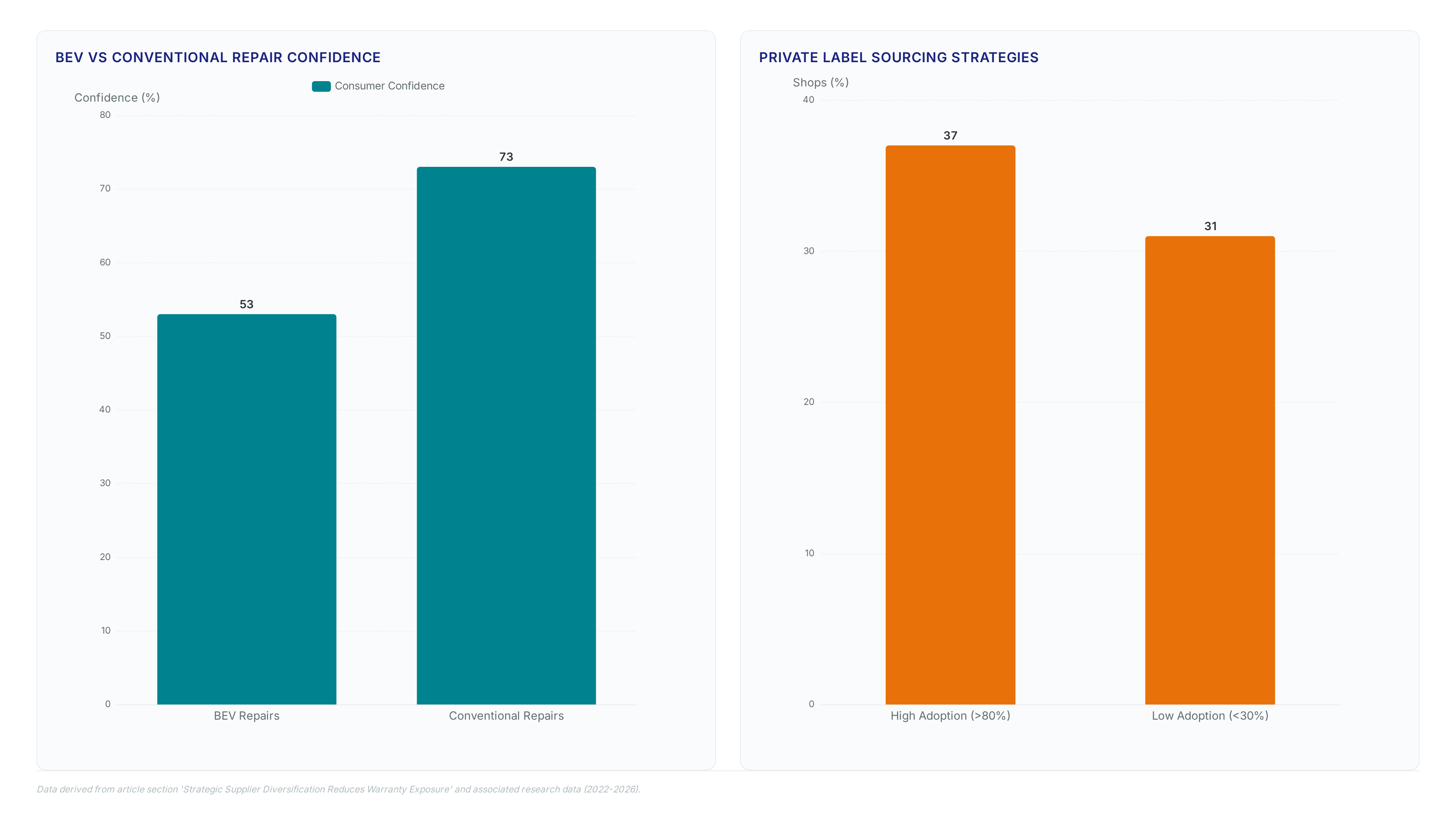
Only 53% of Battery Electric Vehicle owners trust repair shops compared to 73% for conventional vehicles, creating a stark competitive disadvantage for uncertified operators. Modern ghost codes emerge when aftermarket control units fail cryptographic handshake validation against the vehicle gateway. This failure mode forces technicians into endless diagnostic loops that erode customer trust quicker than mechanical errors. The root cause lies in mismatched firmware signatures that trigger false fault flags within the diagnostic trouble code stack. Vehicle technology complexity now sits at 26 per cent, intensifying the penalty for using non-OEM electronic control units. Shops attempting fixes without dealer-level flashing tools often exacerbate the problem by corrupting module state machines. The reputational cost exceeds the parts price difference when an owner loses faith in the shop's technical capability. Independent providers must weigh the risk of consumer confidence A single botched high-voltage repair can permanently alienate a customer base already skeptical of independent EV service.
Strategic Supplier Diversification Reduces Warranty Exposure
Defining the Price and Quality Paradox in Auto Parts
Price sensitivity for initial supplier contact dropped to 7.9 per cent in 2026, signaling that warranty exposure now outweighs upfront savings. Shops prioritize premium parts at 63 per cent adoption to avoid the labor costs of comebacks caused by component failure. This shift counters the historical pressure to minimize consumer repair bills. Older vehicle fleets nearing 13 years of age drive demand for reliable maintenance rather than cheap fixes aging vehicle fleets. The paradox creates a tension where low-price strategies actively destroy shop profitability through repeated warranty claims. Technicians waste billable hours diagnosing faults stemming from substandard aftermarket components. Distributors like AutoZone now deploy massive hubs to secure inventory quality, acknowledging that availability means nothing if the part fails immediately. Operators ignoring this trend risk reputational damage that no discount can repair. High-quality OEM equivalents reduce the frequency of catastrophic electronic handshake failures. The market clearly favors reliability as the primary metric for supplier selection.
Applying Private Label Strategies to Balance Cost and Reliability
Private label adoption splits sharply, with 37 per cent of shops sourcing over 80 per cent of inventory from store brands while 31 per cent limit usage to under 30 per cent. This divergence reflects a calculated risk assessment where warranty exposure dictates supplier selection rather than unit cost alone. Shops prioritize brand reputation for complex assemblies to avoid labor losses from premature failure, reserving private labels for non-critical maintenance items like filters or wipers. The strategic value of private labels depends entirely on the repair context and customer vehicle type. For conventional repairs, established store brands offer acceptable margins, yet this approach falters with advanced powertrains. The consolidation of larger, technologically equipped service centers favors those who can validate private equity Speedy Auto Service uses a long-standing reputation for high-quality repair services to compete against both independent shops and other franchise models, illustrating how network backing influences brand perception. The limitation remains that private labels cannot yet replicate the cryptographic validation required by modern vehicle computers. Operators must therefore segment inventory by risk profile rather than applying a blanket cost-saving mandate.
Warranty Exposure Risks from Chronic Supply Chain Bottlenecks
Dependence on bottlenecked U. S. Delivery mediums creates chronic warranty exposure for Canadian automotive service providers. This shift mirrors industry moves where AutoZone announced a strategic pivot to "Mega-Hubs" designed to increase the availability of slow-moving parts. However, reliance on these centralized systems introduces latency that complicates immediate repair needs. The cost is measurable: electronic components failing handshake validation trigger ghost codes that waste billable hours. Suppliers have maintained stable margins by passing compliance costs upstream to OEMs, yet independent shops bear the brunt of warranty failures when non-compliant parts fail. Only 21 per cent of shops currently use seven or more distributors, leaving most vulnerable to single-source disruptions. The constraint is clear: diversifying supply chains requires administrative overhead that small shops struggle to manage. Technicians must verify part integrity against OEM specifications to prevent catastrophic system failures in modern vehicles.
Implementing a Multi-Vendor Sourcing Policy for Service Shops
Defining the Multi-Vendor Sourcing Policy Framework
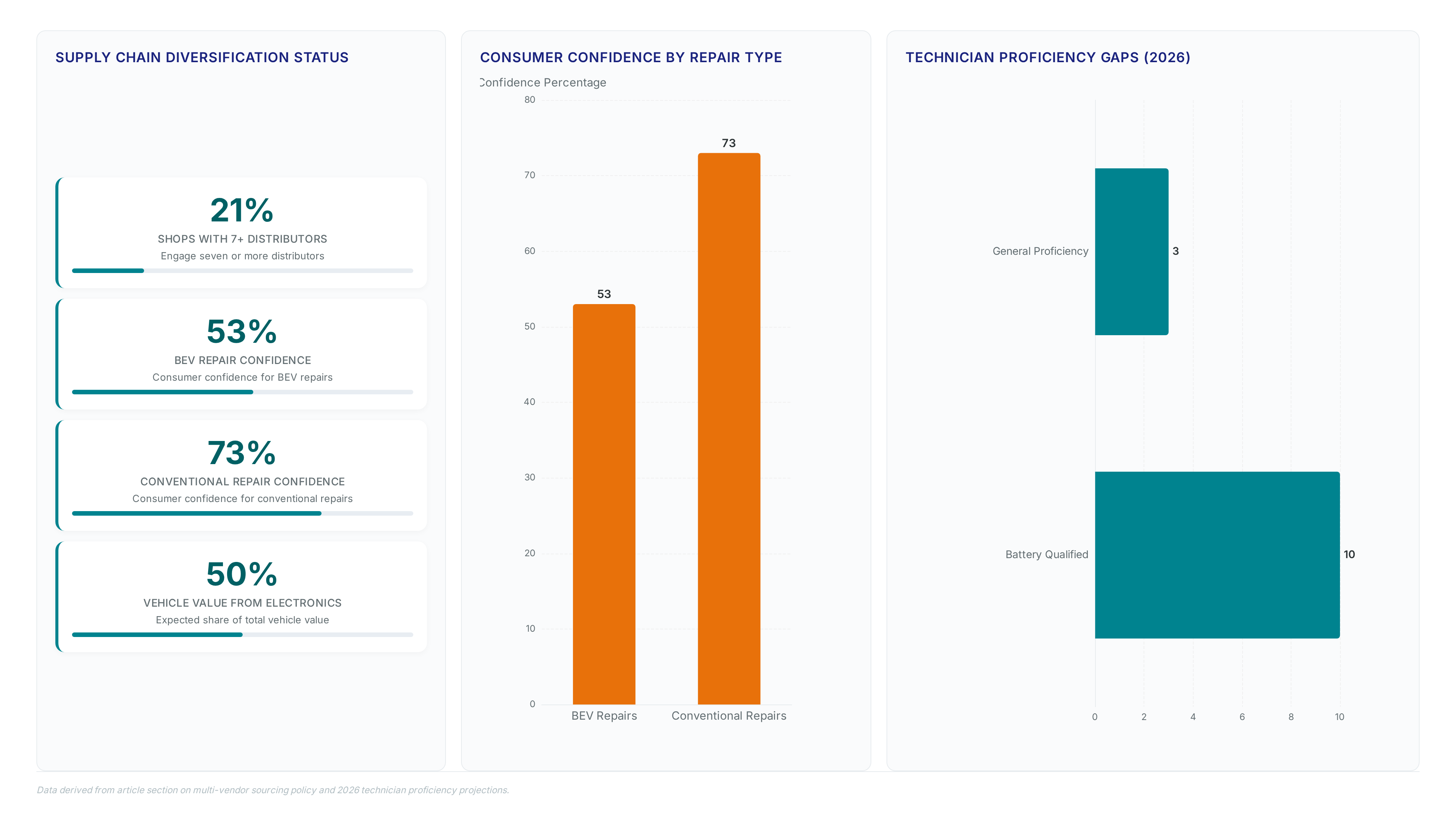
Shops are abandoning single-supplier dependence for distributed networks, a shift visible as 21 per cent of facilities now engage seven or more distributors. This structural adjustment limits warranty exposure by preventing total reliance on any single jobber's inventory fluctuations. Brand trust outranks unit cost because unreliable components trigger expensive diagnostic loops and labor losses. Operators construct tiered supplier matrices instead of linear chains.
- Map primary distributors for high-volume mechanicals to maintain baseline throughput.
- Identify specialized vendors for complex electronics where vehicle data
- Establish dealer accounts for proprietary modules requiring OEM calibration.
- Audit supplier performance quarterly against failure rates. 5.
Applying Brand-Trust Criteria to Distributor Selection
Validating distributor warranty terms against specific failure modes like electronic handshake errors defines a brand-trust policy. Shops audit supplier return policies before onboarding to ensure coverage extends to labor costs associated with defective aftermarket electronics. Due diligence prevents revenue loss when components fail to communicate with vehicle computers, a frequent cause of diagnostic loops. Managing seven or more distributors increases procurement complexity notably. Diversification mitigates single-source failure risks that plague 21 per cent of shops relying on fragmented supply chains. Repair outcome confidence impacts customer retention directly, especially as only 53 per cent of BEV owners trust shops lacking specialized technical credibility. Products and Brands recommends prioritizing distributors who publish clear warranty protocols online. Transparency reduces friction during dispute resolution. Operators ignoring these verification steps face higher comeback rates, eroding the reputation they aim to protect through premium parts selection. Verifying trust costs less than a single failed repair on a complex modern vehicle.
Checklist for Establishing Secure Jobber Communication Channels
Stable platform uptime defines the baseline for secure jobber channels since online ordering usage dropped to 13 per cent following interface instability. Technicians validate digital stability before committing to a new vendor portal.
- Audit current ordering platforms for unnecessary updates that alter workflow efficiency.
- Establish direct voice lines to bypass bottlenecks inherent in U. S. Stranglehold delivery models.
- Confirm supplier adherence to CASIS data standards for accurate vehicle information access.
- Test system response times during peak business hours.
- Document all communication outages for future reference.
- Train staff on backup ordering procedures. Increased administrative overhead is required to manage multiple logins and warranty terms. Operators mitigate this friction by standardizing communication protocols across all vendor relationships. Distributors improve retention by stopping improvements to order sites that function adequately. Ignoring this advice costs measurable first-call volume as shops pivot to reliable alternatives. Strategic diversification ensures that a single point of failure in AutoZone Mega-Hubs logistics does not halt entire service bays. This approach secures the supply chain against external volatility while maintaining operational continuity.
About
Ray Donnelly, Master Automotive Technician and Aftermarket Parts Authority at KZMALL Auto Parts, brings over two decades of frontline experience to the critical discussion on industry transition. Having spent ten years running an independent repair shop before leading technical content, Ray understands firsthand how unreliable components directly inflate labor costs and damage shop reputations. His daily work involves analyzing fitment data and quality tiers to prevent comebacks, making him uniquely qualified to address the shift from speed to technical accuracy. At KZMALL, a global B2B platform offering 50,000+ SKUs with standardized ACES/PIES data, Ray ensures that the parts distributed meet the rigorous demands of aging vehicles. This article reflects his professional commitment to helping service providers navigate the move toward brand reliability, ensuring that the "first call" is earned through trust and precision rather than just proximity.
Conclusion
Scaling digital procurement exposes a critical fragility: administrative bloat often outpaces technical gains when shops rely on single-vendor ecosystems. As vehicle electronics complexity doubles, the operational cost of managing fragmented vendor portals and warranty terms threatens to eclipse the savings from competitive parts pricing. The bottleneck is no longer parts availability but the cognitive load required to navigate unstable interfaces and verify data integrity across incompatible systems. Shops must pivot from passive adoption to active orchestration of their supply chain technology stack before these friction points erode margins on high-value EV repairs.
Implement a redundant communication protocol by Q3 that mandates dual-channel verification for all orders exceeding a modest fee. Do not wait for a system outage to test your backup procedures; the aging fleet demographic demands immediate reliability that single-point failures cannot support. Diversification is not merely about price shopping but ensuring operational continuity when primary logistics hubs face volatility.
Start by auditing your top three vendor platforms this week specifically for uptime history and data export capabilities. If a supplier cannot guarantee near-perfect stability or provide raw data access, initiate a parallel qualification process for an alternative partner immediately. This specific, time-bound action secures your workflow against the very real risk of digital paralysis.
Frequently Asked Questions
Shops now prioritize part reliability over speed to avoid costly comebacks. A single technician vacancy costs the average automotive shop approximately $60,000 annually, making the accuracy of sourced components a critical financial imperative for survival.
Providers now engage seven or more sources to mitigate warranty risks. This shift occurs as availability priorities drop to 39.5%, forcing shops to cast wider nets for reliable inventory rather than relying on local stock alone.
Complex vehicle architectures demand strict OEM specifications for safety. With electronics projected to represent 50% of vehicle value by 2030, the high cost of failure forces shops to source critical components directly from dealers.
Managing multiple accounts allows shops to bypass unreliable aftermarket components. Since availability priorities have slipped to 39.5%, diversifying ensures access to trusted brands that prevent the financial ruin associated with repeated repair failures.
Labor scarcity makes every minute spent searching for parts lost revenue. A single technician vacancy costs the average automotive shop approximately $60,000, driving the urgent need for precise, first-time-fix parts from trusted suppliers.