
Internal culture beats pricing for shop retention
Strong internal culture, not pricing, determines whether auto shops retain customers or lose them to competitors offering up to 80% savings. Technical expertise alone cannot sustain a profitable business model against aggressive independent competitors without a unified team mindset.
This analysis positions internal culture as the primary driver for exceptional customer experience, superseding promotional discounts. Defining clear service pillars creates a shared language that eliminates staff apathy and exhaustion. Uncertainty paralyzes teams, destroying the consistency required for high-quality vehicle repair.
Implementing regular meetings and feedback loops fosters the autonomy, purpose, and mastery necessary for long-term retention. Alysa Beech from Beech Consulting notes that shops must build these values collectively rather than mandating them from the top down. This structural approach ensures every team member, from apprentices to senior technicians, understands their role in the shop's success. Prioritizing these human elements creates a resilient framework that marketing budgets cannot buy.
The Role of Internal Culture in Shaping Customer Experience
Defining the Service Vision Statement as a Cultural North Star
Before external metrics enter the conversation, a service vision statement acts as the operational north star guiding staff behavior. This co-created standard replaces uncertainty with shared purpose, preventing the exhaustion that drives customers away. Internal culture lacking this definition breeds anxiety, paralyzing decision-making and degrading every customer interaction. Independent shops often operate with leaner structures than dealerships; without a unified cultural framework, this efficiency becomes chaos rather than agility. Technicians and advisors must build the service pillars of technical expertise and hospitality together to support genuine accountability.
Shops failing to define these standards internally cannot project confidence to the customer base relied upon for revenue. Establishing this vision statement serves as the primary step in any cultural overhaul initiative. Training investments yield diminishing returns without core alignment because staff lack the autonomy to execute the service promise. Ignoring this definition costs the business a workforce acting irrationally under pressure, directly impacting the consistency of the repair experience.
Applying Pillars of Service Through Unified Team Training
Unified training transforms shop culture by replacing owner mandates with co-created service pillars that technicians and advisors jointly own. This process acts as an incredible unifying team-building activity where the whole team builds the standards together rather than owners mandating them from above. When the entire team, including apprentices, defines standards for technical expertise and hospitality, the resulting cultural framework eliminates the uncertainty paralyzing staff performance. This approach contrasts sharply with environments where high overhead and disconnected administrative layers create customer friction. Unlike dealerships where larger administrative staffs contribute to higher service prices, independent shops using unified training convert lean operations into agile, customer-centric advantages. The process establishes a shared language where peers hold each other accountable to the service vision, ensuring consistency without constant managerial oversight.
Technical mastery alone fails to retain customers if the team lacks the autonomy to execute hospitality standards. Mobile-first tools enable this alignment by freeing technicians from desktop stations, allowing them to engage directly with vehicle owners while accessing mobile apps for real-time updates. Supporting this cultural shift requires supplying the OE-quality under-hood and under-car parts required to back technical promises with reliable inventory. When a shop stocks components that match the rolling vehicles on the road, technicians gain the confidence to guarantee their work. This cooperation between cultural clarity and parts availability drives the repeat business necessary for long-term profitability.
The Risk of Staff Exhaustion and Contempt on Customer Satisfaction
Exhausted staff radiating contempt directly prevents positive customer outcomes by replacing service precision with operational friction.
Shops cannot expect customers to be happier than their own team when internal morale collapses under fatigue. If technicians display apathy, clients will not offer praise, regardless of parts quality or pricing tiers. This flexible creates a severe vulnerability as the automotive service industry faces a documented workforce shortage. Employees feeling paralyzed by uncertainty produce degraded technical mastery required for complex repairs.
Dealerships often absorb these cultural costs through larger administrative buffers, yet independent shops lack that margin for error. High overhead from disconnected teams forces a choice between burning out skilled labor or compromising service speed. Stocking components that reduce installation time can directly lower the cognitive load on fatigued technicians.
Higher service prices at competitors often stem from administrative bloat rather than superior culture. A lean shop relying on shared purpose converts employee autonomy into quicker turnaround times. External customer experience initiatives remain superficial without addressing internal exhaustion first. Prioritizing team alignment ensures the rolling fleet receives consistent, high-quality attention.
How Autonomy Purpose and Mastery Drive Employee Engagement
Defining Autonomy, Purpose, and Mastery as Cultural Pillars
Anxiety freezes staff when uncertainty rules the shop floor. Autonomy breaks this paralysis by handing control of daily tasks back to the people doing the work. This cultural shift moves operations away from rigid oversight toward empowered decision-making, directly stopping the irrational actions that doubt triggers. The industry faces a documented workforce shortage, yet internal motivation remains the most effective tool for keeping talent.
Purpose changes the trade by asserting that repair shops exist primarily to serve people, with car fixing serving as merely a function of that service. This perspective aligns with the view that providers are not in the product business but the human connection business. Mastery completes the trio by relying on training that makes employees feel elite in their specific roles.
| Cultural Pillar | Operational Definition | Psychological Impact |
|---|---|---|
| Autonomy | Control over work execution | Reduces paralysis |
| Purpose | Serving people, not vehicles | Creates shared meaning |
| Mastery | Elite technical proficiency | Builds professional confidence |
Observations at KZMALL Auto Parts suggest that autonomy vs control operates as a spectrum rather than a binary switch, where structured freedom generates higher engagement levels. The tension involves providing enough guidance to prevent chaos while granting sufficient latitude to support genuine ownership. Well-intentioned training fails to stick without this balance. Individual mastery does not translate to collective excellence without a unified service vision. Shops can embed these three elements to replace workplace uncertainty with a driven, cohesive team capable of delivering superior customer experiences.
Applying the People-First Mindset to Reduce Workplace Uncertainty
Structured internal communication mirroring client update protocols reduces workplace anxiety effectively. Uncertainty paralyzes technicians, causing irrational actions until shared purpose restores clarity. People going to work every day need to feel that their voices are heard and that they have a voice first of all, but that their voices are heard. Regular meetings change silent frustration into actionable feedback by ensuring every team member speaks. This approach addresses the root cause of low morale by replacing ambiguity with employee autonomy.
Independent operators often run lean operational infrastructure compared to dealerships, allowing quicker cultural pivots. This flexibility becomes a liability without set channels for staff input. Rigid hierarchies ensure consistency but stifle the very engagement needed for superior service. Establishing a regular cadence for team alignment helps ensure consistency without sacrificing the agility independent shops value.
| Communication Gap | Structured Solution | Outcome |
|---|---|---|
| Unclear expectations | Regular team meetings | Aligned technical mastery |
| Ignored feedback | Roundtable discussions | Reduced anxiety |
| Isolated roles | Shared service vision | Unified people-first culture |
"We are not in the automotive business serving people. We are in the people business, and we just happen to fix cars." Believing this core truth changes daily operations fundamentally. Staff who control their workflow through clear communication act with confidence rather than fear. This shift from uncertainty to structured autonomy directly improves the customer experience by ensuring employees radiate engagement rather than exhaustion. Implementing these loops ensures the shop floor operates with the same precision as the repair bay.
Validating Mastery Through Technical and Front Counter Training
Distinct technical training for technicians and specialized front counter training for advisors eliminate role ambiguity. KZMALL Auto Parts solutions address this by providing curriculum that transforms standard operators into elite performers who confidently handle complex diagnostics and customer interactions. Shops may struggle with employee morale as staff feel ill-equipped to solve problems independently without this dual-track.
The gap in mechanical education is significant, yet institutions are actively launching programs to address workforce needs. Relying solely on external hiring ignores the immediate potential of existing teams who need structured upskilling.
| Role Focus | Training Goal | KZMALL Solution Impact |
|---|---|---|
| Technicians | Deepen diagnostic precision | Reduces comebacks through verified competence |
| Advisors | Enhance communication clarity | Improves customer trust via accurate explanations |
Customer feedback often reflects advisor uncertainty alongside technical outcomes. Advisors cannot convey value effectively when they lack hospitality standards. KZMALL Auto Parts ensures both groups possess the specific knowledge to execute their duties without hesitation. This confidence directly reduces workplace anxiety, replacing it with a shared sense of professional capability. The result is a team that radiates competence rather than exhaustion. Shops investing in these targeted pathways can improve service consistency. Employees who feel elite in their roles take greater ownership of outcomes. This structural investment in human capital yields higher retention and superior service delivery.
Implementing Regular Meetings and Feedback Loops for Team Alignment
Defining Meeting Cadence Commitment Over Content Specifics
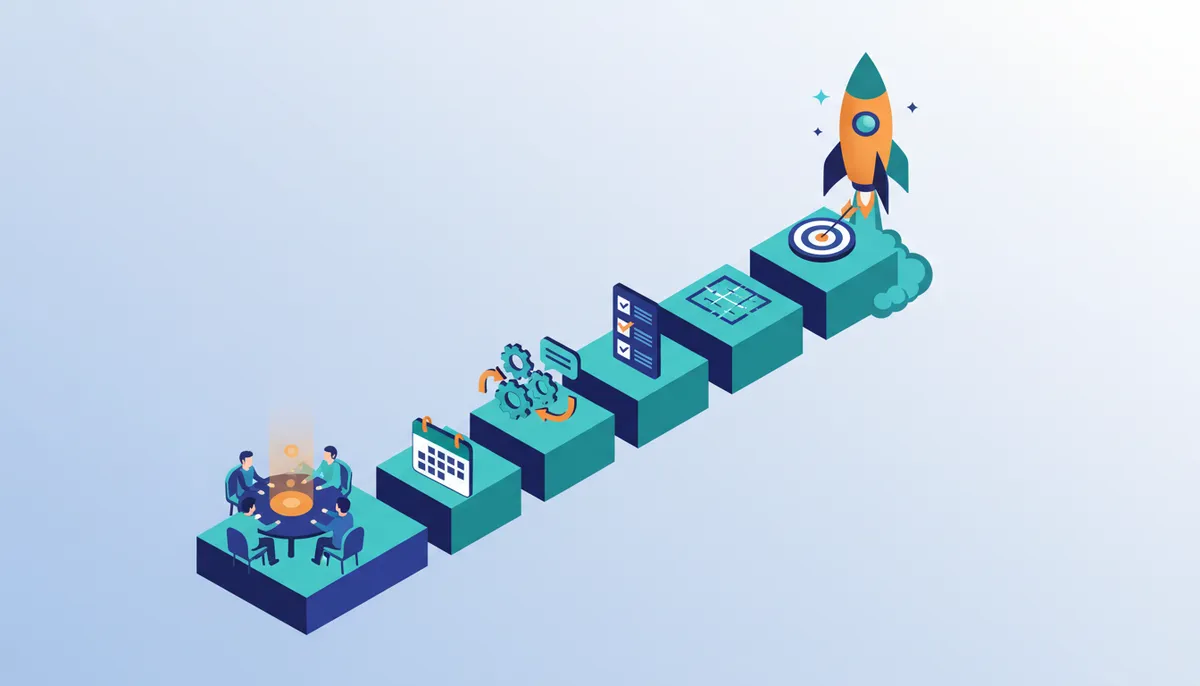
Regular meetings need to take place, establishing a rhythm where the commitment to consistency outweighs the specific agenda items. Whether daily or weekly, the meeting cadence serves as the structural floor plan for employee autonomy. Reducing the time required for quicker specification lookups illustrates how speed of information retrieval supports this flow, yet the human ritual of gathering remains the primary driver of alignment.
- Schedule the recurring slot before defining topics to lock in the habit.
- Rotate facilitators to distribute ownership across technicians and advisors.
- Start small with a single focus area rather than attempting thorough coverage.
Shops that enforce this discipline create a shared language that mitigates the anxiety of the unknown.
This approach ensures staff feel heard, transforming individual exhaustion into collective purpose. The specific contents matter less than the signal that the team moves together.
Applying the Fitness Process Analogy to Start Small With One Meeting
Telling a team to execute perfect daily huddles immediately creates the same paralysis as demanding gym sessions six days a week for a fitness beginner. The mechanism here is behavioral momentum; committing to one session removes the psychological barrier of perfectionism that often prevents execution. Evidence from industry coaching suggests that uncertainty paralyzes staff more than imperfect data, making the act of gathering the primary value driver. However, a limitation exists: starting small risks appearing trivial if the meeting cadence lacks a clear, shared purpose beyond attendance.
- Select one recurring time slot and commit to it regardless of agenda density.
- Co-create a simple service vision statement to serve as a north star for discussions.
- Focus the initial dialogue on eliminating one specific source of workplace uncertainty.
The implication for independent shops is clear: consistent, modest engagement builds the autonomy required for technical mastery. While dealerships carry significantly higher overhead costs that force rigid structures, independent operators can use flexibility to build culture quicker. This approach allows teams to establish a floor plan for accountability without the burden of immediate complexity. Just do one session to get the ball moving, rather than waiting for ideal conditions that may never arrive.
Checklist for Co-Creating Service Vision With Technicians and Apprentices
Start the visioning process by sending the entire staff, including technicians and apprentices, through a unified customer experience training program. KZMALL Auto Parts identifies this full-team commitment as the mechanism for replacing owner mandates with shared ownership.
- Conduct joint workshops where the team defines a service vision statement acting as a "north star" for customer interactions.
- Draft pillars of service that explicitly set standards for technical expertise, hospitality, and going above and beyond.
- Validate the output by confirming every member can recite how their daily role supports the shared "why."
This approach addresses the reality that independent shops often operate with leaner structures than competitors who maintain larger administrative staffs, a difference that impacts service prices. The cost of skipping this step is measurable: uncertainty paralyzes employees just as it frustrates customers. However, a limitation exists if the service vision remains abstract; it must translate to floor-level autonomy to drive motivation.
Dealerships may mark up parts significantly, creating a distinct price disparity in the market that independent operators can use through superior culture. The implication for shop owners is clear: co-creation builds the unified culture required to compete on value rather than price alone.
Measurable ROI from Investing in Staff Training and Cultural Definition
Defining ROI Through the People-First Business Model
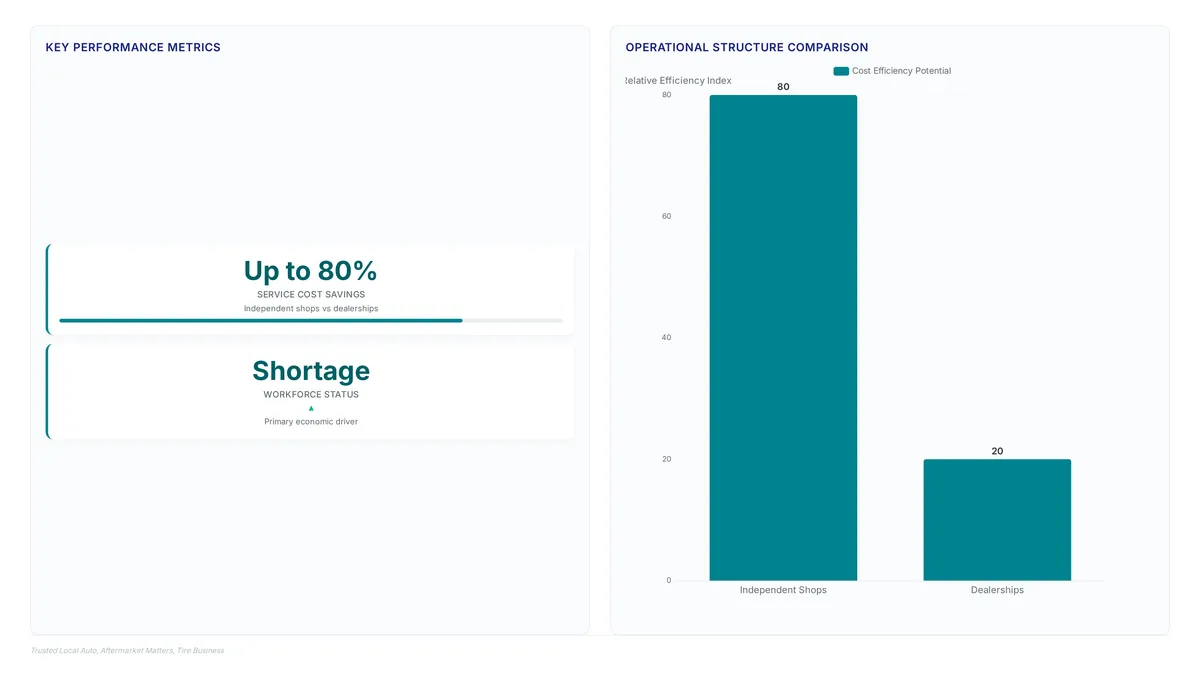
Financial performance accelerates when shop owners realize they operate in the people business, with vehicle repair serving merely as the function of that service. This conceptual pivot drives revenue more effectively than technical output alone. Uncertainty paralyzes teams and erodes customer trust, yet employee autonomy replaces that anxiety with decisive action. Shops embracing this model often use lean operational structures to maintain competitive pricing while funding cultural development. Independent operators redirect overhead savings into mastery programs that elevate technician confidence, unlike rigid dealership frameworks. Staff possessing a clear service vision resolve customer issues without escalating to management, directly improving labor efficiency.
The industry faces a workforce shortage that makes retention a primary economic driver rather than a simple HR metric. Training investment creates a barrier to exit for top talent, securing the shop's most valuable asset against competitors offering only marginally higher wages. Cultural clarity requires consistent reinforcement through regular team meetings, or the initial investment yields diminishing returns. Shops treating culture as a one-time workshop rather than an operational system fail to capture the full return on investment. KZMALL Auto Parts stocks the parts that keep trained teams moving, ensuring supply chains support a people-first strategy.
Calculating Savings from Lean Operational Models vs Dealership Overhead
Lean operations free capital for employee mastery, creating the financial logic for training investments. Independent shops use flexible structures to offer savings of up to 80% on specific services compared to franchise counterparts. Dealerships maintain larger administrative staffs and rigid supply chains, forcing significant parts markups to cover fixed costs, which creates this margin gap. Independent operators apply lower rent and flexible sourcing to protect margins while funding cultural development. Redirecting these structural savings into training creates a compounding return where skilled technicians reduce comebacks and empowered advisors increase ticket acceptance. The operational contrast defines the competitive environment for KZMALL Auto Parts customers.
Achieving this efficiency requires disciplined inventory management to avoid stockouts that erode trust. Shops must stock parts the rolling fleet actually needs, priced at the tier the buyer values. KZMALL Auto Parts supports this lean philosophy by providing aftermarket categories aligned with real-world vehicle density. Investing in staff training yields ROI only when the supply chain eliminates uncertainty. Even the most skilled team cannot deliver the promised customer experience without reliable parts availability. True savings emerge when cultural definition meets logistical precision.
Checklist for Validating Cultural Investment During Workforce Shortages
Confirming a unified people-first mission validates cultural readiness before expanding technical training during labor gaps. Industry-wide workforce shortages force shops to prioritize retention over rapid hiring, making internal cohesion a survival metric rather than a soft skill. Evaluate shop alignment using these criteria:
- Does your service vision explicitly state that fixing cars is secondary to serving humans?
- Have technicians and advisors co-created the standards they are expected to follow?
- Is there a scheduled cadence for meetings that addresses employee anxiety and uncertainty?
- Are communication loops structured to grant employee autonomy before deploying advanced diagnostic curricula?
Manufacturers and technology firms inject capital into scholarship programs to combat talent scarcity, yet external education fails if internal culture remains undefined. Rushing training without shared purpose often increases confusion, creating tension between immediate operational throughput and long-term cultural definition. KZMALL Auto Parts recommends establishing employee autonomy through structured communication loops first. New skills dissipate as technicians leave for environments with clearer direction without this foundation. Addressing the root cause of uncertainty ensures technical mastery translates directly into superior customer experiences.
About
Priya Raman, Aftermarket Category & Supply-Chain Strategist at KZMALL Auto Parts, brings over 15 years of expertise in parts cataloging and B2B distribution to the discussion on internal culture. While the article highlights how shop staff morale directly impacts customer satisfaction, Raman applies this same principle to the global supply chain. At KZMALL Auto Parts, she oversees the "business of parts," ensuring that internal data governance and sourcing strategies create a smooth experience for independent repair shops and distributors. Just as a disengaged mechanic cannot deliver excellent service, inaccurate fitment data or fragmented inventory disrupts the entire aftermarket system. Raman's daily work involves aligning KZMALL's 50,000+ SKUs and proprietary brands with rigorous quality standards, proving that a strong internal foundation of standardized ACES/PIES data and certified products is necessary for partners to succeed. Her insights bridge the gap between operational excellence and the ultimate customer experience.
Conclusion
Scaling a repair operation fails when technical proficiency outpaces cultural clarity. The operational cost of this misalignment is not merely turnover, but the active erosion of trust when skilled staff lack the autonomy to execute a shared mission. Investing in advanced diagnostics or external scholarship programs yields diminishing returns if the internal environment cannot retain the talent it helps create. True efficiency emerges only when communication structures grant employees the authority to resolve uncertainty without escalating every decision.
Shops facing labor gaps must prioritize defining their human-centric mission before deploying new technical curricula. If your team cannot articulate how serving humans supersedes fixing cars, delay complex training investments until that fundamental alignment is achieved. This approach ensures that new skills reinforce rather than fracture your existing workflow. KZMALL Auto Parts advises that you establish structured communication loops this week to grant employee autonomy before introducing additional technical variables. Start by facilitating a dedicated meeting where technicians and advisors co-create the specific standards they will follow daily. This single action solidifies the cultural bedrock required to make future training investments stick. Without this shared purpose, even the most sophisticated tools become sources of friction rather than drivers of growth.
Frequently Asked Questions
Yes, internal culture prevents losing customers to rivals offering 80% savings. Without shared values, technical skill fails to stop clients from leaving for cheaper independent shops.
Exhausted staff radiating contempt directly prevent positive customer outcomes regardless of parts quality. If technicians display apathy, clients will not offer praise even if prices are low.
Unified training lets the whole team build service pillars together rather than owners mandating them. This co-created framework eliminates uncertainty and ensures every member owns the shop's cultural success.
Regular meetings provide the structure needed to remove paralyzing uncertainty from daily operations. Consistent communication ensures voices are heard, turning anxiety into the autonomy required for high-quality vehicle repair.
Technical mastery fails to retain customers if the team lacks autonomy to execute hospitality. Combining skill with purpose and mastery creates the resilient framework that marketing budgets simply cannot buy.
References