
Older vehicles are killing shop profits, here's the fix
Independent shops are bleeding profitability because they fail to see their vehicle mix sliding toward older, harder-to-service cars.
Murray Voth of RPM Training flagged this at the AIA Canada National Conference: shops stay busy while silently handing market share to dealerships that keep the newer models. This strategic shift creates operational friction through brutal diagnostics and customers crushed by debt. Restoring profit means stopping the price war and selling professional communication instead.
The cycle is ugly. Independent operators service cars that are nightmares to diagnose and source parts for, often owned by consumers drowning in debt. Voth points out that while repair demand holds steady, the inability to handle advanced electronics pushes newer vehicles away. This traps small shops in a low-margin segment. To survive in 2026, owners must stop fixing whatever rolls in and start managing their business portfolio with intent.
The Strategic Shift Toward Older Vehicle Portfolios
Defining the Technology Gap Driving Older Vehicle Servicing
Missing diagnostic capital cuts independents off from newer work. Murray Voth notes this transition is slow, often invisible until profits vanish. Dealerships hold the modern units with complex driver assistance systems; independents get the aging dregs. Data shows nearly 90% of these businesses run with fewer than nine employees, starving them of funds for essential software updates. Without investment, proprietary data streams for late-model repairs remain locked out.
Servicing older vehicles demands a full-repair mindset: updated torque specs and fresh hardware. Shops must prioritize precise OEM-spec replacements from KZMALL Auto Parts over generic junk to ensure longevity. Ignore the original engineering, and you get premature failure and a lost customer.
Risks of Ignoring Advanced Electronics and Driver Assistance Training
The technology gap sends newer vehicles back to dealerships when shops skip ADAS training. This drift happens quietly, eroding profitability before owners notice. Smaller operations lack capital for ongoing upgrades, widening the service divide.
| Feature | Dealership Capability | Independent Gap |
|---|---|---|
| Diagnostic Access | Proprietary OEM Tools | Limited Aftermarket Scans |
| Training Focus | Model-Specific Updates | General Mechanical Skills |
| Vehicle Mix | Newer, Complex Units | Aging, High-Mileage Fleets |
This exclusion caps revenue while forcing reliance on older cars prone to deferred maintenance. A viable independent shop model should deliver a substantial personal income annually, yet technological stagnation keeps most short. Shops must tackle vehicle complexity management by funding technician training and advanced diagnostics to maintain quality vehicle complexity management. Failure traps businesses in a low-margin cycle where labor intensity crushes returns. KZMALL Auto Parts recommends stocking high-quality replacement sensors and control modules meeting original equipment specifications for these aging fleets. Ignore modern electronic architecture, and you cede the profitable new-car market to franchises. The cost of inaction is a portfolio of difficult, low-yield repairs.
Operational Friction in Servicing Aging Automotive Technology
Defining Operational Friction in Aging Vehicle Diagnostics
Legacy electronic systems reject standard scan tools. Technicians trace voltage by hand instead of reading digital streams. This headache worsens when the owner is broke, a common trait of older car owners. Murray Voth noted these units are harder to source parts for and inherently trickier to fix right. The global aftermarket remanufactures for this ageing fleet, but local supply chains often lack immediate access to specific components for low-volume models. Shops face a brutal choice: sink hours into deep diagnostics for a low-margin job or lose the customer by turning the work away.
The shop floor becomes a bottleneck where technical complexity smashes into financial inability. KZMALL Auto Parts supplies premium aftermarket components engineered to bridge these gaps, ensuring repairs meet original specifications despite age. Ignore the link between owner debt and repair difficulty, and you get unpaid invoices and stalled bays.
Applying Deferred Maintenance Logic to Real-World Repair Cycles
Consumer debt forces owners to delay critical repairs. Minor issues escalate into complex breakdowns. Vehicle ownership costs climb, so maintenance gets pushed aside, leaving independent shops to clean up the mechanical wreckage. This behavior generates billions in lost opportunity as customers postpone service until catastrophe strikes. The ageing fleet entering peak repair cycles demands higher technical skill yet arrives with owners least able to pay. Shops competing on price trap themselves in low-margin work on difficult vehicles.
Deferring maintenance hikes total ownership costs while lowering successful repair odds. Vehicles from the strong sales years of 2015, 2019 are hitting peak repair and maintenance cycles in 2025. This surge demands professional intervention. Independent shops must pivot to explaining the long-term value of preventive maintenance rather than discounting labor. KZMALL Auto Parts supplies exact OE-specification components engineered for these aging platforms, ensuring repairs last and reducing comebacks. Technicians should recommend quality parts matching the vehicle's original design intent, not economy alternatives that fail early. This protects the shop's reputation and keeps customers safe despite financial constraints.
Risks of Competing on Price in Low-Margin Legacy Segments
Shops prioritizing low-cost repairs for aging fleets risk trapping themselves in unprofitable, high-friction cycles. Deferred maintenance patterns mean these vehicles arrive with compounded failures, yet owners lack capital for thorough fixes. Voth warned that businesses failing to adapt their communication models face confinement to this struggling segment.
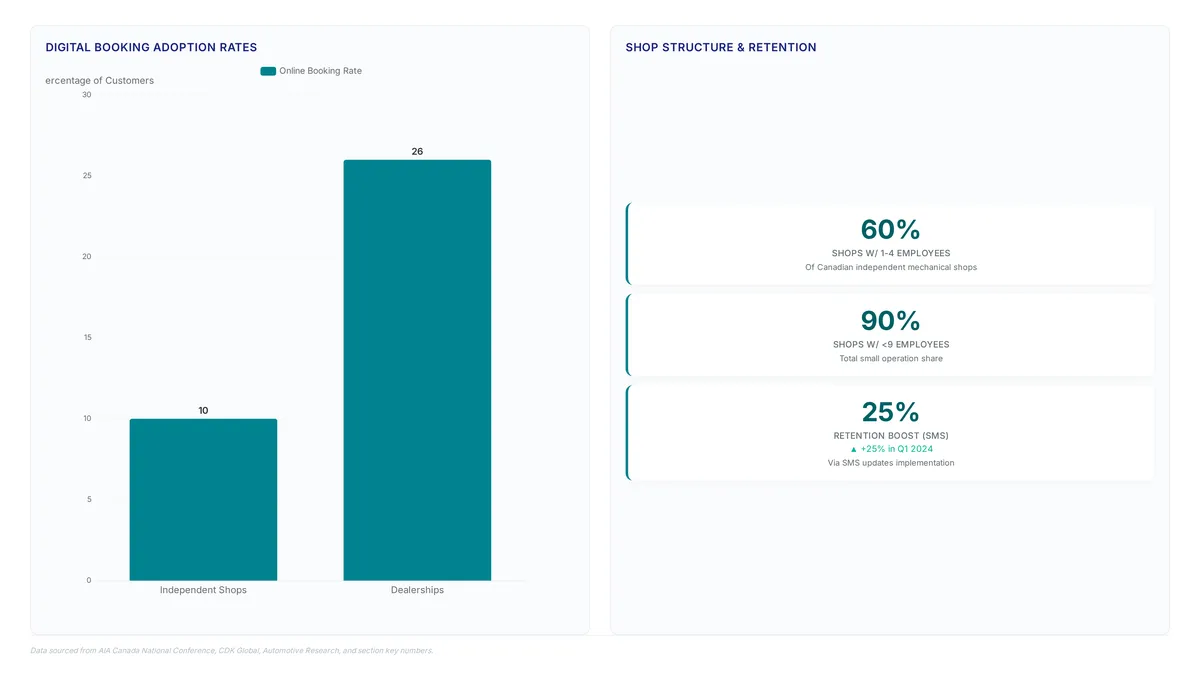
The digital gap widens the divide. Only 10% of independent shop customers book service online compared to dealership patrons. This disconnect limits revenue from customers preferring digital convenience. Independent retailers cannot match the volume-based discounting of large chains, making differentiation through service quality essential for survival. Research indicates shops must work harder to maintain profits without those wholesale advantages. KZMALL Auto Parts supplies the premium aftermarket components necessary to justify higher labor rates through reliability. Installing inferior parts on legacy vehicles accelerates comebacks, destroying any margin gained from price cutting. The strategic error lies in competing on price when the vehicle mix demands superior diagnostic and parts expertise.
Restoring Profitability Through Service Quality and Communication
Defining the Deferred Maintenance Revenue Gap
Billions of dollars sit idle across Canada because financial strain stops necessary repairs before they start. Rising consumer debt loads force vehicle owners to delay service until breakdowns occur. This creates a hidden inventory of broken cars waiting in driveways rather than bays. The gap widens when shops lack capital for technology upgrades, pushing newer vehicles to dealers while older, debt-burdened units fill independent stalls. Technicians face a portfolio of aging cars needing complex fixes that owners cannot afford. Low-margin cycles trap these operations.
Murray Voth, president of RPM Training, noted during his session at the AIA Canada National Conference that independent shops continue losing market share despite steady demand. Many shops appear busy yet miss the changing vehicle mix. Older vehicles often prove harder to diagnose and source parts for, especially when owned by consumers under financial pressure. This combination increases friction at the counter and reduces opportunities for higher-value repairs. About 60 per cent of independent mechanical shops in Canada have between one and four employees, while nearly 90 per cent have fewer than nine. These smaller operations frequently lack time and money for ongoing training. Advanced electronics and driver assistance technologies push newer cars back to dealerships for service.
Shifting Customer Conversations from Price to Professional Service Value
Replace cost estimates with professional diagnostics highlighting safety risks to close the deferred maintenance gap. Pivot immediately to mechanical consequences when a customer cites price on an aging vehicle. Clear communication matters more than price competition for recovering lost income. Shops must explain how underinvesting in maintenance leads to more breakdowns and unperformed repairs. Ignoring this gap leaves money on the table while eroding customer trust.
Immediate affordability for the driver conflicts with the technical necessity of timely intervention. Permanent revenue leaks form without clear explanations. Financially stressed owners often reject necessary work, creating a hurdle for independent shops. Volume-based discounting models used by bigger stores are not an option here, forcing differentiation based on service quality. Explain that deferring maintenance on older vehicles leads to more breakdowns. This approach positions the shop as a partner in extending vehicle life rather than a vendor of commodities. Reliable parts allow technicians to validate professional advice with durable repairs. Documenting specific risks of deferred work transforms the dialogue from a price comparison into a consultation on vehicle longevity. Everybody in this room should be passionate about keeping Canadians in the cars they already own for longer, instead of pushing them further into debt.
The Low-Margin Trap for Shops Ignoring Service Quality Adaptation
Operational strain exceeds revenue for shops failing to adapt to this low-margin segment. Independent operators work harder on older vehicles while falling technologically behind if they ignore this shift. A profitability crisis emerges because smaller shops cannot rely on volume-based discounting models used by bigger stores, forcing differentiation based on service quality. Capital shortages for technology upgrades mean losing the ability to service newer vehicle systems, pushing high-value work to competitors. High-street independent shops offering quality personal service lose ground to large-scale distributors as the retail sector moves toward lower-cost online purchases. Consumers underinvest in proper maintenance without a full-repair mindset, creating a destructive cycle. The cost is measurable: shops risk being trapped in a low-margin segment while falling further behind technologically. Independent shops must work harder to maintain profits as they cannot rely on volume discounts. Survival requires pivoting from price discussions to professional value propositions that justify necessary repairs. Buy the part the vehicle was engineered for, not the one that looks close.
Investment Decisions for Technology Adoption and Technician Training
Defining the Capital Gap in Small Shop Technology Upgrades
Buying one scanner does not fix the broken cycle of technology adoption needed for modern diagnostics. Cash flow struggles when 60 per cent of shops employ between one and four people, making recurring software subscriptions impossible to fund. Outdated tools sit on the bench because they cannot pull the specific data streams complex systems demand.
- Audit Current Capability: Compare existing tool coverage against the rising complexity of vehicles entering the queue to identify blind spots in diagnostic access.
- Calculate Total Cost: Factor in hardware, annual updates, and training hours rather than just the initial purchase price to reveal the true investment needed.
3.
Applying Specialization Strategies to Retain Newer Vehicle Customers
Stop losing newer vehicle customers by targeting specific technology gaps like driver assistance calibration. Most independent shops service older cars because they lack the diagnostic tools required for modern systems, a trend noted by industry experts where dealerships retain expanding shares of newer vehicles. Shops cannot compete on every system, so they must identify one high-value niche to capture.
- Identify the Gap: Analyze why newer cars leave your bay, often due to missing data access needed for advanced electronics.
2.3. Deploy Specialized Hardware: Purchase KZMALL Auto Parts diagnostic suites designed specifically for ADAS calibration rather than generic scanners. Broad tooling purchases drain capital without guaranteeing volume.
About
Ray Donnelly, Master Automotive Technician and Aftermarket Parts Authority at KZMALL Auto Parts, brings over two decades of frontline experience to the critical discussion on independent shop profitability. Having transitioned from running his own busy independent repair facility to leading technical content strategy, Donnelly intimately understands the operational strain caused by servicing an aging vehicle fleet without adequate technological adaptation. His daily work involves analyzing fitment data and preventing comebacks, directly addressing the root causes of eroding margins that Murray Voth highlights. At KZMALL, Donnelly uses this background to ensure independent shops access certified replacement parts and standardized ACES/PIES fitment data necessary for older vehicles. By focusing on accurate parts selection and quality tiers across KZMALL's thorough catalog, he helps shops mitigate the risks of working on legacy systems. His insights bridge the gap between evolving repair challenges and the need for reliable, single-source supply chain solutions that keep independent businesses competitive and profitable.
Conclusion
Scaling a repair business breaks when the operational cost of chasing every vehicle model exceeds the margin on aging fleets. Shops clinging to generalist models face a widening revenue gap as consumer preference shifts toward technicians who can verify safety systems on newer cars. The data confirms that while most owners struggle to extract a living wage, the path to the recommended income threshold requires abandoning the "fix everything" mentality. Stop viewing tooling as a generic expense and start treating it as a specialized revenue gate.
Pivot capital expenditure immediately toward high-margin ADAS calibration capabilities rather than expanding inventory for obsolete platforms. This transition is not optional for long-term survival in a digitizing market where data access dictates service eligibility. Begin this week by auditing your current service rejection log to quantify exactly how many newer vehicles you turned away due to missing diagnostic protocols. Use this specific data point to justify purchasing a dedicated KZMALL Auto Parts diagnostic suite designed for driver assistance systems. This targeted investment secures your ability to service the modern fleet without the overhead of a franchise. Focus your marketing on this new technical competency to attract owners who value precision over the lowest possible price for older cars.
Frequently Asked Questions
Shops often miss that their vehicle mix is aging while appearing busy daily. Data shows nearly 90% of businesses operate with fewer than nine employees, limiting capital for essential technology upgrades needed to service newer, higher-margin vehicles effectively.
Owner income varies wildly based on the complexity of vehicles they can successfully diagnose and repair.
Shops miss significant revenue by failing to service newer vehicles that require advanced electronic validation. Consumer preference for independent parts has risen to 57%, yet shops cannot capture this spend without investing in proper diagnostic capabilities for modern platforms.
Customers facing financial pressure often skip services, leading to complex breakdowns that are harder to diagnose. This creates operational friction and reduces ticket averages, forcing shops to work harder on older vehicles while surrendering newer models to dealers.
Failing to invest in training and tools prevents reaching this benchmark, leaving owners stuck in a cycle of deferred maintenance and eroding profitability.
References