Green apprentice plans fix the 65% calibration gap
With 65% of repairs now requiring ADAS calibration, waiting for perfect hires is a losing strategy. Erin Vaughan's May 2026 analysis cuts through the noise: the only viable path is building green apprentices internally. Hunting for experienced labor is futile when two-thirds of candidates fail ASE exams on the first try. It is far more efficient to train new habits than to break old ones.
Vaughan's methodology relies on timed coaching plans that elevate tenured staff into mentors. This hierarchy frees senior technicians for complex diagnostics while maintaining strict quality control over entry-level work. The alternative, leaving new hires idle due to workflow bottlenecks, is a primary driver of turnover in a strained market. By defining clear roles, shops protect profitability even during heavy investment in development. The linchpin is marketing preventative maintenance. Without a steady stream of scheduled oil changes and tire work, apprentices have nothing to learn on. Shops must actively sell these services to sustain the learning curve, shifting from a reactive breakdown model to a predictable workforce pipeline.
The Role of Green Apprentices in Modern Auto Repair Workforces
Defining the Green Apprentice and Basic Services Trainer Roles
Digital inspection tools drive revenue. Shops using them properly see average repair orders jump from $380 to $510. Yet, a staffing wall remains: approximately two-thirds of test-takers fail the ASE certification exam on their first attempt. External pipelines cannot staff your bays fast enough. You must bridge the gap internally.
A green apprentice is entry-level talent unburdened by legacy habits. With 65% of vehicle repairs now demanding complex calibration skills, starting fresh often beats retraining veterans who lack these specific competencies. This model avoids the stagnation plaguing franchises that compete on national warranties rather than personalized service.
The basic services trainer is your internal anchor. This employee holds six months to a year of tenure and executes tasks like oil changes, tire repairs, and digital vehicle inspections without oversight. Their role is simple: handle volume work so senior staff can focus on high-margin diagnostics.
| Role | Tenure Requirement | Primary Function |
|---|---|---|
| Green Apprentice | 0 months | Learn core skills |
| Basic Services Trainer | 6, 12 months | Supervise entry tasks |
This tiered structure unlocks revenue potential. Yes, it costs time upfront. But paying premium wages for external hires who still need habit correction costs far more.
Implementing a Timed Coaching Plan for Internal Technician Development
Start with staff who have six months to a year of tenure. These individuals form the backbone of a functional timed coaching plan. Look for punctuality and task confidence before assigning trainer duties. This approach transitions apprentices from basic maintenance to complex diagnostics without the delays of external hiring.
The recommended timeline spans 1 to 10 months. This duration allows for proper skill layering. Rushing creates quality control failures; dragging it out wastes money. Shops neglecting this pipeline face skyrocketing costs recruiting scarce certified technicians. Modern vehicles demand technicians who can interpret real-time data from devices connected to the OBDII port, not guesswork.
Ad-hoc mentoring fails. Without a fixed schedule, knowledge transfer varies wildly between shifts. Independent facilities often outperform franchises here by adapting training speed to individual aptitude.
This model converts variable labor costs into a stable asset. The ramp-up phase hurts immediate revenue, no doubt. But it avoids the trap of hiring expensive staff who struggle with platform-based diagnostics. Vehicle complexity is outpacing the learning curve of rigid, seasoned technicians. Strategic hiring now prioritizes malleability. Younger technicians adapt faster to evolving diagnostic platforms than veterans set in legacy workflows. As labor rates rise due to certified shortages, this adaptability directly impacts profitability. Relying solely on experienced hires means paying inflated wages for obsolete skill sets.
| Feature | Green Apprentice | Experienced Technician |
|---|---|---|
| Tech Adaptability | High (new habits) | Variable (legacy dependence) |
| Training Cost | High initial investment | Low initial cost |
| OBDII Proficiency | Trained on current specs | Requires retraining |
| Wage Pressure | Low entry rate | Premium market rate |
Structuring Technician Levels and Timed Coaching Plans
Criteria for Selecting Internal Basic Services Trainers
A basic functions trainer needs six months to a year of tenure. They must perform unsupervised DVIs and tire repairs confidently. Verify their ability to handle oil changes and basic R&R jobs before assigning coaching duties. This baseline ensures they can manage quality control without constant hand-holding.
Here lies the friction: the most skilled technician is rarely the best teacher. High production speed often correlates with low instructional tolerance. Prioritizing ticket volume over pedagogical aptitude fractures the training pipeline. New hires fail to absorb core competencies, leading to measurable rework rates and customer dissatisfaction.
Mechanics: Executing the 1 to 10 Month Timed Coaching Plan
Execution begins with tool proficiency. A one to 10 months plan mandates strict adherence to tool safety before any intermediate repairs. Sequence training from shop maintenance to complex diagnostics. Premature task delegation is a common, costly error. Unverified technicians lack the procedural rigor modern vehicle systems demand, and the resulting rework erodes the margin gains from digital inspection workflows.
- Validate proper use of tools and equipment during month one.
2.
Check your work volume before hiring. A lack of entry-level tasks stalls development entirely. If basic work isn't there, stop hiring and start marketing. Poor shop management software integration or marketing gaps often leave new hires idle. Modern diagnostics require trainees to access real-time data via the OBDII port, not guess at issues.
| Workflow State | Apprentice Status | Action Required |
|---|---|---|
| High Basic Volume | Ready to Hire | Deploy timed coaching plan |
| Low Basic Volume | Do Not Hire | Market preventative maintenance |
| Mixed Volume | Partial Load | Restrict hiring to part-time |
Without sufficient oil changes or tire repairs, the basic provisions trainer cannot validate skills. Breakdown-only revenue streams are too volatile for apprenticeship models.
Marketing Preventative Maintenance to Sustain Apprentice Workflow
Defining Preventative Maintenance and DVI Workflow
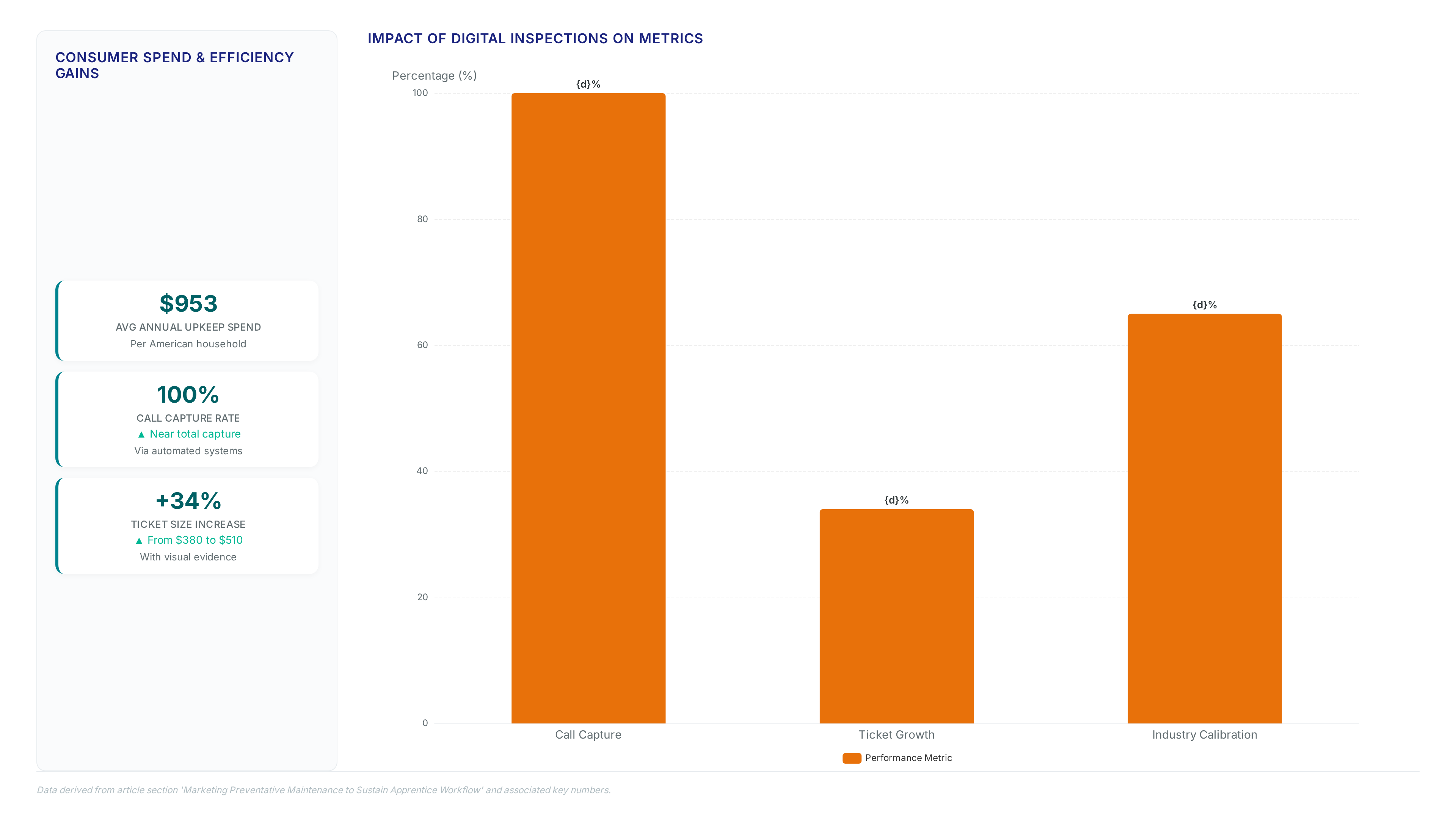
Preventative maintenance differs from emergency breakdowns by its scheduled nature. This workflow hinges on the Digital Vehicle Inspection (DVI) to convert visual findings into client approvals. Modern DVI architecture uses mobile apps where technicians capture media on a tablet, attaching files directly to the repair order estimate within the Shop Management System. A historical log validates suggested services against actual vehicle conditions.
Operations demand more than inspection. You must perform thorough DVIs, present findings, recommend services, and book the next appointment. Clients defer critical services without structured presentation because visual evidence is missing. Cloud-based automated workflows enable straight-through processing for estimates, reducing friction between discovery and authorization. Shops ignoring these tools remain dependent on unpredictable breakdown traffic. Value demonstration before repair initiation defines the distinction.
Marketing Basic Services to Generate Apprentice Volume
Shift focus from reactive breakdowns to consistent preventative service clients. Actively market oil changes and tire rotations. The average American spends $953 annually on vehicle upkeep, a recoverable revenue stream for shops positioning themselves as maintenance facilities. Without this steady inflow, apprentices sit idle, stalling skill acquisition and wasting payroll.
Shops failing to capture this work rely on volatile breakdown customers who exhibit lower loyalty and higher price sensitivity. Converting reactive callers into scheduled clients demands thorough Digital Vehicle Inspections and clear communication. Successful strategies include using automotive SEO to attract local drivers searching for routine service. Independent shops compete against franchise models by emphasizing personalized care and community trust. Marketing requires upfront time investment, but ignoring it costs more than subscription fees for modern digital management tools. Booking the next appointment during every interaction builds a clientele worth more money. This approach ensures basic maintenance tasks remain available to justify hiring new trainees.
Application: Validating Shop Capacity for Apprentice Integration
Verify bay utilization rates before recruiting a single apprentice. Basic work volume dictates training success. Entry-level bays lacking consistent oil changes or tire rotations require facilities to first market specifically for those jobs. Shifting focus from reactive breakdowns to scheduled maintenance clients provides the necessary steady workflow.
New hires stall without this foundation, causing senior technicians to lose productivity mentoring instead of repairing. Facilities should implement Digital Vehicle Inspection tools to capture media and present findings directly to customers. Transparency builds trust and increases acceptance of recommended services. Adopting AI-driven phone answering systems ensures nearly 100% of inbound calls are captured for scheduling. An unutilized apprentice drains payroll while generating zero revenue. Secure the work before hiring the worker.
Executing a Shop-Ready Apprentice Hiring Program
Defining the Apprentice Candidate Profile and Trainer Prerequisites
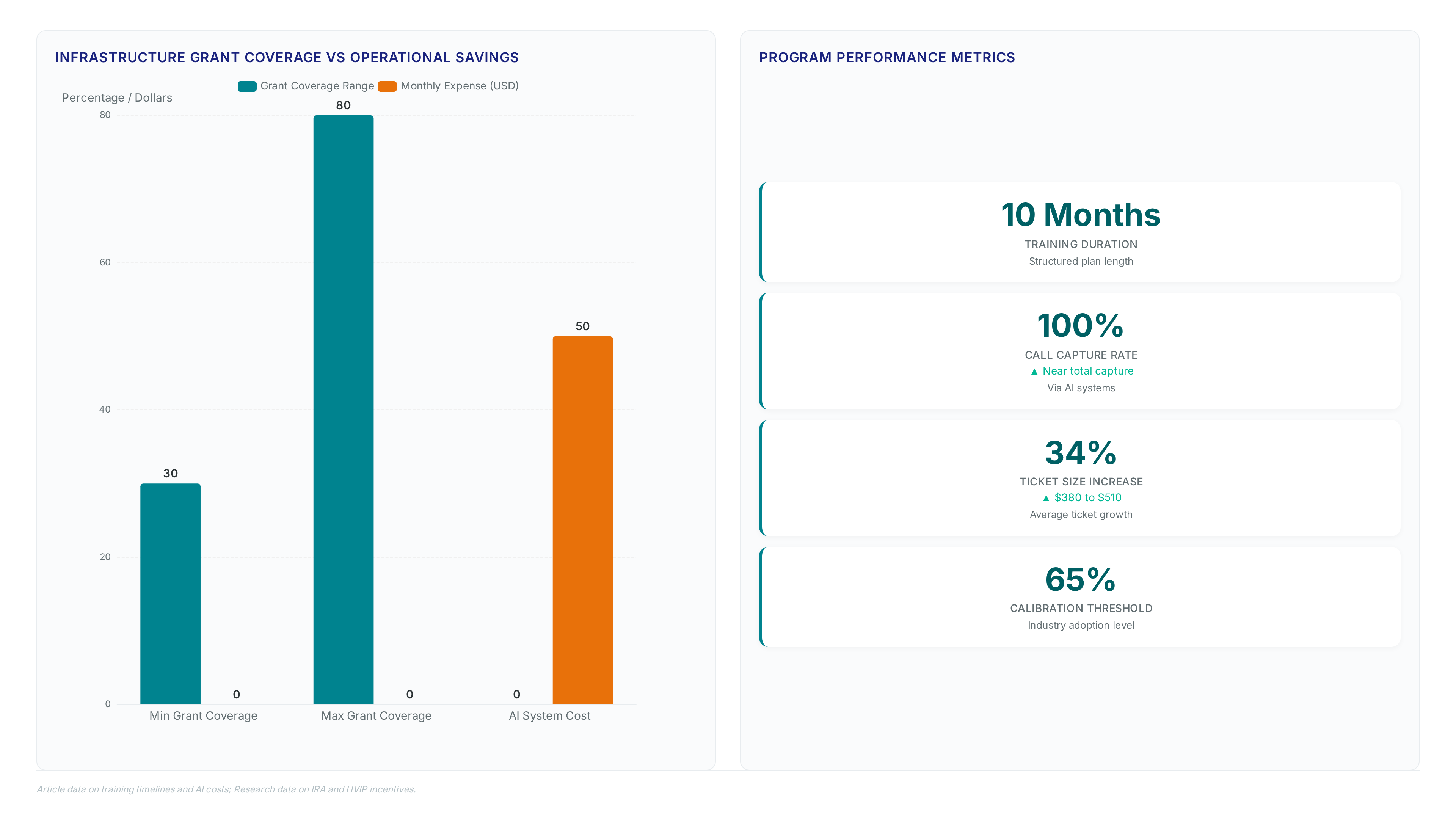
Recruit for ambition and reliability, not fully formed technicians with bad habits. The internal basic capabilities trainer must demonstrate consistent punctuality and the confidence to perform unsupervised oil changes or tire repairs. This mentor requires six months to one year of tenure to effectively coach new hires while continuing their own skill development. Facilities lacking a candidate with these traits must delay hiring until internal leadership matures.
- Audit current workflows to confirm sufficient basic maintenance volume exists before posting job listings.
- Select a mentor who performs Digital Vehicle Inspections with photo evidence to drive higher customer approval rates via transparency.
- Implement AI phone systems to capture nearly all inbound calls while dropping monthly expenses from $400 to $50 using AI phone answering systems.
Shops ignoring workflow validation risk idle apprentices who drain payroll. Cloud-native shop management architectures demand that even entry-level staff adapt to continuous software updates and digital documentation.
Sequencing Tool Safety and ADAS Calibration in Training Plans
Months one through three of the one to 10 months plan mandate strict tool safety and shop maintenance before any vehicle interaction. Training new behaviors is significantly easier than correcting established poor techniques later. Verify that trainees master equipment handling protocols before advancing to live bay work.
- Inspect and organize all hand tools and diagnostic equipment daily.
- Perform scheduled shop maintenance tasks without direct supervision.
- Document completion of safety modules in the training.
Progression to intermediate repairs and mandatory ADAS calibration modules begins only after basic competency is proven. Failure to include this leaves shops unable to complete a majority of incoming work orders safely. Trainers must apply resources like the Protech ADAS ID3 tool data to illustrate real-world calibration requirements.
| Phase | Duration | Focus Area |
|---|---|---|
| Foundation | Months 1-3 | Tool safety, shop maintenance |
| Basic Services | Months 4-6 | Oil changes, tire repair, DVIs |
| Intermediate | Months 7-10 | Brake service, ADAS exposure |
Premature exposure to complex calibration without tool safety mastery risks expensive equipment damage. Products and Brands recommends structuring the curriculum to delay high-value tool access until safety benchmarks are met. This sequencing prevents costly errors while ensuring the workforce develops necessary technical precision.
Implementation: Validating Shop Workflow Capacity Before Apprentice Recruitment
Verify existing basic service volume before recruiting, or new hires face immediate idle time. Franchise models compete on national warranties; independents rely on personalized service to fill entry-level bays. Without a steady stream of oil changes and tire rotations, an apprentice cannot progress through the required one to 10 months of structured training. If current workflows lack these tasks, execute a marketing strategy to convert breakdown-only clients into maintenance customers first.
| Workflow Signal | Required Action | Operational Result |
|---|---|---|
| Intermittent basic jobs | Deploy AI phone systems | Captures missed calls |
| No scheduled maintenance | Market preventative packages | Stabilizes technician hours |
| High breakdown ratio | Retrain service advisors | Increases average repair order |
Implementing AI phone answering:
- Audit the past month's repair orders for consistent basic maintenance tasks.
- Calculate the hourly cost of a mentor supervising a non-productive apprentice.
- Secure a pipeline of basic jobs through targeted community outreach before posting job listings.
Products and Brands recommends validating this capacity mathematically rather than assuming demand will materialize after hiring.
About
Anna Petrova serves as a B2B Auto Parts Market Analyst at KZMALL, where she specializes in dissecting workforce dynamics and supply chain sustainability. Her daily analysis of market sizing and competitive trends uniquely positions her to address the critical shortage of skilled technicians discussed in this article. By tracking demand across 50,000+ SKUs, Petrova observes firsthand how the aging technician population threatens the stability of the independent aftermarket. Her work at KZMALL, a global wholesale platform, reveals that relying solely on experienced hires is no longer a viable strategy as retirement rates climb. Instead, she advocates for investing in "green" apprentices, noting that fresh talent is often more adaptable to the complex fitment data and new technologies driving modern parts distribution. This perspective connects broad industry data on ASE certification failures with practical sourcing strategies, offering parts buyers a clear roadmap to secure their future labor force through targeted apprenticeship programs.
Conclusion
Apprentice programs fail when mentor bandwidth collapses under unstructured supervision. The hidden cost isn't just the trainee's wage; it is the compounded loss of senior technician productivity when workflow volume fluctuates. Shops that recruit before securing a consistent pipeline of entry-level tasks force experienced staff to choose between teaching and earning. This degrades both safety standards and revenue per hour. Friction stalls skill acquisition and inflates the true cost of development far beyond the initial salary offer.
Commit to a strict six-month moratorium on hiring new trainees until your shop maintains high utilization on basic service bays for three consecutive months. Do not expand your workforce based on projected growth; build capacity only after current staff are consistently overloaded with qualifying work. If your current workflow cannot sustain a dedicated mentor without dipping into emergency repair time, your infrastructure is not ready for expansion.
Start this week by auditing your last 40 hours of technician time logs to isolate exactly how many minutes were lost to idle waiting or interrupted teaching moments. Use this data to calculate the precise break-even point for basic service volume before drafting a single job description.
Frequently Asked Questions
Training new habits is easier than breaking old ones in experienced hires. This approach is vital because 65% of vehicle repairs now require complex calibration skills that legacy technicians often lack completely.
Candidates need six months to a year of tenure to supervise entry tasks unsupervised. This experience ensures they can train others while the shop sees repair orders rise from $380 to $510 consistently.
The recommended duration for a structured timed coaching plan spans one to ten months. This allows sufficient time for skill layering before technicians handle complex diagnostics independently without senior staff oversight.
Selling scheduled services creates the consistent volume of entry-level work required to sustain an apprentice. Without this steady flow, shops cannot justify the investment needed to train new staff members effectively.
Shops utilizing digital inspection tools properly often see average repair orders rise from $380 to $510. This increase helps offset the initial time investment required from senior staff during the training period.