
Fuel Striker vs Pneumatic: Dropping the Air Hose
The M18 Fuel Striker delivers 7 joules of force, matching pneumatic hammers at 145 PSI without air hoses.
Mobility no longer requires sacrificing torque when attacking seized components or tearing down suspensions. This cordless hammer chisel cuts the physical clutter plaguing traditional shop floors.
The tool's brushless motor replicates the output of leading long-barrel pneumatic hammers, a finding detailed in the aftermarket tool accessories report. Its twist-style chuck accepts standard .401-inch round shank accessories, while a dedicated ramp-up function prevents bit slips during startup. Integrated LED lighting and onboard electronics guard against heavy load failures, maintaining performance where air lines often falter.
Ditching compressed air isn't merely a convenience upgrade; it is a necessary evolution for modern shops facing space constraints and efficiency demands. Removing the tether of air hoses lets service centers deploy technicians faster and with greater flexibility. This transition signals the end of the pneumatic monopoly on heavy-duty component removal.
The Role of the M18 Fuel Striker in Modernizing Automotive Service Infrastructure
M18 Fuel Striker: 7-Joule Brushless Architecture
Milwaukee Tool engineered the M18 Fuel Striker to displace long-barrel pneumatic air hammers within active service bays. This brushless motor architecture generates 7 joules of striking force. Such output equals the performance of leading long-barrel pneumatic hammers operating at 145 PSI. Compressor dependency disappears while power consistency remains intact for suspension teardown and heavy component removal.
A twist-style chuck defines the tool interface by supporting all.401‑inch round shank accessories. Immediate compatibility exists with existing aftermarket tool accessories. Operators select from three modes using a variable-speed trigger. A ramp-up function gradually increases impact speed to improve control during startup. Integrated LED lighting improves visibility in confined work areas. Onboard electronics protect the tool and battery under heavy loads.
| Feature | Specification | Benefit |
|---|---|---|
| Striking Force | 7 joules | Matches 145 PSI pneumatic output |
| Chuck Type | Twist-style | Enables quick bit changes |
| Shank Size | .401‑inch | Universal accessory compatibility |
Battery capacity replaces continuous air supply as the primary constraint. Operators must manage charge cycles during extended suspension work. Pneumatic systems maintain constant pressure without interruption. The cordless solution demands attention to power state to ensure consistent performance throughout a shift. Ryan Mack, group manager of product marketing at Milwaukee Tool, noted that this performance level allows technicians to move away from air tools without sacrificing productivity.
Suspension Teardown Without Pneumatic Hoses
True shop mobility arrives by eliminating physical hose constraints during heavy component removal. This cordless hammer chisel matches the output of leading long-barrel pneumatic hammers operating at 145 PSI. Operators tackle rusted fasteners and pressed-in parts anywhere in the bay.
Technicians engage the twist-style chuck to swap .401‑inch round shank accessories quickly. Compatibility across diverse aftermarket tool accessories maintains workflow continuity. Integrated LED lighting further enhances visibility in confined work areas where shadow often obscures fastener heads.
| Feature | Operational Benefit |
|---|---|
| Ramp-up function | Improves control during startup |
| Integrated LED | Improves visibility in confined work areas |
| Cordless design | Removes trip hazards from air lines |
Tripping or snagging hoses on lifted vehicles during high-force application represents a specific safety hazard that air line elimination removes. Battery management becomes the new operational constraint. Technicians must monitor charge levels since the tool relies on onboard electronics to protect the battery under heavy loads. Power state awareness replaces hose routing as the daily routine.
Operational Advantages of Cordless Hammer Chisels in High-Mobility Repair Environments
Defining the 7-Joule Cordless Hammer Chisel Architecture
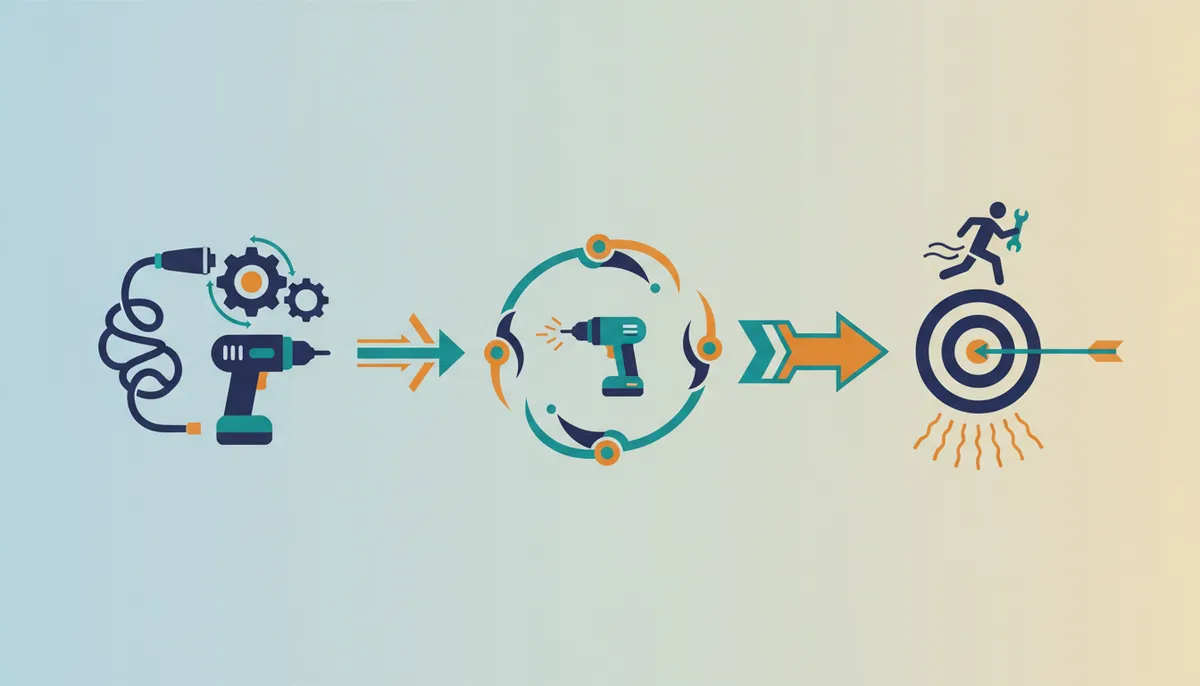
A brushless motor delivers the 7 joules of striking force central to this architecture. Technicians fracture seized components without tethering to a compressed air supply. The system uses a twist-style chuck accepting standard .401‑inch round shank bits, ensuring compatibility with existing accessory inventories. Operators deciding whether to switch from air to cordless must weigh the loss of infinite runtime against the gain in shop mobility. Milwaukee also introduced two additional items to support demanding service applications: A five‑piece hammer chisel bit set.
Bit selection dictates efficiency. Technicians should prioritize accessories designed for high-impact cordless drivers to maximize the brushless motor's lifespan.
Applying Ramp-Up Mode for Rusted Fasteners
Engaging ramp-up mode prevents bit slippage on corroded surfaces by gradually increasing impact velocity rather than applying full force immediately. This controlled acceleration allows the chisel tip to seat securely into irregular fastener heads before delivering maximum energy, a distinction when working in confined engine bays where a slip could damage adjacent components. The variable-speed trigger operates alongside three selectable modes to provide granular control over the initial strikes.
Technicians addressing inconsistent impact performance can rely on onboard electronics that help protect the tool and battery under heavy loads.
Shop mobility improves notably when removing air hoses from the equation, allowing operators to move freely around lifted vehicles without dragging pneumatic lines. The tool accepts standard .401‑inch shank bits, facilitating quick swaps using the twist-style chuck when transitioning between different corrosion levels.
| Feature | Benefit for Rusted Fasteners |
|---|---|
| Ramp-up Function | Reduces initial slip risk |
| Onboard Electronics | Protects tool and battery under load |
| Cordless Design | Eliminates hose drag |
Operators must balance the need for aggressive force with the precision required to preserve surrounding hardware. Pneumatic tools offer continuous runtime. The cordless design allows technicians to remove seized components and rusted fasteners while maintaining mobility throughout the shop.
About
Dmitry Volkov serves as a Senior Automotive Technical Writer at KZMALL Auto Parts, where he specializes in translating complex engineering specifications into actionable insights for the independent aftermarket. His daily work involves rigorous analysis of suspension systems and heavy-duty component removal, making him uniquely qualified to evaluate the Milwaukee M18 Fuel Striker. As KZMALL distributes extensive chassis and steering parts under its KBASE brand, Volkov understands the critical need for efficient tools during suspension teardowns. He regularly assesses how cordless innovations like this 7-joule hammer chisel impact shop productivity by eliminating pneumatic constraints. His expertise ensures that technical evaluations accurately reflect real-world repair scenarios faced by KZMALL's global network of distributors and repair shops. By connecting manufacturer data to practical application, Volkov provides the precise technical context professionals need to understand how modern tools simplify the removal of seized components and pressed-in parts.
Conclusion
Scaling this technology across a full service bay reveals that operational friction shifts from raw power delivery to accessory management. While the 7-joule impact energy handles severe corrosion, the real bottleneck becomes bit retention and selection speed during high-volume turnover. Shops relying on mixed inventories of pneumatic and electric tools often face compatibility gaps that slow down technicians more than the removal process itself. You must standardize on .401‑inch shank accessories immediately to ensure smooth integration with the twist-style chuck, preventing downtime caused by searching for compatible bits during critical repairs.
Adopt a phased transition plan where cordless hammer chisels replace pneumatic units for all mobility-dependent tasks within the next quarter. This approach uses the ramp-up function to protect surrounding components while eliminating the logistical drag of air hoses. Start by auditing your current bit inventory this week to identify non-compliant shanks that require replacement before full deployment. Technicians should test the variable-speed trigger on a set of corroded fasteners to calibrate their touch with the gradual acceleration profile. This specific focus on accessory compatibility and operator technique ensures the onboard electronics function as intended under heavy loads. For deeper insights into optimizing tool performance through proper training, review the latest diagnostic training resources available for modern equipment.
Frequently Asked Questions
It matches pneumatic hammers running at 145 PSI. This force eliminates compressor dependency while maintaining industrial power for heavy suspension teardown tasks without air hoses.
The tool accepts standard .401-inch round shank accessories. This compatibility ensures technicians can use existing aftermarket bits while gaining cordless mobility for diverse repair applications.
It gradually increases impact speed during startup. This control feature reduces slips when engaging seized components, ensuring safer operation in confined automotive work areas.
Battery capacity replaces continuous air supply as the constraint. Operators must monitor charge cycles since electronics protect the system, unlike pneumatic systems with constant pressure.
It removes trip hazards from air lines in bays. Technicians avoid snagging hoses on lifted vehicles during application of high force for safer component removal.
References