
Electric vehicle leasing drops as values fall
EV leasing volume dropped more than 40 per cent. Collapsing residual values dismantled early adoption models. This correction proves depreciation risks now outweigh fuel savings for most buyers. The era of guaranteed electric vehicle growth has ended. A harsh reality replaces it: technology depreciation and fading incentives drive values down quicker than internal combustion equivalents.
Lease economics have broken down. Automakers slash new prices to move stock, instantly devaluing existing fleets. We examine the mechanics of residual value collapse, where older models suffer rapid obsolescence and infrastructure gaps scare off used buyers. The EV sales decline is not a temporary pause. It is a structural shift forcing resource allocation toward AI and robotics instead of electrification.
The aftermath extends beyond the showroom floor into the supply chain. Tariff disruptions are projected to cut 5-6% of total automotive aftermarket revenue, creating significant pressure on supplier bottom lines according to SP Global. While electric vehicle components face uncertain demand, the traditional aftermarket remains buoyed by aging combustion fleets. The industry must accept that ICE vehicles will dominate the high-maintenance age bands for the foreseeable future.
Defining the Core Drivers of EV Market Deceleration
Defining Technology Depreciation and Residual Value Erosion
Newer models introduce superior range and charging speeds, rendering older electric vehicles obsolete regardless of physical condition. This is technology depreciation. Legacy battery architectures fall behind current industry standards, eroding value faster than mechanical wear. When automakers cut new EV prices to clear inventory, residual values face immediate pressure. Lang noted that depreciation remains the largest cost of vehicle ownership. Manufacturers prioritizing volume over value stability create immediate losses for lessors as existing fleet values tank.
The market consequence is a structural shift toward retaining older internal combustion vehicles. High prices keep legacy cars in circulation, driving demand for remanufacturing of parts to maintain affordability. EVs face steep value cliffs due to feature gaps. The broader vehicle population continues aging, with about 371 million out-of-warranty vehicles expected in Europe by late 2026. This demographic reality forces operators to prioritize ICE longevity over speculative electric inventory. Marketing future technology conflicts with servicing the dominant, aging fleet that generates steady revenue today. Ignoring this split risks capital misallocation in parts procurement.
Price cuts on new electric vehicles collapse residual values for existing units. In 2025, EV values dropped sharply, compounding losses from the year before and outpacing depreciation for ICE vehicles. Concerns over range, charging times, infrastructure gaps, insurance costs, and operating issues dampen used-market demand, further pushing prices down. A discounted new unit makes a two-year-old model economically unviable at its previous price point.
This pricing strategy ignores long-term damage to brand equity and lessor solvency. Some automakers have reportedly had to compensate leasing partners for unexpected losses on returned vehicles, indicating severe miscalculation in asset planning. The cost appears in collapsed lease terms and hesitant consumers who delay purchases anticipating further drops. Network operators in the automotive space require an urgent pivot toward data-driven demand forecasting to avoid overstocking assets destined for rapid devaluation. Inventory must reflect real-world value loss rather than optimistic book values.
Market Risks: Infrastructure Gaps and Fading Incentives Dampening Used Demand
Infrastructure gaps and range anxiety now act as primary suppressors of secondary market liquidity for electric vehicles. Consumer hesitation stems from tangible operational deficits rather than abstract environmental concerns. Range limitations, extended charging times, and uneven network coverage create friction that depresses demand for pre-owned units. These technical constraints compound the financial drag caused by fading government incentives and rising insurance costs. Lang Marketing analyzed the impact of EV sales decline, noting that depreciation, fading incentives, and weaker leasing economics weighed on demand.
Purchase subsidy removal has reshaped the economic calculus for buyers, making older models with slower charging speeds particularly unattractive. This forces a divergence where internal combustion engines retain utility value while early EVs suffer accelerated obsolescence. The global automotive aftermarket has been in a state of continuous growth since 2021, driven primarily by drivers retaining vehicles for longer periods rather than new vehicle sales volume. As EVs age, their utility value drops quicker than their mechanical life, unlike ICE vehicles which retain functional relevance despite age. Operators must recognize that technology depreciation accelerates as older models fall behind newer offerings. Concerns over infrastructure gaps and charging times continue to dampen used-market demand, creating sustained headwinds for both new and used EV sales.
Fading incentives reshape the purchase market alongside these technical hurdles. Lang estimates that by the fourth quarter of 2025, EVs' share of new-vehicle sales had fallen about 40 per cent. Average new EV transaction prices rose by nearly one-fifth, and the pace of EV leasing dropped more than 40 per cent. Lang says these shifts will act as sustained headwinds for both new and used EV sales for years. The slowdown represents a longer-lasting adjustment rather than a short-term pause. Meanwhile, ICE vehicles, including hybrids, are expected to retain a dominant share of car and light-truck sales longer than previously anticipated.
That flexible favours the traditional aftermarket, Lang said. Without EVs rapidly expanding their share, ICE vehicles will continue to dominate the older age bands of the vehicle parc, where parts consumption is highest. Lang projected that the ICE aftermarket will continue to grow in product volume for the foreseeable future, supported by aging vehicles and sustained repair and maintenance demand.
Mechanics of Collapsing Residual Values and Lease Economics
The Mechanics of Technology Depreciation in EV Leasing
Older hardware cannot support new software features, accelerating value loss. This mechanism differs fundamentally from standard mileage wear because the asset loses utility regardless of physical condition. As Lang identified, older models falling behind newer offerings drives this specific form of obsolescence. Rapid hardware cycles render previous generations functionally obsolete before mechanical failure occurs. Range anxiety, charging delays, infrastructure gaps, insurance costs, and operating issues dampen used-market demand while pushing prices down further. A vehicle missing critical capabilities due to legacy architecture commands a steep discount in the secondary market. The firm expects elevated EV depreciation to persist as this gap widens. Newer vehicles offer integrated electronics and quicker charging that older architectures cannot match through updates alone. Lessors face tension when pricing leases based on future value assumptions that technology shifts invalidate. High vehicle prices are persisting in the current market, a factor that keeps older vehicles in circulation longer and indirectly supports the aftermarket by delaying new vehicle purchases. Forecasting models must weigh hardware lifespan against software roadmap viability. Inventory holding costs rise when the technology inside becomes outdated quicker than the chassis wears out.
Calculating Lease Cost Spikes from Falling Residual Values
Monthly lease payments rise immediately when projected residual values drop below original forecasts because the lessee must cover the larger depreciation gap. This mathematical reality forces lessors to either increase monthly charges or absorb significant losses on the asset. Some automakers have reportedly had to compensate leasing partners for unexpected losses on returned vehicles rather than passing costs to consumers. The pace of EV leasing dropped more than 40 per cent as these distorted economics deterred new contracts. Falling residual values drive up lease costs, creating a scenario where physical condition matters less than software capability. Maintaining attractive lease rates while ensuring portfolio solvency presents a difficult conflict for finance teams. The broader sector relies heavily on global supply chains, evidenced by the US importing $139 billion worth of aftermarket parts, yet EV specific components lack similar liquidity. Publishers like Lang suggest the market requires a fundamental reset in how asset lifetime is modeled against innovation cycles. Without accurate forecasting, lessors face compounding deficits as vehicle values diverge sharply from initial book entries. The financial impact extends beyond individual contracts to destabilize the entire leasing framework for electric fleets.
Mechanics: Inventory Clearing Price Cuts as a Residual Value Threat
New EV price reductions to clear stock immediately erase the equity of existing leased assets. When automakers slash MSRP, the residual value foundation for prior contracts collapses because the used market reprices against the new lower floor. Lang noted that as dealers cut new EV prices to clear inventory, a move that immediately pressures residual values, the gap between book value and market reality widens. This flexible creates a feedback loop where falling demand accelerates price cuts, which further depresses values. Divergence between new and used demand intensifies this pressure. EVs' share of new‑vehicle sales had fallen about 40 per cent, yet average new EV transaction prices rose by nearly one‑fifth due to mix shifts toward premium trims while volume models discounted heavily. This bifurcation confuses forecasting models that rely on linear depreciation curves. Operators managing fleets face a scenario where high vehicle prices persist in the broader market, a factor that keeps older vehicles in circulation longer and indirectly supports the aftermarket by delaying new vehicle purchases factor. The primary risk lies in the lag time; falling residual values drive up lease costs, deterring new contracts until market conditions stabilize. Until then, every new discount validates a lower ceiling for secondary market pricing, forcing a permanent reset of asset valuation assumptions across the sector.
Strategic Aftermarket Adjustments for Slowing EV Adoption
Defining the Extended ICE Dominance Window
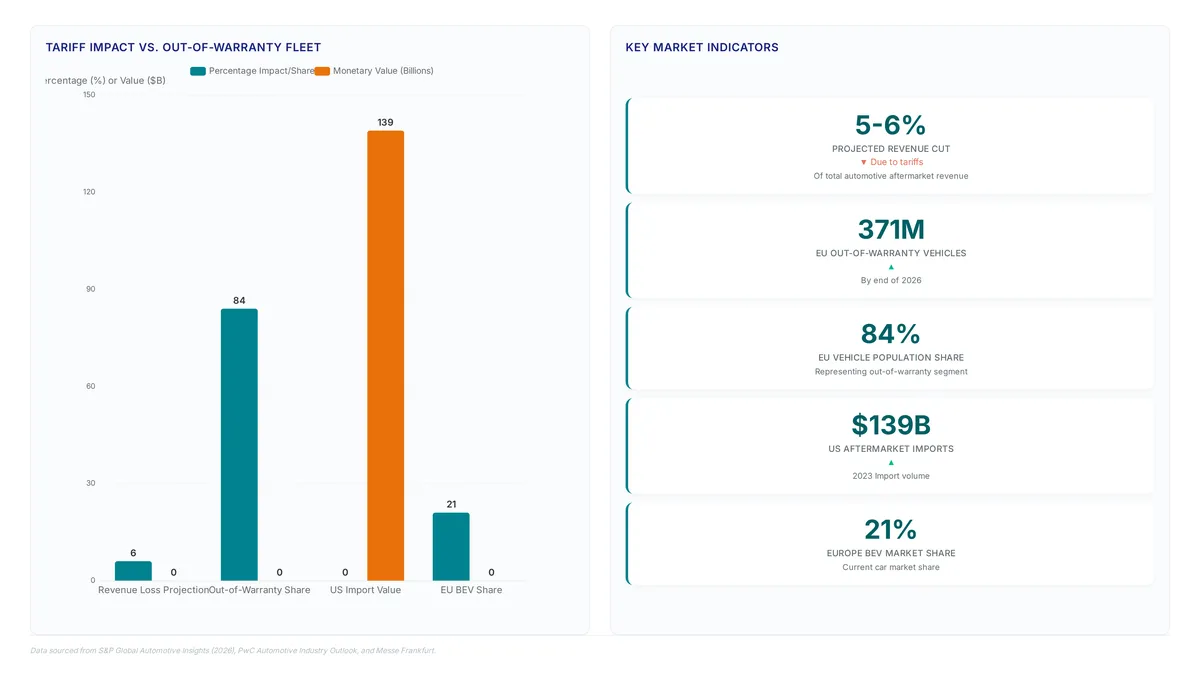
Lang argued the EV slowdown is not a short‑term pause but a longer‑lasting adjustment that reshapes parts sourcing. Internal combustion engines, including hybrids, are expected to retain a dominant share of car and light‑truck sales longer than previously anticipated, keeping older units in service. This flexible ensures ICE vehicles will continue to dominate the older age bands of the vehicle parc where parts consumption is highest.
The implication for distributors is a mandatory shift in inventory pricing models to reflect the extended service life of combustion engines. Providers who align procurement with the reality of an aging vehicle parc will capture value while competitors chase shrinking EV margins. Ignoring this demographic reality exposes businesses to unnecessary volatility in a market that currently favors proven mechanical reliability over speculative electrification.
Supply Chain Vulnerabilities Amidst Tariff Disruptions
Trade policy volatility immediately threatens the financial stability of importers reliant on global parts flows. These tariff disruptions are projected to cut 5-6% of total automotive aftermarket revenue, creating significant pressure on supplier bottom lines. The implementation of new tariffs is expected to directly erode supplier profit margins, with the potential revenue loss forcing a re-evaluation of pricing strategies across the supply chain. While EV ownership costs fluctuate with battery degradation fears, ICE longevity offers predictable demand but faces immediate import headwinds. This flexible forces a choice: absorb the tariff hit to maintain market share or pass costs to consumers and risk volume contraction. The publisher notes that managing this complexity around diagnostic tools and data access will determine who captures value. Operators ignoring these supply chain fractures risk insolvency before the market stabilizes.
Implementing Inventory Pricing Controls Amid Market Volatility
Implementation: Defining Residual Value Compensation Mechanisms
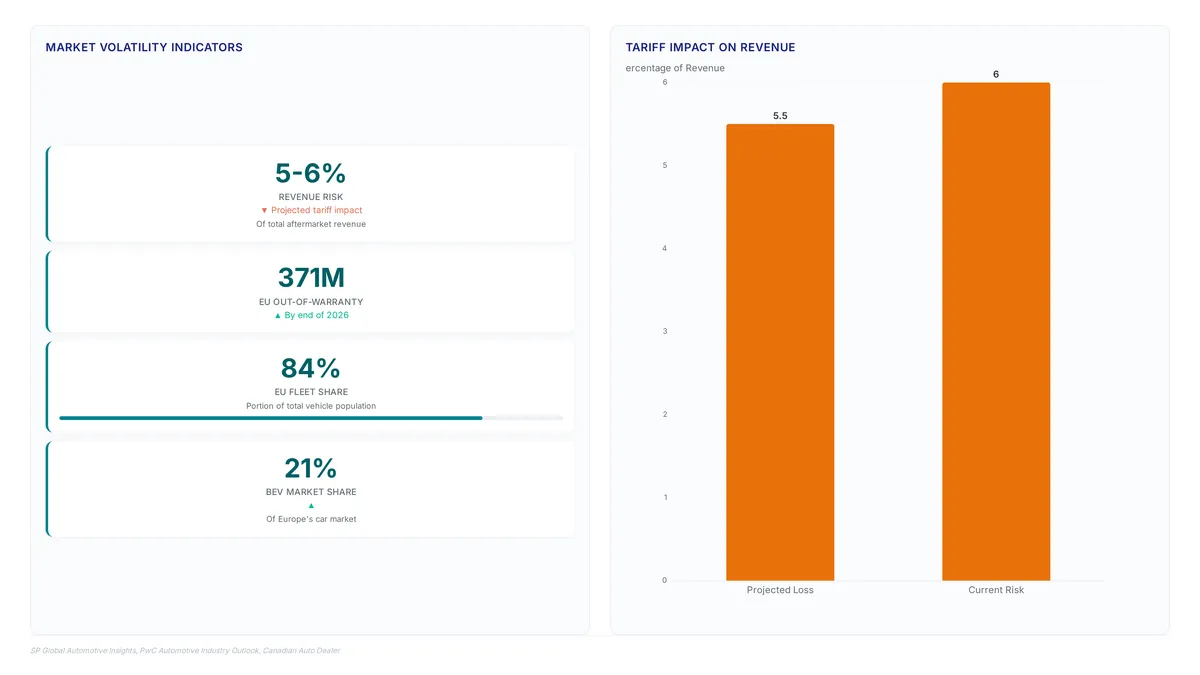
EV leasing faces severe strain as plummeting residual values inflate monthly costs. Compensation structures bridge the gap between guaranteed buyback rates and actual market prices eroded by rapid technology obsolescence. Operators manage exposure in this climate by focusing on specific financial safeguards.
- Monitoring returned inventory to identify models with value drops exceeding standard curves.
- Calculating the deficit between predicted residuals and current auction realization prices.
- Reviewing lease contract terms in light of realized losses and falling residual values.
- Recognizing capital opportunities in sectors where older vehicle demographics ensure stable parts demand.
Current market conditions often treat symptoms of volatile depreciation while ignoring broader structural headwinds. Relying solely on payouts overlooks the reality that internal combustion engines retain dominance in older vehicle age bands. Network operators must evolve inventory strategy accordingly. Capital previously dedicated to aggressive EV acquisition now supports forecasting for conventional parts. Liquidity remains available for high-turnover ICE components while strict financial hedging manages EV risk rather than volume assumptions.
Targeting Aging ICE Vehicle Parc for Parts Volume
Dealers reorient inventory acquisition toward older internal combustion engine models where repair frequency stays structurally high. Vehicles from the 2015-2019 sales cohort now enter peak maintenance windows, driving sustained demand for service departments and parts operations across the industry. This shift requires operators to prioritize stock for high-mileage fleets rather than chasing volatile electric vehicle residuals that suffer from rapid technology depreciation.
- Evaluate labor rate cards to remain competitive against independent shops that traditionally capture this aging demographic.
- Consider pricing strategies that reflect the higher parts consumption rates of legacy powertrains.
- Direct marketing spend to target owners of vehicles approaching substantial service milestones like timing belt replacements.
Dealership service economic models face pressure as owners of aging vehicles systematically migrate to independent operators for cost savings. Capturing this revenue requires competitive pricing on common maintenance items to retain customer loyalty before substantial failures occur. A tension exists between maintaining premium brand positioning and offering competitive rates necessary to prevent customers from defecting to the independent car parts trade. Operators ignoring this demographic pivot risk losing the most reliable revenue stream in their service departments.
Mitigating Revenue Loss from Tariff Disruptions
Direct financial exposure to import duties creates immediate pressure on supplier bottom lines across the automotive aftermarket. Operators must implement pricing controls to absorb these shocks without sacrificing market share.
- Map supply chain exposure by auditing all imported components subject to new tariff classifications.
2.
| Risk Factor | Impact Scope | Mitigation Action |
|---|---|---|
| Import Duties | Revenue Margin | Flexible Price Adjustments |
| Supply Delays | Stock Availability | Multi-Region Sourcing |
| Cost Volatility | Cash Flow | Hedging Contracts |
Maintaining competitive shelf prices while preserving solvency during trade disputes presents a complex challenge. Absorbing costs temporarily might secure customer retention, yet prolonged margin compression threatens long-term viability for distributors. Strategic price elasticity analysis reveals when to pass costs to consumers versus when to absorb losses to clear aging stock.
About
Dmitry Volkov serves as a Senior Automotive Technical Writer at KZMALL Auto Parts, where he specializes in translating complex engineering data into actionable industry insights. His daily work involves analyzing component standards and manufacturing processes across KZMALL's extensive catalog of EV-ready solutions, including the K-LEOPARD battery line and KTOP electronic components. This hands-on experience with fitment data and parts interchangeability uniquely positions him to assess how shifting EV market dynamics, such as rising depreciation and model discontinuations, directly impact the independent aftermarket. By monitoring how these trends alter demand for specific replacement parts, Volkov provides a grounded perspective on the supply chain adjustments necessary for distributors and repair shops. His analysis bridges the gap between broad market fluctuations and the practical realities faced by B2B partners navigating a cooling EV environment while maintaining service readiness for diverse vehicle fleets.
Conclusion
Scaling service operations for aging electric vehicle fleets reveals a critical breaking point where legacy supply chains cannot match the rapid obsolescence of modern components. While traditional models rely on deep aftermarket inventories, the shift toward electrification demands a fundamental restructuring of how dealerships manage parts depth for vehicles exceeding eight years of age. The projected loss of over half the aftermarket revenue due to tariff disruptions confirms that relying on imported stock without flexible pricing controls is unsustainable. Dealers must immediately pivot from passive inventory holding to active supply chain mapping to survive these margin compressions.
Operators should mandate a full audit of imported electric vehicle components within the next thirty days to identify exposure before new duties fully impact cash flow. This analysis must directly inform a flexible pricing strategy that absorbs short-term shocks while preserving long-term solvency. Start this week by cross-referencing your current stock of electric vehicle components against updated tariff classifications to isolate high-risk SKUs. Only by proactively adjusting price cards and diversifying sourcing regions can service departments retain ownership of the aging demographic before independent shops capture the remaining value. The window to secure this revenue stream through strategic adaptation is narrowing, requiring immediate execution rather than theoretical planning.
Frequently Asked Questions
Cutting new prices immediately destroys residual values for existing fleets. This collapse drives lease volumes down by more than 40 percent, forcing lessors to absorb unexpected losses on returned vehicles.
Tariff disruptions are projected to cut 6% of total automotive aftermarket revenue. This reduction creates significant pressure on supplier bottom lines while they navigate volatile international supply chains.
Approximately 371 million out-of-warranty vehicles will exist in Europe by late 2026. This massive aging fleet ensures sustained demand for traditional maintenance parts despite the slowdown in electric vehicle sales.
Older battery architectures fall behind current standards rapidly, causing steep value cliffs. This specific technology depreciation renders previous generations less desirable regardless of their physical condition or remaining battery health.
Internal combustion vehicles will dominate older age bands where parts consumption is highest. This shift favors the traditional aftermarket as resource allocation moves away from speculative electric inventory.
References