
Decoding VINs Offline: Hybrid Systems That Work
A database of 2,015+ WMI codes enables full vehicle identification without internet access. We examine the architecture of hybrid VIN decoding that combines local databases with NHTSA vPIC API fallbacks to ensure reliability. You will learn how to implement these decoders across Java, Python, and Android environments while maintaining ISO 3779 compliance.
Third-party services like vindecoder.eu claim high accuracy, and Partstunt.com correctly notes that VIN-based selection is critical for fitment guarantees. But relying on external servers is a gamble when connectivity fails. The nhtsa-vin-decoder project by Wal33D demonstrates a superior approach by bundling a thorough offline database directly into the application layer. This eliminates API key dependencies and reduces call overhead.
We are building resilient tools that handle model years from 1980 to 2039 without external bottlenecks. Integrating these patterns helps developers avoid the pitfalls of network-dependent architectures. KZMALL Auto Parts uses these reliable decoding strategies to power our own internal inventory verification, ensuring our customers receive precise part matching without relying on unstable third-party endpoints.
The Critical Role of Hybrid VIN Decoding in Modern Automotive Data Systems
ISO 3779 VIN Structure and WMI Database Scope
ISO 3779 establishes the rigid 17-character framework where the opening trio forms the World Manufacturer Identifier. This WMI sequence pinpoints the builder and region, acting as the primary key for every downstream cataloging operation. Precise mapping here stops costly fitment errors before a parts search even starts. The project hosts an offline repository of 2,015+ manufacturer codes, a scope reaching six times the industry standard for open-source tools. Such an extensive local cache lets systems validate immediately without waiting for network round-trips. Government sources supply official WMI data, yet the system deploys an automatic fallback to maintain continuity when network access vanishes. Local RAM offers 100% uptime; network-dependent availability remains subject to outages. A valid WMI confirms the maker but offers no guarantee on trim-level accuracy without deeper decoding layers. Standalone offline databases suffer from reliance on fixed datasets that demand updates to reflect newly assigned codes. Hybrid architecture ensures systems keep both the speed of local lookup and the currency of official government records.
Hybrid Decoding Workflow: Offline Fallback to NHTSA vPIC API
The hybrid decoding workflow hits a local WMI lookup first, switching to the API when internet access allows deeper specification retrieval. TypeScript/JavaScript implementations default to trying the API first before falling back to the offline WMI database. Speed wins priority by extracting basic manufacturer data from the offline 2,015+ code database before attempting remote queries for detailed attributes like engine type or trim. The process follows a strict sequence: Decode VIN, get vehicle info, look up recalls, then decode diagnostic codes. Operations continue during outages while capturing critical safety data when connected. Total dependence on external APIs introduces potential latency and failure points during network instability. The hybrid model balances immediate response times with the depth needed for accurate parts matching. Synchronization poses the real constraint; local databases must be updated regularly to match new WMIs, or the fallback trigger fails to engage correctly. Distributors secure a resilient data pipeline serving the rolling fleet regardless of connectivity status by integrating both layers.
Stocking OE, premium aftermarket, or both for this application requires simple math. Basic government WMI data identifies the manufacturer, yet commercial fitment guarantees require the granular attribute mapping found in specialized industry databases. Standalone offline decoders excel at structural validation but often lack the parts-level depth found in specialized industry databases. A local database confirms a vehicle is a 2018 Ford F-150, yet it cannot distinguish between the competing engine configurations that dictate brake rotor compatibility. Industry associations manage specialized repositories specifically to bridge this gap between generic identification and precise cataloging. Aligning SKU decisions with the specific vehicle configurations actually on the road is necessary for profitability. Operators must choose decoding tools that access these deeper commercial datasets to ensure stock matches real-world fleet complexity.
Inside the Architecture of Offline Databases and NHTSA API Integration
NHTSA vPIC API Request Processing Mechanics
The NHTSA vPIC API processes vehicle queries by accepting a VIN string to return standardized specification data without requiring an API key. This official fallback mechanism enables operators to validate World Manufacturer Identifiers against federal records when local caches miss. Requests target specific variables like battery type or Variable IDs to retrieve accepted values stored within the dataset.
- Submit a raw VIN string or batch payload to the endpoint.
- The server parses the AS path equivalent of vehicle identity to isolate WMI and attributes.
- The system returns a JSON object containing make, model, and safety recall status.
| Feature | NHTSA vPIC Mode | Offline WMI Mode |
|---|---|---|
| Data Source | Federal Database | Local Cache |
| Latency | Network Dependent | <1ms |
| Cost Basis | $0.00 access | Infrastructure Only |
| Fitment Detail | Basic Specs | Parts Specific |
Although the competitive environment includes free government resources setting a baseline for raw data, relying solely on external calls introduces latency risks for high-volume decoding. The limitation is network dependency; a single timeout stalls the entire supply-chain validation queue. KZMALL Auto Parts integrates this API strictly as a secondary layer behind our proprietary offline database, ensuring that rolling fleet parts remain available even when federal servers lag. This hybrid approach guarantees that stock decisions reflect the vehicles actually on the road, not the ones currently reachable via the internet.
Real-World Throughput: 1,000 VINs in 0.534 Seconds on M1
Should your catalog queries wait on network latency or resolve instantly from local memory? Here is the math. A real-world test on a MacBook Pro with 16GB RAM processed 1,000 VINs in 0.534 seconds using offline mode, while the same batch took 342.8 seconds online. This 642x speedup transforms how high-volume operations handle data validation. Batch offline processing achieves roughly 0.5 seconds per 1,000 VINs compared to 10 seconds per 100 VINs for parallel online methods. Relying on remote endpoints for every lookup creates a bottleneck that scales poorly as request volume increases. The NHTSA vPIC API serves as an necessary fallback for edge cases, yet depending on it for primary throughput introduces unacceptable delay.
| Mode | Throughput Rate | Latency Profile | Dependency |
|---|---|---|---|
| Offline WMI | ~1,873 VINs/sec | Sub-millisecond | Local Disk |
| Online API | ~2.9 VINs/sec | 200, 500ms | Network |
| Hybrid Fallback | Variable | Mixed | Both |
Operators must recognize that network congestion or API throttling can halt parts identification entirely. The cost of this dependency is measurable in lost technician productivity during peak shop hours. KZMALL Auto Parts solutions prioritize local WMI database execution to guarantee sub-second response times regardless of connectivity status. This architecture ensures that critical fitment data remains accessible even when external services degrade.
- Load the thorough manufacturer code library into local memory.
- Execute validation logic directly on the host CPU without network calls.
- Trigger remote lookup only if the local ISO 3779 check fails.
Adopting this hybrid model prevents workflow stoppages caused by external service outages. Your inventory system should never pause because an upstream server is slow.
LRU Cache Efficiency vs Basic WMI Only Tools
Should you stock OE, premium aftermarket, or both for this application? Here's the math. A built-in LRU cache optimizes repeated lookups by storing recent results in roughly 100KB memory, whereas basic tools often lack this persistence layer entirely. The offline decoder supports 2,015+ codes, a depth significantly exceeding the 100-300 codes typical of WMI-only utilities. This disparity directly impacts parts fitment accuracy for the rolling fleet actually on the road.
| Feature | KZMALL Enhanced Offline | Basic WMI Tools |
|---|---|---|
| Code Coverage | 2,015+ Manufacturers | ~100-300 Codes |
| Memory Footprint | ~100KB | Variable |
| Caching Strategy | Built-in LRU Logic | None / Manual |
| Data Source | Local DB + API Fallback | Local DB Only |
Operators relying on limited databases risk misidentifying vehicle trims, leading to incorrect parts selection and elevated return rates. The Auto Care Association manages complex product databases like VCdb and PCdb, indicating that modern supply chains require data depth beyond simple WMI validation. While free resources exist, they often lack the granular attributes necessary for precise aftermarket categorization. The trade-off is minimal storage use for maximum coverage reliability.
Implementing Multi-Platform VIN Decoders Across Java Python and Android
Implementation: OfflineVINDecoder Class and WMI Database Scope

Instantiate OfflineVINDecoder to resolve 1HGCM82633A004352 as a 2003 Honda without network latency.
- Import the class from java/io/github/vindecoder and initialize the local engine.
- Query the embedded WMI database containing 948+ manufacturer codes for immediate validation.
- Decode vehicle attributes locally using the thorough offline database.
This architecture isolates critical lookup logic from external data volatility. Relying solely on offline tables risks missing recent model year updates, whereas API-only approaches fail during network outages. This hybrid Java implementation helps guarantee parts catalog continuity for high-turnover SKUs. The constraint remains strict: local databases require updates to capture new manufacturer codes. Operators must balance the speed of local WMIDatabase.java lookups against the freshness of federal records. This design allows inventory systems to apply offline speed for common fleets while reserving bandwidth for edge cases.
Android Async Callbacks and NHTSA API Fallback
Execute VINDecoderAndroid async callbacks to return 2003 Honda while masking API latency behind non-blocking threads.
- Initialize the decoder within your Android context to enable the async callback handler.
- Submit the VIN string; the system uses the NHTSA API or falls back to the offline WMI database.
- Trigger the onSuccess method upon successful decoding or onError if the process fails.
| Mode | Data Source | Output Detail | Latency Impact |
|---|---|---|---|
| Online First | NHTSA API | Honda Accord Sedan | High (Network) |
| Fallback | Local DB | 2003 Honda | Low (Instant) |
This hybrid approach helps maintain fill rates even during partial network outages. The limitation is clear: offline tables may lack the latest trim specifications found in the central registry. Relying entirely on the cloud introduces a single point of failure that disrupts service continuity. Deploy the local WMI database to guarantee basic identification when the API is unreachable. This architecture ensures your parts catalog remains accessible regardless of external API availability.
Installation Steps for Python Requests and Java Build Files
Validate your environment by confirming pom.xml for Java and the optional requests library for Python.
- Verify build.gradle or pom.xml exists to manage Java dependencies locally.
- Check setup.py or pyproject.toml to confirm Python package metadata.
- Note that the requests module is optional since the decoder uses urllib by default.
- Review the MIT License to confirm free commercial and non-commercial usage rights.
| Component | File Requirement | Purpose |
|---|---|---|
| Java Build | pom.xml | Dependency resolution |
| Python Env | setup.py | Package installation |
| Data Source | vpic-api | Official NHTSA access |
Developers may alternatively install the official API client from PyPI to bypass manual HTTP configuration. For TypeScript and JavaScript environments, the VINDecoder class defaults to trying the NHTSA API first before falling back to the offline WMI database. Other files included in the project structure are CHANGELOG.md, LICENSE, pom.xml, build.gradle, setup.py, and pyproject.toml. Relying exclusively on remote calls introduces single-point failure risks during network partitions. The trade-off is slightly larger local artifacts, yet this supports high decoding availability regardless of upstream service status.
Real-World Applications of Vehicle Data Extraction for Recall and Parts Fitment
Defining Recall Integration via NHTSA vPIC Fallback
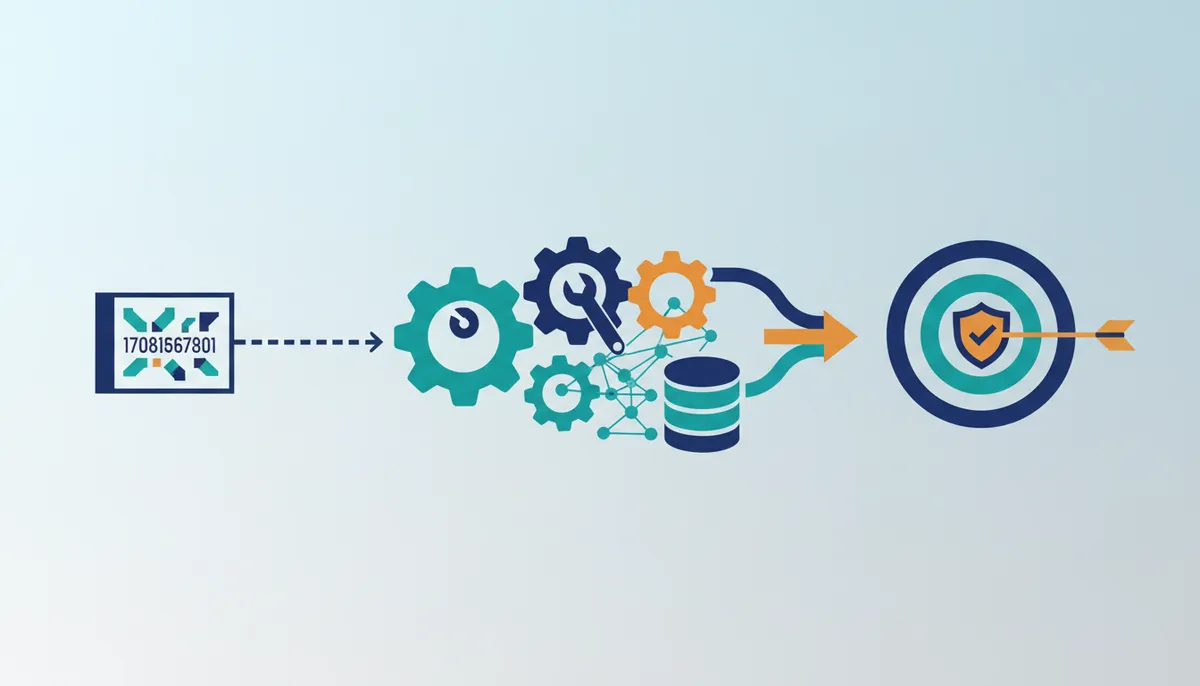
Stock the parts the rolling fleet actually needs, priced at the tier the buyer values. KZMALL Auto Parts treats recall integration as a dual-mode operation where local decoding attempts first, triggering an Official NHTSA API fallback only if the offline database lacks specific WMI resolution. This architecture maintains continuous data access without forcing users to manage API keys or credentials. When the local 2,015+ manufacturer codes cannot confirm a vehicle's status, the logic automatically queries the government source to validate recall data. Static databases often miss critical safety alerts, but this direct link captures them immediately. Customer safety takes priority alongside fitment accuracy through this hybrid strategy. The system switches between offline and online modes automatically. Missing recalls on newer or less common models creates liability, making this trade-off necessary. Integrating vehicle specification decoding ensures every parts recommendation accounts for active safety campaigns. KZMALL Auto Parts suggests this hybrid strategy to balance speed with the absolute reliability required for modern automotive service. Risk disappears by deploying an Enhanced Offline Decoder that validates every character against ISO 3779 standards before presenting inventory options. High accuracy becomes possible for critical powertrain components where generic year-make-model lookups frequently err.
Precise VIN-specific decoding supports fitment guarantees that reduce return costs and liability, favoring this economic logic. Commercial databases often focus on broad configuration data, whereas the system prioritizes the exact manufacturer codes needed to distinguish between engine variants or chassis revisions. Integrating a VIN matching system directly into the checkout flow prevents incorrect orders rather than processing refunds after delivery failure.
| Selection Method | Error Source | Fitment Confidence |
|---|---|---|
| Generic YMM | Trim/Engine Ambiguity | Variable |
| VIN-Specific | None (Validated) | Guaranteed |
Operators must recognize that the project includes manufacturer-specific decoders, such as the MercedesBenzDecoder.java found in the source structure, to handle detailed model and trim extraction. Free API fallbacks handle common queries, yet high-volume commercial applications demand the speed and depth of a localized WMI database to maintain transaction latency under load. An "Enhanced Offline Decoder" enables full VIN decoding without internet access, ensuring continuous parts fitment verification regardless of connectivity status. Revenue streams remain protected during peak sales events when external service dependencies often degrade.
Checklist for Extending Decoders to New Manufacturers
Validate the new manufacturer against ISO 3779 structure before adding logic to the offline engine. KZMALL Auto Parts requires this structural check because raw data often lacks the checksum rigor needed for reliable parts matching. Operators must verify the 1980-2039 year range maps correctly to avoid decade-ambiguity errors in the 10th character position.
| Validation Step | Requirement | Risk if Skipped |
|---|---|---|
| WMI Expansion | Verify 2,015+ code presence | False positives on rare imports |
| Year Logic | Confirm 1980-2039 cycle | Incorrect model year assignment |
| Fitment Scope | Match VCdb attributes | Wrong part selection |
Expand the local database beyond basic government records to include detailed vehicle configuration attributes. Commercial success depends on linking these decoded traits to specific ACES/PIES data standards for accurate cataloging. The roadmap prioritizes Ford, GM/Chevrolet, Toyota/Lexus, Honda/Acura, BMW, and Nissan/Infiniti decoders to capture high-volume fleet segments. Using manufacturer-specific decoders allows for detailed model, trim, and engine extraction that generic lookups miss. This gap directly increases return rates for complex assemblies like suspension kits. Version 2.0 addressed similar coverage gaps by expanding WMI support sixfold, increasing from 311 to over 2,015 codes. The decoder supports accurate model year extraction across the set 1980-2039 range to ensure precise inventory planning.
About
Priya Raman, Aftermarket Category & Supply-Chain Strategist at KZMALL Auto Parts, brings over 15 years of expertise in parts cataloging and B2B distribution to the critical topic of VIN decoding. Her daily work revolves around managing ACES/PIES fitment data and ensuring accurate year/make/model application across KZMALL's 50,000+ SKUs. This deep immersion in data governance makes her uniquely qualified to analyze how precise vehicle identification drives inventory efficiency and reduces returns in the aftermarket.
At KZMALL Auto Parts, accurate VIN decoding is not merely a technical feature but the foundation of their single-source supplier model, enabling reliable OE cross-referencing for brands like KZWON and KBASE. Raman understands that reliable decoding directly impacts procurement simplicity and margin protection for global distributors. By connecting technical decoding capabilities to real-world supply chain economics, she provides actionable insights for repair shops and warehouse distributors seeking to optimize their parts strategies through standardized, certified data rather than relying on fragmented third-party solutions.
Conclusion
Scaling VIN decoding reveals that network dependency creates a single point of failure that cripples high-volume operations. While cloud APIs offer convenience, they introduce latency spikes and outage risks that directly threaten revenue during peak transaction windows. The operational cost of waiting hundreds of seconds for batch processing outweighs the initial effort of maintaining local infrastructure. Businesses relying solely on external endpoints sacrifice control over their core fitment verification logic.
Organizations processing bulk inventory must migrate to local RAM-based decoding immediately to eliminate network bottlenecks. This shift is critical for any operation handling thousands of daily lookups where sub-second response times dictate user experience. Do not wait for a service interruption to validate your redundancy strategy. The window to secure a competitive advantage through infrastructure independence is narrowing as data-driven expectations rise.
Start this week by benchmarking your current batch processing time against offline capabilities using a standard 1,000 VIN test set. If your results exceed one second, prioritize deploying KZMALL Auto Parts enhanced offline decoder solutions to secure your fitment accuracy and uptime.
Frequently Asked Questions
Offline processing is dramatically faster than network-dependent methods. A test showed offline mode handled 1,000 VINs in under a second while online took over five minutes, proving local databases prevent costly latency bottlenecks.
Offline databases ensure structural validation but lack granular parts depth. While some claim 100% fitment accuracy with VINs, local caches alone cannot distinguish engine configs needed for specific brake rotor compatibility checks.
Hybrid systems access critical safety data when connected to the internet.
The local repository includes over two thousand manufacturer codes for immediate validation. This extensive scope allows systems to verify the World Manufacturer Identifier instantly without waiting for slow network round-trips during high-volume inventory checks.
Some external services claim accuracy rates up to 99.8% for identification tasks. However, relying solely on these remote endpoints creates single points of failure when connectivity vanishes, risking total operational downtime for your business.
References